
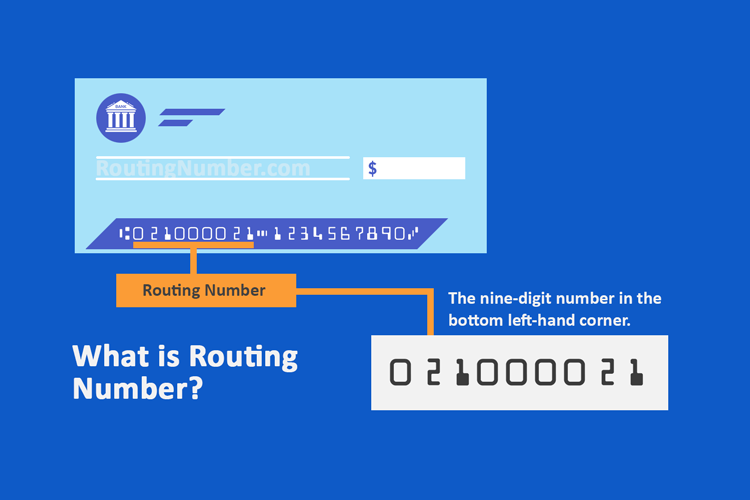
In the complex landscape of personal and business finance, certain numerical strings act as the invisible glue holding the global economy together. While most individuals are intimately familiar with their credit card numbers or their Social Security digits, the “routing number” often remains a misunderstood necessity until the moment a payroll form or a digital invoice requires it. Formally known as an ABA Routing Transit Number (RTN), this nine-digit code serves as the fundamental “address” for financial institutions within the United States. Understanding what a routing number is, how it functions, and why it remains a cornerstone of the financial sector is essential for anyone looking to navigate their money with precision and security.
Decoding the Routing Number: More Than Just a String of Digits
The routing number is not a random sequence generated by a computer; it is a highly structured identifier that tells the Federal Reserve exactly where a financial institution is located and how to process transactions moving toward it. Established by the American Bankers Association (ABA) in 1910, this system was originally designed to make check processing more efficient. In the century since, it has evolved into the backbone of the electronic banking era.
The Origin and Evolution of the ABA Number
Before the implementation of routing numbers, the manual sorting of paper checks was a logistical nightmare. Banks had to identify each other by name and location, which led to frequent errors and delays in the “clearing” of funds. The ABA created the routing transit number to standardize this process. Today, while paper checks are declining in popularity, the routing number has found new life in Automated Clearing House (ACH) transfers, wire transfers, and direct deposits. It serves as a digital fingerprint for your bank, ensuring that when money is sent, it doesn’t just go to “any” bank, but to the specific vault (physical or digital) where your account resides.
Breaking Down the Nine Digits
To the untrained eye, a routing number is just a block of text. To a financial professional, it is a data map. The first four digits represent the Federal Reserve routing symbol, which identifies the bank’s physical location (the Federal Reserve district) and the type of institution it is. The next four digits are the bank’s unique identifier assigned by the ABA. The final digit is known as the “check digit.” This last number is the result of a complex mathematical formula applied to the first eight digits. If a single number is typed incorrectly during a transaction, the check digit will not match the formula’s output, allowing the system to instantly flag the error and prevent the funds from being sent to a non-existent destination.
Why Banks Use Multiple Routing Numbers
It is a common misconception that every bank has only one routing number. Large, national banks often have dozens. This is frequently a result of historical mergers and acquisitions; when a large bank buys a smaller regional one, they may continue to use the smaller bank’s routing number for customers in that specific region. Furthermore, many institutions utilize different routing numbers for different types of transactions. For instance, the routing number you use for an ACH transfer (like your paycheck) might be different from the one required for a domestic wire transfer. Distinguishing between these is vital to ensure that high-priority transfers are processed through the correct internal channels of the bank.
Routing vs. Account Numbers: Knowing the Difference
In the world of personal finance, the routing number and the account number are the “dynamic duo” of transaction processing. However, they serve very different purposes. Confusing the two is one of the most common causes of failed digital payments and delayed bill settlements.
The Address vs. The Identity
A helpful way to conceptualize the difference is to think of a large apartment complex. The routing number is the street address of the entire building. It tells the mail carrier (the Federal Reserve) which building to stop at. The account number is your specific apartment number. It tells the building manager (your bank) which specific door to deliver the package to. Without the routing number, the money can’t find the right bank; without the account number, the bank doesn’t know which customer’s balance to credit.
Security Implications of Each Number
From a security standpoint, the routing number is public information. You can find the routing numbers for major institutions like Chase, Bank of America, or Wells Fargo with a simple search on their official websites. It is not, in itself, a secret. The account number, however, is private. While both are needed to initiate a withdrawal (such as an ACH debit for a utility bill), the account number is the sensitive half of the equation that requires protection. In modern financial tools and fintech apps, you will often see the routing number displayed clearly, while the account number is masked with asterisks for your protection.
Essential Use Cases in Personal and Business Finance

Understanding how to use your routing number is a fundamental skill in money management. It is the key that unlocks various automated financial services that save time and reduce the likelihood of late fees.
Streamlining Income with Direct Deposits
For the modern worker, the most frequent interaction with a routing number occurs during the “onboarding” process at a new job. By providing your routing and account numbers to your employer, you enable direct deposit. This allows the payroll system to bypass the physical check-clearing process, often granting you access to your funds a day or two earlier than you would otherwise. In the context of government benefits, such as Social Security or tax refunds, providing an accurate routing number ensures that your money arrives safely without the risk of mail theft.
Navigating Transfers: ACH vs. Domestic Wires
When moving large sums of money—such as a down payment for a home or a business payment to a vendor—you will encounter the choice between ACH and Wire transfers.
- ACH (Automated Clearing House): These are generally free or low-cost and are processed in batches. They use a standard routing number and take 1-3 business days.
- Wire Transfers: These are near-instantaneous and are used for high-value, time-sensitive transactions. Because they move through a different “express lane” within the Federal Reserve system, they often require a specific “Wire Routing Number” that differs from your standard check routing number.
Automating Recurring Expenses
The “set it and forget it” philosophy of personal finance relies heavily on the routing number. Whether it is your mortgage, car insurance, or a subscription service, setting up an ACH pull ensures your bills are paid on time. By using your routing number instead of a debit card for these payments, you also avoid the headache of updating payment information every time a plastic card expires or is replaced due to fraud.
Best Practices for Financial Security and Information Privacy
Because the routing number is the gateway to your bank account, it must be handled with a level of professional caution. While the routing number alone isn’t enough for a hacker to steal your identity, it is a piece of the puzzle that fraudsters seek.
The Safety of Public Banking Information
In the digital age, many people worry about the visibility of their banking details. It is important to remember that every time you write a paper check, your routing and account numbers are printed clearly at the bottom for anyone who handles the check to see. This is why financial experts recommend moving toward “E-checks” or secure portal payments. These methods encrypt your routing data, ensuring that only the authorized financial institutions can read the instructions.
Preventing “Authorized” Fraud
One of the rising threats in the money niche is “authorized” fraud, where a scammer convinces a victim to provide their routing and account numbers under the guise of a “refund” or a “verification” process. Always remember: your bank will never call you to ask for your routing number—they already have it. Only provide these details through secure, encrypted portals that you have reached by typing the official URL into your browser yourself.
Beyond the Nine Digits: The Global Financial Landscape
As we move toward an increasingly globalized economy, the limitations of the US-centric routing number system become more apparent. If you are involved in international business or have family abroad, the nine-digit ABA number is only part of the story.
SWIFT, BIC, and IBAN for International Transactions
The ABA routing number is a domestic system. When money crosses international borders, the global banking community uses different identifiers. The most common is the SWIFT (Society for Worldwide Interbank Financial Telecommunication) code, also known as a BIC (Bank Identifier Code). In Europe and many other regions, the IBAN (International Bank Account Number) is used, which integrates both the bank’s routing info and the individual’s account info into one long alphanumeric string. For a US customer to receive money from abroad, they must provide their domestic routing number to their bank, which then provides a SWIFT code for the international sender.

The Shift Toward Real-Time Payment Systems
The financial world is currently undergoing a massive transformation with the introduction of real-time payment (RTP) rails, such as the Federal Reserve’s “FedNow” service. These systems aim to make the traditional 3-day waiting period for ACH transfers a thing of the past. While the underlying technology is changing, the routing number remains the primary identifier. Even in a future where money moves in milliseconds, the “address” of the bank—the routing number—will remain the essential map that ensures capital flows to the right destination in our vast global economy.
aViewFromTheCave is a participant in the Amazon Services LLC Associates Program, an affiliate advertising program designed to provide a means for sites to earn advertising fees by advertising and linking to Amazon.com. Amazon, the Amazon logo, AmazonSupply, and the AmazonSupply logo are trademarks of Amazon.com, Inc. or its affiliates. As an Amazon Associate we earn affiliate commissions from qualifying purchases.