
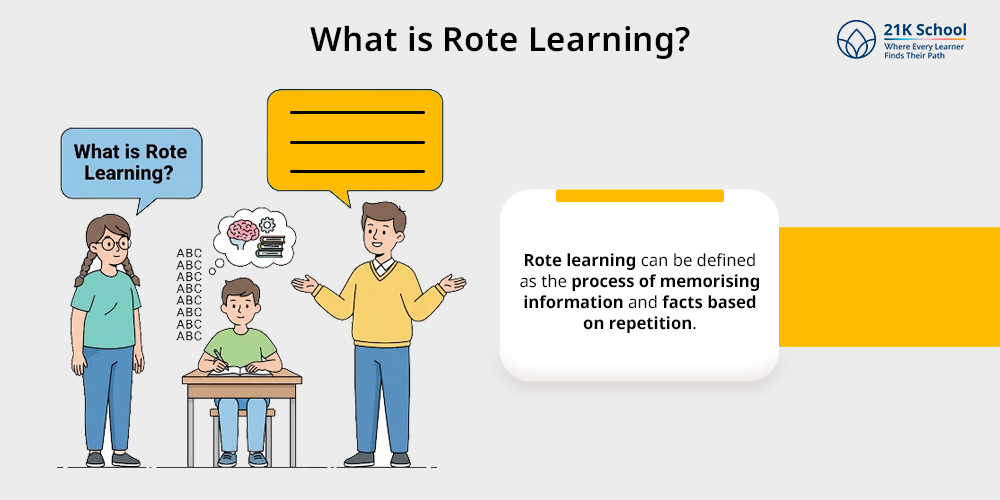
In the lexicon of cognitive science and pedagogy, “rote” has long been a term associated with the mechanical repetition of information—the process of memorizing data without necessarily understanding its underlying structure or context. However, as we navigate the complexities of the 21st-century technological landscape, the concept of “rote” has undergone a profound transformation. In the world of technology, software engineering, and artificial intelligence, rote is no longer just a method of human learning; it is a fundamental architectural challenge and a catalyst for the next generation of automation.
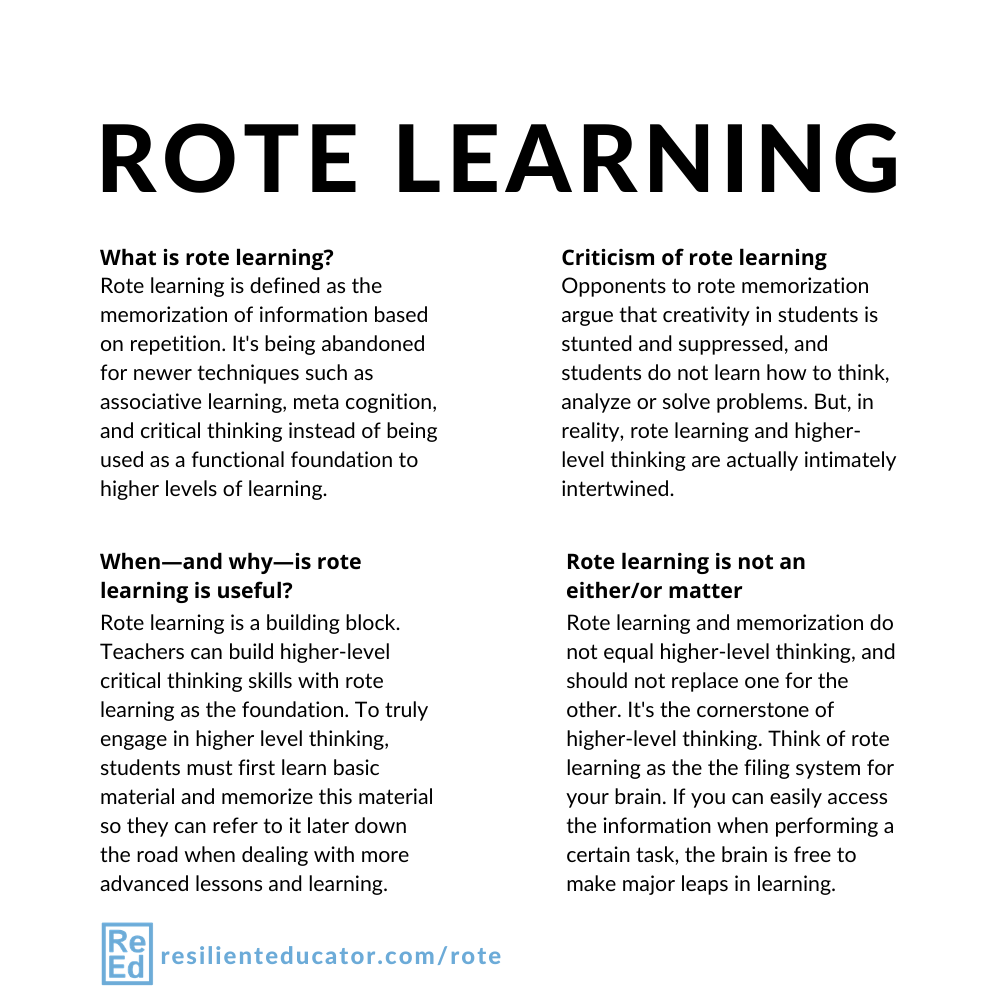
To understand what rote is in a modern tech context, we must look beyond the classroom. We must examine how machines handle repetitive tasks, how algorithms “overfit” by memorizing rather than generalizing, and how the tech industry is systematically working to eliminate “rote toil” through increasingly sophisticated software solutions.
The Technical Foundations of Rote Learning in Artificial Intelligence
At its most basic level, rote learning in technology refers to the simplest form of machine learning. It involves a system storing input data and its corresponding output, then retrieving that exact output when presented with the same input again. While this sounds efficient, it represents the floor of computational intelligence.
Defining Rote Learning in Machine Learning
In the field of Artificial Intelligence (AI), rote learning is synonymous with a “lookup table” approach. When a model is trained, it observes patterns. A “rote” model does not actually learn a pattern; it saves the specific data point. If the model is asked to process a piece of information it has seen before, it performs perfectly. However, the moment it encounters a slight variation, it fails. This is because the system lacks “generalization”—the ability to apply learned logic to novel scenarios. In the evolution of AI, moving past rote mechanisms was the primary hurdle that led us from simple calculators to the neural networks we use today.
The Problem of Overfitting: When Machines Memorize Instead of Learn
In modern data science, “rote” behavior manifests as a common pitfall known as overfitting. Overfitting occurs when a statistical model or machine learning algorithm captures the “noise” of the data rather than the intended signal. Effectively, the machine becomes too “rote.” It memorizes the training data so precisely that it cannot function in the real world. This is a critical concern for tech leads and AI researchers. To combat this rote tendency, engineers use techniques like “dropout” or “regularization,” which essentially force the machine to forget specific details so it is forced to understand the broader logic.
Lookup Tables and Memoization in Software Development
While rote behavior is often viewed as a limitation in AI, it is a powerful tool in software optimization. This is best seen in “memoization.” In programming, memoization is an optimization technique used primarily to speed up computer programs by storing the results of expensive function calls and returning the cached result when the same inputs occur again. This is “rote” in its most productive form. By allowing a computer to “memorize” a complex calculation, developers can significantly reduce CPU load and latency. In this niche, being rote is not a lack of intelligence; it is a strategic use of memory to preserve processing power.
Beyond Repetition: Transitioning from Rote Automation to Cognitive AI
For decades, the goal of enterprise technology was to automate rote tasks—those repetitive, high-volume actions that consume human time without requiring human creativity. This evolution has moved through several distinct phases, each bringing us closer to a world where “rote” is the domain of the machine and “insight” is the domain of the human.
Robotic Process Automation (RPA) as Modern Rote Work
Robotic Process Automation (RPA) is the current gold standard for handling rote digital tasks. RPA “bots” are designed to mimic human interactions with software—moving files, filling out forms, or extracting data from invoices. These systems are inherently rote; they follow a strict script. If a button on a website moves three pixels to the left, a traditional RPA script might break. Despite its limitations, RPA has revolutionized industries like logistics and fintech by offloading the “rote” burden from human workers, allowing for a digital-first approach to traditional workflows.
The Shift to Intelligent Process Automation (IPA)
We are currently witnessing a shift from Rote Automation to Intelligent Process Automation (IPA). While RPA handles the “doing,” IPA incorporates AI to handle the “thinking.” By integrating natural language processing and computer vision, technology can now handle rote tasks that involve unstructured data. For example, instead of just copying data from a fixed spreadsheet (RPA), an IPA system can read an inconsistently formatted email, understand the intent, and then execute the necessary response. This transition represents the tech industry’s attempt to solve the “rote” problem by giving machines the context they previously lacked.
Large Language Models (LLMs) and the End of Rote Content Generation
The emergence of Large Language Models, such as GPT-4, marks a turning point in how we define rote output. In the past, generating a standard report or a basic piece of code was considered a rote task. Today, generative AI can synthesize vast amounts of information to produce these outputs in seconds. However, there is a technical debate regarding whether LLMs are truly “thinking” or if they are performing a high-level version of “stochastic rote”—predicting the next word based on a massive database of memorized patterns. Regardless of the philosophical distinction, the practical impact is the democratization of high-level output, effectively automating what was once considered “knowledge work.”

The Role of Rote in Software Engineering and DevOps
In the world of software engineering, “rote” is often discussed through the lens of “toil.” Toil is the kind of work tied to running a production service that tends to be manual, repetitive, and automatable. For Site Reliability Engineers (SREs), the elimination of rote toil is a primary metric of success.
Automating Rote Infrastructure Tasks
Modern infrastructure-as-code (IaC) tools like Terraform and Ansible were born from the need to eliminate rote configuration. Historically, setting up a server involved a technician manually typing commands into a terminal—a rote process prone to human error. By codifying these steps, technology ensures that environments are reproducible. The “rote” nature of the setup is handled by the code, ensuring that every server instance is a perfect, error-free replica of the last.
CI/CD Pipelines: Systematizing Repetition for Reliability
Continuous Integration and Continuous Deployment (CI/CD) pipelines are the ultimate manifestation of rote efficiency in the tech world. A pipeline takes the rote tasks of testing, building, and deploying software and automates them. This ensures that every piece of code goes through the exact same rigorous checks. By leaning into the rote capabilities of a computer—its ability to do the same thing a million times without getting bored or distracted—software teams can release updates faster and with higher confidence.
Eliminating “Toil” in Site Reliability Engineering (SRE)
Google’s SRE handbook famously defines toil as the enemy of engineering. Toil is rote work that doesn’t provide long-term value. If an engineer has to manually reset a database every morning, that is rote toil. The goal of a high-functioning tech organization is to write a script that resets the database automatically. In this sense, the “tech” solution to rote is to turn a repetitive human action into a permanent piece of autonomous software.
Digital Security and the Rote Nature of Cyber Threats
Cybersecurity is an ongoing battle between rote, automated attacks and adaptive, intelligent defenses. Understanding the rote nature of certain threats is key to building resilient digital perimeters.
Brute Force Attacks: The Rote Logic of Hacking
A brute force attack is the most literal example of rote methodology in cybercrime. It involves an automated script trying every possible combination of characters to crack a password. There is no nuance or “hacking” skill involved; it is purely mechanical repetition. Tech professionals counter this with rote defenses, such as account lockouts and rate-limiting, which are programmed to recognize and stop the mechanical rhythm of a brute-force attempt.
Pattern Recognition vs. Heuristic Analysis
Legacy antivirus software operated on a rote principle: it looked for a “signature” (a specific string of code) that matched a known virus. If the virus changed just one line of code, the rote scanner would miss it. Modern cybersecurity has moved toward heuristic and behavioral analysis. Instead of looking for a memorized signature, these tools look for suspicious behavior. This mirrors the shift in AI from rote memorization to contextual understanding, allowing security tools to detect “zero-day” threats that have never been seen before.
The Future of Human-Tech Interaction: Escaping the Rote Loop
As technology continues to absorb rote functions, the relationship between humans and their tools is changing. The value of a tech professional is increasingly measured not by what they can “do” (as many rote actions are now automated), but by how they can “orchestrate.”
Upskilling in an Era of High-Level Automation
For those in the tech industry, the automation of rote tasks necessitates a shift in skill sets. As compilers get smarter and AI writes more boilerplate code, the “rote” skill of syntax memorization becomes less valuable. Instead, architectural thinking, system design, and ethical oversight become the new premiums. The tech industry is moving toward a “Low-Code/No-Code” future for rote applications, requiring humans to step up into more strategic, creative roles.
Creative Problem Solving vs. Algorithmic Rote
Ultimately, the distinction between what is rote and what is creative remains the dividing line between current technology and true Artificial General Intelligence (AGI). Computers excel at rote tasks—they can process billions of data points without fatigue. Humans excel at divergent thinking—making connections between seemingly unrelated concepts. The most successful technology trends are those that leverage this synergy: using the machine’s rote power to handle the data, freeing the human mind to provide the innovation.
In conclusion, “rote” in the tech world is both a legacy to be overcome and a tool to be harnessed. Whether it is the memoization that speeds up an app, the RPA that processes an invoice, or the CI/CD pipeline that ensures software quality, the mechanization of the repetitive is the engine of progress. By understanding the rote nature of basic computation and the drive toward cognitive automation, we can better navigate the evolving digital landscape and focus on the truly unique contributions that only human intelligence can provide.
aViewFromTheCave is a participant in the Amazon Services LLC Associates Program, an affiliate advertising program designed to provide a means for sites to earn advertising fees by advertising and linking to Amazon.com. Amazon, the Amazon logo, AmazonSupply, and the AmazonSupply logo are trademarks of Amazon.com, Inc. or its affiliates. As an Amazon Associate we earn affiliate commissions from qualifying purchases.