
At its surface, Rock Paper Scissors (RPS) is a simple hand game used by children to settle playground disputes or by adults to decide who pays for the next round of coffee. However, within the realms of computer science, game theory, and artificial intelligence, RPS is far from a triviality. It is a profound model of non-transitive competition, a cornerstone of algorithmic strategy, and a primary testing ground for predictive machine learning.
To understand what Rock Paper Scissors is in a technical context, one must look past the physical gestures and analyze it as a zero-sum, simultaneous-move game with no dominant strategy. In the modern tech landscape, RPS serves as a fundamental framework for developing everything from blockchain security protocols to multi-agent autonomous systems.

The Algorithmic Foundation: Game Theory and Zero-Sum Logic
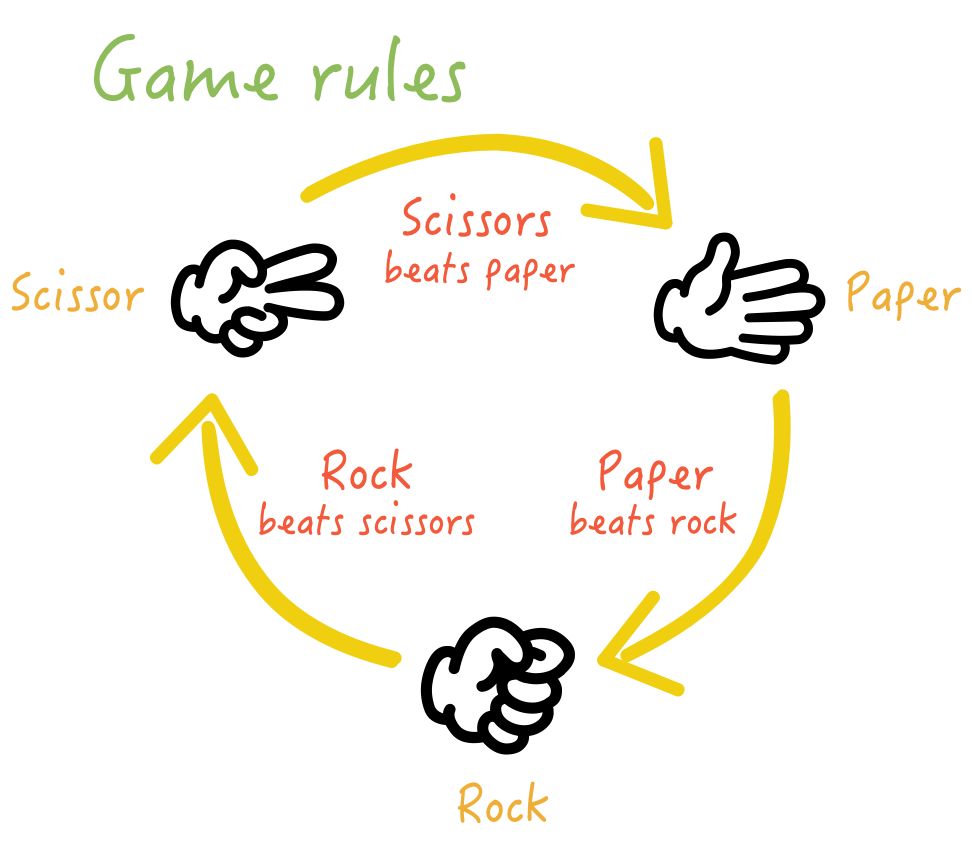
In the language of mathematics and software architecture, Rock Paper Scissors is a “non-transitive” game. In a transitive relationship, if A is better than B, and B is better than C, then A must be better than C. RPS breaks this logic: Rock beats Scissors, and Scissors beats Paper, but Rock does not beat Paper. This circularity is what makes the game a subject of intense study in computational logic.
Nash Equilibrium in Rock Paper Scissors
In game theory, the Nash Equilibrium represents a state where no player can increase their expected payoff by unilaterally changing their strategy. For RPS, the Nash Equilibrium is a “Mixed Strategy” where each player chooses Rock, Paper, or Scissors with exactly 1/3 probability.
From a technical standpoint, implementing a true Nash Equilibrium requires a high-quality Random Number Generator (RNG). If a computer program can achieve perfect randomness, it becomes mathematically unexploitable. However, humans are notoriously bad at being random. This “human noise” is where advanced algorithms find their edge, transforming a game of luck into a game of data mining.
The Zero-Sum Constraint
RPS is a strictly zero-sum game, meaning one player’s gain is exactly equal to the other player’s loss. In software engineering, this model is used to simulate resource allocation and competitive environment dynamics. When developers build AI to compete in zero-sum environments, they use RPS as a baseline to ensure the agent can handle circular dependencies without falling into infinite loops or “stalling” out when no clear superior option exists.
Machine Learning and Predictive Analytics: Breaking the Human Pattern
If the optimal strategy is pure randomness, why do AI systems consistently defeat human players in RPS tournaments? The answer lies in predictive analytics and pattern recognition. While humans believe they are playing randomly, they are actually governed by psychological heuristics that algorithms can identify and exploit.
Pattern Recognition and Markov Chains
One of the most common tech implementations used to “solve” human behavior in RPS is the Markov Chain. A Markov Chain is a stochastic model describing a sequence of possible events in which the probability of each event depends only on the state attained in the previous event.
In an RPS AI, the system tracks the history of the human player. For example, if a human loses with Rock, they are statistically more likely to switch to Paper or Scissors in the next round rather than repeating the losing move. An AI utilizing a second or third-order Markov Chain can analyze these sequences (e.g., “Player played Rock-Rock-Paper”) to predict the next move with a high degree of accuracy. By processing thousands of rounds, the AI builds a transition matrix that maps human psychology into a predictable data set.
Deep Learning and Psychological Profiling
Beyond simple Markov Chains, modern AI researchers use Deep Neural Networks to play RPS. These models don’t just look at the last move; they look at “meta-strategies.” Humans often fall into “win-stay, lose-shift” patterns.
- Win-Stay: If a player wins with Rock, they are likely to play it again.
- Lose-Shift: If a player loses with Rock, they are likely to move to the gesture that would have beaten their opponent’s last move.
Advanced AI agents use Reinforcement Learning (RL) to adapt their weights in real-time. If the agent notices the human is adapting to its strategy, the RL agent shifts its own policy to stay one step ahead. This makes RPS a perfect microcosm for studying “adversarial co-evolution” in AI development.
Rock Paper Scissors in the Age of Blockchain and Web3

The transition of RPS into the digital world brought about a significant technical challenge: the “Commit-Reveal” problem. In a physical game, players show their hands simultaneously. In a networked environment, latency makes this impossible. If User A sends their move to a server first, a malicious User B (or the server itself) could sniff the packet and counter it.
Solving the “Commit-Reveal” Problem
To facilitate a fair game of RPS on a blockchain, developers utilize a cryptographic technique known as the Commit-Reveal Scheme. This process involves two phases:
- The Commitment Phase: Player A chooses their move (e.g., Rock) and hashes it with a secret “salt” (a random string of data). They send only the hash to the smart contract. Because hashes are one-way functions, the move is hidden.
- The Reveal Phase: Once both players have submitted their hashes, they reveal their moves and their secret salts. The smart contract verifies that the move plus the salt matches the original hash.
This technical framework is the foundation for secure voting systems, decentralized auctions, and any digital interaction where simultaneous, private input is required.
Verifiable Random Function (VRF) Integration
For a computer to play RPS fairly against a human on a decentralized network, it must prove its move wasn’t generated after seeing the player’s input. Developers use Verifiable Random Functions (VRFs). A VRF provides a proof that a random number was generated fairly and wasn’t tampered with. In the context of “What is Rock Paper Scissors?” in tech, it is a gateway to understanding how we establish trust in trustless environments.
Cybersecurity and Cryptographic Parallels
The logic of Rock Paper Scissors is deeply embedded in cybersecurity strategies, particularly in the concept of “Intransitive Defense.” In many security architectures, there is no single “best” tool, just as there is no best move in RPS.
The Principle of Intransitivity in Security
In cybersecurity, we often see a “Paper-Scissors-Rock” relationship between different protocols:
- Encryption (Rock) protects data from Interception (Scissors).
- Quantum Computing (Scissors) can potentially break Classical Encryption (Rock).
- Quantum Key Distribution (Paper) can render Quantum Attacks (Scissors) ineffective.
Understanding the circular nature of RPS helps security architects realize that a linear “fortress” approach is often less effective than a dynamic, circular defense strategy where different layers protect against different specific threats.
Defense-in-Depth Strategies
RPS teaches us that for every “move” an attacker makes, there is a counter-move, but that counter-move might leave a different flank exposed. This is why modern tech stacks use “Defense in Depth.” If an attacker uses a “Paper” strategy (e.g., a phishing attack), the defense must be “Scissors” (e.g., Multi-Factor Authentication). If the attacker then switches to “Rock” (e.g., a brute-force attack), the defense must adapt. The ability of a system to detect these shifts and rotate its “hand” is what defines a resilient digital infrastructure.
The Future of Evolutionary Algorithms and Multi-Agent Systems
Finally, RPS is used in the study of Evolutionary Computing. In these simulations, different algorithms (agents) compete for survival in a virtual ecosystem.
Multi-Agent Systems (MAS)
In a Multi-Agent System, thousands of “bots” may play RPS against each other. Tech researchers observe how “clusters” of strategies emerge. Interestingly, these simulations often mirror biological phenomena. For instance, in certain species of lizards, three different mating strategies exist that function exactly like Rock Paper Scissors. By coding these behaviors into software, developers can create more realistic simulations of market fluctuations, traffic flow, and even the spread of viruses.
Biological Computing Models
The future of RPS in tech may lie in DNA computing and synthetic biology. Researchers have created “molecular” versions of RPS where different chemical strains inhibit one another in a circular loop. This allows for the creation of “living computers” that can solve complex logic problems by observing which “hand” survives in a chemical solution.
Conclusion: More Than a Game
So, what is Rock Paper Scissors? To the casual observer, it is a pastime. To the technologist, it is a masterclass in Game Theory, a playground for Machine Learning, a challenge for Blockchain Security, and a model for Evolutionary Logic.
As we move toward a world dominated by autonomous agents and complex algorithmic interactions, the simple lessons of RPS—the importance of randomness, the power of pattern recognition, and the necessity of circular balance—remain more relevant than ever. Whether we are securing a network or training a neural network, we are often, in some form, playing a high-stakes game of Rock, Paper, Scissors.
aViewFromTheCave is a participant in the Amazon Services LLC Associates Program, an affiliate advertising program designed to provide a means for sites to earn advertising fees by advertising and linking to Amazon.com. Amazon, the Amazon logo, AmazonSupply, and the AmazonSupply logo are trademarks of Amazon.com, Inc. or its affiliates. As an Amazon Associate we earn affiliate commissions from qualifying purchases.