
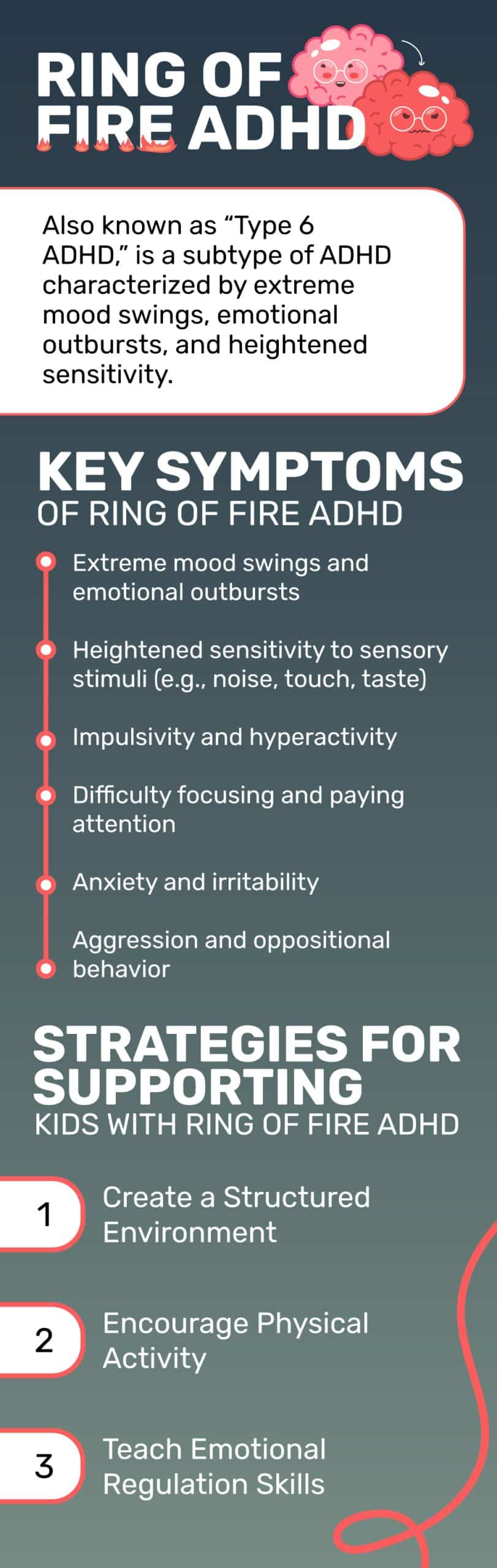
The landscape of neurodevelopmental diagnostics is undergoing a radical transformation. While traditional ADHD diagnosis has long relied on behavioral observations and subjective checklists, a new frontier in health technology is emerging. Central to this evolution is the identification of specific neuro-biological subtypes, most notably the “Ring of Fire” ADHD. This term, popularized by clinical neuroscientists using advanced imaging, describes a brain that isn’t just underactive—as seen in classic ADHD—but is instead hyper-stimulated across multiple regions. Understanding this condition requires a deep dive into the technology of the mind: SPECT scans, Quantitative EEG (QEEG), and the burgeoning role of Artificial Intelligence in precision psychiatry.
The Evolution of ADHD Diagnostics: From Observation to Neuro-Imaging
For decades, the standard for diagnosing Attention Deficit Hyperactivity Disorder was the DSM-5 (Diagnostic and Statistical Manual of Mental Disorders). While effective for broad categorization, it lacks the technical granularity required to understand the diverse neural architectures of the human brain. The shift toward a “Tech-First” approach in neurology has led to the discovery that ADHD is not a monolithic condition.
The Specter of Brain Mapping: Understanding SPECT Scans
Single-Photon Emission Computed Tomography (SPECT) represents a pivotal shift in how we view the brain. Unlike an MRI, which provides a static structural image, SPECT is a nuclear imaging test that shows how blood flows through the brain. In the context of Ring of Fire ADHD, this technology revealed a startling pattern: instead of the low activity typically seen in the prefrontal cortex of ADHD patients, these individuals showed a “ring” of high activity (hyper-perfusion) surrounding the entire brain. This high-tech visualization allows clinicians to move beyond “guessing” based on behavior and instead analyze the raw data of cerebral blood flow.
How Quantitative EEG (QEEG) is Changing the Diagnosis Game
Quantitative Electroencephalography, or QEEG, often referred to as “brain mapping,” is another critical tool in the tech arsenal. It processes standard EEG data through sophisticated software to create a visual map of electrical activity. For those with the Ring of Fire phenotype, QEEG data often reveals an excess of fast-wave activity (High Beta waves). The technology converts raw electrical signals into Z-scores, comparing an individual’s brain waves to a massive database of “neurotypical” samples. This data-driven approach allows for a level of diagnostic precision that was previously impossible, identifying the exact neural frequencies that contribute to emotional dysregulation and sensory overload.
Defining the “Ring of Fire” Through a Technological Lens
To understand the Ring of Fire ADHD, one must view the brain as a complex processing unit. In computing terms, classic ADHD is often characterized by “low clock speeds” in the executive centers. However, the Ring of Fire subtype is more akin to a system where the cooling fans have failed, and every processor is running at 100% capacity simultaneously. This leads to system-wide crashes and “lag” in processing emotional data.
Hyperactivity vs. Hyper-connectivity: The Computational Model of the Brain
Using computational neuroscience, researchers have begun to model the Ring of Fire brain as one suffering from “hyper-connectivity” in the limbic system and the parietal lobes. In tech terms, the “bandwidth” of the brain is being consumed by excessive internal noise. While a standard ADHD brain struggles to “boot up” focus, the Ring of Fire brain is overwhelmed by background processes. Technology allows us to see that this isn’t a lack of will, but a throughput issue where the brain’s “server” is being D-DoS attacked by its own overactive neurons.
The Role of Neural Circuitry in Sensory Overload
One of the hallmarks of the Ring of Fire subtype is extreme sensitivity to light, sound, and touch. Through the use of Functional MRI (fMRI) technology, we can see that the sensory gating mechanisms in these individuals are functionally different. The “tech stack” of the brain’s filtering system is essentially bypassed, leading to a state of constant high-alert. By mapping these specific neural circuits, developers are now creating specialized noise-canceling technologies and light-filtering software designed specifically for the neurodivergent “user interface.”
AI and Machine Learning in Personalized ADHD Management
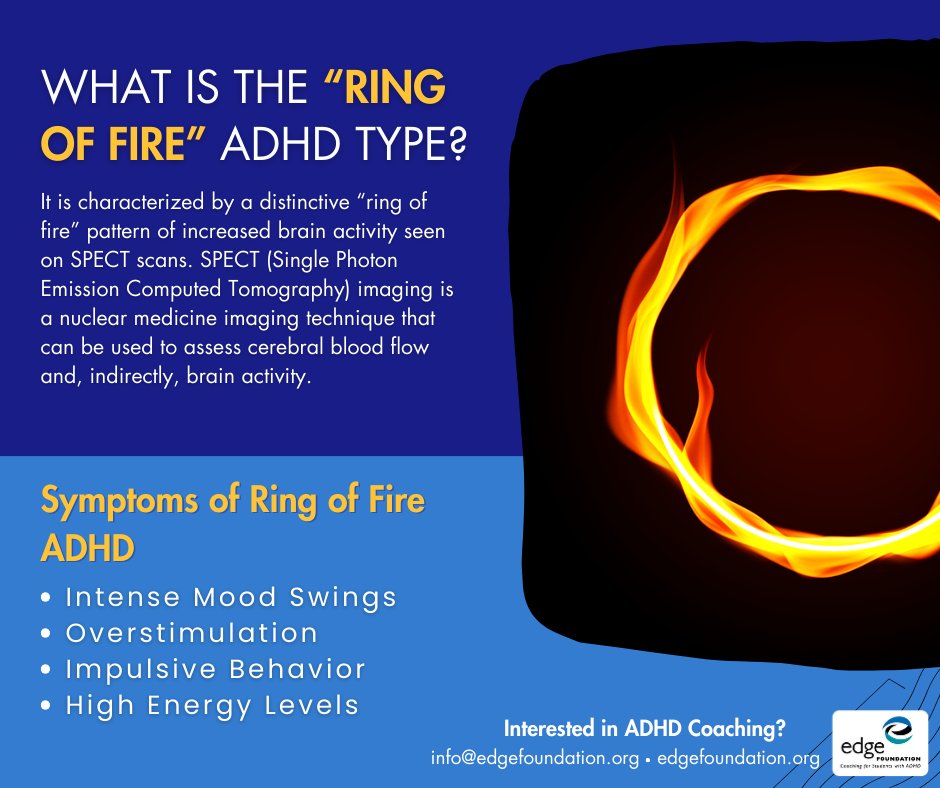
As we gather more data from SPECT and QEEG scans, the role of Artificial Intelligence (AI) becomes paramount. We are moving away from “one-size-fits-all” treatments toward algorithmic, data-backed interventions.
Algorithmic Diagnosis: Can AI Spot the Ring of Fire Pattern?
Machine learning algorithms are now being trained on thousands of brain scans to identify the subtle markers of Ring of Fire ADHD. By inputting demographic data, genetic markers, and QEEG results into a neural network, AI can predict with increasing accuracy which subtype a patient possesses. This “Predictive Tech” reduces the trial-and-error period for treatment, which is often a multi-year struggle for patients. These algorithms can identify patterns that are invisible to the human eye, such as specific ratios of theta-to-beta waves that correlate specifically with the Ring of Fire’s emotional volatility.
Predictive Analytics for Pharmacological and Digital Therapeutics
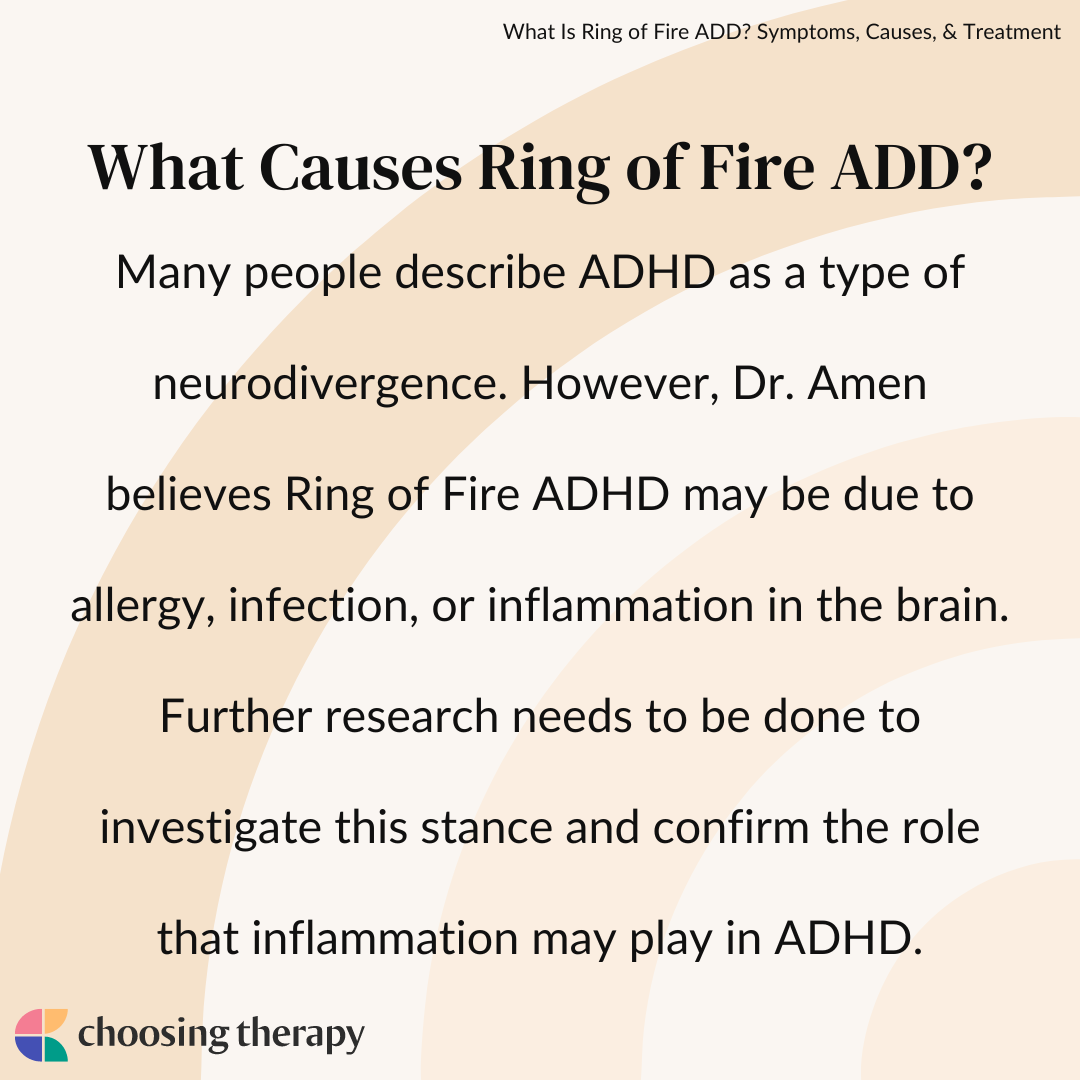
The technology doesn’t stop at diagnosis. AI-driven platforms are being developed to predict how a Ring of Fire brain will respond to various stimulants or supplements. For this specific subtype, traditional stimulants (which increase brain activity) can often act like “pouring gasoline on a fire.” Predictive analytics help clinicians choose calming agents or anticonvulsants instead. Furthermore, “Digital Therapeutics” (DTx)—FDA-cleared software that treats conditions—are being tailored to provide cognitive exercises that “cool down” the overactive regions identified by AI mapping.
Digital Health Tools and Wearables for the Ring of Fire Phenotype
The consumer tech market has seen an explosion in “neuro-wearables” that allow individuals to monitor their brain states in real-time. For those with Ring of Fire ADHD, these gadgets provide a much-needed “external dashboard” for their internal state.
Neurofeedback Gadgets: Training the Brain in Real-Time
Consumer-grade EEG headbands and neurofeedback devices are becoming essential tools for managing the Ring of Fire. These devices use Bluetooth to connect to a smartphone app, providing real-time biofeedback on stress levels and brainwave activity. Through “gamified” neurofeedback, users can learn to consciously lower their High-Beta wave production. This is essentially “user-end optimization” for the brain, using hardware to teach the biological software how to regulate itself.
Smart Apps and Cognitive Load Management Systems
For the Ring of Fire individual, productivity isn’t about doing more; it’s about managing “Cognitive Load.” New apps are emerging that use AI to schedule tasks based on the user’s predicted mental energy levels. By integrating with wearable data (like Heart Rate Variability or sleep quality), these apps can “throttle” notifications and simplify task lists when the user’s data suggests they are approaching a state of hyper-arousal or “system overload.” This is the ultimate synergy between personal tech and neuro-management.
The Future of Neuro-Tech and Emotional Regulation
As we look toward the next decade, the integration of technology and neurodivergence will only deepen. The goal is a seamless “Neuro-Ecosystem” where the environment responds to the brain’s needs.
Beyond the Pill: Integrated Tech Ecosystems for Neurodivergence
We are moving toward “Smart Environments.” Imagine a home or office that detects a Ring of Fire individual’s rising stress levels via a smartwatch and automatically dims the smart lighting, lowers the temperature, and plays calming ambient frequencies. This isn’t science fiction; it is the logical conclusion of the Internet of Things (IoT) meeting neurotechnology. By adjusting the external environment through tech, we can mitigate the internal “fire” that characterizes this ADHD subtype.
Conclusion: The Data-Driven Path Forward
The discovery and categorization of Ring of Fire ADHD is a triumph of modern medical technology. By moving away from subjective observation and toward hard data—SPECT scans, QEEG, AI modeling, and wearable biometrics—we are finally providing individuals with the “owner’s manual” for their specific brain type. In the world of high-tech neurology, a diagnosis is no longer a label; it is a data set that empowers personalized, effective, and transformative interventions. As technology continues to evolve, our ability to map, manage, and master the “Ring of Fire” will only become more precise, turning a challenging neuro-biological pattern into a manageable, and perhaps even advantageous, way of being.
aViewFromTheCave is a participant in the Amazon Services LLC Associates Program, an affiliate advertising program designed to provide a means for sites to earn advertising fees by advertising and linking to Amazon.com. Amazon, the Amazon logo, AmazonSupply, and the AmazonSupply logo are trademarks of Amazon.com, Inc. or its affiliates. As an Amazon Associate we earn affiliate commissions from qualifying purchases.