
Revolving debt is a cornerstone of modern finance, a ubiquitous yet often misunderstood financial instrument that touches nearly every individual and business. Unlike traditional installment loans, which feature a fixed payment schedule and a defined end date, revolving debt offers a flexible credit line that can be used, repaid, and reused repeatedly. This unique characteristic makes it an incredibly powerful tool for managing finances, providing immediate liquidity, and building credit, but it also carries inherent risks if not managed with discipline and understanding. From the average consumer’s credit card to a company’s line of credit, comprehending the mechanics, benefits, and pitfalls of revolving debt is crucial for financial well-being and strategic growth.
Understanding the Mechanics of Revolving Debt
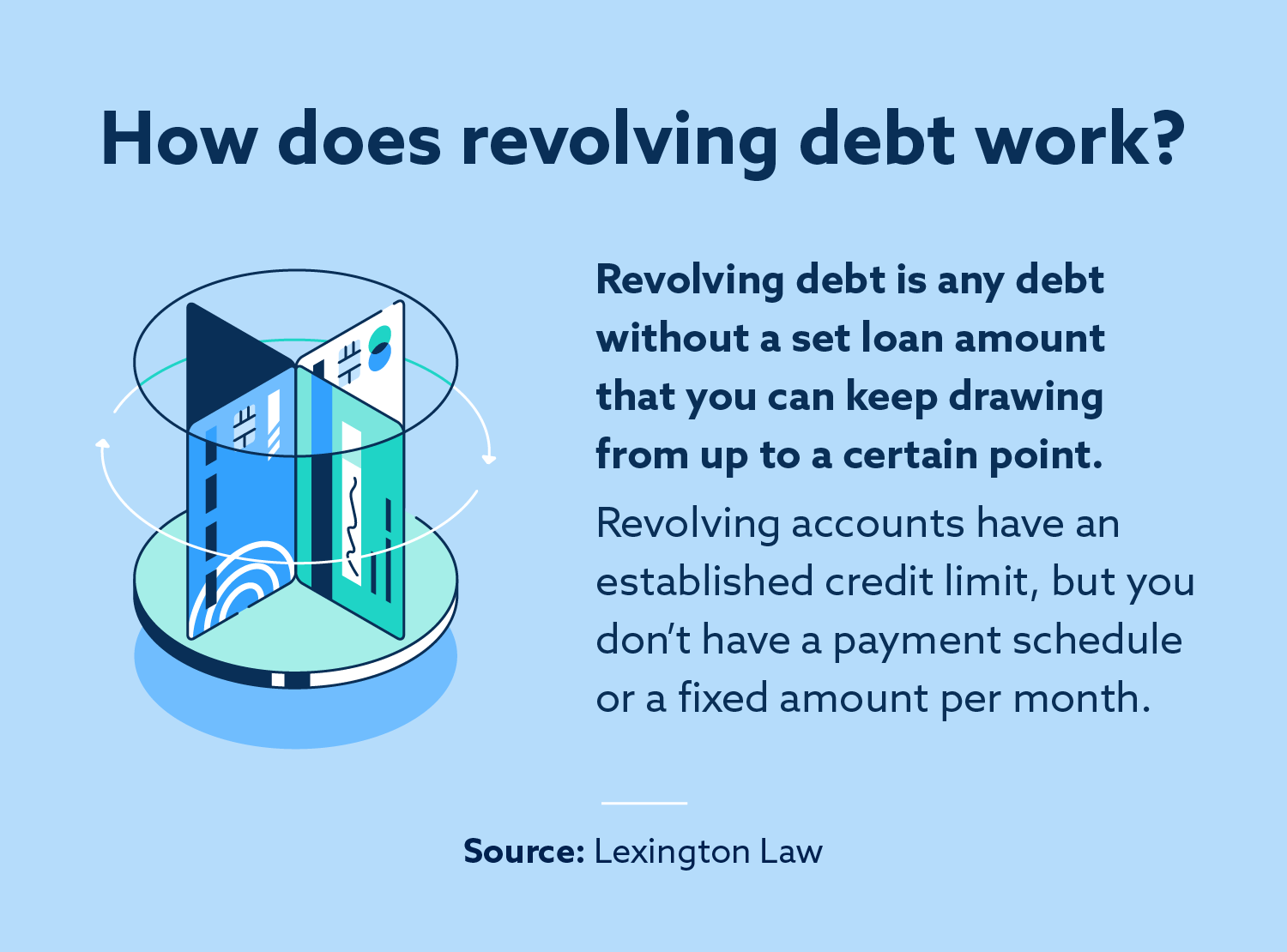
At its core, revolving debt operates on a simple, cyclical principle: you are granted a credit limit, you can borrow up to that limit, you make payments, and as you repay, your available credit replenishes. This continuous cycle distinguishes it sharply from other forms of borrowing.
How It Works: Credit Limits and Minimum Payments
When you open a revolving credit account, the lender assigns you a credit limit – the maximum amount you’re allowed to borrow. Your available credit is this limit minus your current outstanding balance. For instance, if you have a $10,000 credit limit and an outstanding balance of $3,000, you have $7,000 in available credit that you can access.
Each billing cycle, you receive a statement detailing your purchases, interest charges, fees, and the minimum payment due. This minimum payment is a critical component and often the most seductive trap of revolving debt. It typically comprises the accrued interest plus a very small percentage (often 1-3%) of the outstanding principal balance. While making the minimum payment keeps your account in good standing, it significantly prolongs the repayment period and maximizes the total interest you’ll pay over the life of the debt, sometimes leading to interest payments that far exceed the original principal borrowed.
The Cost of Flexibility: Interest Rates and Fees
The convenience and flexibility of revolving debt come at a price, primarily through interest rates and various fees. The Annual Percentage Rate (APR) is the yearly rate of interest charged on your outstanding balance. APRs on revolving accounts, particularly credit cards, tend to be significantly higher than those on installment loans (like mortgages or car loans) due to their unsecured nature and the flexibility they offer. APRs can be fixed or variable, with variable rates often tied to a benchmark index like the prime rate, meaning they can fluctuate.
Beyond interest, a host of fees can add to the cost of revolving debt:
-
Annual fees: A yearly charge for holding the account.
-
Late payment fees: Incurred if you miss your payment due date.
-
Over-limit fees: Charged if your balance exceeds your credit limit.
-
Balance transfer fees: A percentage fee applied when moving debt from one account to another.
-
Cash advance fees: A fee (and often a higher interest rate) for withdrawing cash against your credit limit.
Understanding these costs is paramount for managing revolving debt effectively and preventing it from spiraling out of control.
The Revolving Nature: Borrow, Repay, Borrow Again
The defining characteristic of revolving debt is its “revolving” nature. Unlike a fixed-term loan where the principal balance steadily decreases to zero with each payment, revolving credit allows you to continuously borrow against your available credit limit as you repay your outstanding balance. This creates a perpetual line of credit. If you pay off your entire balance, your credit limit is fully restored, and you can start borrowing again. This constant availability makes it an ideal tool for ongoing expenses, unpredictable needs, or managing cash flow, but it also demands a high degree of financial discipline to avoid accumulating persistent, high-interest debt.
Common Examples of Revolving Debt
While the concept of revolving debt might seem abstract, its forms are deeply embedded in our daily financial lives, serving both personal and business needs.
Credit Cards: The Ubiquitous Form
Credit cards are by far the most common and recognizable form of revolving debt. They offer immediate purchasing power, convenience for online and in-store transactions, and often come with enticing rewards programs (cash back, travel points, etc.) and introductory 0% APR offers. For consumers, they are crucial for building a credit history, which is essential for securing future loans like mortgages or car financing. Businesses also extensively use credit cards to manage expenses, track employee spending, and earn rewards on operational purchases. However, their ease of use, coupled with high interest rates and minimum payment structures, makes them a frequent source of consumer debt woes when not managed responsibly.
Home Equity Lines of Credit (HELOCs)
A Home Equity Line of Credit (HELOC) allows homeowners to borrow against the equity they’ve built in their property. Unlike a home equity loan, which is an installment loan with a lump sum payout, a HELOC is a revolving credit line. During a “draw period” (typically 5-10 years), you can borrow funds as needed, up to a pre-approved limit, and make interest-only or interest-plus-small-principal payments. After the draw period, the loan typically converts to a repayment period, requiring full principal and interest payments. HELOCs often come with lower interest rates than credit cards because they are secured by your home, making them an attractive option for large expenses like home renovations, education costs, or debt consolidation. However, the significant risk here is that if you default, your home could be foreclosed upon.
Business Lines of Credit
For businesses, a line of credit is an invaluable revolving debt tool for managing operational cash flow, addressing seasonal fluctuations, or funding short-term needs like inventory purchases. Similar to a personal credit card or HELOC, a business line of credit provides access to funds up to a set limit, which can be drawn upon, repaid, and reused. These lines can be secured (backed by collateral like accounts receivable or inventory) or unsecured. They are crucial for maintaining liquidity, bridging gaps between payments and receivables, and seizing growth opportunities without having to seek new financing for every small need, offering immense flexibility to entrepreneurs and established companies alike.
The Benefits and Risks of Revolving Debt
Revolving debt, like any financial instrument, is a double-edged sword. Its utility depends entirely on how it’s wielded.
Advantages: Flexibility, Convenience, and Credit Building

The primary advantage of revolving debt is its unparalleled flexibility. It provides immediate access to funds for emergencies, unexpected expenses, or simply managing uneven income and outgoing payments. For businesses, it can be a lifesaver during lean months or for quickly capitalizing on opportunities. The sheer convenience of credit cards for transactions, both online and in physical stores, is undeniable, often surpassing the practicality of cash or debit.
Crucially, revolving debt, when managed responsibly, is a powerful tool for building and improving your credit history and score. By consistently making on-time payments and keeping your credit utilization low, you demonstrate financial responsibility, which is vital for securing more favorable terms on future loans (mortgages, car loans, business loans) and even for non-financial aspects like renting an apartment or obtaining insurance. Many revolving accounts also offer rewards and perks like cashback, travel points, purchase protection, and extended warranties, adding further value.
Disadvantages: The Debt Trap and High Costs
The very flexibility that makes revolving debt attractive also makes it prone to misuse and financial difficulty. The most significant disadvantage is the potential for falling into a debt trap. With high interest rates (especially on credit cards) and the temptation to only make minimum payments, debt can quickly escalate, becoming a persistent and growing burden that takes years, if not decades, to repay. The cumulative interest paid can far exceed the original amount borrowed, effectively making purchases much more expensive.
Minimum payments are designed to keep you indebted, ensuring the lender earns maximum interest over time. High outstanding balances can lead to a high credit utilization ratio (the amount of credit used compared to your total available credit), which negatively impacts your credit score. Missing payments or defaulting can severely damage your credit history, making future borrowing difficult and costly. Moreover, for secured revolving debt like HELOCs, the ultimate risk is losing your collateral – your home – if you fail to meet your obligations. The emotional and psychological stress associated with chronic, high-interest debt can also be profound, impacting mental health and overall quality of life.
Effective Strategies for Managing Revolving Debt
Responsible management is key to harnessing the benefits of revolving debt while mitigating its risks. A proactive approach involves discipline, strategic planning, and leveraging available financial tools.
Prudent Use: Setting Limits and Budgeting
The most fundamental strategy is prudent use. This means only charging what you can realistically afford to pay off, ideally in full, each month. Establishing a budget is essential to track your income and expenses, identify areas where you can cut back, and allocate funds specifically for debt repayment. Consider setting your own internal credit limits that are well below your official credit card limits to avoid overspending. Automating your minimum payments ensures you never miss a due date, avoiding late fees and negative marks on your credit report. For optimal financial health, aim to pay your full statement balance every month to avoid interest charges entirely.
Accelerating Repayment: Paying More Than the Minimum
If you carry a balance, paying more than the minimum payment is the single most effective way to reduce interest costs and pay off your debt faster. Even an extra $50 or $100 per month can significantly shorten the repayment period and save you hundreds or thousands in interest. Two popular strategies for accelerating repayment are:
-
Debt Avalanche: Prioritize paying down the debt with the highest interest rate first, while making minimum payments on all others. Once the highest-rate debt is paid off, roll that payment amount into the next highest interest rate debt. This strategy saves the most money on interest.
-
Debt Snowball: Prioritize paying down the smallest balance first, while making minimum payments on all others. Once the smallest debt is paid off, roll that payment amount into the next smallest debt. This strategy provides psychological wins and motivation.
Leveraging Financial Tools: Balance Transfers and Consolidation
For individuals struggling with high-interest credit card debt, specific financial tools can provide relief. Balance transfer credit cards often offer an introductory 0% APR for a limited period (e.g., 12-24 months). This allows you to transfer high-interest balances from other cards and pay them down without incurring new interest during the promotional period. Be mindful of balance transfer fees (typically 3-5% of the transferred amount) and ensure you can pay off a significant portion before the promotional rate expires.
Debt consolidation loans are another option. These are typically installment loans with a lower fixed interest rate, used to pay off multiple high-interest revolving debts. This simplifies repayment into a single, predictable monthly payment and often reduces the total interest paid. Finally, if debt feels overwhelming, consider seeking guidance from non-profit credit counseling services which can help you create a personalized debt management plan.
Monitoring Your Credit Health
Regularly monitoring your credit health is vital. Obtain your free credit reports annually from all three major bureaus (Equifax, Experian, TransUnion) and review them for errors. Understand your credit score and the factors that influence it, particularly your credit utilization ratio. Keeping this ratio below 30% (ideally below 10%) is crucial for a healthy credit score. Consistent monitoring allows you to proactively manage your debt and quickly identify any potential issues or fraudulent activity.
Revolving Debt in a Broader Financial Context
Revolving debt isn’t just about managing monthly bills; it plays a strategic role in both personal and business financial planning.
Its Role in Personal Financial Planning
For individuals, revolving debt can be a valuable component of a robust financial plan. It serves as an emergency preparedness tool, offering a safety net for unexpected expenses without depleting savings. When used strategically for large purchases, such as a new appliance, with a clear plan for quick repayment, it can offer flexibility. Most importantly, responsible use of revolving credit is fundamental for building a strong credit profile. A good credit score unlocks lower interest rates on mortgages, auto loans, and other significant financial commitments, saving thousands over a lifetime. It’s about demonstrating the capacity to manage credit effectively, which is a powerful asset in the financial world.
Impact on Business Operations and Growth
In the business world, revolving debt, particularly a business line of credit, is indispensable for managing operational cash flow. It helps businesses navigate seasonal fluctuations in sales, ensuring they have funds available for inventory purchases during peak seasons or to cover expenses during slower periods. It’s an efficient way to fund short-term projects or bridge gaps between invoicing clients and receiving payments. Unlike equity financing, which dilutes ownership, a line of credit allows businesses to access capital without giving up a share of the company. Responsible use of revolving debt is a hallmark of shrewd business management, enabling companies to maintain liquidity, seize opportunities, and sustain growth without falling prey to cash flow crises.

Conclusion
Revolving debt is a financial instrument defined by its continuous availability, allowing borrowers to access, repay, and reuse credit up to a set limit. While forms like credit cards, HELOCs, and business lines of credit offer unparalleled flexibility, convenience, and opportunities for credit building, they also present significant risks, primarily due to high interest rates and the potential for accumulating persistent debt. Effective management necessitates a disciplined approach: understanding the true costs, budgeting meticulously, consistently paying more than the minimum, and strategically leveraging tools like balance transfers or consolidation. Whether for personal financial planning or navigating complex business operations, revolving debt, when approached with knowledge and prudence, can be a powerful catalyst for financial stability and growth, rather than a debilitating burden.
aViewFromTheCave is a participant in the Amazon Services LLC Associates Program, an affiliate advertising program designed to provide a means for sites to earn advertising fees by advertising and linking to Amazon.com. Amazon, the Amazon logo, AmazonSupply, and the AmazonSupply logo are trademarks of Amazon.com, Inc. or its affiliates. As an Amazon Associate we earn affiliate commissions from qualifying purchases.