
In the landscape of modern business finance, the unpredictability of project-based work often presents a significant hurdle to long-term scaling. For freelancers, consultants, and agencies, the “feast or famine” cycle is a well-known risk where periods of high income are followed by dry spells that can threaten the viability of the enterprise. The retainer contract emerges as the most effective financial instrument to combat this volatility.
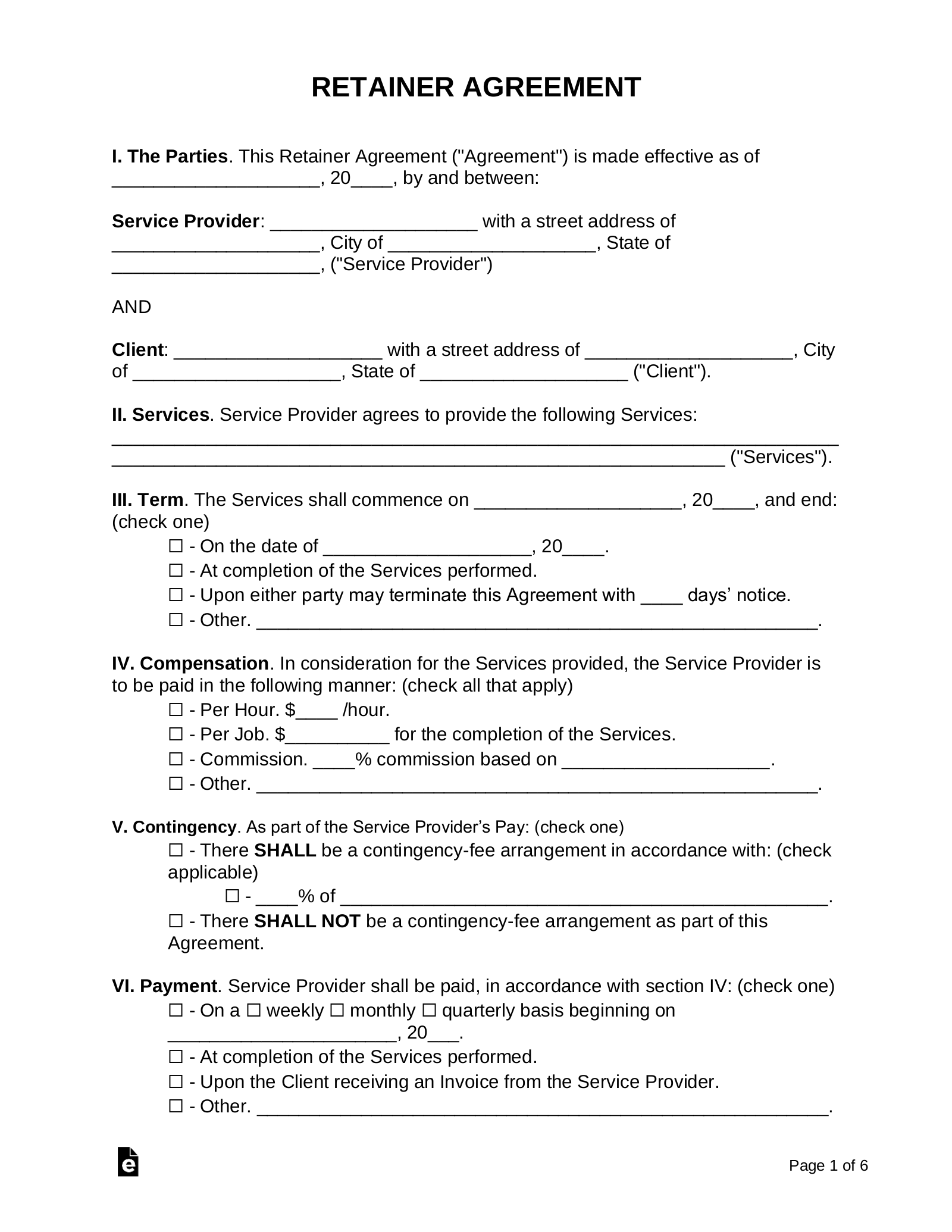
A retainer contract is a long-term work agreement between a service provider and a client that covers a set period and a specific set of services or a dedicated amount of time for a fixed, recurring fee. Unlike one-off projects, which require constant lead generation and sales effort, a retainer shifts the focus toward relationship management and sustainable financial growth. By securing a guaranteed monthly or quarterly income, businesses can move from reactive survival to proactive strategic investment.
Defining the Retainer Contract: The Bedrock of Modern Business Finance
At its core, a retainer contract is an advance payment for services to be rendered over a specific duration. This model is widely used in legal, accounting, marketing, and consulting sectors, but it is increasingly becoming the standard for any service-based business looking to stabilize its bottom line. To understand the financial mechanics, one must distinguish between the two primary types of retainers.
Pay-for-Work Retainers
This is the most common form of retainer for creative and technical services. In this model, the client pays a fixed monthly fee in exchange for a predetermined number of hours or a specific list of deliverables. For example, a digital marketing consultant might charge $3,000 per month to manage social media accounts and provide four blog posts. Financially, this allows the provider to calculate their “revenue per hour” with high precision and ensures that their capacity is booked in advance.
Pay-for-Access Retainers
Often utilized by high-level consultants and legal professionals, this model is less about specific tasks and more about availability. The client pays for the “right of access” to the provider’s expertise. In this scenario, the provider may not perform a specific task every month, but they are “on call” to provide strategic advice whenever the client requires it. From a financial perspective, this is highly lucrative as it decouples income from time spent, allowing for a higher profit margin based on value rather than labor.
The Hybrid Model
Many sophisticated businesses use a hybrid approach, where a base retainer covers a standard set of maintenance tasks, and any work exceeding the agreed scope is billed at a preferential “retainer rate.” This provides the service provider with a guaranteed floor for their income while maintaining the upside potential of additional project work.
The Strategic Advantage: Why Retainers are Essential for Financial Growth
The transition from project-based billing to a retainer-based model represents a fundamental shift in a business’s financial health. While project work is often focused on the immediate completion of a task, retainers are focused on the long-term health of the business and the client relationship.
Predictable Cash Flow and Financial Planning
The most immediate benefit of a retainer contract is the predictability of cash flow. In a project-based model, revenue is often tied to milestones or final deliveries, which can be delayed by client feedback, external market factors, or internal bottlenecks. A retainer provides a fixed date for income, allowing business owners to plan their overhead, hire staff, and invest in tools with confidence. This stability is often the prerequisite for securing business loans or lines of credit, as financial institutions favor recurring revenue models.
Lowering Customer Acquisition Costs (CAC)
Marketing and sales are expensive. Every hour spent pitching a new client is an hour not spent on billable work. Retainer contracts significantly lower the Customer Acquisition Cost by extending the Lifetime Value (LTV) of a single client. When a client moves from a $5,000 one-off project to a $2,000 monthly retainer, the revenue over 24 months increases from $5,000 to $48,000. The cost to “sell” that $48,000 was only incurred once, at the beginning of the relationship.
Enhanced Resource Management
For any service provider, “capacity” is their most valuable asset. Retainers allow a business to forecast their capacity months in advance. Knowing that 70% of the team’s time is already sold via retainers allows the management to decide when to hire new talent or when to stop accepting new work. This prevents the “burnout” phase where a business takes on too much work to compensate for previous slow periods.
The Client Perspective: Investing in Guaranteed Results
To successfully implement retainer contracts, it is essential to understand why they are financially beneficial for the client as well as the provider. A retainer should never be sold as “guaranteed money for the provider,” but rather as “guaranteed value for the client.”

Priority Access and Response Times
Clients value the peace of mind that comes with knowing they are a priority. In a retainer agreement, the service provider carves out a specific block of time for that client. If an emergency arises or a sudden opportunity appears, the client on retainer does not have to wait for a quote to be drafted or a contract to be signed—they are already at the top of the queue.
Budgetary Predictability
Just as a provider needs predictable income, a client needs predictable expenses. CFOs and department heads prefer fixed monthly costs over erratic invoices. A retainer allows a client to bake the service cost into their annual budget, reducing the administrative friction of approving individual invoices for every small task.
Deep Institutional Knowledge
Over time, a provider on retainer becomes an expert in the client’s business. This “onboarding” only happens once. By maintaining a long-term relationship, the client avoids the “learning curve” costs associated with hiring new vendors. The provider understands the brand voice, the internal politics, and the technical stack, leading to faster execution and higher-quality results.
Essential Clauses: Structuring a Retainer for Maximum Protection
A poorly structured retainer contract can lead to “scope creep,” where the client demands more work than the fee covers, effectively eroding the provider’s profit margin. To maintain financial health, several key clauses must be included in the agreement.
Scope of Work (SOW) and Exclusions
The contract must be explicit about what is included and, perhaps more importantly, what is not. If a retainer is for “consulting,” it should define how many meetings are included and what topics they cover. Without clear boundaries, the provider risks becoming a “catch-all” resource for the client, which quickly devalues the hourly rate.
The “Use It or Lose It” Policy
A common point of contention is what happens to unused hours or deliverables at the end of the month. Most professional retainers operate on a “use it or lose it” basis. This ensures the provider can manage their capacity. If hours were allowed to roll over indefinitely, a client could theoretically save up six months of hours and demand them all in a single week, paralyzing the provider’s operations.
Termination and Notice Periods
Financial stability is built on the notice period. A retainer should require 30, 60, or even 90 days’ notice for termination. This gives the provider a “financial runway” to find a replacement client before the revenue disappears. Without a notice period, a retainer is just a series of one-off projects that can end without warning.
Late Fees and Payment Terms
Since the primary goal of a retainer is cash flow, payment terms should be strict. Many retainers are billed “in advance” (at the start of the month) rather than “in arrears” (at the end). This ensures the business has the capital to perform the work before the costs are incurred.
Transitioning to a Retainer Model: How to Secure Ongoing Income
Moving a business from project-based billing to a retainer model requires a strategic approach. It is rarely as simple as just asking for a monthly fee; it requires demonstrating ongoing value.
Auditing Existing Projects for Recurring Needs
The first step is to look at past invoices and identify patterns. If a client has come back for three separate “small updates” over six months, they are a prime candidate for a maintenance retainer. Presenting the client with the data of their past spending can show them that a retainer would have been more cost-effective and efficient.
The “Bridge” Strategy
For new clients, it is often difficult to sell a retainer right away. The most effective strategy is the “Bridge.” Start with a defined, high-value project to prove competence and build trust. As the project nears completion, present a “Phase 2” or a “Succession Plan” in the form of a retainer. The argument is simple: “We have built this great engine together; now let’s make sure it continues to run at peak performance.”
Demonstrating Continuous ROI
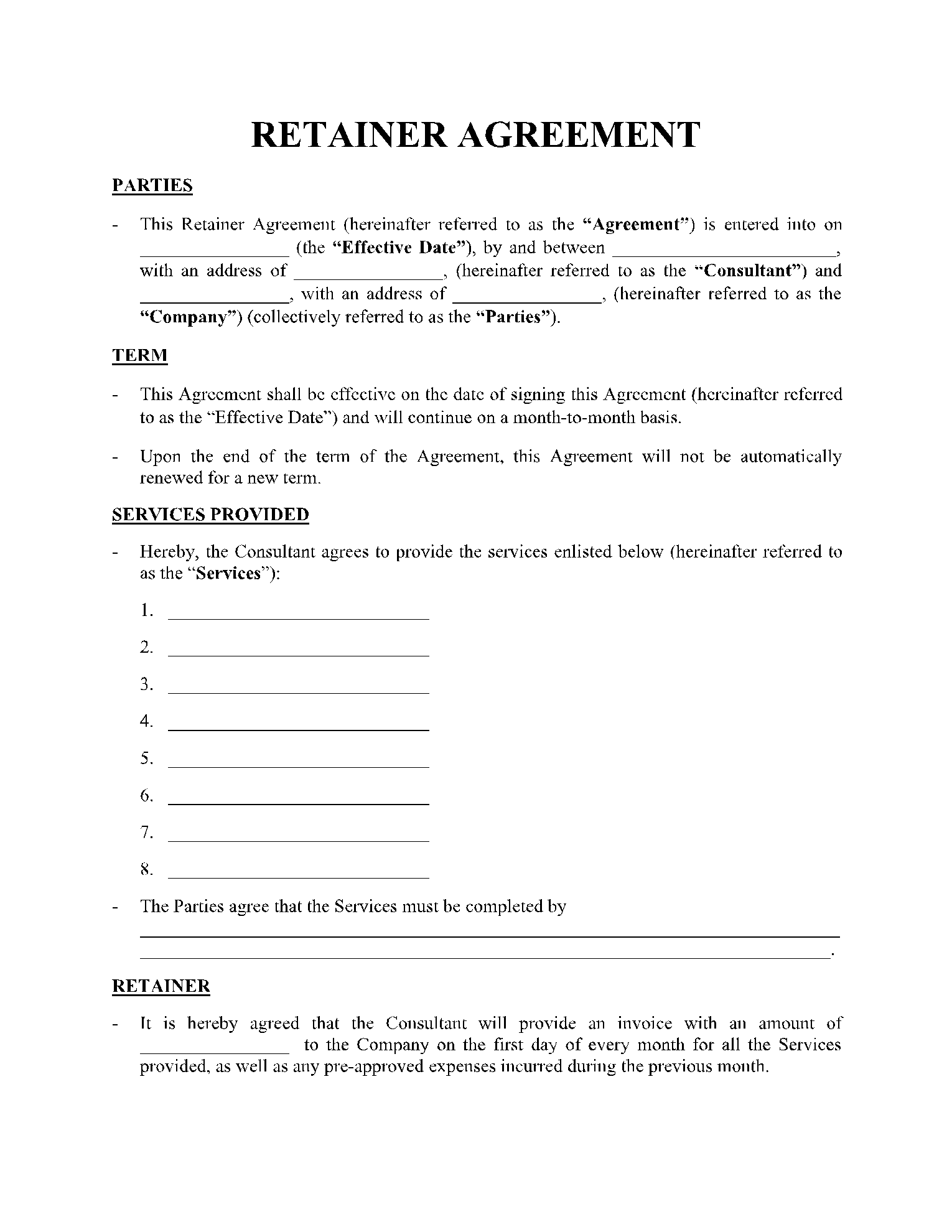
To keep a retainer client long-term, the provider must consistently prove the financial return on investment. This is achieved through regular reporting. A monthly “Retainer Value Report” that summarizes work completed, goals met, and the strategic outlook for the next month transforms the invoice from an “expense” into an “investment” in the client’s eyes.
In conclusion, the retainer contract is more than just a legal document; it is a financial strategy that enables business maturity. By prioritizing recurring revenue over one-off sales, service providers can build resilient, scalable, and profitable enterprises that are equipped to weather any economic climate. For the client, it represents a partnership based on consistency and quality. For the business owner, it represents the ultimate financial goal: peace of mind.
aViewFromTheCave is a participant in the Amazon Services LLC Associates Program, an affiliate advertising program designed to provide a means for sites to earn advertising fees by advertising and linking to Amazon.com. Amazon, the Amazon logo, AmazonSupply, and the AmazonSupply logo are trademarks of Amazon.com, Inc. or its affiliates. As an Amazon Associate we earn affiliate commissions from qualifying purchases.