
In an increasingly complex technological landscape, understanding the fundamental principles that govern the physical world is more crucial than ever. From the delicate mechanics of a microchip to the robust framework of a skyscraper, every piece of technology is subjected to and interacts with forces. At the heart of comprehending these interactions lies the concept of resultant force. Far from being an abstract academic exercise, grasping resultant force is indispensable for engineers, designers, developers, and innovators across every facet of the tech industry. It’s the linchpin for predicting motion, ensuring stability, optimizing performance, and guaranteeing safety in the products and systems we build.
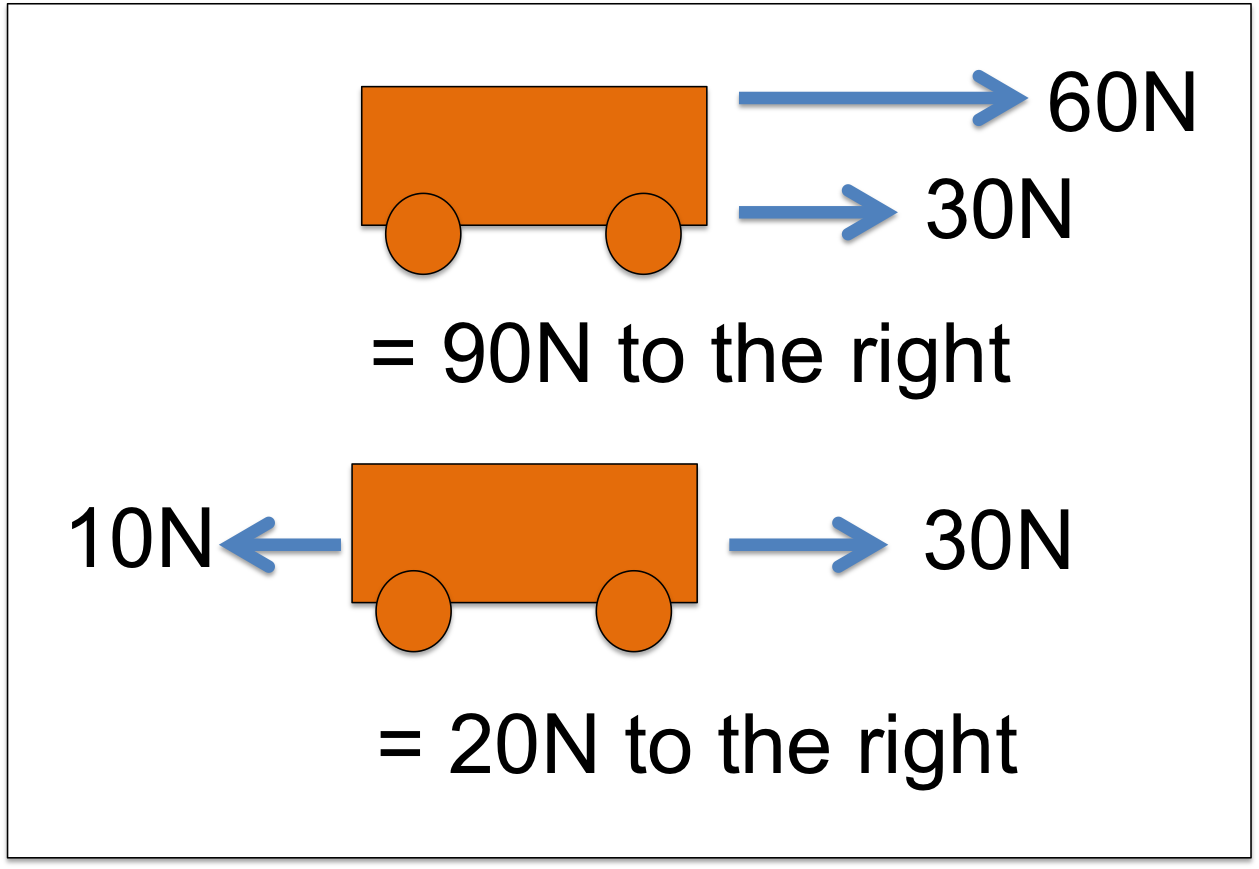
Essentially, resultant force is the single force that represents the net effect of all individual forces acting on an object. When multiple forces pull, push, or twist an object in different directions, they don’t simply cancel out or add up in a straightforward arithmetic sum. Instead, their vector nature—meaning they have both magnitude (strength) and direction—requires a more sophisticated approach to determine their combined impact. The resultant force is this single, theoretical force that would produce the same acceleration on the object as all the individual forces combined. Its importance cannot be overstated; it is the ultimate determinant of an object’s state of motion, dictating whether it accelerates, decelerates, changes direction, or remains stationary. For anyone involved in creating the next generation of technological marvels, a robust understanding of resultant force is not just beneficial—it’s foundational.
The Fundamental Concept of Resultant Force in Engineering & Tech
At its core, resultant force is a physics principle, but its translation into practical application is what makes it a cornerstone of engineering and technology. It provides the analytical lens through which complex physical interactions can be simplified and understood, paving the way for predictable and robust technological solutions.
Defining Resultant Force: A Primer for Technologists
Imagine an object—a drone, a bridge, or even a tiny component within a smartphone. This object is rarely influenced by just one force. Gravity pulls it down, air resistance pushes against it, motors exert thrust, and supports provide normal forces. Each of these is an individual force, characterized by both its strength (magnitude) and the direction in which it acts. The “resultant force,” often denoted as F_net, is the vector sum of all these individual forces. If you were to replace all those separate forces with just one equivalent force, that would be the resultant force.
For an object to remain stationary or move at a constant velocity (i.e., not accelerate), the resultant force acting on it must be zero. This is a direct application of Newton’s First Law of Motion. If the resultant force is non-zero, then, according to Newton’s Second Law (F=ma), the object will accelerate in the direction of the resultant force, with an acceleration proportional to the magnitude of that force and inversely proportional to the object’s mass. This basic principle governs everything from the trajectory of a ballistic missile to the smooth operation of an automated factory robot.
Vector Addition: The Math Behind the Motion
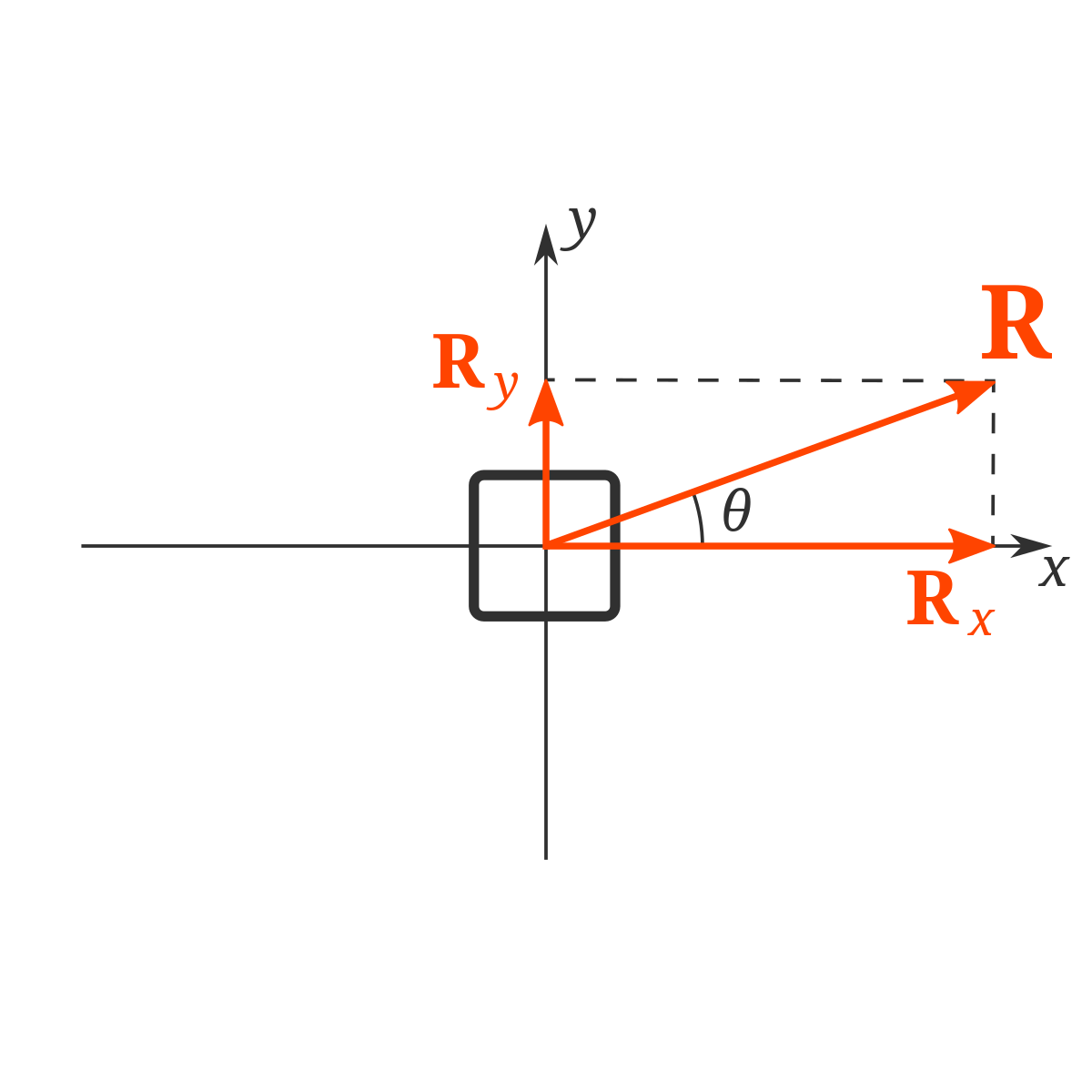
Unlike scalar quantities (like temperature or mass) that can be added arithmetically, forces are vector quantities. This means their direction is critical. To find the resultant force, one must employ vector addition. Graphically, this involves placing the tail of one force vector at the head of another and drawing a new vector from the original tail to the final head. Analytically, it typically involves breaking each force vector into its perpendicular components (e.g., x, y, and z components in 3D space), summing the components in each direction independently, and then recombining these sums to find the magnitude and direction of the resultant vector.
Software and computational tools are invaluable here, as manual vector addition can become cumbersome with many forces or complex geometries. Computer-aided engineering (CAE) tools leverage these mathematical principles to quickly and accurately calculate resultant forces, enabling engineers to model, simulate, and predict the behavior of structures and systems with high precision. This mathematical rigor is what transforms abstract physics into actionable engineering insights.
Why it Matters: Predicting and Controlling Physical Interactions
The ability to determine resultant force is not merely an academic exercise; it is foundational to the practical application of technology.
-
Structural Integrity: Engineers use resultant force calculations to ensure bridges don’t collapse, buildings withstand earthquakes, and aircraft wings don’t snap under stress. They must design structures where the resultant forces are safely distributed or counteracted.
-
Machine Design: For designing gears, levers, or robotic arms, understanding resultant forces helps in selecting appropriate materials, sizing components, and predicting wear and tear.
-
Motion Control: In robotics, aerospace, and automotive industries, resultant force dictates how an object will move. By precisely controlling the applied forces, engineers can achieve desired trajectories, speeds, and accelerations.
-
Safety: Predicting how forces will interact is vital for designing safety features, from crash-resistant car chassis to secure packaging for sensitive electronics. Understanding resultant forces helps minimize risks and prevent failures.
Without a firm grasp of resultant force, predicting the outcome of physical interactions would be a matter of guesswork, leading to inefficient, unreliable, and potentially dangerous technological solutions.
Resultant Force in Design and Simulation Software
The digital revolution has profoundly impacted how engineers approach resultant force analysis. Advanced software platforms have transformed the painstaking manual calculations of yesteryear into rapid, iterative simulations, allowing for unprecedented design optimization and predictive accuracy.
CAD/CAE Tools and Finite Element Analysis (FEA)
Modern engineering relies heavily on Computer-Aided Design (CAD) for creating detailed 3D models and Computer-Aided Engineering (CAE) for analyzing their behavior. Within the CAE umbrella, Finite Element Analysis (FEA) is a powerful method for simulating how a design reacts to various physical effects, including forces, heat, and vibration. FEA works by breaking down a complex object into a multitude of small, interconnected “finite elements.” By applying known forces and boundary conditions to these elements, the software can calculate the forces and stresses experienced by each element, ultimately determining the resultant forces and their distribution across the entire structure. This allows engineers to visualize stress concentrations, identify potential failure points, and understand deformation patterns under load.
Simulating Real-World Scenarios: From Bridges to Microchips
FEA and other simulation tools allow engineers to test designs virtually under conditions that would be expensive, time-consuming, or even impossible to replicate physically. For a bridge, designers can simulate the resultant forces from wind loads, vehicle traffic, and seismic activity to ensure its structural integrity. In consumer electronics, these tools help predict how a smartphone casing will withstand drops or how internal components will react to external pressures. For microchips, resultant force analysis can be crucial in understanding thermal expansion stress or the minute forces exerted during fabrication processes that could affect performance. The ability to model and analyze resultant forces in these diverse scenarios is paramount for developing robust and reliable tech products.
Iterative Design: Optimizing for Strength, Efficiency, and Safety
The beauty of simulation software lies in its ability to facilitate rapid iteration. Engineers can modify a design, re-run simulations, and immediately see the impact on resultant forces and stresses. This iterative loop allows for optimization across multiple parameters:
-
Strength: Modifying material choices or geometric features to better withstand forces.
-
Efficiency: Reducing material usage without compromising strength, leading to lighter and more cost-effective designs.
-
Safety: Ensuring that under maximum expected loads, all resultant forces are within safe operating limits, preventing catastrophic failures.
This iterative process, powered by sophisticated resultant force analysis, accelerates the design cycle, reduces prototyping costs, and ultimately leads to superior products.
Robotics and Autonomous Systems: Balancing Dynamics
In the realm of robotics and autonomous systems, understanding and controlling resultant forces is not just about static stability; it’s about dynamic motion, interaction, and adaptability in real-time. These systems must constantly calculate and react to forces to perform their tasks effectively and safely.
Kinematics and Dynamics: How Resultant Forces Drive Robot Movement
Robotics is fundamentally divided into kinematics (the study of motion without considering forces) and dynamics (the study of motion considering forces and torques). While kinematics describes how a robot arm moves from point A to point B, dynamics explains why it moves that way—the forces and torques required to achieve that motion, and the resultant forces experienced by the robot and its environment.
For a robotic arm to pick up an object, its motors must generate forces and torques that result in the desired movement, overcoming inertia and gravity. The resultant force at the gripper determines how securely the object is held, or if it will slip. In walking robots, precise control of ground reaction forces (a type of resultant force) is crucial for maintaining balance and locomotion on uneven terrain.
Sensor Fusion and Feedback Loops: Adapting to Changing Forces
Autonomous systems operate in dynamic environments where forces are constantly changing. This necessitates sophisticated sensor arrays and intelligent feedback loops. Force sensors, accelerometers, gyroscopes, and proximity sensors collect data on external forces, motion, and contact. This data is then fed into control algorithms that calculate the resultant forces acting on the system in real-time. Based on this, the system adjusts its own actuators (motors, thrusters) to generate counter-forces, thereby controlling the resultant force and achieving desired outcomes—whether it’s maintaining a stable flight path for a drone, walking gracefully across a rocky landscape, or applying the correct pressure during a delicate surgical procedure. This continuous sensing, calculation of resultant forces, and adaptive response is key to intelligent autonomy.
Obstacle Avoidance and Trajectory Planning: Navigating Complex Environments
For self-driving cars, delivery drones, or industrial robots, safely navigating complex environments requires constant assessment of potential collisions and interactions. Resultant force calculations play a role here in several ways:
-
Collision Prediction: By understanding the inertia and mass of the system, and potential impact forces, algorithms can predict the resultant forces of a collision and take evasive action.
-
Path Optimization: Trajectory planning algorithms account for external forces like wind, gravity, and friction, calculating the necessary control forces to achieve a smooth and efficient path, ensuring the resultant forces guide the system safely.
-
Human-Robot Interaction: In collaborative robotics, understanding the resultant forces when a robot interacts with a human is paramount for safety. Systems are designed to detect unexpected forces and stop or adjust their movement to prevent injury.
The intricate interplay of sensing, computing resultant forces, and acting upon them defines the sophistication of modern robotic and autonomous technologies.
The Role of Resultant Force in Advanced Materials and Gadget Development
Beyond large-scale structures and dynamic systems, resultant force analysis is equally critical at the micro-level, influencing material science and the design of everyday tech gadgets. The quest for smaller, lighter, yet more durable devices hinges on mastering these forces.
Material Stress and Strain: Engineering for Durability
Every material has limits to the forces it can withstand before deforming or breaking. When an external force acts on an object, it creates internal forces within the material, known as stress. This stress, in turn, can cause the material to deform, known as strain. Understanding the resultant forces applied to a material allows engineers to predict the stress and strain it will experience. This knowledge is vital for selecting the right materials for specific applications—be it the flexible yet robust screens of foldable phones, the impact-resistant casing of a wearable device, or the high-strength alloys used in aerospace components. Materials scientists continually innovate, developing new composites and alloys that can better manage resultant forces, offering improved strength-to-weight ratios and enhanced durability.
Miniaturization Challenges: Managing Forces in Tiny Devices
The relentless drive towards miniaturization in consumer electronics presents unique challenges regarding resultant forces. As devices shrink, the components within them become incredibly delicate. Even small external forces, like a drop or a slight bend, can generate significant resultant forces at the micro-scale, potentially damaging circuit boards, connectors, or delicate sensors. Engineers must meticulously design internal structures and select materials that can dissipate or distribute these resultant forces effectively. This includes everything from the resilient adhesives used to secure components to the tiny shock absorbers integrated into camera modules. Every millimeter of space is optimized to ensure that critical components are shielded from damaging resultant forces.
Impact Resistance and Ergonomics: User Experience Through Force Management
For end-users, resultant force often manifests as the feel and durability of a product.
-
Impact Resistance: Whether it’s a smartphone surviving a drop, a gaming controller withstanding enthusiastic use, or an industrial tablet enduring harsh environments, resistance to impact is a key selling point. Engineers deliberately design these products to manage resultant forces from sudden impacts, often by incorporating materials that absorb energy or structures that distribute stress evenly.
-
Ergonomics: The comfort and ease of use of a gadget are also influenced by resultant forces. An ergonomically designed mouse or keyboard distributes forces from the user’s hand evenly, reducing strain. Wearable devices must be light enough that the resultant force of gravity combined with inertia doesn’t feel cumbersome, while also having sufficient grip to stay in place without excessive pressure.
By diligently analyzing resultant forces, tech companies can deliver products that are not only functional but also durable, safe, and comfortable to use, directly enhancing the user experience.
Future Implications: AI, Machine Learning, and Predictive Force Analysis
As technology advances, so too does our ability to analyze and manipulate resultant forces. Artificial Intelligence (AI) and Machine Learning (ML) are poised to revolutionize this field, moving beyond static simulations to dynamic, adaptive, and even predictive force management.
AI-Driven Design Optimization
The iterative design process, already enhanced by CAE tools, is being supercharged by AI. Generative design algorithms can explore thousands, even millions, of design variations, automatically optimizing for factors like weight, material use, and structural integrity under various resultant force scenarios. Instead of human engineers manually adjusting parameters, AI can intelligently propose novel geometries and material distributions that are far more efficient in managing resultant forces than traditional designs. This means creating lighter, stronger, and more complex structures faster than ever before. For example, AI can design brackets for aerospace applications that are lighter but handle resultant forces more effectively, leading to fuel savings and enhanced safety.
Real-time Force Prediction in Smart Systems
Beyond design, AI and ML are enabling systems to predict resultant forces in real-time. In robotics, machine learning models can analyze sensor data to anticipate how a robot will interact with its environment, predicting resultant contact forces even before full contact occurs. This allows for more nuanced and proactive control, leading to smoother movements, safer human-robot collaboration, and more precise manipulation of objects. In autonomous vehicles, AI can predict the resultant forces of a potential collision based on sensor inputs and vehicle dynamics, enabling more effective evasive maneuvers. This moves from reactive control to proactive intelligence, driven by sophisticated force prediction.

Beyond Static Analysis: Dynamic and Adaptive Force Management
Traditionally, resultant force analysis often focuses on static or quasi-static conditions. However, the future lies in dynamic and adaptive force management. AI and ML allow systems to learn from experience, continuously refining their understanding of how various forces interact in complex, changing environments. This capability is critical for developing highly adaptable systems like self-repairing materials that can reconfigure their internal structure to better distribute resultant forces after damage, or advanced prosthetics that dynamically adjust their gait to terrain irregularities by predicting ground reaction forces. The ability to not only measure resultant forces but also to predict and adapt to them in real-time opens up new frontiers in material science, robotics, and intelligent systems, leading to technologies that are more resilient, efficient, and intelligent than anything we have seen before.
In conclusion, the concept of resultant force, while rooted in classical physics, remains an ever-present and increasingly vital aspect of technological innovation. From the foundational principles guiding design to the cutting-edge applications of AI, a deep understanding and precise manipulation of resultant forces are indispensable for building the advanced, reliable, and intelligent technologies of tomorrow.
aViewFromTheCave is a participant in the Amazon Services LLC Associates Program, an affiliate advertising program designed to provide a means for sites to earn advertising fees by advertising and linking to Amazon.com. Amazon, the Amazon logo, AmazonSupply, and the AmazonSupply logo are trademarks of Amazon.com, Inc. or its affiliates. As an Amazon Associate we earn affiliate commissions from qualifying purchases.