
In the world of commercial woodworking and independent craftsmanship, “resawing” is often discussed as a technical skill. However, from a financial perspective, resawing is much more than a workshop technique; it is a strategic maneuver used to maximize material yield, reduce overhead costs, and unlock high-margin revenue streams. For entrepreneurs in the timber and furniture industries, understanding the mechanics and the economics of resawing is essential for turning a labor-intensive hobby into a scalable, profitable business.
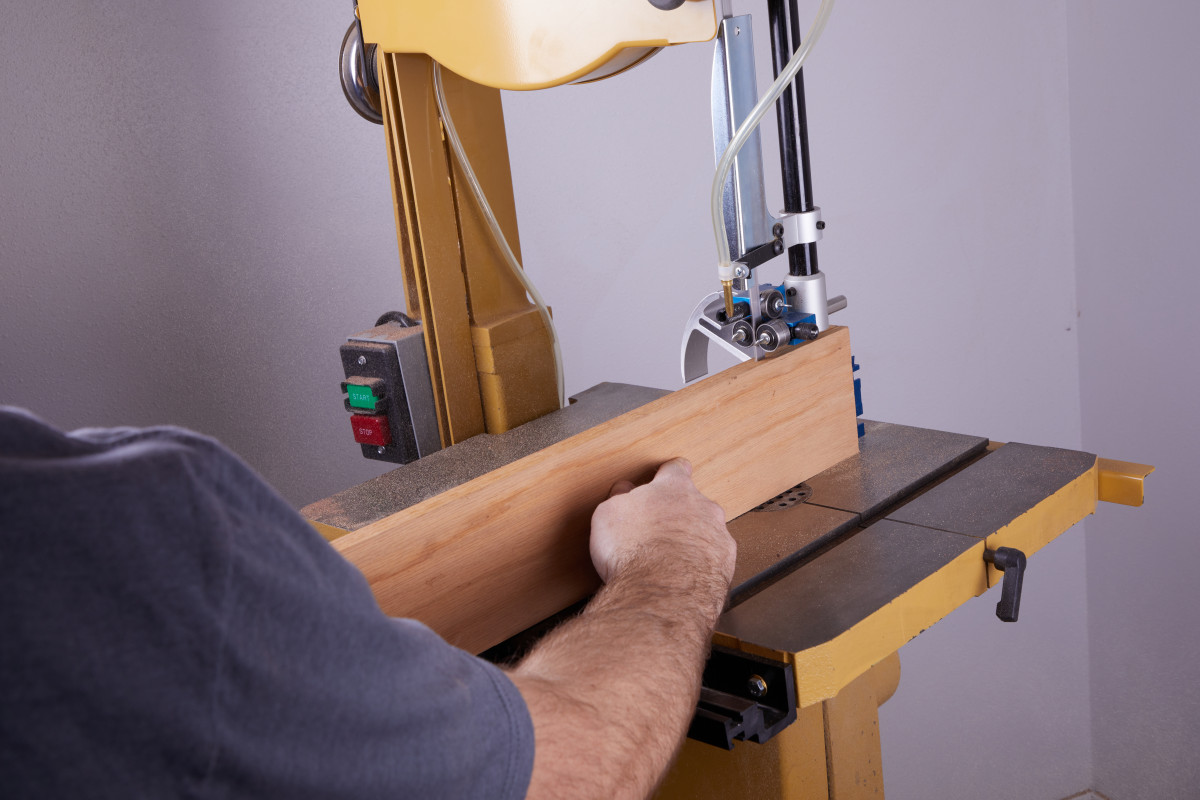
At its core, resawing is the process of cutting a thick piece of lumber into thinner slabs or veneers. Unlike standard ripping, which cuts a board to width, resawing involves cutting through the thickness of the board. This allows a woodworker to transform a single, expensive slab of hardwood into multiple usable pieces, effectively doubling or tripling the inventory value of a single raw material purchase.
The Economics of Resawing: Buying Thick and Selling Thin
The financial logic behind resawing rests on the pricing structures of the lumber market. In many cases, thicker lumber (measured in “quarters,” such as 8/4 or 12/4) is sold at a lower price per board foot than specialized thin stock. By purchasing thicker stock and resawing it in-house, a business can circumvent the premium prices charged by mills for thinner, finished boards.
The Cost Advantage of Material Yield
When a business buys a 2-inch thick (8/4) board of high-grade Walnut, they are investing in a raw asset. If that business requires half-inch boards for drawer sides or decorative panels, purchasing pre-cut half-inch stock from a supplier often comes with a significant markup for the milling labor and the increased waste handled by the supplier.
By performing the resawing in-house, the business captures that “milling premium.” A single 8/4 board can often be resawn into three or even four thin slices, depending on the blade kerf and the desired final thickness. This increases the total surface area of usable wood available for production without a corresponding increase in the initial capital outlay for raw materials.
Reducing Waste and Increasing Efficiency
In traditional woodworking, excess thickness is often removed using a thickness planer. This process turns expensive hardwood into worthless sawdust. Resawing preserves that material. Instead of planing away 1/2 inch of Cherry to reach a desired thickness, resawing allows the craftsman to “save” that 1/2 inch as a separate, usable board. In a high-volume production environment, the cumulative savings of “saving” rather than “planing” can equate to thousands of dollars in annual material costs.
Turning a Skill into a Profitable Side Hustle
Beyond its use in internal production, resawing serves as the foundation for several lucrative side hustles and niche business models. Because many hobbyist woodworkers lack the specialized equipment required for high-quality resawing, there is a consistent market demand for custom milling services and specialty wood products.
Bookmatching for High-End Markets
One of the most profitable outputs of resawing is “bookmatching.” This involves slicing a thick board into two thinner pieces and opening them like a book so that the grain pattern is mirrored. Bookmatched panels are highly sought after by custom furniture makers, luthiers (instrument makers), and interior designers.
A bookmatched set of highly figured Maple or Claro Walnut can command a price significantly higher than the sum of its parts. For an entrepreneur, the ability to source unique logs, resaw them into bookmatched sets, and sell them to a niche audience represents a high-margin opportunity with relatively low overhead once the equipment is in place.
The Luthier and Cabinetry Niche
The musical instrument industry relies heavily on thin, stable slices of “tonewoods.” Resawing allows a business to take a single block of Spruce or Rosewood and create dozens of acoustic guitar tops or backs. This transformation from “block” to “component” is where the most significant value-add occurs. Similarly, for high-end cabinetry, resawing allows for the creation of “continuous grain” drawer fronts, a luxury feature that allows a business to charge premium rates for superior aesthetic cohesion.

Equipment as an Investment: Analyzing the ROI of the Bandsaw
To successfully integrate resawing into a business model, one must view the necessary equipment—primarily a high-capacity bandsaw—as a financial investment rather than a mere tool purchase. The Return on Investment (ROI) of a resaw-capable setup can be calculated by comparing the cost of the machine against the projected savings in material and the potential for new revenue.
Entry-Level vs. Industrial Setups
For a side hustle or a small shop, a 14-inch or 18-inch bandsaw with a high-tension frame is often the starting point. These machines, while requiring an initial investment of $1,500 to $3,500, can pay for themselves within a year if used to process expensive exotic woods or to eliminate the need for pre-milled thin stock.
Industrial-scale operations may opt for dedicated resaw machines with wider blades and power feeders. These setups require higher capital but offer extreme precision and speed, allowing for the mass production of veneers or flooring lamellas. The financial decision here rests on volume; the more wood that passes through the machine, the lower the “per-cut” cost becomes.
The Hidden Costs: Blades and Maintenance
A professional financial analysis of resawing must include the recurring costs of specialized blades. Resawing requires “carbide-tipped” or high-carbon steel blades designed for deep cuts. While these blades can cost $150 to $300 each, their ability to provide a clean finish reduces the amount of secondary sanding or planing required. This saves labor time—the most expensive variable in any business.
Scaling a Woodworking Business Through Strategic Resawing
As a woodworking business grows, resawing becomes a tool for strategic scaling. It allows the business to diversify its product line without drastically increasing its inventory of raw materials.
Premium Veneers and Luxury Markets
Shop-sawn veneers are a hallmark of luxury furniture. Unlike paper-thin commercial veneers, shop-sawn veneers are usually 1/16″ to 1/8″ thick. They offer the beauty of rare woods with the stability of a plywood or MDF core. By resawing their own veneers, a business can use one spectacular (and expensive) board to cover the surface area of ten different pieces of furniture. This “stretches” the most valuable assets in the inventory, maximizing the visual impact and the market price of the finished goods.
Inventory Management and Material Longevity
In a fluctuating lumber market, resawing provides a buffer against price spikes. A business can stock up on thick 8/4 or 12/4 “shorts” or “culls” when prices are low and then resaw them into whatever dimensions are currently needed for orders. This flexibility reduces the need to maintain a diverse and expensive inventory of various thicknesses, streamlining cash flow and storage requirements.

Financial Best Practices for Woodworking Entrepreneurs
To ensure that resawing contributes to the bottom line, entrepreneurs should follow strict financial and operational guidelines:
- Track the Yield: Calculate the “recovery rate” of your resawing operations. How much usable wood are you getting versus how much is lost to the kerf (the width of the saw cut)? Minimizing kerf through better blade technology directly increases profit.
- Labor Costing: Resawing takes time—not just for the cut itself, but for the setup and the subsequent cleaning of the boards. Ensure that the price of the finished product reflects this specialized labor.
- Depreciation and Tax Strategy: In many jurisdictions, the purchase of a professional bandsaw can be depreciated as a business expense, providing a tax shield that offsets the initial cost.
- Market Differentiation: Use the unique capabilities of resawing (like bookmatching and ultra-thin veneers) to move away from “commodity” woodworking and into the “bespoke” market, where profit margins are substantially higher.
Resawing is ultimately a masterclass in resourcefulness. By viewing a board not just as a single unit, but as a container for multiple thinner units, a woodworker shifts their mindset from craft to commerce. Whether it is used to save money on material costs or to create high-value specialty products, resawing remains one of the most effective ways to build a sustainable and profitable business in the timber industry.
aViewFromTheCave is a participant in the Amazon Services LLC Associates Program, an affiliate advertising program designed to provide a means for sites to earn advertising fees by advertising and linking to Amazon.com. Amazon, the Amazon logo, AmazonSupply, and the AmazonSupply logo are trademarks of Amazon.com, Inc. or its affiliates. As an Amazon Associate we earn affiliate commissions from qualifying purchases.