
The backfire flame arrestor is a critical safety component in various internal combustion engine applications, particularly prevalent in marine environments and industrial settings where flammable vapors are present. Its primary function is to prevent engine backfires from igniting combustible fuel mixtures in the intake system, thereby averting catastrophic fires or explosions. Understanding the comprehensive requirements for a backfire flame arrestor involves delving into its fundamental purpose, intricate technical design, stringent regulatory compliance, and essential operational considerations. This complex piece of safety technology demands precision in engineering and adherence to strict standards to fulfill its life-saving role.

The Critical Role of Backfire Flame Arrestors in Engine Safety
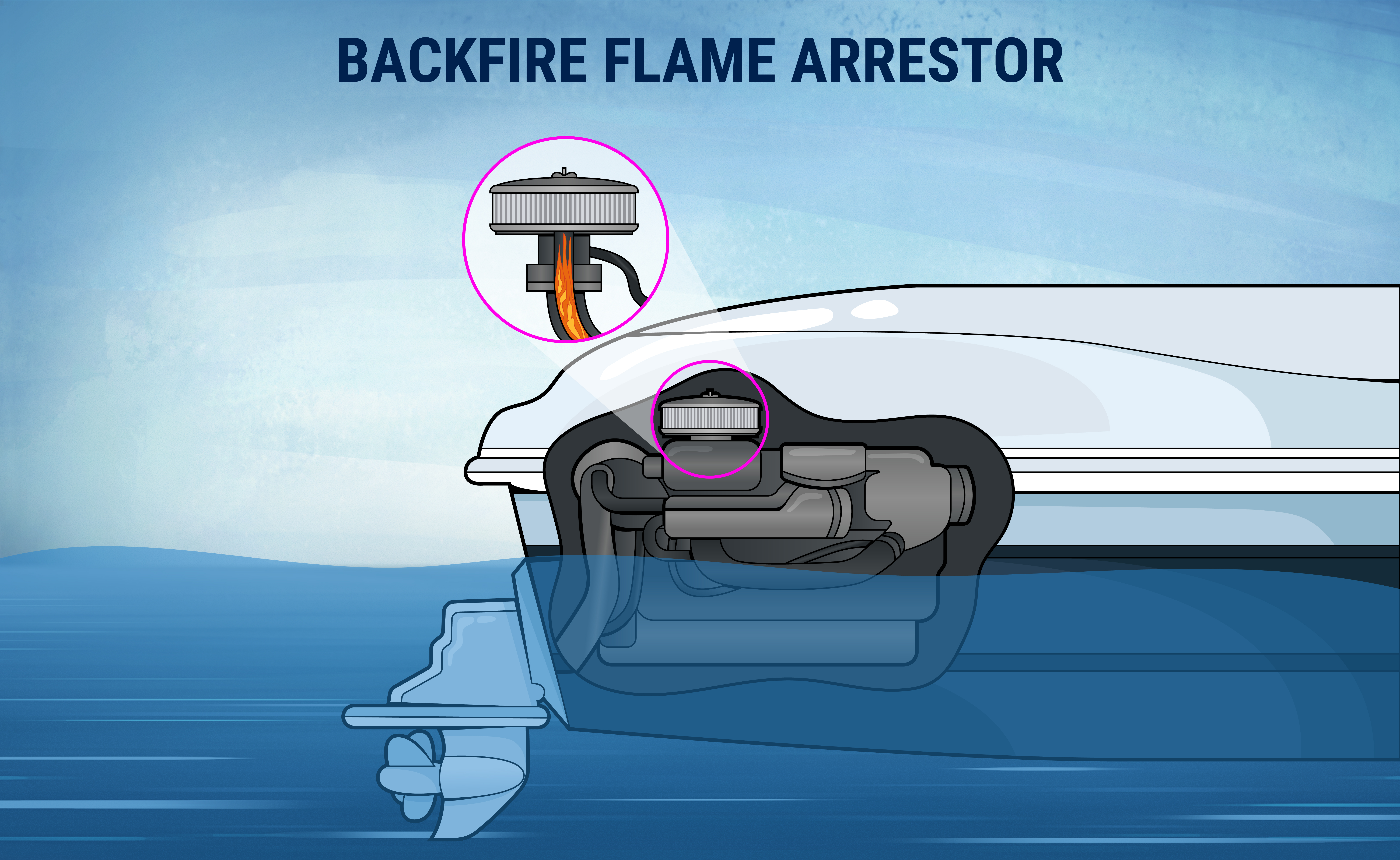
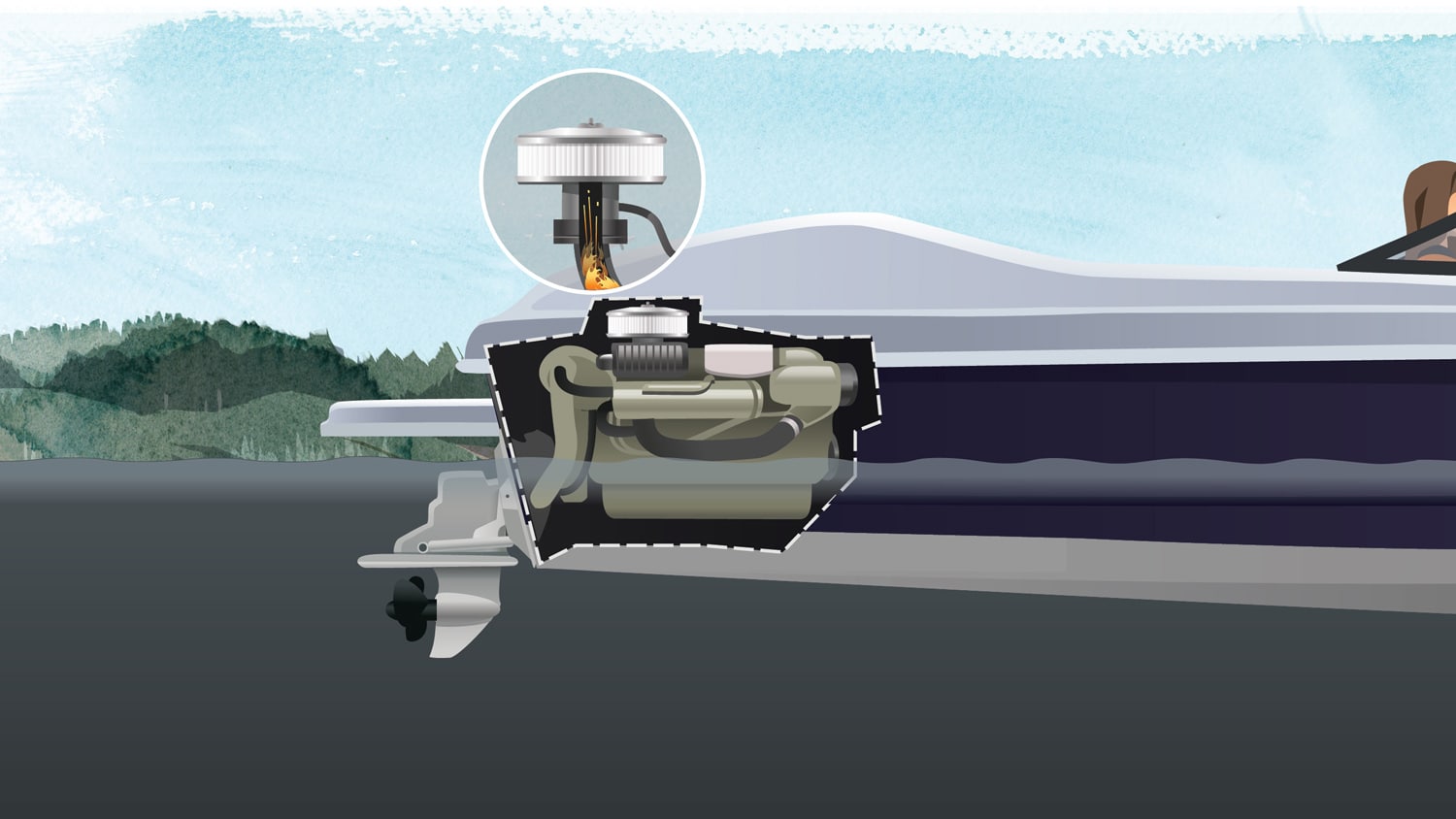
Internal combustion engines, especially those operating with carbureted or older fuel injection systems, can occasionally experience a “backfire.” This phenomenon occurs when combustion gases ignite prematurely in the intake manifold, sending a flame front backward through the carburetor or throttle body. In an environment where gasoline or other volatile fuels are present, such as the bilge of a boat or an industrial machinery enclosure, this momentary flame can easily ignite accumulated fuel vapors, leading to a rapid and devastating fire. The backfire flame arrestor acts as an indispensable barrier, intercepting and extinguishing this flame before it can escape the engine’s intake system and reach the surrounding atmosphere.
At its core, a backfire flame arrestor functions by rapidly cooling the hot combustion gases of a backfire to a temperature below the autoignition point of the surrounding fuel-air mixture. It achieves this through a series of narrow passages or a mesh-like structure, often referred to as a “flame element.” As the flame front attempts to pass through these confined channels, it makes intimate contact with the cooler material of the arrestor. Heat is rapidly transferred from the flame to the arrestor’s surfaces, causing the flame to quench and preventing its propagation. This principle, known as flame quenching or the “quenching distance” effect, is fundamental to the device’s efficacy. Without a properly designed and maintained flame arrestor, the risk of a severe fire incident in fuel-vapor-rich environments escalates dramatically, posing significant threats to life, property, and environmental integrity.
Technical Design and Engineering Principles
The effectiveness of a backfire flame arrestor hinges on precise technical design and engineering principles. The selection of materials, the geometry of the flame-arresting element, and its overall construction are paramount to ensuring its ability to withstand the forces of a backfire and efficiently quench the flame.
Material Selection and Durability
The materials used in a flame arrestor must possess specific properties. High thermal conductivity is crucial for rapid heat transfer from the flame to the arrestor body, enabling efficient quenching. Materials must also exhibit excellent corrosion resistance, especially in harsh marine environments or industrial settings exposed to various chemicals. Stainless steel (e.g., 304 or 316) is a common choice due to its strength, corrosion resistance, and reasonable thermal properties. The material must also be able to withstand repeated exposure to high temperatures generated by backfires without deforming or degrading, which could compromise its protective function. Durability is also critical to ensure the device maintains its structural integrity over its operational lifespan, resisting vibrations, impacts, and environmental stressors.
Flame Element Geometry and Construction
The internal geometry of the flame arrestor’s element is perhaps the most critical design aspect. It typically consists of a matrix of small, precisely defined passages that create a large surface area-to-volume ratio. Common designs include corrugated metal ribbons wound into a spiral (known as an “element gap” or “crimped ribbon element”) or multiple layers of wire mesh. The “mesh size” or “element gap” – the maximum hydraulic diameter of the passages – is a critical parameter. It must be small enough to quench the flame effectively for the specific fuel-air mixture it is designed to protect against (e.g., gasoline vapor) but large enough to allow sufficient airflow for the engine to operate efficiently without excessive restriction. Computational Fluid Dynamics (CFD) and extensive empirical testing are employed during the design phase to optimize this geometry, balancing safety requirements with engine performance demands. The assembly must be robust, ensuring that the elements remain securely in place even under the pressure pulse of a backfire.
Airflow and Pressure Drop Considerations
While safety is paramount, a flame arrestor must not unduly restrict the engine’s airflow. Any significant pressure drop across the arrestor can reduce engine performance, fuel efficiency, and potentially lead to other operational issues. Therefore, engineers must design flame arrestors that offer a balance between effective flame quenching and minimal airflow impedance. This involves optimizing the element’s design, inlet/outlet configurations, and overall housing to facilitate smooth airflow while still ensuring sufficient surface area for heat transfer during a backfire event. Advanced designs may incorporate features to improve flow characteristics without compromising safety, highlighting the continuous innovation in this field.
Navigating Regulatory Standards and Certification
For a backfire flame arrestor to be considered effective and legally compliant, it must meet stringent regulatory standards and often undergo rigorous certification processes. These standards are developed by various bodies, depending on the application and geographical region, and are designed to ensure consistent safety and performance.
Marine Industry Standards
In the marine industry, where gasoline-powered engines are common and fuel vapor accumulation is a significant concern, the requirements for flame arrestors are particularly strict. In the United States, the Coast Guard (USCG) mandates that backfire flame control devices meet specific standards, most notably those outlined by the Society of Automotive Engineers (SAE) J1928, “Devices for Backfire Flame Control.” This standard specifies performance criteria, testing procedures (including simulated backfire tests), and labeling requirements. Devices must be capable of preventing flame propagation under a range of conditions, including different fuel-air ratios and engine speeds. Certification typically involves third-party testing to confirm compliance with SAE J1928, after which a device may receive USCG approval. Similar standards exist in other maritime jurisdictions (e.g., ISO 13591 for recreational craft).
Industrial and Commercial Applications
Beyond marine, flame arrestors are critical in industrial settings where flammable gases or vapors are present, such as chemical processing plants, fuel storage facilities, and pharmaceutical manufacturing. In these environments, broader explosion protection standards apply. Organizations like Underwriters Laboratories (UL), FM Global, ATEX (for the European Union), and IECEx (international) provide certification for flame arrestors used in these contexts. These standards often differentiate between “deflagration” (subsonic flame propagation) and “detonation” (supersonic flame propagation) arrestors, requiring different design and testing protocols. The selection of an arrestor in industrial applications is highly dependent on the specific gas group, maximum experimental safe gap (MESG), and operating conditions, ensuring the device is appropriate for the exact hazard it mitigates. Compliance involves rigorous testing, documentation, and quality control during manufacturing.
Testing and Validation
Central to all certification is comprehensive testing. Flame arrestors are subjected to a series of tests under controlled laboratory conditions to simulate real-world backfire events. This includes igniting specific fuel-air mixtures on one side of the arrestor and verifying that no flame propagates to the other side. Tests may also evaluate the device’s pressure drop, structural integrity after repeated backfires, and resistance to environmental factors. The data collected from these tests is meticulously analyzed to ensure the arrestor consistently performs its intended safety function across its specified operational envelope. This stringent validation process is what underpins the trust placed in certified backfire flame arrestors.
Installation, Maintenance, and Operational Integrity
Beyond selecting a certified backfire flame arrestor, its effective integration and sustained performance in an engine system depend heavily on correct installation, diligent maintenance, and an understanding of operational integrity. These practical requirements are as crucial as the design and certification.
Proper Installation
Correct installation is paramount. The flame arrestor must be securely mounted directly to the air intake system of the engine, typically above the carburetor or throttle body, ensuring a tight seal to prevent any flame bypass. Any gaps or leaks around the arrestor can compromise its ability to contain a backfire. The orientation must also be correct according to manufacturer specifications to ensure optimal airflow and quenching capabilities. It is essential to use the correct fasteners and gaskets and to ensure that no foreign objects or debris obstruct the internal elements during installation. Improper installation negates the safety benefits of even the best-designed and certified arrestor.
Routine Maintenance and Inspection
Flame arrestors, especially those operating in dusty or oily environments, are prone to clogging. Accumulation of dirt, oil residue, or other debris on the flame-arresting elements can significantly restrict airflow, leading to engine performance issues or even stalling. More critically, excessive clogging can reduce the device’s ability to cool a flame front, rendering it ineffective. Therefore, routine cleaning and inspection are mandatory. Manufacturers typically provide cleaning instructions, which often involve using approved solvents or detergents and rinsing. Inspections should check for any signs of physical damage, corrosion, or deformation that could impair its function. A damaged arrestor must be replaced immediately.
Recognizing Limitations and Replacement
While highly effective, flame arrestors have limitations. They are designed for specific fuel types and operating conditions. Using an arrestor outside its design parameters (e.g., using a gasoline flame arrestor in an engine burning a different, more volatile fuel) can be extremely dangerous. Furthermore, repeated exposure to backfires can, over time, degrade the flame-arresting elements, particularly if they are subjected to extreme heat. It is vital to periodically check the manufacturer’s recommendations for service life and replacement intervals. Any significant engine modifications that alter airflow or fuel delivery should prompt a re-evaluation of the flame arrestor’s suitability. Adhering to these operational guidelines ensures the backfire flame arrestor remains a reliable safeguard throughout its service life.
Innovations and Future Trends in Flame Arrestor Technology
The field of flame arrestor technology, while mature, continues to evolve with innovations driven by advanced materials, smart monitoring, and increasingly stringent safety demands. These advancements aim to enhance performance, reliability, and ease of maintenance.
One significant trend is the exploration of new materials and coatings. Researchers are investigating materials with superior thermal conductivity, higher temperature resistance, and enhanced corrosion properties to create more durable and effective flame arrestors. This includes advanced alloys, ceramics, and even composite materials that can withstand more severe backfire events while maintaining their structural integrity and quenching efficiency. Coatings are also being developed to reduce fouling and improve self-cleaning properties, extending maintenance intervals and ensuring consistent performance.
Another area of innovation involves smart monitoring and integration with engine management systems. Future flame arrestors might incorporate sensors to detect clogging, temperature anomalies, or even the occurrence of a backfire. This data could then be relayed to the engine’s electronic control unit (ECU) or a vessel’s monitoring system, providing real-time alerts to operators about potential issues that could compromise safety or performance. Such intelligent integration could move flame arrestor maintenance from a scheduled task to a condition-based one, optimizing operational uptime and ensuring proactive safety management.
Finally, optimization through advanced simulation and additive manufacturing is gaining traction. Sophisticated CFD models are continually refined to predict flame propagation and quenching dynamics with greater accuracy, allowing for more precise design of flame arrestor elements that balance minimal airflow restriction with maximum safety. Additive manufacturing (3D printing) offers the potential to create highly complex, optimized internal geometries that would be difficult or impossible to achieve with traditional manufacturing methods. This could lead to lighter, more efficient, and even more compact flame arrestors capable of meeting the evolving demands of modern engine designs and diverse application environments, further bolstering safety in critical operational settings.
aViewFromTheCave is a participant in the Amazon Services LLC Associates Program, an affiliate advertising program designed to provide a means for sites to earn advertising fees by advertising and linking to Amazon.com. Amazon, the Amazon logo, AmazonSupply, and the AmazonSupply logo are trademarks of Amazon.com, Inc. or its affiliates. As an Amazon Associate we earn affiliate commissions from qualifying purchases.