
In the modern economic landscape, energy is more than just a utility; it is the lifeblood of global markets, a primary driver of inflation, and a cornerstone of any sophisticated investment portfolio. For decades, the global financial system was built upon the back of nonrenewable energy—resources that are finite and subject to intense geopolitical volatility. However, we are currently witnessing a historic capital migration. Billions of dollars are flowing out of traditional extractive industries and into the renewable sector. Understanding the fundamental differences between renewable and renewable energy is no longer just a scientific necessity; it is a financial imperative for investors, business owners, and individuals looking to protect their wealth in a changing climate.
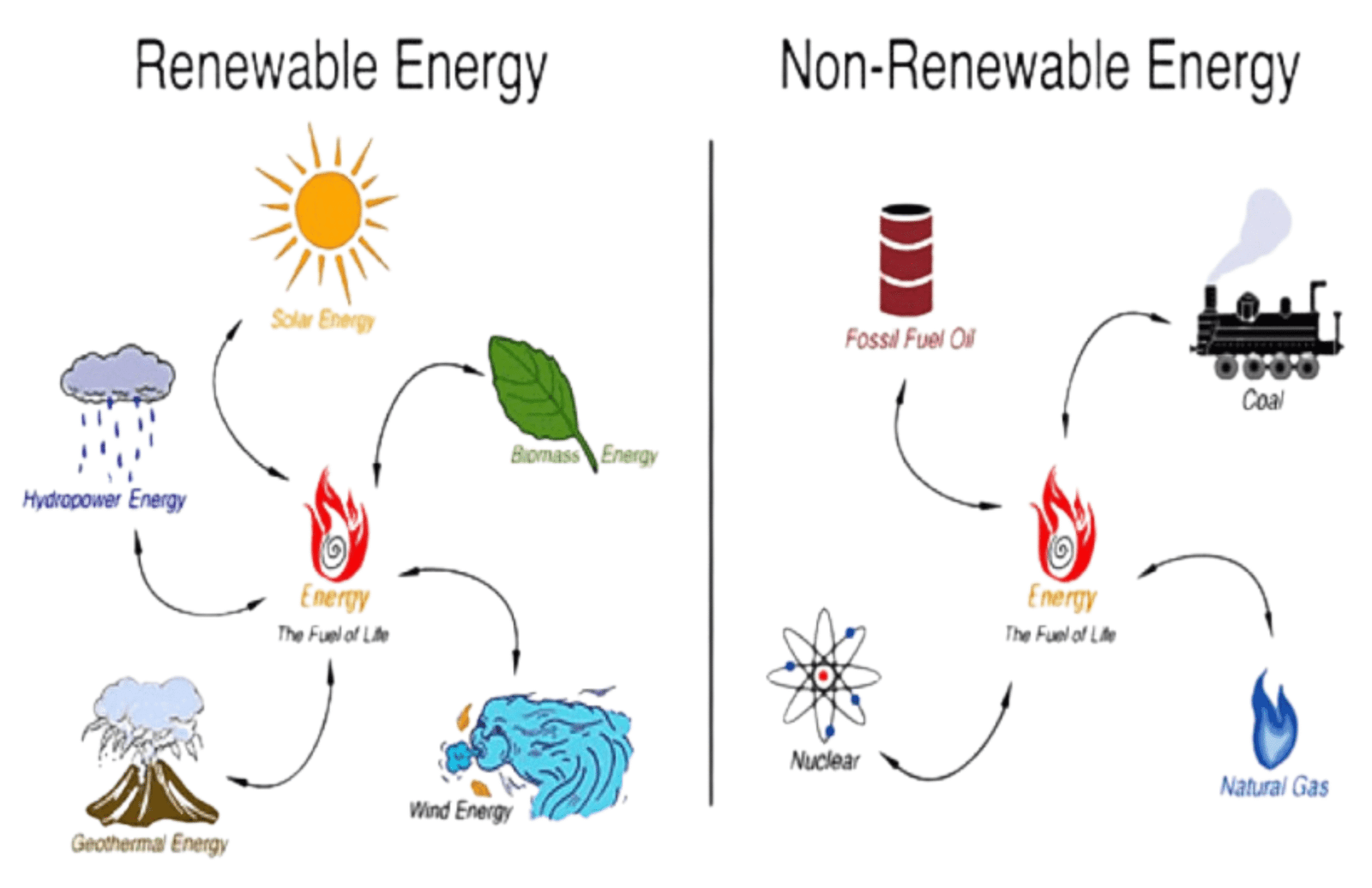
The Economic Fundamentals of Nonrenewable Energy
Nonrenewable energy sources, primarily fossil fuels such as coal, oil, and natural gas, have historically been the most significant drivers of industrial growth. From a financial perspective, these resources are defined by their scarcity and the high “marginal cost” of production. Because these resources do not replenish on a human timescale, every barrel of oil extracted represents a reduction in total global supply, creating a permanent tension between supply and demand.
Fossil Fuel Commodities and Market Volatility
For the individual investor or the corporate treasurer, nonrenewable energy is synonymous with volatility. Because oil and gas are global commodities, their prices are sensitive to geopolitical conflicts, shipping disruptions, and OPEC+ policy shifts. This volatility creates a “ripple effect” through the economy. When the price of crude oil rises, the cost of logistics, manufacturing, and plastic production increases, leading to cost-push inflation. From a money management perspective, holding assets heavily reliant on nonrenewable energy requires a high tolerance for risk and a keen understanding of global macroeconomics.
The Financial Risk of Stranded Assets
One of the most pressing concerns in business finance today is the concept of “stranded assets.” These are investments in fossil fuel infrastructure—such as coal mines, oil rigs, or gas pipelines—that may lose their value before the end of their expected economic life due to regulatory changes or the falling cost of competitors. For institutional investors, the “carbon bubble” represents a significant systemic risk. If global regulations tighten to meet climate goals, companies with massive nonrenewable reserves may find those assets legally or economically unextractable, leading to massive write-downs on balance sheets and a subsequent collapse in stock value.
The Financial Revolution of Renewable Energy
Renewable energy—derived from wind, solar, hydroelectric, and geothermal sources—operates on a completely different economic model. Unlike nonrenewable energy, which is a “fuel-based” economy, renewable energy is a “technology-based” economy. In a fuel-based economy, you must continually buy the resource to generate power. In a technology-based economy, once the hardware (the solar panel or wind turbine) is paid for, the “fuel” is essentially free. This shift from operational expenditures (OPEX) to capital expenditures (CAPEX) is revolutionizing how we think about energy as an asset class.
Levelized Cost of Energy (LCOE): Why Renewables are Winning
The most important metric in the energy finance sector is the Levelized Cost of Energy (LCOE). This calculates the average cost of building and operating a power-generating plant over its entire lifecycle. Over the last decade, the LCOE of solar and wind power has plummeted by over 80% and 40%, respectively. In many parts of the world, it is now cheaper to build a new solar farm than to continue running an existing coal plant. For the savvy investor, this represents a massive opportunity. The declining cost curve of renewable technology creates a “deflationary” pressure on energy prices, which can stabilize long-term industrial costs and provide predictable returns for utility-scale projects.
Tax Incentives and Subsidies as Profit Drivers

Governments worldwide are incentivizing the transition to green energy through various financial instruments. In the United States, the Inflation Reduction Act (IRA) has earmarked hundreds of billions of dollars for clean energy credits. These incentives serve to de-risk investments in renewable infrastructure. For businesses, these subsidies turn what might have been a marginal project into a high-yield investment. Understanding the “tax equity” market—where large corporations invest in renewable projects to receive tax credits—is a niche but highly profitable area of corporate finance that bridges the gap between environmental goals and bottom-line profits.
Personal Finance and Energy: Lowering Overheads
The distinction between renewable and nonrenewable energy isn’t just a matter for Wall Street; it has a profound impact on personal finance and household wealth building. As the cost of traditional grid power (often derived from nonrenewables) continues to rise due to aging infrastructure and carbon taxes, individuals are looking toward decentralized renewable energy as a way to hedge against rising living costs.
Homeowner ROI on Solar and Storage Solutions
For the average homeowner, installing a residential solar system is one of the few home improvements that offers a quantifiable Return on Investment (ROI). Unlike a kitchen remodel, which may increase home value but doesn’t generate cash flow, solar panels act like a dividend-paying asset. By reducing or eliminating a monthly electricity bill, a homeowner effectively increases their monthly disposable income. When paired with battery storage, this setup also provides a hedge against “peak pricing” and grid instability, protecting the individual’s financial well-being from market fluctuations.
Energy Efficiency as a Wealth-Building Strategy
Beyond generation, the “money” side of the energy equation involves efficiency. In personal finance, a dollar saved is often more valuable than a dollar earned because it is not subject to income tax. Transitioning from nonrenewable-reliant appliances (like gas furnaces) to high-efficiency renewable-compatible tech (like heat pumps) reduces long-term maintenance and fuel costs. This “efficiency first” approach is a cornerstone of modern financial planning, allowing households to divert capital that would have been “burned” on utility bills into high-yield savings or investment accounts.
Building a Green Energy Portfolio
As the “Great Energy Transition” accelerates, investors must decide how to allocate their capital. The choice between sticking with the high dividends of “Big Oil” or chasing the growth of “Big Green” is a defining challenge of 21st-century portfolio management.
Identifying ESG Winners in the Stock Market
Environmental, Social, and Governance (ESG) criteria have become standard for many institutional investors. Companies that transition away from nonrenewable dependencies often receive higher ESG scores, which can lead to increased demand for their shares and a lower cost of capital. However, for the individual investor, it is crucial to look past “greenwashing” and identify companies with genuine competitive advantages in the renewable space. This includes looking at manufacturers of specialized components (like inverters or high-voltage cables), producers of critical minerals (lithium, copper, and cobalt), and utilities that are successfully pivoting their generation mix.

Managing Risk in the Energy Transition Era
A balanced financial strategy requires acknowledging that the world cannot move away from nonrenewable energy overnight. There is still significant money to be made in the transition. Some investors utilize a “barbell strategy”—holding shares in traditional energy companies that are using their massive cash flows to fund renewable research, while simultaneously holding high-growth, pure-play renewable startups. The key to managing risk in this sector is diversification. By spreading investments across different types of renewable tech and geographic regions, investors can protect themselves against the regulatory changes or technological disruptions that might impact one specific niche of the energy market.
In conclusion, the choice between renewable and nonrenewable energy is fundamentally a choice between two different financial futures. Nonrenewable energy offers a legacy of high-density power but carries the baggage of extreme volatility and the looming threat of stranded assets. Renewable energy offers a path toward lower marginal costs, government-backed stability, and long-term deflationary energy prices. For those who understand these financial dynamics, the energy transition represents the greatest wealth-creation opportunity of our generation. Whether through direct stock market participation, corporate strategy, or personal home upgrades, the “money” is clearly moving toward the sun, the wind, and the water.
aViewFromTheCave is a participant in the Amazon Services LLC Associates Program, an affiliate advertising program designed to provide a means for sites to earn advertising fees by advertising and linking to Amazon.com. Amazon, the Amazon logo, AmazonSupply, and the AmazonSupply logo are trademarks of Amazon.com, Inc. or its affiliates. As an Amazon Associate we earn affiliate commissions from qualifying purchases.