
The global energy landscape is a complex tapestry woven from diverse sources, each with its unique technological profile, environmental impact, and economic footprint. Understanding the fundamental distinction between renewable and non-renewable energy is not merely an academic exercise; it is crucial for comprehending the technological trajectories, innovations, and challenges shaping our planet’s future. At its heart, this distinction revolves around the concept of replenishment and the technological ingenuity required to harness these disparate forms of power.
Renewable energy sources are those that naturally replenish themselves over relatively short timescales, often continuously. Their utilization is generally associated with minimal carbon emissions and a pathway toward long-term sustainability. Non-renewable energy, conversely, originates from finite resources that are consumed much faster than they can be naturally reformed, typically over millions of years. Their widespread use has historically driven industrialization but also poses significant environmental and geopolitical challenges, spurring a global technological push towards alternative solutions. This article delves into the technological frameworks, advancements, and the critical role technology plays in both defining and transforming these energy categories.
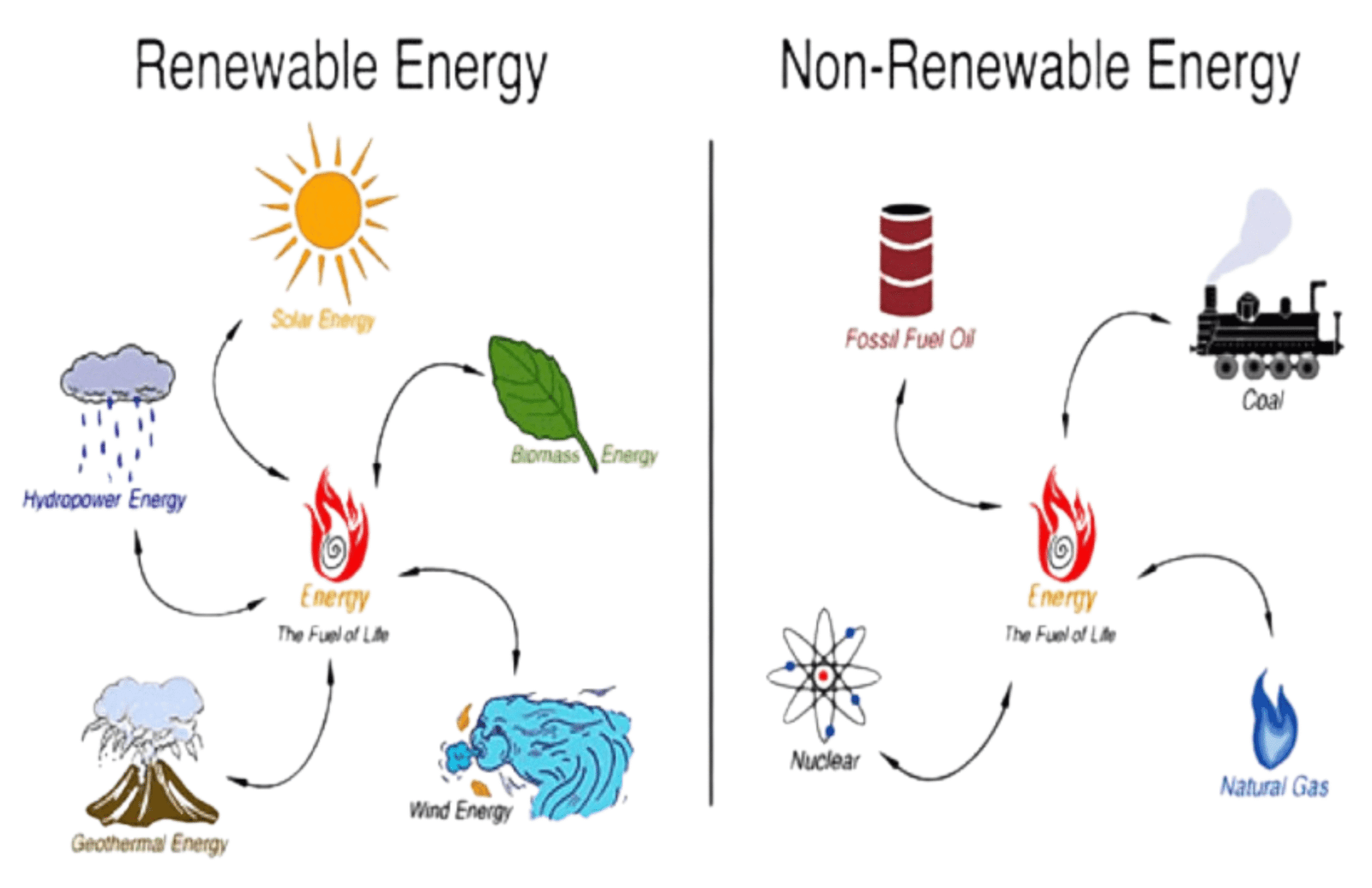
The Technological Fabric of Renewable Energy Systems
Renewable energy is not a monolith; it encompasses a diverse array of technologies that harness the earth’s incessant natural processes. The shift towards these sources is largely a story of overcoming engineering hurdles and leveraging cutting-edge material science, digital controls, and system integration.
Solar Photovoltaics: From Silicon to Grid Power
Solar energy, primarily captured through photovoltaic (PV) technology, stands as a prime example of technological evolution. Early solar cells were inefficient and prohibitively expensive. Modern PV systems, however, have seen remarkable advancements. The core technology involves semiconductor materials, predominantly silicon, which convert sunlight directly into electricity. Recent innovations include perovskite solar cells, which promise higher efficiencies and lower manufacturing costs, and organic photovoltaics, offering flexibility and transparency for diverse applications.
Beyond the cells themselves, the technological ecosystem supporting solar power includes advanced inverters that convert DC electricity to AC, smart tracking systems that optimize panel orientation throughout the day, and sophisticated grid integration software. Microinverters and power optimizers have become standard for enhancing module-level performance, especially in shaded conditions, while predictive analytics and AI are increasingly used to forecast solar output and manage grid stability. The deployment of utility-scale solar farms now relies on advanced robotics for installation and maintenance, further reducing costs and increasing efficiency.
Wind Turbines: Engineering Giants Capturing Kinetic Energy
Wind power harnesses the kinetic energy of air in motion, converting it into electricity via towering turbines. The technological marvel of a modern wind turbine lies in its aerodynamic blade design, advanced gearboxes (or direct-drive systems), and sophisticated control algorithms that optimize power output and minimize stress on components. Materials science plays a critical role, with lighter yet stronger composites used for blades, pushing the boundaries of turbine size and efficiency.
Offshore wind technology represents a significant leap, utilizing stronger, larger turbines in deeper waters where wind resources are more consistent and powerful. This requires advanced foundation engineering (monopiles, jackets, floating platforms), specialized installation vessels, and robust subsea cable infrastructure for power transmission. Predictive maintenance, utilizing IoT sensors and machine learning, is crucial for maximizing uptime and extending the lifespan of these massive, remote installations, ensuring they operate at peak efficiency and reliability.
Geothermal and Hydroelectric: Harnessing Earth’s Natural Power
Geothermal energy taps into the heat within the Earth’s crust. Technological advancements in drilling techniques, heat exchangers, and binary cycle power plants have expanded its applicability beyond traditional volcanic zones. Enhanced Geothermal Systems (EGS) involve injecting water into hot, dry rock to create artificial reservoirs, pushing the frontiers of geothermal deployment through advanced hydraulic fracturing and reservoir management technologies.
Hydroelectric power, one of the oldest forms of renewable energy, converts the energy of flowing or falling water into electricity. Modern hydroelectric plants leverage advanced turbine designs (e.g., Francis, Kaplan, Pelton turbines) and sophisticated control systems for optimal water resource management. Pumped-hydro storage, a crucial technology for grid stability, uses excess electricity to pump water uphill, storing potential energy that can be released later, acting as a giant battery and integrating seamlessly with intermittent renewables like solar and wind.
The Engineering Behind Non-Renewable Energy Exploitation
Non-renewable energy sources – primarily fossil fuels (coal, oil, natural gas) and nuclear energy – have been the bedrock of industrial civilization for centuries. Their extraction, processing, and conversion into usable energy are testament to complex engineering feats, though often accompanied by significant environmental consequences.
Fossil Fuels: Extraction and Combustion Technologies
The technologies for extracting fossil fuels have evolved dramatically. Oil and gas exploration now employs advanced seismic imaging, directional drilling (allowing horizontal wells to access wider reservoir areas), and hydraulic fracturing (“fracking”) to unlock hydrocarbons from shale formations. These techniques require highly specialized drilling rigs, downhole sensors, and sophisticated computational modeling to optimize extraction while managing geological risks.
Coal mining has also seen technological transformation, from manual labor to highly automated longwall mining machines and massive draglines for opencast operations.
The combustion of fossil fuels for electricity generation relies on mature but continuously refined technologies. Modern thermal power plants incorporate advanced boiler designs, high-pressure steam turbines, and sophisticated control systems to maximize efficiency and reduce emissions. Technologies like integrated gasification combined cycle (IGCC) plants for coal and combined cycle gas turbines (CCGT) for natural gas significantly improve efficiency by capturing waste heat, showcasing ongoing efforts to wring more energy from these finite resources with less waste.
Nuclear Power: Fission Reactors and Waste Management

Nuclear energy harnesses the immense power released from atomic fission. The core technology lies in the nuclear reactor, where controlled chain reactions split uranium or plutonium atoms, generating heat to produce steam that drives turbines. Modern reactors, such as Pressurized Water Reactors (PWRs) and Boiling Water Reactors (BWRs), incorporate multiple redundant safety systems, advanced control rods, and sophisticated monitoring technologies to ensure safe operation.
The technological challenges extend beyond power generation. Nuclear fuel cycle management, including uranium enrichment, spent fuel reprocessing, and radioactive waste disposal, requires highly specialized chemical engineering, robotics, and geological engineering solutions. Research into advanced reactor designs, such as Small Modular Reactors (SMRs) and Generation IV reactors (e.g., molten salt reactors, fast breeder reactors), focuses on improving safety, efficiency, reducing waste, and even consuming existing nuclear waste, demonstrating a continuous push for technological refinement in this complex field.
Challenges in Efficiency and Emissions Reduction
A significant technological imperative in the non-renewable sector is addressing its environmental footprint. Carbon Capture, Utilization, and Storage (CCUS) technologies are designed to capture CO2 emissions from power plants and industrial facilities before they enter the atmosphere. This involves advanced chemical absorption, membrane separation, and cryogenic processes, followed by complex geological storage techniques. While technically feasible, the economic viability and scalability of CCUS remain significant engineering challenges. Technologies for reducing other pollutants, such as sulfur dioxide (SOx) and nitrogen oxides (NOx), through flue gas desulfurization and selective catalytic reduction, are also integral to modern non-renewable power plants.
Technological Innovations Driving the Energy Transition
The global imperative to reduce carbon emissions and achieve energy security is driving unprecedented technological innovation across the entire energy spectrum. This transition is not just about replacing one source with another, but fundamentally rethinking how energy is produced, stored, distributed, and consumed.
Energy Storage Solutions: The Battery Revolution
The intermittency of many renewable sources (e.g., solar only when the sun shines, wind only when it blows) makes robust energy storage solutions indispensable. Battery technology, particularly lithium-ion batteries, has seen exponential growth in capacity, efficiency, and cost reduction. These are crucial for grid-scale energy storage, electric vehicles, and off-grid solutions. Beyond lithium-ion, research is accelerating into alternative chemistries like solid-state batteries, flow batteries, and next-generation supercapacitors, aiming for even higher energy density, faster charging, and longer lifespans.
Hydrogen technologies, including electrolyzers for green hydrogen production (using renewable electricity to split water) and fuel cells for energy conversion, are also emerging as key storage and energy carrier solutions, especially for hard-to-decarbonize sectors like heavy industry and long-haul transport.
Smart Grids and Distributed Energy Resources
The traditional unidirectional power grid is being transformed into a smart grid – a digitally enabled, two-way system capable of integrating distributed energy resources (DERs) like rooftop solar, electric vehicles, and battery storage. This transformation is driven by advanced metering infrastructure (AMI), real-time sensors, communication networks, and sophisticated software platforms. Smart grids leverage Artificial Intelligence (AI) and Machine Learning (ML) for demand forecasting, fault detection, predictive maintenance, and optimizing energy flow, ensuring reliability and efficiency with a higher penetration of renewables.
Blockchain technology is also being explored for secure, transparent energy trading in local microgrids, empowering consumers and facilitating peer-to-peer energy transactions.
Artificial Intelligence and Machine Learning in Energy Optimization
AI and ML are revolutionizing every facet of the energy sector. From optimizing the placement and operation of wind turbines and solar panels to predicting energy demand and pricing, these technologies are enhancing efficiency and reliability. ML algorithms can analyze vast datasets from sensors and weather patterns to forecast renewable energy output with greater accuracy, allowing grid operators to better balance supply and demand. In non-renewable plants, AI is used for predictive maintenance, identifying potential equipment failures before they occur, thus reducing downtime and operational costs. Furthermore, AI is critical for designing more efficient energy materials, accelerating research into new catalysts and battery chemistries.
The Future of Energy: Converging Technologies and Sustainability
The trajectory of energy development points towards a future characterized by technological convergence, where digital innovations, advanced materials, and sophisticated engineering combine to create a more sustainable, resilient, and accessible energy system. The distinction between renewable and non-renewable, while fundamental, becomes increasingly nuanced as technologies blur the lines and enable more efficient and cleaner use of all resources.
Advanced Materials for Energy Efficiency
Innovation in materials science is pivotal. From more efficient thermoelectric materials that convert waste heat into electricity to advanced insulation for buildings, and lightweight composites for electric vehicles and aircraft, materials play a critical role in reducing energy consumption and enhancing energy conversion efficiency. Nanomaterials are being explored for supercapacitors, catalysts for hydrogen production, and advanced solar cells, promising breakthroughs that could redefine energy capture and storage.
Decentralization and Energy Independence
The proliferation of distributed energy resources, coupled with smart grid technologies and advanced battery storage, is enabling a more decentralized energy system. Microgrids and nanogrids allow communities, campuses, and even individual homes to generate, store, and manage their own power, increasing resilience against large-scale grid failures and fostering greater energy independence. This shift empowers consumers with more control over their energy consumption and generation, enabled by user-friendly smart home technologies and energy management systems that integrate with personal devices and appliances.

Cybersecurity in Energy Infrastructure
As energy systems become more digitized, interconnected, and reliant on AI, the importance of cybersecurity becomes paramount. Protecting critical energy infrastructure – from smart meters and grid control systems to nuclear power plant networks – from cyber threats is a monumental technological challenge. Robust encryption, intrusion detection systems, secure communication protocols, and continuous monitoring are essential to prevent disruptions, data breaches, and potential sabotage that could have catastrophic consequences for national security and economic stability.
In conclusion, both renewable and non-renewable energy sources are deeply rooted in complex technological systems. The ongoing global energy transition is not merely a policy choice but a profound technological revolution, driven by continuous innovation in materials science, digital technologies, and engineering. The future of energy hinges on our ability to further develop, integrate, and intelligently manage these technologies to build a sustainable, efficient, and secure energy ecosystem for all.
aViewFromTheCave is a participant in the Amazon Services LLC Associates Program, an affiliate advertising program designed to provide a means for sites to earn advertising fees by advertising and linking to Amazon.com. Amazon, the Amazon logo, AmazonSupply, and the AmazonSupply logo are trademarks of Amazon.com, Inc. or its affiliates. As an Amazon Associate we earn affiliate commissions from qualifying purchases.