
In the landscape of modern technology, we often take for granted the seamless operation of our smartphones, the rapid data transfers of our cloud servers, and the silent efficiency of our electric vehicles. At the heart of every digital advancement lies a singular, unified force of nature: electromagnetism. The relationship between electricity and magnetism is not merely a curiosity for physicists; it is the fundamental architecture upon which the entire tech industry is built. From the way we store petabytes of data to the way we charge our devices wirelessly, understanding the interplay between these two forces is essential for anyone navigating the nuances of hardware, software, and the future of digital innovation.
Electromagnetism: The Engine Driving Hardware Innovation
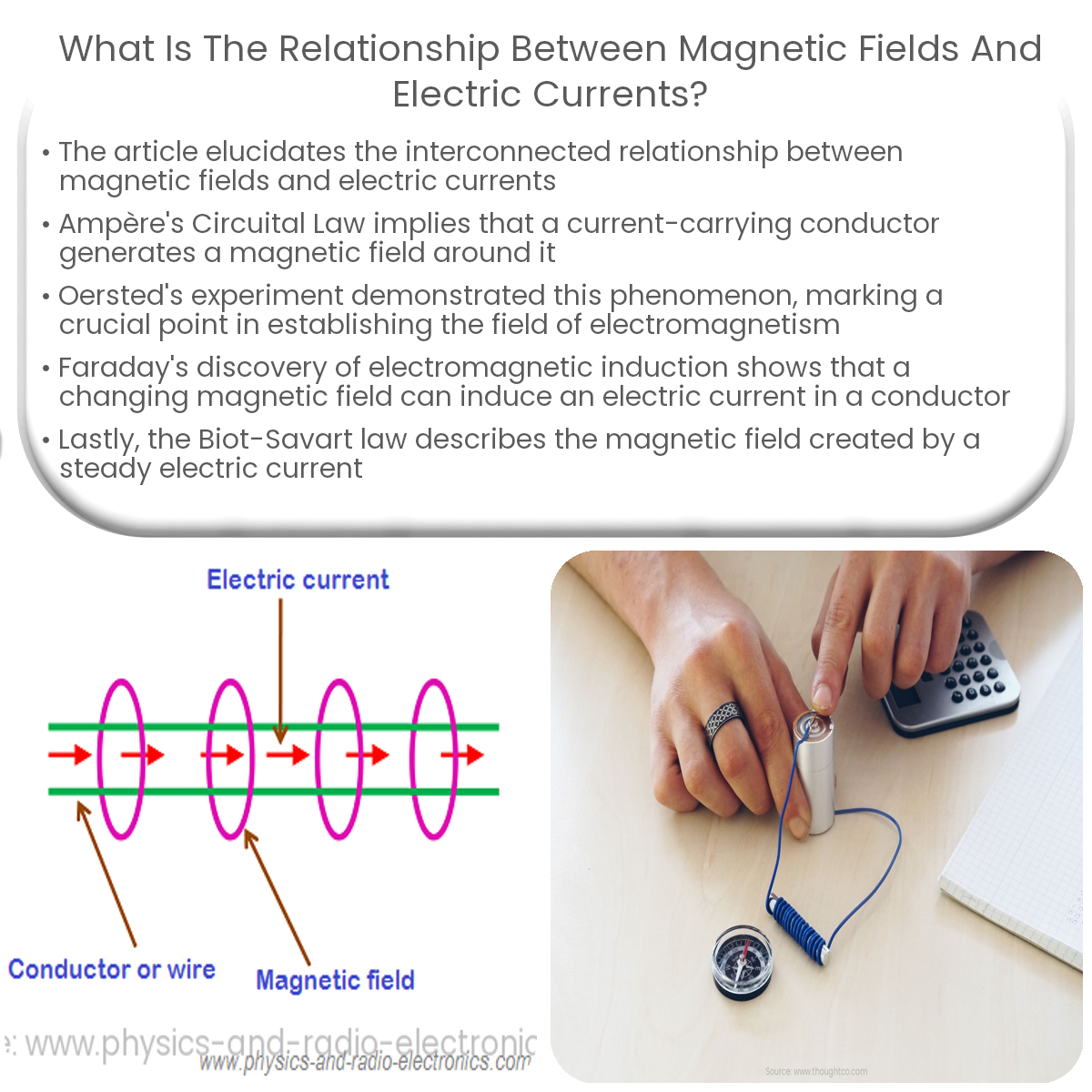
The synergy between electricity and magnetism was first codified in the 19th century, but its practical application has become the defining characteristic of 21st-century technology. At its simplest, the relationship is reciprocal: an electric current flowing through a conductor creates a magnetic field, and a changing magnetic field can induce an electric current in a nearby circuit. This phenomenon, known as electromagnetic induction, is the cornerstone of almost every hardware component we use today.
The Foundation of Modern Power Delivery
Every gadget in our pockets relies on power management systems that leverage electromagnetism. When you plug your laptop into a wall outlet, you aren’t just connecting it to a battery. You are engaging a sophisticated series of transformers and inductors. These components use magnetic fields to step down high-voltage electricity into the precise, low-voltage currents required by delicate silicon microchips. Without the ability to convert and regulate energy through magnetic flux, modern semiconductors would instantly succumb to thermal failure.
In the realm of portable tech, we see the evolution of this relationship in the rise of Gallium Nitride (GaN) chargers. These devices use high-frequency electromagnetic switching to deliver more power in smaller footprints. By optimizing the magnetic properties of the transformer cores, tech companies have been able to shrink the physical size of power bricks while increasing charging speeds for laptops and smartphones.
Wireless Charging and the Qi Standard
Perhaps the most visible consumer-facing application of the electricity-magnetism relationship is wireless charging. Standards like Qi and Apple’s MagSafe utilize inductive coupling to transfer energy through the air. A copper coil inside the charging pad generates an oscillating magnetic field. When a compatible device with its own internal coil is placed within this field, the magnetism induces a current in the device’s coil, which is then rectified and used to charge the battery.
This tech trend is moving toward “spatial charging,” where devices can charge from several feet away using beamforming magnetic resonance. This represents a significant leap in convenience, removing the need for physical connectors and reducing mechanical wear and tear on ports—a major win for device longevity and digital security.
From Storage to Processing: How Magnetic Fields Shape Computing
While we often think of computers as purely electronic, they have historically been—and continue to be—deeply magnetic. The relationship between these two forces is what allowed the “Big Data” revolution to occur, providing the physical means to store and retrieve the massive amounts of information required for modern software and AI models.
The Evolution of Data Storage
For decades, the Hard Disk Drive (HDD) was the gold standard for data storage. These devices function by using an electromagnetic read/write head to flip the magnetic polarity of microscopic grains on a spinning platter. Each flip represents a binary 1 or 0. Even as Solid State Drives (SSDs) become the norm for consumer laptops due to their speed, magnetic tape and high-capacity HDDs remain the backbone of the global cloud infrastructure.
The density at which we can pack magnetic information has scaled exponentially. Technologies like Heat-Assisted Magnetic Recording (HAMR) use lasers to momentarily heat the storage medium, allowing the magnetic field to write data to even smaller areas. This tech allows data centers to house the trillions of parameters required to train Large Language Models (LLMs), proving that the old relationship between electricity and magnetism is still the primary enabler of the newest AI tools.
MRAM: The Future of Memory
A burgeoning tech trend that bridges the gap between electricity and magnetism is Magnetoresistive Random Access Memory (MRAM). Unlike traditional RAM, which stores data as an electric charge that disappears when the power is cut, MRAM uses magnetic states to store data. This makes it “non-volatile,” meaning it retains information without power, similar to a flash drive, but with the speed of system memory.

MRAM is highly resistant to radiation and extreme temperatures, making it a favorite for industrial IoT (Internet of Things) devices and aerospace technology. As we move toward edge computing—where AI processing happens directly on the device rather than in the cloud—MRAM’s ability to combine the benefits of magnetism and electricity offers a path toward ultra-low-power, “instant-on” computing.
Electromagnetism in Digital Connectivity and Security
The digital world is defined by connectivity. Whether it is a 5G signal, a Wi-Fi 6E network, or a Bluetooth connection to your earbuds, we are communicating via electromagnetic waves. The relationship between electricity and magnetism allows us to encode digital data into waves that travel through the vacuum of space or the atmosphere at the speed of light.
The Mechanics of Wireless Communication
Every wireless chip in a smartphone is essentially a high-speed modulator that converts electrical signals (data) into electromagnetic radiation. By varying the frequency, amplitude, or phase of these waves, we can transmit complex packets of information across the globe. The transition to higher frequencies in 5G and 6G technology requires a deeper mastery of electromagnetism, utilizing “millimeter waves” that offer massive bandwidth but require precise antenna arrays to manage.
This tech is also at the heart of NFC (Near Field Communication), which powers contactless payments. The security of these transactions relies on the short-range nature of magnetic induction, ensuring that your financial data cannot be “sniffed” from a distance. The physics of the magnetic field provides a natural security perimeter for our digital wallets.
Shielding and Digital Integrity
In high-performance computing and digital security, the relationship between electricity and magnetism presents a challenge: electromagnetic interference (EMI). Because moving electricity creates magnetism, the components inside a high-speed router or a secure laptop can interfere with one another. This “noise” can lead to data corruption or even allow “side-channel attacks,” where hackers monitor electromagnetic emissions to steal encryption keys.
To counter this, the tech industry employs advanced shielding techniques. Using materials like Mu-metal or specialized conductive coatings, engineers create “Faraday cages” around sensitive components. This ensures that the magnetic fields generated by a powerful processor don’t disrupt the electrical signals in the memory bus, maintaining the integrity and security of the digital system.
The Future: Spintronics and the AI Hardware Revolution
As we push toward the limits of Moore’s Law, the tech industry is looking for ways to move beyond traditional electron-flow computing. This is where “spintronics” comes into play. Spintronics, or spin electronics, is a cutting-edge field that utilizes the intrinsic “spin” of electrons—a quantum mechanical property linked to magnetism—rather than just their electrical charge.
Spintronics and Energy-Efficient AI
Traditional chips generate a massive amount of heat because moving electrons through silicon creates resistance. Spintronic devices, however, change their magnetic state with very little energy and almost no heat. For the AI industry, which is currently struggling with the massive energy demands of GPU clusters, spintronics represents a potential holy grail. By leveraging the magnetic properties of electrons, we could build AI hardware that is 100 times more energy-efficient than current silicon-based architectures.
High-Speed Data Centers and Magnetics
The infrastructure supporting the internet is also undergoing a magnetic transformation. Optical switches, which route light-based data through fiber-optic cables, are increasingly using magneto-optic effects to manage traffic. By applying a magnetic field to certain crystals, engineers can rotate the polarization of light, allowing for the switching of data packets at speeds that were previously impossible. This synergy ensures that as our demand for bandwidth grows, the underlying physical relationship between electricity and magnetism evolves to meet it.

Conclusion: The Invisible Infrastructure
The relationship between electricity and magnetism is the invisible thread that connects every facet of the technology niche. It is the force that powers our devices, the medium that stores our memories, and the carrier of our digital conversations. For developers, hardware engineers, and tech enthusiasts, understanding this relationship is not just about physics; it is about recognizing the constraints and the possibilities of the digital age.
As we look toward a future defined by quantum computing, autonomous vehicles, and ubiquitous AI, the mastery of electromagnetism remains our most potent tool. The next generation of gadgets will not be built on electricity alone, nor on magnetism alone, but on the increasingly sophisticated dance between the two. In the world of tech, they are inseparable partners, driving the innovations that continue to redefine the boundaries of what is possible.
aViewFromTheCave is a participant in the Amazon Services LLC Associates Program, an affiliate advertising program designed to provide a means for sites to earn advertising fees by advertising and linking to Amazon.com. Amazon, the Amazon logo, AmazonSupply, and the AmazonSupply logo are trademarks of Amazon.com, Inc. or its affiliates. As an Amazon Associate we earn affiliate commissions from qualifying purchases.