
For decades, the pursuit of photorealism in video games has been a relentless journey, pushing the boundaries of hardware and software alike. From the blocky polygons of early 3D games to the highly detailed environments of today, each generation has brought us closer to visuals indistinguishable from reality. Among the most significant leaps in this evolution is ray tracing—a rendering technique that promises to redefine how light behaves in virtual worlds. But what exactly is ray tracing, and how does it elevate the gaming experience?
At its core, ray tracing is a sophisticated method for simulating the physical behavior of light. Unlike traditional rendering techniques that approximate lighting effects, ray tracing models individual light rays as they bounce off surfaces, refract through objects, and eventually reach the virtual camera or player’s eye. This meticulous simulation results in incredibly realistic lighting, reflections, shadows, and global illumination, fundamentally transforming the visual fidelity of modern games. It’s a technology that has long been a staple in film and animation for its unparalleled realism, and its relatively recent introduction to real-time interactive gaming marks a pivotal moment for the industry.
Unpacking the Core Concept: From Pixels to Photons
To truly appreciate ray tracing, it’s essential to understand the rendering paradigm it seeks to augment, or in some cases, replace. For many years, rasterization has been the backbone of real-time 3D graphics, a highly efficient method designed to render scenes quickly. Ray tracing, however, offers a fundamentally different and more physically accurate approach.
The Limitations of Traditional Rasterization
Traditional real-time rendering, primarily reliant on rasterization, works by taking 3D models and projecting them onto a 2D screen, effectively “painting” pixels. While incredibly fast and optimized over decades, rasterization struggles with the complexities of light. Realistic reflections, refractions, and global illumination (the way light bounces around and illuminates a scene indirectly) are typically faked using a variety of clever algorithms and approximations like screen-space reflections, ambient occlusion, and pre-baked lightmaps. These techniques are computationally lighter but often lack the dynamic accuracy and physical plausibility that sophisticated lighting requires. For instance, screen-space reflections can only reflect what’s currently visible on the screen, leading to artifacts or omissions when objects are off-camera. Similarly, pre-baked lighting restricts dynamic changes in the environment.
A Glimpse into Ray Tracing’s Origins
The concept of ray tracing isn’t new; it dates back to the 1960s and was formalized by Turner Whitted in 1979. For decades, it was considered too computationally intensive for real-time applications, relegated to offline rendering for visual effects in movies and animated films where a single frame could take hours or even days to render. The computational demands arise from the fact that for every pixel on the screen, potentially multiple rays must be traced into the scene, each bouncing off surfaces and generating secondary rays for reflections, refractions, and shadows. The sum of these interactions determines the final color and intensity of that single pixel. It’s only with the advent of specialized hardware and highly optimized algorithms that real-time ray tracing in games became a tangible reality.
How Ray Tracing Transforms Gaming Visuals
The impact of ray tracing on game visuals is profound and immediately noticeable. It moves beyond approximations to deliver a level of realism that was previously unattainable, creating more immersive and believable virtual worlds.
Realistic Lighting and Global Illumination
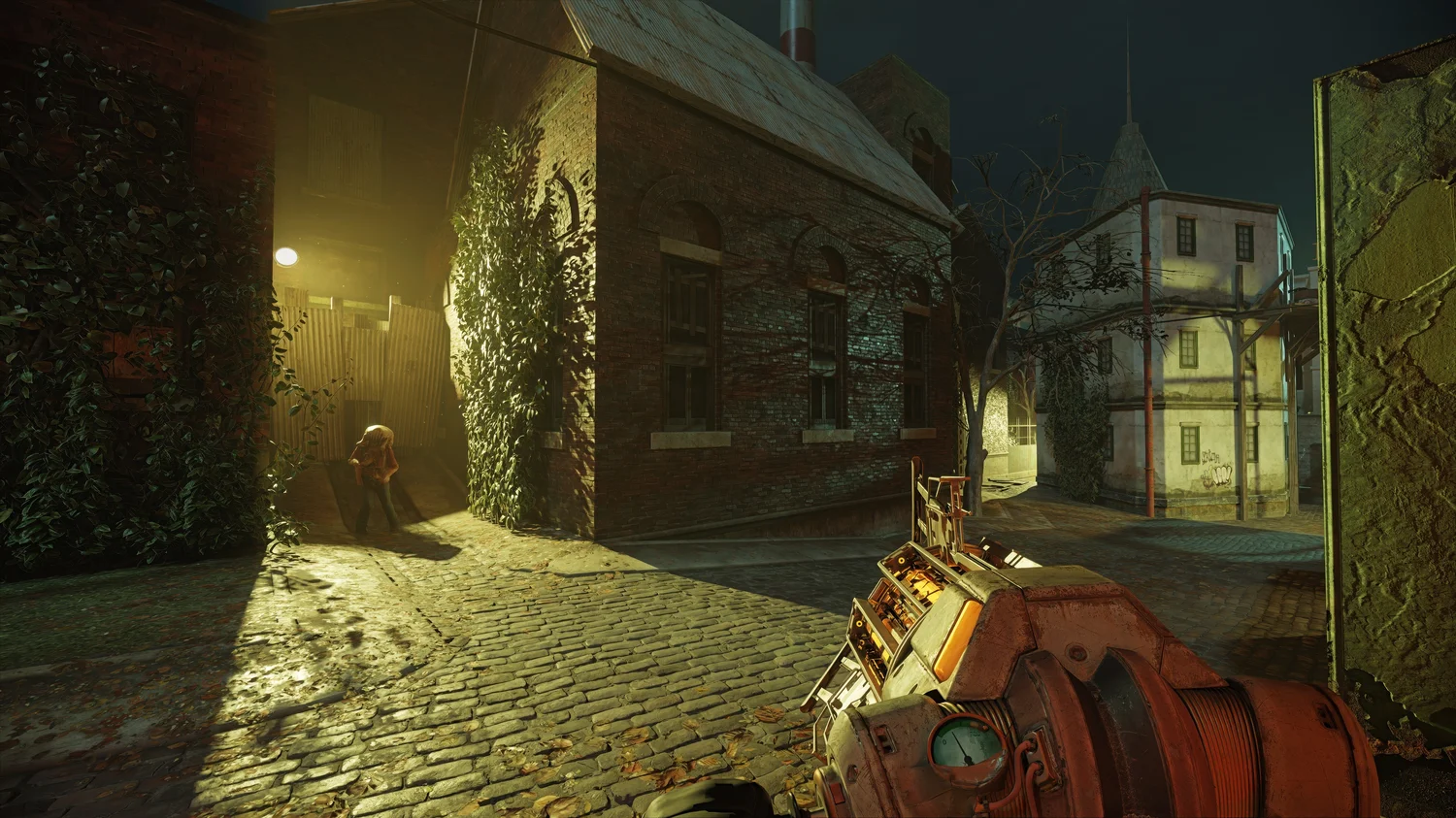
Perhaps the most significant contribution of ray tracing is its ability to simulate realistic lighting and global illumination. Instead of relying on approximations for how light spreads and interacts with an environment, ray tracing calculates direct and indirect light paths. This means that light from a window will not only illuminate the wall directly opposite but will also bounce off that wall, subtly illuminating other parts of the room. This indirect lighting adds depth, realism, and atmosphere that static or approximated lighting schemes simply cannot match. Scenes feel more grounded and natural, with soft light spilling into dark corners and subtle color bounces from colored surfaces.
Hyper-Accurate Reflections
Reflections are often a tell-tale sign of a game’s rendering capabilities. With ray tracing, reflections are no longer limited to what’s on screen or pre-rendered. Every reflective surface—be it a polished floor, a pane of glass, a metallic weapon, or a puddle on the ground—can accurately mirror the entire 3D environment, including objects, characters, and light sources that might be off-screen. These reflections are dynamic and physically accurate, changing in real-time as the player moves and the environment changes. The effect is particularly striking in games with wet surfaces, highly polished interiors, or reflective bodies of water, adding incredible visual richness and depth.
Dynamic Refractions and Shadows
Beyond reflections, ray tracing also excels at simulating refractions through transparent objects like glass, water, or ice. Light rays bend and distort as they pass through these materials, creating visually convincing distortions that add another layer of realism. Similarly, shadows are rendered with unprecedented accuracy. Ray-traced shadows are soft, volumetric, and adapt to the precise shape and position of light sources and objects. Shadows will accurately soften with distance from the caster (penumbra effects) and vary in intensity based on the light source and surface properties, rather than being simple, hard-edged silhouettes. This nuanced shadow rendition significantly enhances the sense of depth and believability in a scene.
The Technical Underpinnings: How It Works
Bringing ray tracing to real-time interactive experiences required significant breakthroughs in both algorithms and hardware. The process, while still complex, has been optimized to an incredible degree.
Tracing Rays: The Path to Realism
The fundamental principle of ray tracing involves tracing the path of light rays. In the context of real-time rendering, this is often done backwards from the “camera” (the player’s viewpoint) into the scene. For each pixel on the screen, a primary ray is cast. When this ray hits an object, the renderer determines its color and brightness. This isn’t a simple calculation; it involves casting secondary rays:
-
Shadow rays: Sent from the hit point towards light sources to determine if the point is in shadow.
-
Reflection rays: Sent in a reflected direction to determine what the surface reflects.
-
Refraction rays: Sent through transparent objects, bending according to their material properties.
Each of these secondary rays can generate further rays, creating a complex tree of interactions. The results of all these traced rays are then combined to determine the final color of the original pixel. This recursive process is what gives ray tracing its power and its computational intensity.

Denoising and Hybrid Rendering Approaches
Pure path tracing (a more advanced form of ray tracing) where every single light path is traced multiple times, is still too demanding for most real-time games. To make ray tracing viable for gaming, developers employ a hybrid rendering approach. This typically involves using traditional rasterization for the bulk of the scene geometry and texture mapping, and then selectively applying ray tracing for specific, computationally intensive lighting effects like reflections, shadows, or global illumination.
Furthermore, a significant challenge with ray tracing is “noise.” Because only a limited number of rays can be cast per pixel in real-time, the resulting image can appear grainy, especially in areas with complex lighting. This is where denoising algorithms come into play. These sophisticated machine learning-powered filters analyze the noisy ray-traced image and intelligently smooth out the noise while preserving fine details, making the final image appear clean and realistic without requiring an impractical number of rays.
Hardware Acceleration: The RTX Revolution
The real game-changer for ray tracing in games was the introduction of specialized hardware. NVIDIA’s RTX series graphics cards, launched in 2018, were the first to feature dedicated “RT Cores” specifically designed to accelerate ray-tracing calculations. These cores efficiently handle the intersection tests between rays and scene geometry, drastically reducing the computational burden that would otherwise overwhelm traditional shader cores. AMD later followed suit with its RDNA 2 architecture (found in Radeon RX 6000 series GPUs and the latest generation of consoles like PlayStation 5 and Xbox Series X/S), also including hardware-accelerated ray tracing capabilities. This dedicated hardware is what transformed ray tracing from a theoretical ideal into a practical, albeit demanding, feature for real-time interactive entertainment.
The Current Landscape and Future of Ray Tracing
Since its introduction, ray tracing has steadily gained traction, becoming a standard feature in many AAA titles and pushing the boundaries of visual fidelity across various platforms.
Performance Considerations and Optimization
Despite hardware acceleration, ray tracing remains one of the most demanding graphical features. Enabling ray tracing often comes with a significant performance cost, leading to lower frame rates. This is why many games offer different levels of ray tracing implementation (e.g., “medium” or “ultra” settings) or allow players to toggle specific ray-traced effects. Techniques like NVIDIA’s DLSS (Deep Learning Super Sampling) and AMD’s FSR (FidelityFX Super Resolution) are crucial for mitigating this performance impact. These upscaling technologies render the game at a lower resolution and then use AI or advanced algorithms to upscale it to a higher resolution, often with impressive visual results, thus reclaiming some of the frames lost to ray tracing. Ongoing optimization of rendering pipelines, more efficient algorithms, and continued advancements in GPU architecture will further reduce the performance overhead.
Adoption Across Platforms and Game Engines
Ray tracing is no longer exclusive to high-end PC gaming. With the PlayStation 5 and Xbox Series X/S consoles featuring hardware-accelerated ray tracing, the technology has become more widespread. Major game engines like Unreal Engine, Unity, and Frostbite have integrated robust ray tracing support, making it easier for developers to implement these advanced visual effects. As the technology matures and becomes more accessible, we can expect to see ray tracing features become standard in a wider range of games, from massive open-world epics to intricately designed narrative experiences.
Beyond Visuals: Ray Tracing’s Untapped Potential
While primarily lauded for its visual enhancements, ray tracing holds promise for more than just pretty pictures. The underlying principles of tracing rays can be applied to other aspects of game development:
-
Audio: Simulating how sound waves bounce and reflect in an environment for more accurate acoustic realism.
-
Physics: More precise collision detection and object interaction.
-
AI: Potentially informing AI characters about line-of-sight and environmental awareness in a more nuanced way.
As developers continue to explore and innovate, the applications of ray tracing may extend far beyond simply rendering light, potentially enhancing immersion and gameplay mechanics in novel ways.
Is Ray Tracing Worth It? Weighing the Pros and Cons
The question of whether ray tracing is “worth it” is complex and depends heavily on individual priorities, hardware capabilities, and game preferences.
The Visual Fidelity Argument
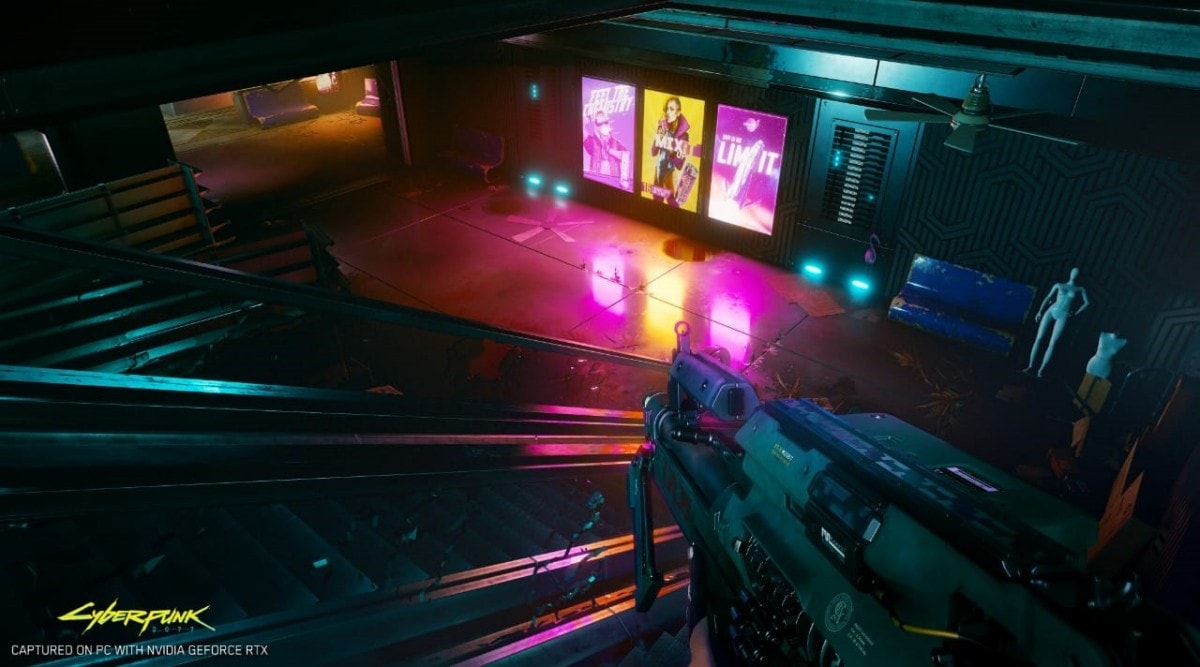
For those who prioritize cutting-edge visuals and an unparalleled sense of realism, ray tracing is an absolute game-changer. The way light behaves, the accuracy of reflections, and the depth of shadows create an incredibly immersive and believable environment that traditional rendering struggles to replicate. In titles like Cyberpunk 2077, Control, or Metro Exodus, ray tracing transforms the atmosphere, making worlds feel more alive and tangible. For many, the visual upgrade alone justifies the performance cost.
The Performance Overhead Dilemma
Conversely, the significant performance hit is the main drawback for many players. If running a game with ray tracing means sacrificing smooth frame rates or having to play at a lower resolution, some might find the trade-off unacceptable. The enjoyment derived from high frame rates and responsive gameplay often outweighs the desire for enhanced visuals. This is especially true for competitive multiplayer games where every frame matters. For users with mid-range hardware, enabling ray tracing might push their system beyond its comfortable limits.
The Evolving Ecosystem
Ultimately, ray tracing is a technology in its relative infancy within real-time gaming. As hardware continues to evolve, as rendering techniques become more efficient, and as upscaling technologies improve, the performance cost of ray tracing will undoubtedly decrease. For now, it represents a premium visual experience for those with the hardware to run it comfortably. It’s a testament to the industry’s relentless pursuit of realism, offering a glimpse into a future where virtual worlds might truly be indistinguishable from our own. As it matures, ray tracing will likely become a fundamental component of gaming graphics, universally enhancing the visual splendor and immersive quality of digital experiences.
aViewFromTheCave is a participant in the Amazon Services LLC Associates Program, an affiliate advertising program designed to provide a means for sites to earn advertising fees by advertising and linking to Amazon.com. Amazon, the Amazon logo, AmazonSupply, and the AmazonSupply logo are trademarks of Amazon.com, Inc. or its affiliates. As an Amazon Associate we earn affiliate commissions from qualifying purchases.