
In the complex symphony of aerospace engineering, where every component plays a critical role in ensuring safety and performance, certain systems stand out for their sheer ingenuity and life-saving potential. Among these is a component known by the acronym RAT, which, far from referring to a rodent, represents a crucial piece of technology: the Ram Air Turbine. The RAT is an elegant, yet robust, emergency power generation system designed to be a last resort when all primary power sources fail. Its very existence is a testament to the aerospace industry’s unwavering commitment to redundancy and safety, providing a lifeline that can mean the difference between a controlled emergency landing and a catastrophic failure.

Modern aircraft are marvels of electrical and hydraulic integration, relying heavily on a continuous supply of power to operate everything from flight controls and navigation systems to cabin pressurization and communication equipment. While primary power systems are incredibly reliable, engineers must account for exceedingly rare but possible scenarios where these systems become incapacitated. This is precisely where the Ram Air Turbine steps in, an unassuming yet immensely powerful device that harnesses the simplest of forces – the airflow around the aircraft – to restore essential functions and allow pilots to maintain control. Understanding the RAT is to appreciate a core tenet of aviation safety: prepare for the worst, even as you strive for the best.
The Lifeline in the Sky: Introducing the Ram Air Turbine (RAT)
The Ram Air Turbine is a testament to engineering foresight, a system designed not for routine operation but for those critical, extraordinary moments when an aircraft’s very survival hangs in the balance. It embodies the principle of “fail-safe” design, providing an independent power source free from the vulnerabilities that might affect an aircraft’s primary generators.
Beyond the Acronym: Defining the RAT
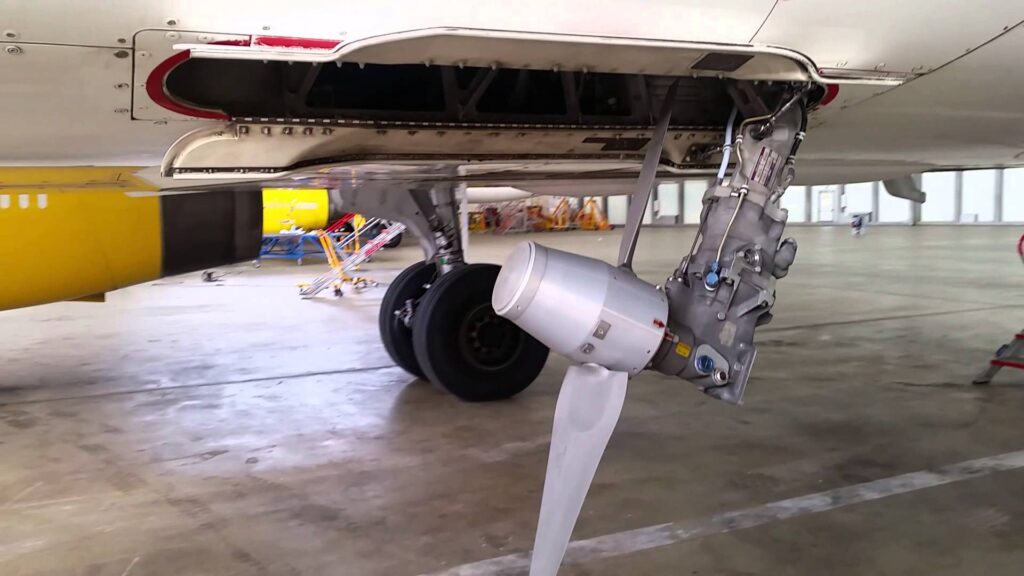
At its most fundamental, a Ram Air Turbine is a small turbine, typically with two to four blades, connected to a generator or a hydraulic pump. It is stowed within the aircraft’s fuselage or wing structure and deployed into the airstream when needed. The “ram air” refers to the dynamic pressure of the air flowing past the aircraft, which, when encountering the turbine blades, causes them to spin rapidly, much like a miniature wind turbine. This rotational energy is then converted into usable power.
Unlike main engines or Auxiliary Power Units (APUs), which consume fuel to generate power, the RAT is entirely passive in its energy generation. It requires no fuel and relies solely on the aircraft’s speed through the air. This inherent independence makes it an ideal emergency system, as its operation is not contingent on the health of other aircraft systems that might have failed.
The Core Function: Emergency Power Generation
The primary function of the RAT is to provide emergency electrical power and/or hydraulic pressure to critical aircraft systems. The specific systems powered by the RAT vary by aircraft type and manufacturer, but they invariably include those essential for flight control, navigation, and emergency communication.
- Electrical Power: In many configurations, the RAT drives an electrical generator, providing direct current (DC) power to vital avionics, flight instrumentation, and communication radios. This ensures that pilots can still see their displays, communicate with air traffic control, and navigate safely.
- Hydraulic Power: In other configurations, or sometimes in conjunction with electrical generation, the RAT drives a hydraulic pump. This restores hydraulic pressure to essential flight control surfaces such as ailerons, elevators, and rudders, which are often hydraulically actuated. Without hydraulic power, manipulating these surfaces can become impossible or exceedingly difficult, rendering the aircraft uncontrollable.
The RAT’s role is not to power the entire aircraft—that would be an impossibly large demand for such a small system—but rather to power a carefully selected set of minimum essential systems necessary for a controlled flight and landing.
A Last Resort: When the RAT Deploys
The deployment of a RAT is always an indication of a severe in-flight emergency. It is typically triggered automatically upon a detected failure of all main electrical generators or hydraulic pumps, or manually by the flight crew when facing a critical power loss. Once deployed, the RAT extends from the aircraft’s body and begins to spin, instantly tapping into the aircraft’s airspeed.
The loud whirring sound and physical extension of the RAT are unmistakable signs to passengers that something out of the ordinary is happening. However, for the flight crew, it signifies the activation of a critical safeguard, providing the tools they need to manage the emergency and guide the aircraft to a safe resolution. It represents a transition from a potentially catastrophic situation to a manageable emergency, underscoring its indispensable value.
Engineering Marvel: How the RAT Works
While conceptually simple, the Ram Air Turbine is a triumph of mechanical engineering and aerodynamic design, optimized to deliver reliable power under extreme and infrequent conditions. Its effectiveness hinges on its ability to quickly and efficiently convert kinetic energy from the airflow into useful mechanical or electrical energy.
Aerodynamic Principles in Action
The core principle behind the RAT is straightforward: leverage the relative wind generated by the aircraft’s forward motion. As the aircraft moves through the air, it creates a “ram effect”—air is forced into the turbine blades. The angle, shape, and number of these blades are meticulously designed to maximize rotational speed and torque for a given airspeed, ensuring that sufficient power is generated even at lower emergency airspeeds.
The turbine’s efficiency is crucial. It must be designed to generate enough power without creating excessive drag that would further complicate an already dire emergency. Materials used are lightweight yet incredibly strong, capable of withstanding the forces of deployment and continuous high-speed rotation in various atmospheric conditions.
Mechanical and Electrical Integration
Once the turbine blades start spinning, this mechanical energy is transferred via a shaft to either an electrical generator or a hydraulic pump, or sometimes a combination of both.
- Electrical Generation: If the RAT is configured for electrical power, the spinning shaft drives an alternator or generator. This produces alternating current (AC) power, which is then typically rectified to direct current (DC) and conditioned to match the aircraft’s emergency bus requirements. This ensures a stable and clean power supply for sensitive electronic systems.
- Hydraulic Pumping: When configured for hydraulic power, the shaft drives a hydraulic pump. This pump draws hydraulic fluid from a reservoir and pressurizes it, sending it through lines to the actuators that control flight surfaces. The pressure must be sufficient to provide adequate control authority for the pilot.
The integration of these systems is seamless, with automatic transfer switches and check valves ensuring that once the RAT comes online, its power is routed to the appropriate emergency systems without requiring extensive manual intervention from the flight crew during an already stressful situation.
Powering Essential Systems: Hydraulics and Electrics
The selection of which systems the RAT powers is a critical design decision. It’s a balance between providing enough capability for safe flight and landing, and not overburdening the relatively small power output of the RAT.
Typically, the RAT provides power to:
- Primary Flight Controls: Actuators for ailerons, elevators, and rudder, allowing the pilot to steer the aircraft.
- Essential Flight Instruments: Primary Flight Display (PFD), Navigation Display (ND), and backup instruments, giving the pilot crucial information about attitude, airspeed, and altitude.
- Communication Radios: To maintain contact with Air Traffic Control (ATC) and other emergency services.
- Limited Navigation Systems: Such as GPS or Inertial Reference Systems (IRS) to guide the aircraft.
- Emergency Lighting: For visibility within the cockpit and cabin during an emergency.
Crucially, the RAT is not designed to power non-essential systems like cabin entertainment, galleys, or even full air conditioning. Its sole purpose is to keep the aircraft flying and controllable, enabling a safe resolution to the emergency.
The Critical Scenarios: Why the RAT is Indispensable
The Ram Air Turbine is not merely an optional feature; it is a fundamental safety component mandated by aviation regulations for certain aircraft types. Its presence is vital in specific, high-stakes scenarios where primary power failures could lead to catastrophic outcomes.
Dual Engine Failure: The Ultimate Test
One of the most severe emergencies an aircraft can face is the failure of all its main engines. While incredibly rare, such events, whether due to fuel exhaustion, volcanic ash, or other systemic issues, have occurred. In a dual (or multi-engine) failure, the main engine-driven generators, which are the primary source of electrical and hydraulic power, cease to function.
In this “glide” scenario, the RAT automatically deploys (or is manually deployed) to harness the aircraft’s remaining kinetic energy. It becomes the sole source of critical power, enabling the flight crew to maintain control, communicate, and navigate the powerless aircraft to the nearest suitable airport for an emergency landing. Without the RAT, the aircraft would quickly become uncontrollable, effectively turning into a very heavy glider without any means of steering or communication. The RAT converts a dire emergency into a potentially survivable one.
Loss of Main Electrical Generators
Even if engines are running, a comprehensive failure of the main electrical generation system (e.g., all engine-driven generators and the APU generator) would plunge the aircraft into darkness, disabling critical avionics and flight systems. In such an event, the RAT is designed to automatically deploy, providing enough emergency power to restore essential electrical services, including critical flight instruments, communication radios, and navigation systems. This allows the crew to troubleshoot the primary power failure or to proceed with an emergency landing.
Hydraulic System Malfunctions
Modern large aircraft rely heavily on hydraulic power for controlling flight surfaces, landing gear, brakes, and nose wheel steering. While aircraft often have multiple independent hydraulic systems, a scenario involving the loss of all primary hydraulic systems (e.g., due to a major leak or pump failures across systems) would severely compromise the aircraft’s controllability.
In such cases, a RAT configured to drive a hydraulic pump would deploy, restoring a baseline level of hydraulic pressure to essential flight controls. This allows pilots to maneuver the aircraft, albeit with potentially reduced control authority, and perform a controlled landing. The RAT acts as a bridge, maintaining critical functionality when all other redundancies have been exhausted.
Design, Deployment, and Maintenance: Ensuring Reliability
The reliability of the Ram Air Turbine is paramount, given its role as an emergency last resort. This reliability is built into every stage, from its initial design and manufacturing to its deployment mechanisms and ongoing maintenance.
Design Considerations: Size, Placement, and Aerodynamics
RATs are designed with several key considerations in mind:
- Aerodynamic Integration: When stowed, the RAT must be flush with the aircraft’s surface to minimize drag. Upon deployment, its shape and position are optimized to efficiently capture airflow while creating acceptable levels of drag.
- Robust Construction: Given the forces it experiences during deployment and operation (high speeds, potential turbulence, cold temperatures), the RAT must be incredibly durable. Materials like high-strength aluminum alloys and composites are common.
- Compactness: It must fit within constrained spaces in the fuselage or wing, yet be large enough to generate sufficient power.
- Power Output: The turbine and generator/pump combination must be sized to meet the specific emergency power requirements of the aircraft it serves.
The placement of the RAT is also strategic, typically in an area that can easily be exposed to unobstructed airflow, such as the underside of the fuselage or near the wing root.
Automatic vs. Manual Deployment Mechanisms
RATs can be deployed either automatically or manually:
- Automatic Deployment: This is the most common method. Sensors continuously monitor the status of the main electrical generators and hydraulic systems. If a critical failure is detected (e.g., voltage drops below a threshold, hydraulic pressure falls), the RAT is automatically released and extended into the airstream. This ensures immediate action without pilot intervention, which is crucial in rapidly developing emergencies.
- Manual Deployment: Flight crews also have the option to manually deploy the RAT via a switch in the cockpit. This provides an additional layer of control, allowing pilots to activate the system if they perceive a power issue that the automatic system has not yet registered, or if they choose to activate it proactively during certain emergency procedures.
The deployment mechanism itself is robust, often involving a pyrotechnic charge or a spring-loaded system that ensures rapid and forceful extension, even against aerodynamic forces.
Rigorous Testing and Maintenance Protocols
Given its emergency role, the RAT is subjected to extremely rigorous testing and maintenance:
- Ground Testing: During aircraft manufacture and major maintenance checks, RATs are often deployed on the ground to confirm their mechanical integrity and power generation capabilities. This involves using ground-based air sources or simulating high-speed airflow.
- Flight Testing: During the certification of a new aircraft type, RAT deployment and operation are extensively tested in flight, sometimes multiple times, to validate its performance under actual aerodynamic conditions.
- Scheduled Maintenance: RATs undergo regular inspections and overhauls at specified intervals, even if never deployed in an emergency. This includes checking for corrosion, wear on bearings, fluid levels in hydraulic systems, and the integrity of electrical connections.
- Post-Deployment Inspection: If a RAT is deployed in an actual emergency, it undergoes a thorough inspection and often a complete overhaul or replacement before the aircraft is cleared for further flight.
These stringent protocols ensure that the RAT, though rarely used, remains in peak operational condition, ready to perform its vital function whenever called upon.
The Impact on Aviation Safety and Future Developments
The Ram Air Turbine is more than just a piece of hardware; it is a foundational element of aviation safety, embodying the industry’s deep-rooted commitment to redundancy and continuous improvement.
A Cornerstone of Redundancy and Safety
The RAT is a prime example of a “dark sky” or “black start” capability—the ability to restart essential functions from a completely powered-down state. It provides a level of independence from primary systems that few other aircraft components can match. This multi-layered approach to power generation (main engines, APU, then RAT) is a critical factor in the exceptionally high safety record of commercial aviation.
It assures that even in the face of unforeseen and extreme system failures, pilots retain the fundamental tools required to navigate and land their aircraft safely. This resilience builds confidence not only among flight crews but also among passengers, knowing that multiple layers of protection are in place.
Pilot Training and Operational Procedures
Pilots undergo extensive training on the operation of the RAT and the procedures associated with its deployment. This includes simulator exercises that replicate scenarios of total power loss, allowing them to practice managing an aircraft solely on RAT power. They learn the specific limitations of RAT power (e.g., reduced hydraulic pressure, limited electrical loads) and how to adapt their flight techniques and emergency checklists accordingly. This hands-on training ensures that if the RAT ever deploys in a real-world scenario, the flight crew can respond effectively and efficiently, maximizing the chances of a safe outcome.

Evolution of Emergency Power Systems
While the fundamental concept of the Ram Air Turbine has remained consistent for decades, its implementation and integration continue to evolve. Modern RATs are more efficient, lighter, and more seamlessly integrated with aircraft’s digital flight control systems. There’s ongoing research into alternative emergency power sources, such as advanced battery systems or even fuel cells, but for now, the RAT remains the gold standard for immediate, robust, and independent emergency power generation in most large commercial aircraft.
As aircraft become increasingly electrified and autonomous, the importance of reliable and redundant power sources, including systems like the RAT, will only grow. Future developments might see RATs optimized for hybrid aircraft, or integrated with advanced energy storage solutions, further enhancing their capabilities and ensuring the continued safety of air travel.
In conclusion, the RAT in an aircraft is far more than an acronym; it’s a critical, high-tech guardian, a symbol of engineering excellence, and an enduring commitment to safety that underscores the very foundation of modern aviation. Its silent presence, stowed away until the direst of circumstances, provides an indispensable lifeline, turning potential catastrophe into manageable emergency, and offering reassurance that every possible measure has been taken to protect those in the sky.
aViewFromTheCave is a participant in the Amazon Services LLC Associates Program, an affiliate advertising program designed to provide a means for sites to earn advertising fees by advertising and linking to Amazon.com. Amazon, the Amazon logo, AmazonSupply, and the AmazonSupply logo are trademarks of Amazon.com, Inc. or its affiliates. As an Amazon Associate we earn affiliate commissions from qualifying purchases.