
The automotive landscape is currently undergoing a seismic shift, transitioning from purely mechanical machines to sophisticated “computers on wheels.” At the heart of this transformation is the development of Advanced Driver Assistance Systems (ADAS), of which Radar Cruise Control—often referred to as Adaptive Cruise Control (ACC)—is a cornerstone technology. By moving beyond the static speed maintenance of the past, Radar Cruise Control represents a significant leap in sensor integration, real-time data processing, and automated vehicle dynamics.
The Mechanics of Modern Motion: How Radar Cruise Control Works
To understand Radar Cruise Control, one must first look at the hardware that makes it possible. Unlike traditional cruise control, which simply locks the throttle at a specific RPM or speed, radar-based systems are “aware” of their surroundings. This awareness is facilitated by a sophisticated suite of sensors and processing units that mimic human perception, albeit with much higher precision and lower latency.
The Role of Millimeter-Wave Radar Sensors
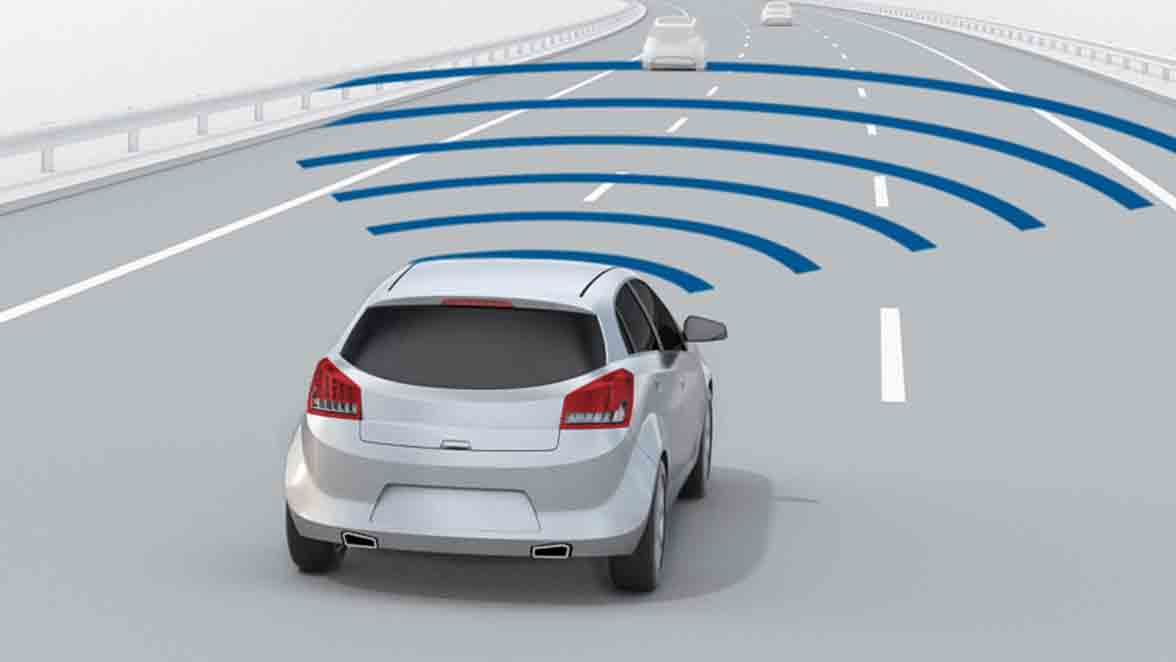
The primary component of this system is the radar unit, typically mounted behind the front grille or the bumper. These sensors emit millimeter-wave signals that travel at the speed of light. When these waves encounter an object—such as the vehicle ahead—they bounce back to the sensor. By calculating the time it takes for the signal to return (Time of Flight) and measuring the frequency shift of the reflected wave (the Doppler Effect), the vehicle’s onboard computer can determine the exact distance, speed, and acceleration of the leading vehicle.
Modern radar sensors are remarkably resilient. Unlike camera-based systems, which can be blinded by heavy rain, fog, or direct sunlight, radar operates at frequencies that can penetrate most atmospheric interference. This makes radar the gold standard for distance sensing in diverse environmental conditions.
Sensor Fusion and Onboard Signal Processing
In high-end automotive technology, radar does not act in isolation. Most modern systems employ “sensor fusion,” a process where data from the radar is combined with inputs from forward-facing cameras and ultrasonic sensors. While the radar is excellent at measuring distance and velocity, cameras are superior at identifying object types (e.g., distinguishing a motorcycle from a truck) and reading lane markings.
The raw data from these sensors is fed into a high-speed Electronic Control Unit (ECU). Using complex algorithms, the ECU filters out “noise”—such as stationary road signs or metallic guardrails—to focus exclusively on relevant moving targets. This real-time processing happens in milliseconds, allowing the vehicle to make minute adjustments to the throttle and braking systems that are often smoother than those made by a human driver.
From Passive to Proactive: Distinguishing ACC from Standard Cruise Control
The evolution from standard cruise control to radar-based systems is a shift from passive automation to proactive intelligence. This transition is fundamental to the user experience and the overall safety profile of modern vehicles.
Constant Velocity vs. Dynamic Spacing
Standard cruise control is a “set it and forget it” tool designed for the open highway. Its only goal is to maintain a constant velocity. If the traffic slows down, the driver must manually intervene by braking, which usually deactivates the system.
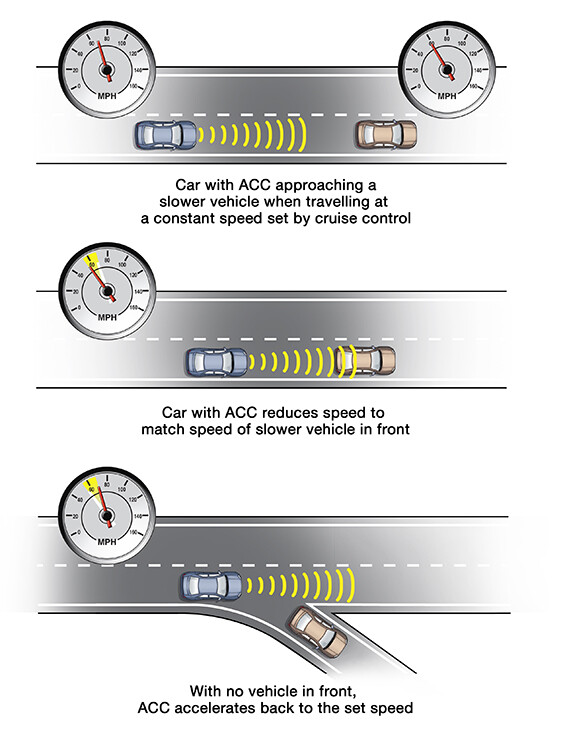
Radar Cruise Control, conversely, is dynamic. It allows the driver to set a desired speed and a preferred “following distance” (usually measured in time intervals or car lengths). If the vehicle ahead slows down, the radar detects the closing gap and signals the ECU to reduce engine power or apply the brakes. Once the path is clear, the system automatically accelerates back to the preset speed. This eliminates the repetitive “brake-and-reset” cycle common in traditional systems.
Stop-and-Go Functionality and Low-Speed Assist
The most advanced iterations of Radar Cruise Control include “Stop-and-Go” or “Traffic Jam Assist” capabilities. Earlier versions of the technology would deactivate once the vehicle dropped below a certain speed (often 20 mph). However, current tech-heavy models utilize high-resolution radar and enhanced braking actuators to bring the car to a complete halt if traffic stops.
If the stop is brief, the car will resume moving automatically when the vehicle ahead pulls away. If the stop is longer, a simple tap on the accelerator or a button press on the steering wheel re-engages the system. This level of automation significantly reduces driver fatigue in congested urban environments, showcasing the transition of the car into a semi-autonomous assistant.
The Technological Ecosystem: Integration with AI and ADAS
Radar Cruise Control is rarely a standalone feature; it is an integral part of a larger ecosystem of Digital Security and Automated Driving Tools. As we move closer to fully autonomous vehicles, the integration of AI and machine learning is refining how these systems behave.
Machine Learning and Predictive Behavior
Leading tech innovators in the automotive space are now utilizing machine learning to improve the “human-like” feel of Radar Cruise Control. By analyzing millions of miles of driving data, AI models can predict how a vehicle should decelerate when a car cuts into its lane. Instead of a jarring, sudden brake application, the system can use predictive modeling to ease off the throttle early, resulting in a more comfortable and energy-efficient transition.
Furthermore, software updates delivered Over-the-Air (OTA) allow manufacturers to refine these algorithms throughout the vehicle’s lifespan. A car purchased today might receive a software patch six months later that improves the radar’s ability to track vehicles through sharp curves, effectively “upgrading” the hardware via code.
Redundancy and Digital Security
As vehicles become more dependent on sensor data, the importance of digital security and system redundancy grows. If a radar sensor fails or provides conflicting data, the system must have a “fail-safe” protocol. This is where the tech stack becomes complex. Tech-forward manufacturers implement “watchdog” processors that constantly monitor the health of the radar and camera systems. If an anomaly is detected—such as a sensor being blocked by mud—the system provides an immediate visual and audible alert to the driver to take full control, ensuring that the automation never operates under compromised conditions.
Precision Control: The Human-Machine Interface (HMI)
The success of any high-tech tool depends on how effectively it communicates with the user. In the context of Radar Cruise Control, the Human-Machine Interface (HMI) is critical for maintaining “situational awareness.”
Visual Feedback via HUDs and Digital Clusters
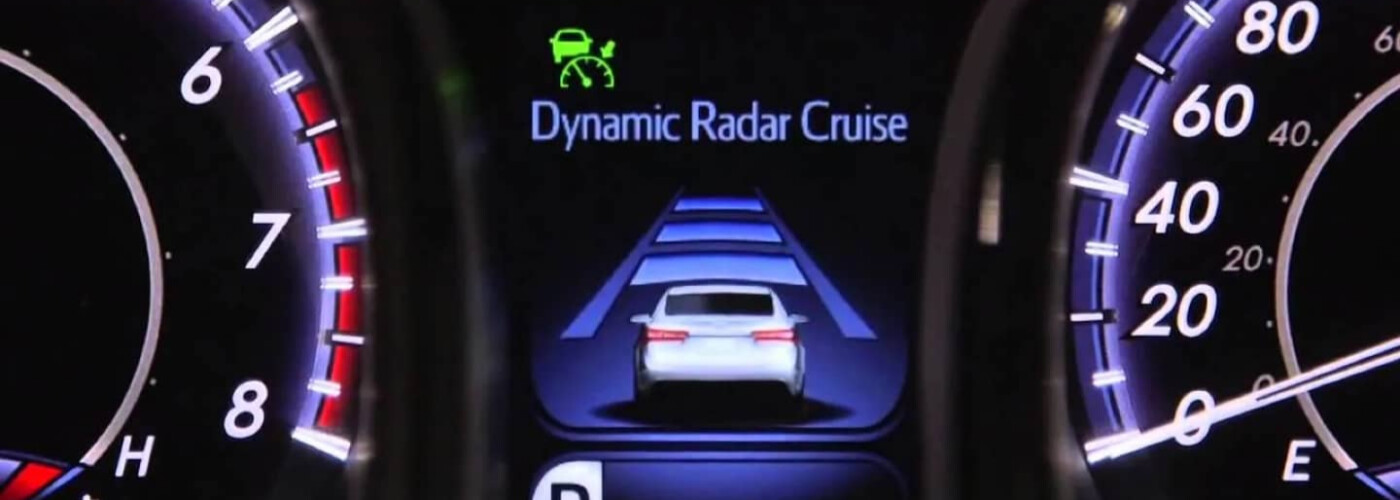
Modern dashboards use high-resolution liquid crystal displays (LCDs) or Head-Up Displays (HUDs) to show the driver exactly what the radar is “seeing.” When a vehicle is detected ahead, a car icon typically appears on the screen, often highlighted in green or blue to indicate a successful lock. This visual confirmation is vital; it builds trust between the driver and the machine, letting the driver know that the tech is functioning as intended.
Haptic and Audible Alerts
Beyond visual cues, many systems use haptic feedback—such as vibrations in the steering wheel or seat—to alert the driver if the radar detects a rapidly closing gap that requires more braking force than the automated system is permitted to apply. This creates a multi-sensory safety net. The technology doesn’t just drive; it coaches the driver and acts as a secondary set of eyes that never gets tired or distracted.
The Road Ahead: Radar Cruise Control as a Gateway to Autonomy
Radar Cruise Control is currently classified under Level 2 of the Society of Automotive Engineers (SAE) levels of driving automation. However, its trajectory is aimed squarely at Levels 3 and 4, where the car assumes more responsibility for the “dynamic driving task.”
Moving Toward Level 3 and Beyond
While current Radar Cruise Control requires the driver to remain attentive and keep their hands on or near the wheel, the next generation of this tech is integrating with high-definition mapping and V2X (Vehicle-to-Everything) communication. In this future-tech scenario, your car’s radar doesn’t just talk to the car in front; it receives data from the traffic lights and the road infrastructure itself.
Imagine a radar system that knows a car three vehicles ahead has slammed on its brakes because of a V2X signal, allowing your vehicle to begin slowing down before your own radar even has a direct line of sight. This is the pinnacle of the “connected car” tech trend.
The Role of LIDAR and Solid-State Radar
The tech industry is also debating the future of radar vs. LIDAR (Light Detection and Ranging). While radar is cost-effective and works well in bad weather, it lacks the high-resolution “point cloud” detail of LIDAR. However, a new generation of “Imaging Radar” or “4D Radar” is emerging. These sensors provide vertical resolution—allowing the car to tell the difference between a bridge (which it can drive under) and a stalled truck (which it must stop for)—at a fraction of the cost of traditional LIDAR.
Conclusion: The Silicon Heart of the Modern Drive
Radar Cruise Control is far more than a convenience feature; it is a sophisticated marriage of microwave physics, high-speed computing, and intelligent software engineering. By automating the most tedious aspects of driving—maintaining distance and managing speed in traffic—it represents a pivotal step in the evolution of consumer technology.
As we look toward a future defined by AI and connectivity, the “smart” radar sensor will remain the primary eyes of the vehicle, transforming our highways into organized, data-driven networks. For the tech-savvy consumer, understanding these systems is no longer optional; it is a glimpse into a future where the boundary between the driver and the digital world continues to blur, resulting in a safer, more efficient journey for everyone on the road.
aViewFromTheCave is a participant in the Amazon Services LLC Associates Program, an affiliate advertising program designed to provide a means for sites to earn advertising fees by advertising and linking to Amazon.com. Amazon, the Amazon logo, AmazonSupply, and the AmazonSupply logo are trademarks of Amazon.com, Inc. or its affiliates. As an Amazon Associate we earn affiliate commissions from qualifying purchases.