
In the rapidly evolving landscape of sports technology, the intersection of big data, predictive analytics, and user experience design has transformed how millions of fans engage with professional sports. At the forefront of this digital shift is the ESPN Fantasy Football platform, a sophisticated piece of software that manages millions of concurrent users every season. One of the most significant quality-of-life features introduced to this platform in recent years is the “Quick Lineup” tool. Far from being a simple button, Quick Lineup represents a complex integration of algorithmic forecasting and streamlined UI/UX design, intended to lower the barrier to entry for casual players while providing a safety net for power users.

To understand what Quick Lineup is from a technical perspective, one must look past the interface and into the backend logic that powers the modern fantasy experience. It is an automated roster-setting utility that utilizes real-time data feeds to populate a user’s starting lineup with the highest-projected players currently on their bench.
The Mechanics of Automation: How the Quick Lineup Tool Works
At its core, the Quick Lineup feature is a sorting algorithm programmed to solve a specific optimization problem within a set of constraints. When a user interacts with this feature, the application initiates a series of calls to ESPN’s proprietary projection engine.
Algorithmic Logic and Projected Points
The primary variable the Quick Lineup tool considers is “Projected Points.” For every player in the NFL, ESPN’s systems generate a weekly score forecast based on a multitude of data points: historical performance, opponent strength, weather conditions, and injury status. When the “Quick Lineup” command is triggered, the software scans the user’s roster, categorizes players by position (QB, RB, WR, TE, FLEX, K, D/ST), and compares the projected totals of those on the starting roster against those on the bench.
If a bench player has a higher projected total than a current starter in the same position group, the algorithm executes a swap. The logic follows a “Greedy Algorithm” approach—it makes the locally optimal choice at each stage (filling each roster slot with the highest available value) with the goal of finding a global optimum (the highest possible total projected score for the week).
Integration with Real-Time Data Feeds
The technical complexity of Quick Lineup increases when accounting for real-time status updates. In the hours leading up to a game, the status of a player can shift from “Questionable” to “Out” in seconds. The Quick Lineup tool is integrated with the platform’s injury reporting system.
From a software engineering standpoint, this requires the tool to check the “Active” status flag in the player database. If a player is flagged as “Out,” the Quick Lineup tool will automatically bypass them, regardless of their projected points, and move to the next highest-projected active player. This ensures that a user’s roster is not only optimized for points but is functionally valid for the upcoming games.
User Experience and Interface Design in the ESPN Fantasy App
The implementation of Quick Lineup is as much a triumph of UI/UX design as it is of data science. In a mobile environment where users often have limited time to manage their teams, reducing the “time to value” is critical for app retention.
Streamlining the Mobile Workflow
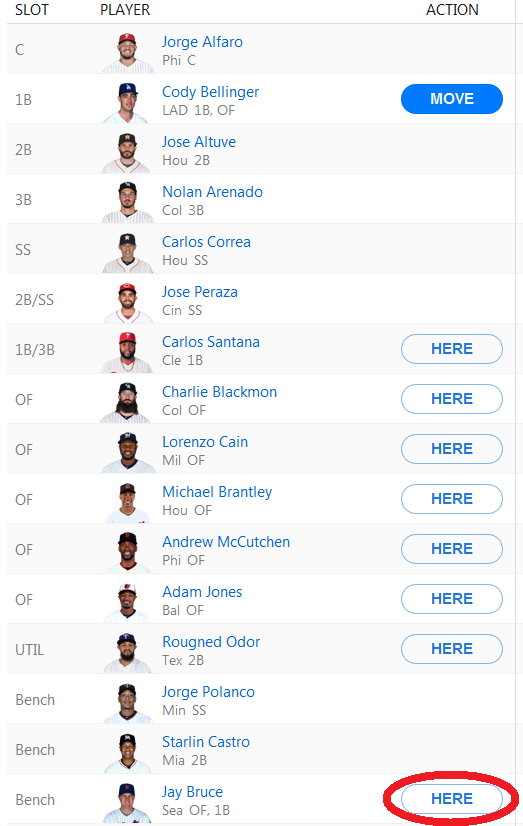
In previous iterations of fantasy software, a user would need to manually tap a player, select “Move,” scroll through their bench, compare numbers, and confirm the switch. This multi-step process, while simple for one player, becomes tedious when managing a 15-player roster across multiple leagues.
The Quick Lineup button serves as a “macro”—a single action that triggers a sequence of automated events. By placing this feature prominently within the “My Team” tab, ESPN’s designers have utilized a design pattern known as “Progressive Disclosure.” It allows casual users to achieve a “good enough” result with one click, while still leaving the manual controls available for those who wish to dive deeper into the minutiae of their matchups.
Accessibility for Casual vs. Power Users
From a product management perspective, Quick Lineup is an accessibility feature. Fantasy football has a high cognitive load; it requires knowledge of depth charts, injury reports, and statistical trends. For a casual user who may only check the app once a week, the Quick Lineup tool removes the “analysis paralysis” that often leads to abandoned teams.
For power users, the tool serves a different purpose: a baseline configuration. An experienced player might use Quick Lineup to set a “default” optimal roster on Tuesday morning, then spend the rest of the week manually tweaking specific positions based on high-level strategy, such as “stacking” a quarterback with a wide receiver or playing a “boom-or-bust” deep threat against a weak secondary.

The Role of Predictive Analytics and AI in Fantasy Sports Software
The Quick Lineup feature is the visible tip of a much larger iceberg involving predictive analytics and machine learning. ESPN’s partnership with companies like IBM (through the Watson integration) has historically brought a layer of AI-driven insight to the platform, and Quick Lineup is the direct beneficiary of this data ecosystem.
Beyond Simple Projections
While the standard Quick Lineup tool often relies on the platform’s base projections, the underlying technology is increasingly moving toward “smart” optimization. This involves analyzing thousands of simulations to determine not just the highest projected mean score, but the safest “floor” or the highest “ceiling.”
Advanced versions of this tech look at “Boom/Bust” percentages. For example, if two players are both projected at 12.5 points, an AI-enhanced Quick Lineup tool might look at the variance in their performance history. If Player A consistently scores 12 points and Player B fluctuates between 2 and 22, the software can provide a recommendation based on whether the user is a heavy favorite (needing a safe floor) or a significant underdog (needing a high ceiling).
Machine Learning and Roster Trends
The software also tracks “wisdom of the crowd” data. By analyzing the “Percentage Started” metric—which tracks how thousands of other league managers are handling a specific player—the system can validate its own projections. If the algorithm projects a player to score highly but the majority of high-performing managers are benching that player, the system can flag this discrepancy. While the current public-facing Quick Lineup tool is primarily deterministic, the infrastructure is in place for a more probabilistic, AI-guided assistant that learns from user behavior over time.
Security, Reliability, and Server-Side Execution
When a user clicks “Quick Lineup,” the request is processed on ESPN’s servers, not just locally on the device. This ensures that the roster change is synchronized across all platforms—web, mobile, and tablet—instantly.
Protecting User Data and Roster Integrity
Security is a paramount concern in any application involving competitive play. The Quick Lineup execution must be authenticated via a secure API token to ensure that the request is coming from the authorized team owner. Furthermore, the system must include “locks” that prevent changes to players whose games have already started. The backend code for Quick Lineup includes a timestamp validation check: if Current_Time > Game_Start_Time, the player object becomes “Read-Only,” and the Quick Lineup algorithm is forced to skip that roster slot.
Scalability During Peak Traffic
The most significant technical challenge for the Quick Lineup feature is concurrency. On a typical NFL Sunday, millions of users log in between 12:00 PM and 1:00 PM ET to make final adjustments. This creates a massive spike in database queries.
To handle this, ESPN utilizes sophisticated load balancing and caching strategies. The projections used by the Quick Lineup tool are often cached at the edge (closer to the user) to reduce the strain on the central database. When a user triggers a Quick Lineup, the server calculates the new roster state and pushes a “batch update” to the database, minimizing the number of write-operations required and ensuring the app remains responsive even during peak loads.
The Future of Algorithmic Management in Digital Sports Platforms
The Quick Lineup tool is just the beginning of what we can expect from automated management in the sports tech sector. As AI agents become more prevalent, the transition from “automation on command” to “proactive automation” is inevitable.
We are moving toward a future where a fantasy app might proactively send a push notification: “Your starting RB was just ruled out. Would you like to use Quick Lineup to find the best replacement?” This shift from reactive tools to proactive assistants represents the next frontier in app development.
Furthermore, as natural language processing (NLP) improves, the “Quick Lineup” function may move beyond a button and into a voice command or a chat-based interface. A user might say, “Optimize my lineup for the highest floor,” and the software will execute a complex series of swaps based on volatility data rather than just mean projections.
In conclusion, “Quick Lineup” on ESPN Fantasy Football is a masterclass in how complex data can be distilled into a simple, user-friendly feature. It bridges the gap between the sophisticated world of sports analytics and the everyday consumer, proving that in the world of modern software, the most valuable features are often those that save the user the most valuable resource of all: time. Whether you are a seasoned veteran or a first-time player, the tech behind Quick Lineup ensures that your team is always competitive, backed by the full power of ESPN’s analytical engine.
aViewFromTheCave is a participant in the Amazon Services LLC Associates Program, an affiliate advertising program designed to provide a means for sites to earn advertising fees by advertising and linking to Amazon.com. Amazon, the Amazon logo, AmazonSupply, and the AmazonSupply logo are trademarks of Amazon.com, Inc. or its affiliates. As an Amazon Associate we earn affiliate commissions from qualifying purchases.