
In an era increasingly defined by technological convergence, few concepts hold as much transformative potential as Quantum AI. This emerging field represents the ambitious fusion of two of the most groundbreaking scientific disciplines of our time: artificial intelligence and quantum computing. While AI has already reshaped industries and aspects of daily life with its classical computational foundations, the integration of quantum mechanics promises to unlock capabilities previously confined to the realm of science fiction. Quantum AI isn’t merely an incremental upgrade; it represents a paradigm shift, aiming to tackle problems currently intractable for even the most powerful supercomputers, ushering in an era of unprecedented computational power and intelligence. This exploration delves into the foundational concepts, the intricate synthesis, the myriad of potential applications, and the formidable challenges that lie on the path to realizing the full promise of Quantum AI.
The Foundations: Understanding AI and Quantum Computing Individually
To grasp the revolutionary nature of Quantum AI, it is essential to first understand its two constituent pillars: Artificial Intelligence and Quantum Computing. Each, in its own right, has carved out a significant niche in the technological landscape, but their combined potential far exceeds their individual sum.
Demystifying Artificial Intelligence (AI)
Artificial Intelligence, at its core, is the simulation of human intelligence processes by machines, especially computer systems. These processes include learning (the acquisition of information and rules for using the information), reasoning (using rules to reach approximate or definite conclusions), and self-correction. Over the past few decades, AI has evolved dramatically, moving from rule-based expert systems to sophisticated machine learning models.
Machine Learning (ML) is a subset of AI that enables systems to learn from data without being explicitly programmed. Algorithms are trained on vast datasets, identifying patterns and making predictions or decisions. Deep Learning, a further subfield of ML, utilizes artificial neural networks with multiple layers (hence “deep”) to learn complex representations of data. These networks mimic the structure and function of the human brain, allowing them to excel at tasks like image recognition, natural language processing, and strategic game playing. The success of current AI is largely predicated on the exponential growth in classical computational power, big data, and advanced algorithms. However, even with these advancements, classical AI faces inherent limitations, particularly when dealing with problems of immense complexity, vast search spaces, or data structures that are inherently quantum in nature. Many real-world optimization problems, for instance, grow exponentially in complexity, quickly overwhelming even the most powerful classical processors.
The Principles of Quantum Computing
Quantum Computing, in stark contrast to classical computing, harnesses the peculiar phenomena of quantum mechanics to process information. Instead of classical bits, which represent information as either 0 or 1, quantum computers use “qubits.” Qubits possess two extraordinary properties that grant quantum computers their potential power:
-
Superposition: A qubit can exist in a state of 0, 1, or a combination of both simultaneously. This means a single qubit can encode more information than a classical bit, and a system of N qubits can represent 2^N states simultaneously. This parallel processing capability is a cornerstone of quantum advantage.
-
Entanglement: When two or more qubits become entangled, they become interconnected in such a way that the state of one instantly influences the state of the others, regardless of the distance separating them. This non-local correlation allows for complex computational operations that have no classical analogue.
These properties enable quantum computers to perform certain calculations exponentially faster than classical computers, particularly for problems involving simulation, optimization, and factoring large numbers. While still in its nascent stages, with current quantum machines being noisy, prone to errors, and limited in the number of stable qubits, the theoretical underpinnings demonstrate a profound potential to solve problems currently considered intractable. The challenge lies in maintaining the delicate quantum states, as qubits are highly sensitive to environmental interference (decoherence), leading to errors.
The Synthesis: Bridging Quantum Computing and AI
The true innovation of Quantum AI lies in its ability to leverage the strengths of quantum mechanics to overcome the limitations of classical AI. This synthesis is not about replacing classical AI but augmenting and enhancing it, opening doors to entirely new capabilities.
Quantum Machine Learning (QML)
Quantum Machine Learning (QML) is the primary intersection point, focusing on how quantum computers can enhance or accelerate machine learning algorithms. This involves two main approaches:
-
Running classical machine learning algorithms on quantum hardware: This seeks to speed up computationally intensive parts of classical ML algorithms, such as linear algebra operations, gradient descent, or data fitting, by leveraging quantum parallelism. For instance, quantum algorithms like HHL (Harrow, Hassidim, Lloyd) can solve systems of linear equations exponentially faster than classical methods, which are fundamental to many ML tasks.
-
Developing entirely new quantum algorithms for machine learning: This involves designing algorithms that inherently use quantum effects like superposition and entanglement to perform tasks like pattern recognition, classification, and optimization in ways that are impossible for classical computers. Quantum neural networks, for example, explore quantum states and operations to process information, potentially leading to more efficient learning or the ability to find more complex patterns in data. Quantum Generative Adversarial Networks (QGANs) and Quantum Support Vector Machines (QSVMs) are also active areas of research, aiming to provide quantum speedups or improved performance for these popular ML models. The ability of quantum computers to process data in high-dimensional quantum Hilbert spaces could also allow them to identify subtle patterns in massive datasets that are invisible to classical algorithms.
Quantum-Inspired Algorithms
Beyond direct quantum hardware, the concepts derived from quantum mechanics have also inspired the development of “quantum-inspired” algorithms that run on classical computers. These algorithms borrow principles like superposition or entanglement in their mathematical formulation to solve complex problems more efficiently. Examples include algorithms for optimization, machine learning, and combinatorial search. While they do not offer a true quantum speedup, they demonstrate how quantum thinking can lead to novel and often more effective computational approaches, pushing the boundaries of classical computing by adopting insights from the quantum realm. These algorithms serve as a bridge, allowing researchers to explore quantum computational paradigms even without direct access to powerful, error-corrected quantum hardware.
Potential Applications and Transformative Impact
The combination of quantum computing and artificial intelligence is poised to revolutionize a multitude of industries, offering solutions to problems that have long stymied classical approaches.
Drug Discovery and Materials Science
One of the most promising applications is in simulating molecular interactions with unprecedented accuracy. Developing new drugs or designing novel materials requires understanding the quantum mechanical behavior of atoms and molecules. Classical computers struggle to accurately model even relatively small molecules due to the exponential complexity of quantum simulations. Quantum AI, particularly QML, can process these complex quantum data states, accelerating the discovery of new drug candidates, optimizing existing compounds, and designing materials with tailored properties (e.g., superconductors, catalysts, energy storage materials) by simulating their behavior at the atomic level. This could dramatically cut down R&D timelines and costs.
Financial Modeling and Optimization
The financial sector deals with immense datasets, complex risk assessments, and highly dynamic markets. Quantum AI can be applied to enhance financial modeling, enabling more sophisticated risk analysis, fraud detection, and portfolio optimization. Quantum algorithms are particularly adept at solving complex optimization problems, which are central to managing vast investment portfolios, derivative pricing, and high-frequency trading strategies. They can explore a vastly larger number of potential market scenarios simultaneously, leading to more robust and profitable decision-making, while also detecting subtle anomalies indicative of fraudulent activities with greater precision.
Cybersecurity and Cryptography
Quantum AI presents both a threat and a solution to cybersecurity. On one hand, Shor’s algorithm, a quantum algorithm, can efficiently factor large numbers, a task that underpins much of modern public-key cryptography (like RSA). This means that current encryption standards could eventually be broken by sufficiently powerful quantum computers. On the other hand, Quantum AI is also at the forefront of developing “post-quantum cryptography” – new encryption methods designed to be resistant even to quantum attacks. Furthermore, quantum-enhanced AI could be used for advanced anomaly detection, creating more resilient and intelligent cybersecurity systems to identify and neutralize emerging threats faster and more effectively.
Advanced Logistics and Supply Chain
Optimization problems are ubiquitous in logistics and supply chain management, from routing delivery vehicles to managing complex global supply networks. These problems often involve an enormous number of variables and constraints, making optimal solutions intractable for classical computers. Quantum AI, with its superior optimization capabilities, can find more efficient routes, minimize costs, reduce delivery times, and create more resilient supply chains, even in the face of unpredictable disruptions. This could lead to significant economic efficiencies and environmental benefits.
Enhanced Artificial Intelligence
Beyond specific applications, Quantum AI promises to fundamentally enhance AI itself. Quantum computers could dramatically accelerate the training of complex AI models, allowing for faster iteration and the development of more sophisticated algorithms. They could enable AI to process and derive insights from larger, more complex datasets that are currently beyond classical capabilities. This could lead to breakthroughs in areas like natural language understanding, computer vision, and autonomous systems, creating AI that is more intelligent, adaptable, and capable of understanding and interacting with the world in more nuanced ways.
Challenges and the Road Ahead
Despite its immense promise, Quantum AI faces significant hurdles before it can transition from theoretical potential to widespread practical application. The journey ahead is complex, requiring breakthroughs across multiple scientific and engineering disciplines.
Hardware Limitations
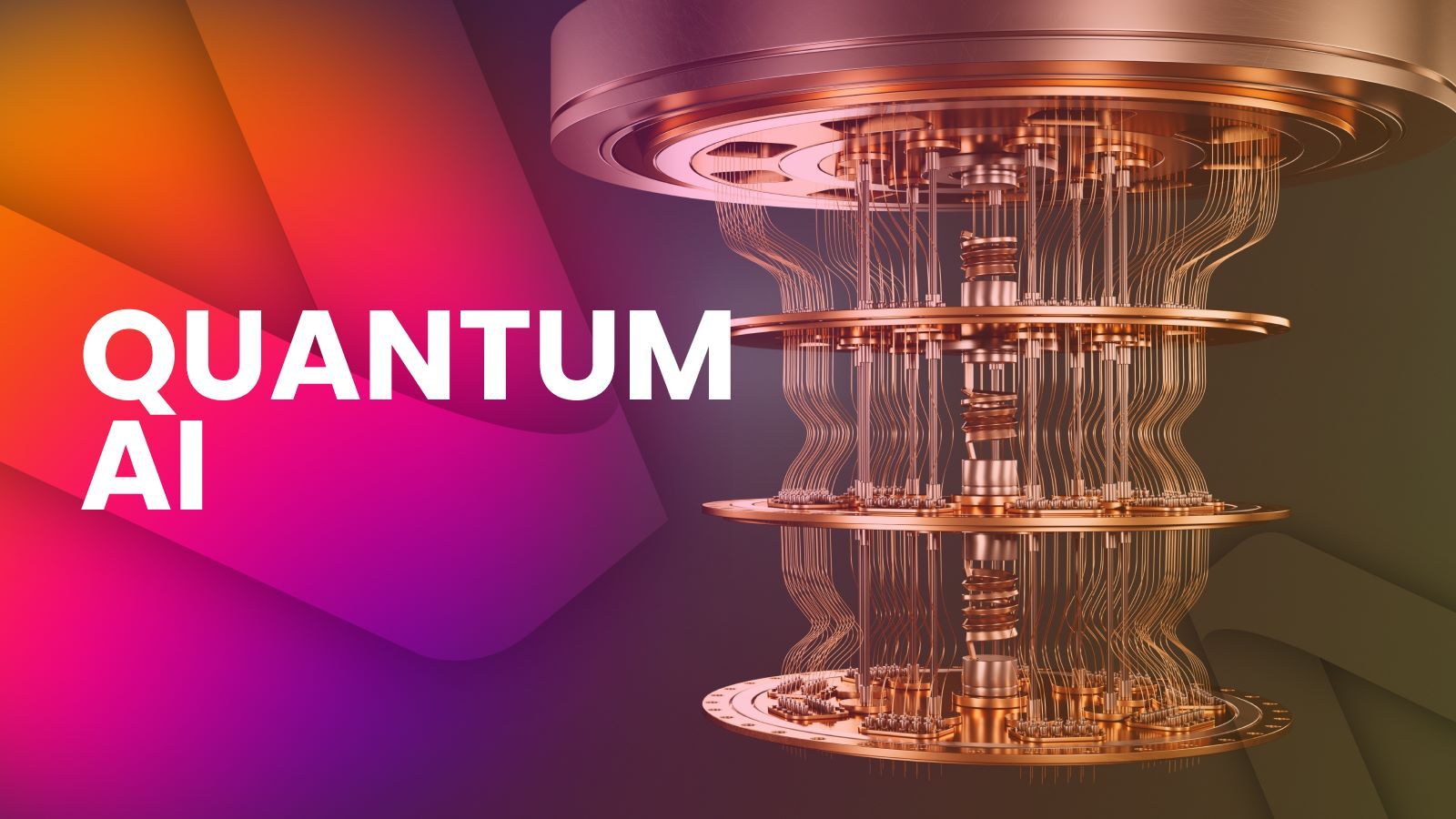
The primary challenge lies in the development of stable, scalable, and error-corrected quantum hardware. Current quantum computers are “noisy intermediate-scale quantum” (NISQ) devices, characterized by a limited number of qubits that are highly susceptible to decoherence and environmental noise. Building fault-tolerant quantum computers that can maintain quantum states for extended periods and perform complex calculations with negligible errors is an monumental engineering task. This involves advanced cryogenics, precision control systems, and innovative materials science to isolate qubits from environmental interference. Scaling up the number of qubits while maintaining coherence remains a major bottleneck.
Algorithm Development
Even with powerful quantum hardware, the development of effective quantum algorithms for AI tasks is another critical challenge. Translating classical AI concepts into the quantum realm, or devising entirely new quantum algorithms that can genuinely leverage quantum advantages, requires deep theoretical understanding and creative problem-solving. Bridging the classical-quantum interface, ensuring efficient data loading into quantum states, and extracting meaningful results from quantum computations are active areas of research. Many proposed quantum algorithms offer only theoretical speedups, and proving their practical advantage over the best classical algorithms often requires substantial empirical testing on future, more capable hardware.
Talent and Ecosystem Development
The field of Quantum AI requires a rare blend of expertise spanning quantum mechanics, computer science, mathematics, and artificial intelligence. There is a global shortage of professionals with these specialized skills. Nurturing a robust ecosystem for Quantum AI involves significant investment in education, research, and collaborative initiatives between academia, government, and industry. Developing accessible quantum programming tools, software frameworks, and cloud-based quantum computing platforms is also crucial to democratize access and accelerate innovation.
The Ethical Dimension
As with any powerful technology, Quantum AI raises significant ethical considerations. The ability to simulate complex systems with unprecedented accuracy, optimize decisions across vast domains, and create highly autonomous intelligent systems necessitates careful consideration of privacy, bias, accountability, and the potential for misuse. Developing ethical guidelines, robust regulatory frameworks, and fostering public discourse will be paramount to ensure that Quantum AI serves humanity responsibly and equitably.
Conclusion: The Future is Quantum-Powered AI
Quantum AI stands at the precipice of a new era of computational capability and artificial intelligence. By marrying the principles of quantum mechanics with the ambition of AI, it promises to transcend the limitations of classical computing, solving problems that are currently beyond our reach. From accelerating drug discovery and revolutionizing financial markets to fortifying cybersecurity and enhancing overall AI capabilities, its potential impact is profound and far-reaching. While the journey is fraught with complex challenges in hardware development, algorithm design, and talent acquisition, the scientific community and industry leaders are making significant strides. The vision of a future powered by Quantum AI—where intractable problems yield to innovative solutions and intelligence reaches new heights—is a powerful motivator. As research continues to unfold and technology matures, Quantum AI is poised to redefine what is possible, ushering in an era of unprecedented technological advancement and human ingenuity.
aViewFromTheCave is a participant in the Amazon Services LLC Associates Program, an affiliate advertising program designed to provide a means for sites to earn advertising fees by advertising and linking to Amazon.com. Amazon, the Amazon logo, AmazonSupply, and the AmazonSupply logo are trademarks of Amazon.com, Inc. or its affiliates. As an Amazon Associate we earn affiliate commissions from qualifying purchases.