
In the vast and ever-evolving landscape of technology, certain foundational concepts act as invisible anchors, silently supporting the most innovative advancements. Among these, the mathematical notion of “quadratic” stands out. Far from being an abstract relic of high school algebra, quadratic relationships, equations, and functions are deeply embedded in the algorithms, systems, and logic that power our digital world. From optimizing machine learning models and rendering realistic graphics to designing efficient software and analyzing complex data, understanding what is quadratic is not just academic; it’s a prerequisite for truly grasping and contributing to modern technological progress. This article delves into the essence of quadratic concepts and illuminates their profound and practical impact across various technological domains.
The Mathematical Core: Defining Quadratic
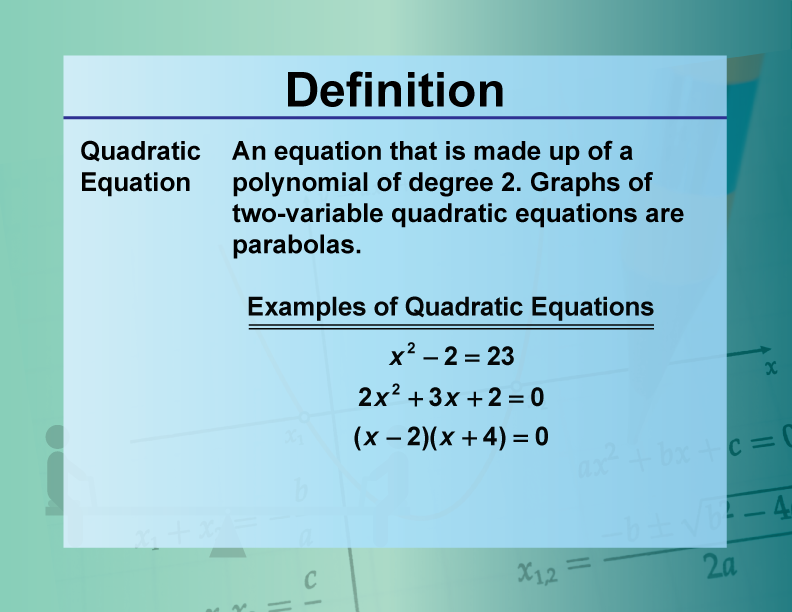
At its heart, “quadratic” refers to anything related to the second degree, particularly in the context of polynomial expressions, equations, and functions. It’s a specific level of mathematical complexity that bridges simple linear relationships with more intricate higher-degree polynomials.
Understanding Degrees and Polynomials
To grasp quadratic, we first need to understand polynomials. A polynomial is a mathematical expression consisting of variables and coefficients, involving only the operations of addition, subtraction, multiplication, and non-negative integer exponents of variables. The “degree” of a polynomial is the highest exponent of the variable in the expression.
-
Linear (Degree 1): An expression like
ax + b(e.g.,2x + 3). Its graph is a straight line. -
Quadratic (Degree 2): An expression like
ax^2 + bx + c(e.g.,3x^2 - 4x + 1). Its graph is a parabola. -
Cubic (Degree 3): An expression like
ax^3 + bx^2 + cx + d. -
And so on.
The quadratic form, therefore, is characterized by the presence of a variable raised to the power of two, making it the highest power in the expression.
The Standard Form and Key Characteristics
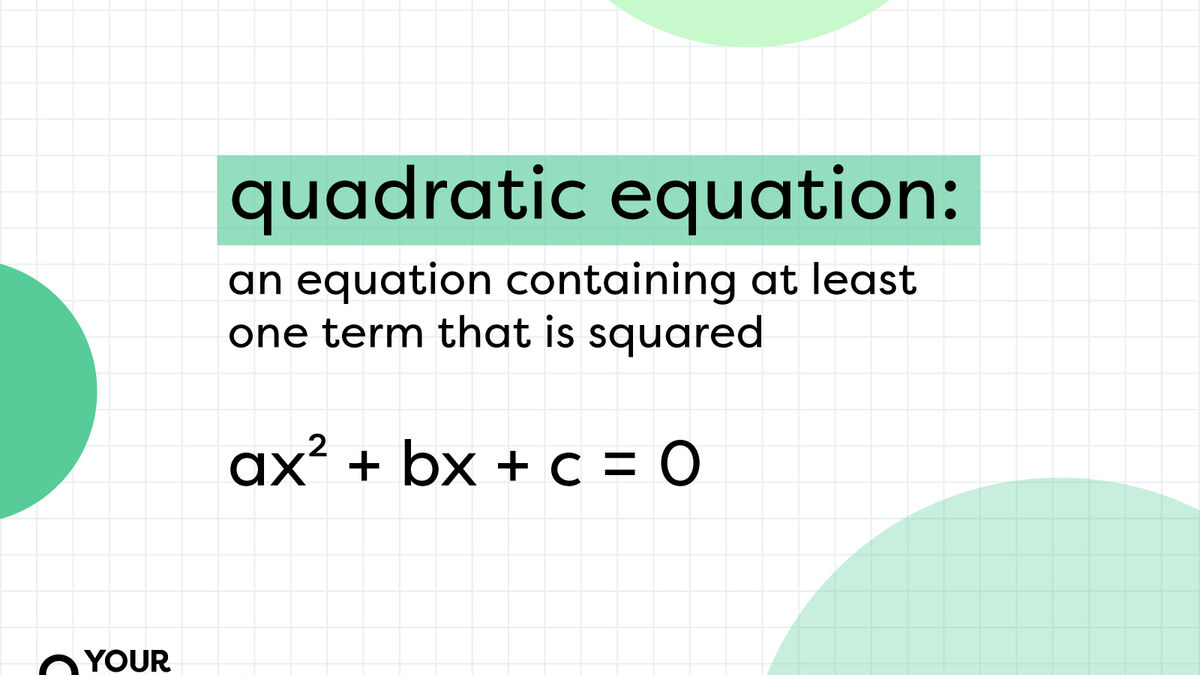
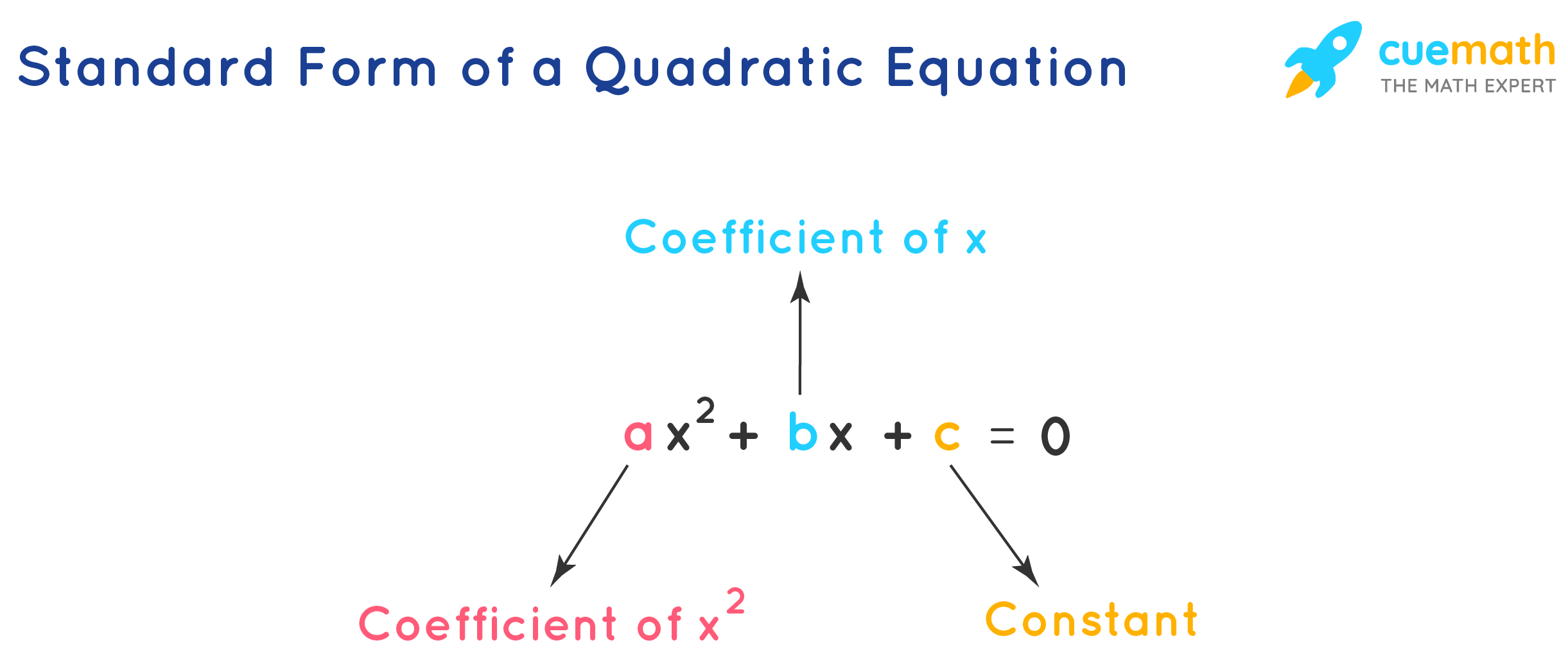
The standard form of a quadratic equation is typically written as ax^2 + bx + c = 0, where ‘a’, ‘b’, and ‘c’ are coefficients, and ‘a’ cannot be zero (otherwise, it would become a linear equation). When expressed as a function, y = ax^2 + bx + c or f(x) = ax^2 + bx + c, its graph forms a distinctive U-shaped curve called a parabola.
Key characteristics of a quadratic function and its graph include:
-
Parabola Shape: Always a symmetrical curve, opening upwards if ‘a’ is positive and downwards if ‘a’ is negative.
-
Vertex: The turning point of the parabola, representing either the maximum or minimum value of the function.
-
Roots/Zeros: The points where the parabola intersects the x-axis (i.e., where
y = 0). These are the solutions to the quadratic equation. A quadratic equation can have two real roots, one real root (a repeated root), or two complex conjugate roots. -
Coefficients’ Influence: The ‘a’ coefficient dictates the parabola’s direction and “width” (steepness). The ‘b’ coefficient influences the position of the vertex. The ‘c’ coefficient is the y-intercept.
Solving Quadratic Equations: A Brief Overview
Finding the roots of a quadratic equation is a fundamental task with wide-ranging applications. Several methods exist:
-
Factoring: Breaking the quadratic expression into a product of two linear factors.
-
Completing the Square: Manipulating the equation algebraically to form a perfect square trinomial.
-
Quadratic Formula: A universal formula (
x = [-b ± sqrt(b^2 - 4ac)] / 2a) that directly yields the roots, regardless of the equation’s factorability.
These methods, while mathematical in nature, underpin computational approaches used in countless software applications and algorithms.
Quadratic Functions and Equations in Software Development and Algorithms
The elegance and predictability of quadratic relationships make them indispensable tools in software development and the design of efficient algorithms. From optimizing code performance to rendering visual elements, quadratics provide critical mathematical frameworks.
Optimization Problems
Many problems in computing involve finding the best possible solution, whether it’s minimizing errors, maximizing efficiency, or finding optimal configurations. These are known as optimization problems. Often, the objective function—the function we aim to minimize or maximize—takes a quadratic form.
A prime example is the Least Squares Method, extensively used in data fitting and regression analysis. When trying to find the “best-fit” line or curve for a set of data points, the goal is to minimize the sum of the squares of the differences (errors) between the observed data points and the values predicted by the model. This “sum of squares” inherently leads to a quadratic objective function, which can then be solved using quadratic principles to find the optimal parameters for the model. This is fundamental to statistical modeling and data science.
Algorithms and Computational Complexity
Understanding quadratic relationships is crucial for analyzing the performance of algorithms. Computational complexity describes how the resources (time and space) required by an algorithm grow with the size of the input data. When an algorithm exhibits quadratic time complexity, denoted as O(n^2), it means that the execution time grows proportionally to the square of the input size (n).
-
Implications: An O(n^2) algorithm might be acceptable for small inputs, but for large datasets, its performance degrades rapidly. If processing 10 items takes 1 unit of time, processing 100 items could take 100 units (10^2), and 1000 items could take 10,000 units.
-
Examples: Simple sorting algorithms like Bubble Sort and Selection Sort have quadratic time complexity because they often involve nested loops, where for each element, they might iterate through most of the other elements. Similarly, naive approaches to matrix multiplication can also exhibit O(n^2) or O(n^3) complexity, necessitating more sophisticated algorithms for large matrices. Recognizing these quadratic patterns helps developers choose more efficient algorithms (e.g., O(n log n) or O(n)) for large-scale applications.
Computer Graphics and Simulations
In computer graphics, quadratic equations are essential for defining and manipulating various visual elements.
-
Curves and Shapes: Parabolas, which are the graphs of quadratic functions, are used to model specific types of curves. More broadly, quadratic components are part of higher-order curves like Bézier curves and splines, which are foundational for creating smooth, scalable shapes in vector graphics, animation, and 3D modeling software.
-
Physics Engines: In game development and scientific simulations, physics engines rely on quadratic equations to model trajectories and interactions. For instance, the path of a projectile (like a thrown ball or an arrow) under constant gravity follows a parabolic trajectory, which is mathematically described by a quadratic function. Collision detection and response systems also frequently involve solving quadratic equations to determine intersection points or times.
The Role of Quadratics in Artificial Intelligence and Machine Learning
The fields of Artificial Intelligence (AI) and Machine Learning (ML) are particularly heavy users of quadratic concepts. From the underlying mathematical optimization to the architecture of specific algorithms, quadratics are a cornerstone.
Cost Functions and Loss Functions
At the core of supervised machine learning is the concept of a cost function (or loss function). This function measures how well a machine learning model is performing by quantifying the error between its predictions and the actual target values. The goal of training a model is almost always to minimize this cost function.
Many widely used cost functions are quadratic in nature. For example:
-
Mean Squared Error (MSE): In linear regression, MSE is one of the most common loss functions. It calculates the average of the squares of the errors. Since it involves squaring the difference between predicted and actual values, it naturally results in a quadratic function with respect to the model’s parameters. Minimizing this quadratic function allows the model to find the best-fit line or hyperplane.
-
Regularization Terms: To prevent overfitting in models, regularization terms are often added to cost functions. L2 regularization (also known as Ridge Regression or weight decay) adds a term proportional to the sum of the squares of the model’s weights. This addition keeps the overall cost function quadratic (or adds a quadratic component) and ensures that the optimization problem remains well-behaved.
Optimization Algorithms
Given that many cost functions are quadratic, or have significant quadratic components, optimization algorithms play a critical role in finding the parameters that minimize these functions.
-
Gradient Descent: One of the most fundamental optimization algorithms, Gradient Descent, iteratively adjusts model parameters in the direction of the steepest decrease of the cost function. Understanding the shape of a quadratic function (its convexity, the unique global minimum for parabolas opening upwards) is crucial for understanding how Gradient Descent works and why it converges. For purely quadratic cost functions, Gradient Descent’s behavior is particularly well-understood and predictable.
-
Newton’s Method: While more computationally intensive, Newton’s method uses second-order derivatives (which capture the curvature of the function, closely related to quadratic approximation) to find the minimum even faster than Gradient Descent for certain types of functions, especially those that are locally quadratic.
Support Vector Machines (SVMs) and Quadratic Programming
Support Vector Machines (SVMs) are powerful supervised learning models used for classification and regression tasks. At their core, SVMs work by finding an optimal hyperplane that best separates data points of different classes in a high-dimensional space. The problem of finding this optimal hyperplane is formulated as a quadratic programming (QP) problem.
Quadratic programming involves optimizing (minimizing or maximizing) a quadratic objective function subject to linear constraints. In the context of SVMs, the objective function aims to maximize the margin between the separating hyperplane and the nearest data points (the support vectors). This objective function, combined with constraints that ensure correct classification, results in a well-defined quadratic programming problem that can be efficiently solved using specialized algorithms. This makes quadratics absolutely central to the operation of SVMs, a widely used and effective machine learning algorithm.
Practical Applications and Emerging Tech
Beyond the core algorithms and theoretical frameworks, quadratic concepts manifest in a myriad of practical technological applications, shaping everything from physical systems to data analysis tools.
Signal Processing and Control Systems
In electrical engineering and computer science, signal processing deals with analyzing, modifying, and synthesizing signals. Quadratic forms are fundamental in designing filters (e.g., Wiener filters), spectral estimation, and adaptive signal processing. For instance, the concept of mean squared error is pervasive in noise reduction and signal reconstruction, leveraging its quadratic nature for optimization.
Control systems, which are designed to regulate the behavior of dynamic systems (e.g., autonomous vehicles, industrial robots, climate control), heavily rely on quadratic optimal control. Techniques like Linear Quadratic Regulator (LQR) design involve minimizing a quadratic cost function that balances control effort and system performance deviations. This ensures that systems can react efficiently and stably to disturbances, often leading to robust and predictable behavior.
Engineering Design and Robotics
Quadratic relationships are indispensable in various facets of engineering design and robotics:
-
Structural Analysis: Engineers use quadratic equations to calculate stress, strain, and deflection in materials and structures, ensuring safety and stability.
-
Robotics: In robotics, kinematics (the study of motion without considering forces) and dynamics (the study of motion considering forces) frequently involve quadratic equations. Calculating the trajectory of robot arms, planning optimal paths, or analyzing the stability of a robot walking on uneven terrain often reduces to solving quadratic problems. The inverse kinematics problem, determining the joint angles required to achieve a desired end-effector position, can involve quadratic solutions for multi-jointed robots.
-
Computer-Aided Design (CAD): Software used for drafting and design relies on quadratic (and higher-order) curves and surfaces for creating complex and smooth geometries.
Mastering Quadratic Concepts for Tech Professionals
For anyone aspiring to thrive in the technological landscape, a solid grasp of quadratic concepts is more than just a mathematical skill; it’s a foundational competency that empowers deeper understanding and more effective problem-solving.
Foundational Math for Advanced Concepts
Quadratic equations and functions serve as a critical stepping stone to understanding more advanced mathematical concepts essential for high-level tech work. They provide the bedrock for:
-
Calculus: Differentiation and integration, crucial for understanding rates of change and accumulation, are often introduced using polynomial functions, with quadratics being a primary example.
-
Linear Algebra: While quadratics are polynomials of a single variable, the concept extends to quadratic forms in multiple variables, which are central to linear algebra, optimization, and multivariate statistics.
-
Discrete Mathematics: Understanding how functions grow (e.g., quadratic growth in complexity analysis) is vital for algorithm design.
Problem-Solving and Debugging
When designing an algorithm, optimizing a machine learning model, or debugging a performance issue in software, recognizing the presence of a quadratic relationship can often lead to a direct and efficient solution. Understanding the properties of quadratics (e.g., finding a minimum/maximum, analyzing growth) provides powerful analytical tools for:
-
Optimizing code: Identifying O(n^2) bottlenecks and devising strategies to reduce complexity.
-
Debugging ML models: Interpreting why a model might be converging slowly or exhibiting unexpected behavior by analyzing its cost function’s landscape.
-
Designing robust systems: Predicting system behavior under various conditions.
Future-Proofing Skills
As technology continues to evolve at an unprecedented pace, the underlying mathematical principles remain constant. While specific tools and programming languages may change, the need to understand how algorithms scale, how data can be optimally processed, and how intelligent systems make decisions will only grow. A strong foundation in quadratic concepts, therefore, future-proofs a tech professional’s ability to adapt, innovate, and contribute meaningfully to the next generation of technological breakthroughs.
In conclusion, “what is quadratic?” is not merely a question about a mathematical formula; it’s an inquiry into a fundamental building block of the digital age. From the theoretical elegance of a parabola to the practical efficiency of an algorithm, quadratic concepts are woven into the very fabric of technology, empowering innovation and driving progress across countless domains. Mastering them is not just about solving equations; it’s about unlocking a deeper understanding of the technological world we inhabit.
aViewFromTheCave is a participant in the Amazon Services LLC Associates Program, an affiliate advertising program designed to provide a means for sites to earn advertising fees by advertising and linking to Amazon.com. Amazon, the Amazon logo, AmazonSupply, and the AmazonSupply logo are trademarks of Amazon.com, Inc. or its affiliates. As an Amazon Associate we earn affiliate commissions from qualifying purchases.