
In the vast and ever-evolving landscape of software development, Python stands out as a high-level, versatile, and incredibly popular programming language. Its readability, extensive libraries, and broad applications—from web development and data science to artificial intelligence and automation—have cemented its position as a go-to choice for developers worldwide. However, the elegance and simplicity that programmers experience when writing Python code belie a sophisticated underlying mechanism that translates human-readable instructions into actions a computer can understand. This crucial mechanism is the Python interpreter.
At its core, an interpreter acts as a bridge, meticulously translating each line of high-level code into machine-executable instructions during runtime. Unlike compiled languages, where the entire program is converted into an executable file before execution, Python’s interpreted nature allows for greater flexibility, faster development cycles, and platform independence. Understanding what a Python interpreter is, how it functions, and its various implementations is fundamental for any developer seeking to truly grasp the power and nuances of the Python ecosystem.
The Fundamental Role of an Interpreter in Programming
To truly appreciate the Python interpreter, it’s essential to first understand the fundamental challenge it addresses: the communication gap between humans and computers. Computers operate on binary code—sequences of zeros and ones—a language that is tedious and nearly impossible for humans to write efficiently. High-level programming languages like Python, on the other hand, use syntax and structures that are closer to human language, making them intuitive and productive. The interpreter is the vital component that bridges this divide.
Bridging the Language Gap
Imagine speaking a language that only a select few understand, and you need to convey complex instructions to a large audience. You’d need a translator. In the world of computing, your high-level Python code is that complex instruction set, and your computer is the audience that only understands machine language. The Python interpreter acts as the real-time translator, taking your print("Hello, world!") and converting it into a series of operations that the computer’s processor can execute directly. This translation happens on-the-fly, as the program runs, giving Python its dynamic and interactive characteristics. This immediate feedback loop is a significant advantage during development and debugging, allowing programmers to test and iterate quickly without waiting for a lengthy compilation process.
Interpreted vs. Compiled Languages
The distinction between interpreted and compiled languages is critical to understanding Python’s operational paradigm. In compiled languages (like C++ or Java), source code is translated into machine code or an intermediate bytecode before execution, typically resulting in a standalone executable file. This compilation process can be time-consuming, but the resulting executables often run very fast because the translation work is already done.
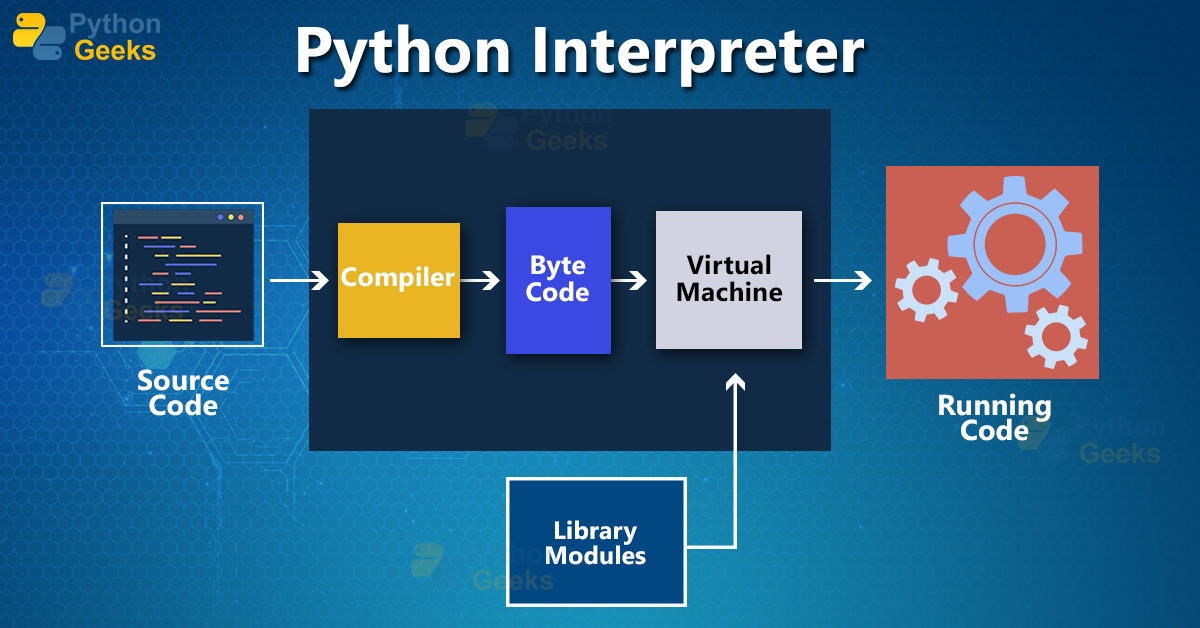
Interpreted languages, conversely, translate and execute code line by line, or in small blocks, at runtime. Python falls into this category, though with a nuance: it first compiles source code into an intermediate format called bytecode, which is then executed by a virtual machine. This two-step process offers a middle ground, providing many of the benefits of interpretation (like platform independence and dynamic typing) while also gaining some performance advantages over purely line-by-line interpretation. The interpreted nature also contributes to Python’s “write once, run anywhere” philosophy, as the same Python script can run on any system with a compatible Python interpreter installed.
The Execution Cycle: Source Code to Output
The journey of a Python script from its .py file extension to observable output involves several key stages orchestrated by the interpreter. When you execute a Python program, the interpreter first performs lexical analysis, breaking the source code into a stream of tokens (keywords, identifiers, operators, etc.). These tokens are then fed into a parser, which checks for syntactic correctness and builds an Abstract Syntax Tree (AST), a hierarchical representation of the program’s structure.
Next, this AST is passed to the bytecode compiler, which translates it into Python bytecode. This bytecode is a low-level, platform-independent representation of your code, often stored in .pyc files (Python compiled files) for faster loading on subsequent runs. Finally, the Python Virtual Machine (PVM) takes this bytecode and executes it. The PVM is an integral part of the interpreter, responsible for carrying out the instructions contained within the bytecode, managing memory, and interacting with the operating system and hardware. This layered approach ensures portability and efficiency.
Deconstructing the Python Interpreter’s Components
To grasp the full scope of the Python interpreter, it’s helpful to break it down into its primary functional components, each playing a distinct yet interconnected role in the execution of Python code.
The Lexer and Parser
The first two stages of the interpreter’s operation involve reading and understanding the structure of your Python code. The lexer, also known as a scanner, is responsible for tokenizing the input. It reads the raw source code character by character and groups them into meaningful units called tokens. For example, x = 10 + y might be tokenized into IDENTIFIER(x), ASSIGNMENT_OPERATOR(=), INTEGER(10), ADD_OPERATOR(+), IDENTIFIER(y). This stream of tokens is then passed to the parser.
The parser takes this token stream and analyzes it to ensure that it conforms to Python’s grammatical rules (syntax). If the code is syntactically correct, the parser constructs an Abstract Syntax Tree (AST). The AST is a tree-like representation of the code’s structure, abstracting away the specifics of the syntax and focusing on the logical relationships between the code elements. This AST is crucial because it provides a structured and unambiguous representation of the program’s logic, which the next stage can easily process. If there’s a syntax error, the parser will flag it, preventing further execution.
The Bytecode Compiler
Once the AST is successfully generated, it’s handed over to the bytecode compiler. This component traverses the AST and translates it into Python bytecode. Bytecode is an intermediate, low-level, and platform-independent set of instructions. It’s not machine code for a specific CPU, but rather a set of instructions for the Python Virtual Machine (PVM). Think of it as a set of standardized instructions that any PVM can understand and execute, regardless of the underlying hardware or operating system.
When you run a Python script, if the bytecode for that script (and its imported modules) doesn’t exist or is outdated, the interpreter will generate .pyc files. These files contain the compiled bytecode, which can be loaded and executed more quickly on subsequent runs, bypassing the lexical analysis and parsing steps. This optimization speeds up the startup time of Python applications, especially for larger projects with many modules. The .pyc files are usually stored in a __pycache__ directory alongside the original .py files.
The Python Virtual Machine (PVM)
The final and perhaps most critical component is the Python Virtual Machine (PVM). The PVM is the runtime engine that takes the generated bytecode and executes it. It’s a software implementation of a computer that understands Python bytecode instructions. When the PVM runs, it emulates a stack-based machine, pushing and popping values onto an operand stack as it processes instructions.
The PVM is responsible for:
-
Executing bytecode instructions: It reads each bytecode instruction and performs the corresponding operation (e.g., loading a variable, performing an arithmetic operation, calling a function).
-
Memory management: It handles the allocation and deallocation of memory for Python objects, including garbage collection.
-
Runtime services: It provides access to various runtime services like I/O operations, exception handling, and interaction with the operating system.
The combination of bytecode and the PVM is what gives Python its characteristic platform independence. As long as a PVM implementation exists for a given platform, Python code can run on it without modification. The PVM is often the bottleneck in Python’s execution speed, as it interprets instructions one by one, which has led to various alternative interpreter implementations focusing on improving this aspect.
Different Implementations and Their Significance
While “Python interpreter” often defaults to referring to the standard implementation, it’s important to recognize that several different interpreters exist, each with its unique characteristics, performance profiles, and integration capabilities. These alternative implementations cater to specific use cases and extend Python’s reach into various computing environments.
CPython: The Reference Implementation
CPython is by far the most widely used and well-known Python interpreter. When you download Python from python.org, you’re getting CPython. It’s called CPython because it is primarily written in C, making it easy to integrate with C libraries and allowing for direct memory access and performance optimizations where necessary. CPython is the reference implementation because it defines the standard behavior and features of the Python language. Its ubiquity means that the vast majority of Python libraries and frameworks are developed and tested primarily against CPython. Its main characteristics include:
-
Ubiquity: It’s the standard.
-
Extensibility: Easy to extend with C/C++ modules.
-
Global Interpreter Lock (GIL): A controversial feature that ensures only one thread can execute Python bytecode at a time, impacting multi-threaded performance (though not multi-process performance).
Other Popular Interpreters
Beyond CPython, several other significant implementations broaden Python’s utility:
-
Jython: This implementation compiles Python code to Java bytecode, allowing it to run on the Java Virtual Machine (JVM). Jython enables seamless integration of Python scripts within Java applications and provides access to the extensive Java class library. This is particularly useful for enterprises heavily invested in the Java ecosystem that want to leverage Python for scripting, testing, or specific application components.
-
IronPython: Similar to Jython, IronPython targets Microsoft’s .NET Common Language Runtime (CLR). It allows Python code to interact with .NET libraries and components, making it a powerful tool for developers working in the Windows ecosystem who wish to use Python for scripting or application development within .NET frameworks.
-
PyPy: PyPy is an alternative interpreter that focuses heavily on performance. It achieves significant speedups compared to CPython (often 5-7 times faster for certain benchmarks) by incorporating Just-In-Time (JIT) compilation. PyPy compiles Python bytecode into native machine code during runtime, optimizing frequently executed code paths. It is also self-hosting, meaning it is written in RPython, a subset of Python specifically designed for writing interpreters.
-
MicroPython: Designed for microcontrollers and embedded systems with limited resources, MicroPython is a lean and highly optimized Python 3 interpreter. It brings the ease and power of Python programming to small hardware devices, enabling rapid development for IoT projects, robotics, and other embedded applications where full CPython would be too resource-intensive.
Choosing the Right Interpreter
The choice of interpreter largely depends on your project’s specific requirements:
-
Default: For most general-purpose Python development, CPython is the standard and safest choice due to its broad compatibility with libraries and robust community support.
-
Performance-critical applications: If raw execution speed is paramount and your code is CPU-bound, PyPy might offer significant performance gains, though compatibility with C-extensions can sometimes be an issue.
-
Integration with Java/JVM ecosystem: Jython is the clear choice for projects that need to leverage existing Java libraries or run Python within a JVM environment.
-
Integration with .NET/CLR ecosystem: IronPython serves the same purpose for the Microsoft .NET framework.
-
Embedded systems/IoT: MicroPython is indispensable for developing on resource-constrained hardware.
Understanding these alternatives allows developers to select the best tool for the job, extending Python’s versatility across a wider range of technical challenges and environments.
Practical Implications and Advanced Concepts
Beyond the theoretical understanding of what an interpreter is, its practical implications profoundly impact how developers write, run, and manage Python code. These practical aspects range from how we interact with the interpreter daily to more advanced concepts that shape architectural decisions.
Interpreter in Action: Interactive Mode and Script Execution
The Python interpreter offers two primary modes of operation, both frequently utilized by developers:
-
Interactive Mode (REPL): When you type
pythonorpython3in your terminal without any arguments, you enter the Read-Eval-Print Loop (REPL). This mode allows you to execute Python statements one by one and get immediate feedback. It’s invaluable for testing small snippets of code, experimenting with library functions, or quickly debugging problems. The>>>prompt signifies that the interpreter is ready for input. This interactive capability is a hallmark of interpreted languages and greatly enhances the development experience. -
Script Execution: The more common way to run Python code is by saving it in a
.pyfile (a script) and then telling the interpreter to execute that file, e.g.,python my_script.py. In this mode, the interpreter reads the entire script, processes it through the stages discussed (lexing, parsing, bytecode compilation), and then executes the bytecode. This allows for the creation of larger, more complex applications that can be run repeatedly.
Virtual Environments: Managing Dependencies
A crucial aspect of modern Python development is the use of virtual environments. A virtual environment is a self-contained directory that holds a specific Python interpreter installation, along with its own set of installed packages and dependencies. The standard library module venv (or third-party tools like conda or pipenv) is used to create them.
Why are they crucial? Different projects often require different versions of libraries, or even different versions of Python itself. Without virtual environments, installing a package for one project might conflict with the requirements of another. For example, Project A might need requests==2.20.0, while Project B needs requests==2.28.0. A virtual environment isolates these dependencies, ensuring that each project has its specific set of libraries without interfering with others or the global Python installation. Each virtual environment effectively encapsulates its own Python interpreter instance, allowing for precise control over the development environment.
Understanding the Global Interpreter Lock (GIL)
The Global Interpreter Lock (GIL) is a key, often misunderstood, feature of CPython. It’s a mutex (mutual exclusion lock) that protects access to Python objects, preventing multiple native threads from executing Python bytecode simultaneously. This means that even on multi-core processors, only one thread can be actively running Python code at any given time within a single CPython process.
The primary reason for the GIL’s existence is to simplify CPython’s memory management and make it easier to integrate with C libraries that are not thread-safe. While the GIL simplifies C-extension development, it significantly limits the effectiveness of multi-threading for CPU-bound tasks in Python. For I/O-bound tasks (e.g., network requests, file operations), the GIL is released during I/O waits, allowing other threads to run.
To overcome GIL limitations for CPU-bound parallelism, Python developers typically resort to:
-
Multi-processing: Using the
multiprocessingmodule, which spawns separate Python interpreter processes, each with its own GIL, allowing true parallel execution. -
Asynchronous programming: Using
asynciofor concurrent I/O operations without relying on threads. -
C extensions: Moving CPU-intensive parts of the code into C/C++ extensions that can release the GIL or operate outside of it.
-
Alternative interpreters: Using interpreters like PyPy that have different approaches to concurrency (though PyPy still has a GIL, its JIT often mitigates its impact).
Understanding the GIL is essential for writing efficient concurrent Python applications and for making informed architectural decisions regarding parallelism.
The Future of Python Interpreters
Python’s journey from a niche scripting language to a global powerhouse has been propelled by its continuous evolution, and the interpreter remains at the heart of this progress. The future promises even more sophisticated interpreters, tailored to specific demands and pushing the boundaries of what Python can achieve.
Performance Enhancements and JIT Compilers
One of the most persistent areas of focus for Python interpreter development is performance. While Python’s ease of use is undeniable, its execution speed, particularly for CPU-bound tasks, has often been a point of comparison with compiled languages. Efforts to mitigate this include:
-
CPython Optimizations: The CPython core developers continually work on optimizing the interpreter itself, improving bytecode execution, garbage collection, and standard library components. Projects like “Faster CPython” (e.g., PEP 659 and PEP 669 for CPython 3.11 and beyond) aim to significantly boost performance without fundamentally changing the language.
-
Just-In-Time (JIT) Compilers: The success of PyPy demonstrates the power of JIT compilation. Future Python interpreters, or even CPython itself, might integrate more sophisticated JIT techniques to compile frequently executed bytecode into highly optimized native machine code during runtime, bridging the performance gap with compiled languages more effectively.
Growing Ecosystem and Specialized Interpreters
As Python expands its footprint into new domains, the demand for specialized interpreters tailored to unique environments will likely increase.
-
WebAssembly (WASM): Projects like Pyodide are bringing Python to the browser by compiling CPython and its scientific stack to WebAssembly. This opens up possibilities for rich, interactive web applications leveraging Python on the client-side.
-
Serverless Computing: Optimized, lightweight interpreters are crucial for serverless functions, where quick startup times and minimal resource consumption are paramount.
-
Edge Computing: With the proliferation of IoT and edge devices, the need for efficient, low-footprint Python interpreters (building on the success of MicroPython) will continue to grow, enabling AI and complex logic closer to the data source.
-
Domain-Specific Optimizations: We might see interpreters optimized for specific workloads, such as highly parallel data processing (e.g., integration with GPU computing) or memory-intensive machine learning tasks.

The Enduring Power of Abstraction
Ultimately, the future of Python interpreters will continue to reinforce the language’s core strength: its powerful abstraction. By handling the complexities of translating human-readable code into machine-executable instructions, interpreters allow developers to focus on problem-solving rather than low-level system details. This abstraction makes Python accessible to beginners, highly productive for professionals, and adaptable to an ever-widening array of technological challenges. As interpreters become more intelligent, faster, and specialized, Python will remain a dominant force, empowering developers to build the next generation of innovative applications with greater ease and efficiency.
In conclusion, the Python interpreter is far more than just a code runner; it is the fundamental engine that empowers Python’s versatility, readability, and widespread adoption. From its intricate process of lexical analysis and bytecode generation to the various implementations tailored for specific needs, understanding the interpreter demystifies Python’s internal workings. As technology advances, so too will the interpreters, continually refining Python’s capabilities and ensuring its place at the forefront of software development.
aViewFromTheCave is a participant in the Amazon Services LLC Associates Program, an affiliate advertising program designed to provide a means for sites to earn advertising fees by advertising and linking to Amazon.com. Amazon, the Amazon logo, AmazonSupply, and the AmazonSupply logo are trademarks of Amazon.com, Inc. or its affiliates. As an Amazon Associate we earn affiliate commissions from qualifying purchases.