
In the intricate world of digital networking, where billions of devices connect and communicate across the globe, the flow of data is governed by precise rules and structures. At the heart of this communication protocol is the Internet Protocol (IP) address—a unique identifier for every device on a network. However, an IP address by itself is insufficient for efficient data routing. To manage traffic, enhance security, and organize hardware effectively, engineers rely on a critical logical tool: the subnet mask.
The purpose of a subnet mask is to serve as a filter that distinguishes the network portion of an IP address from the host portion. By defining these boundaries, the subnet mask tells routers and devices which part of the address refers to the broader network and which part refers to the specific machine. Without this distinction, data packets would lack the necessary “roadmap” to navigate complex infrastructures, leading to massive congestion and security vulnerabilities.
The Foundation of Network Architecture: Understanding IP Logic
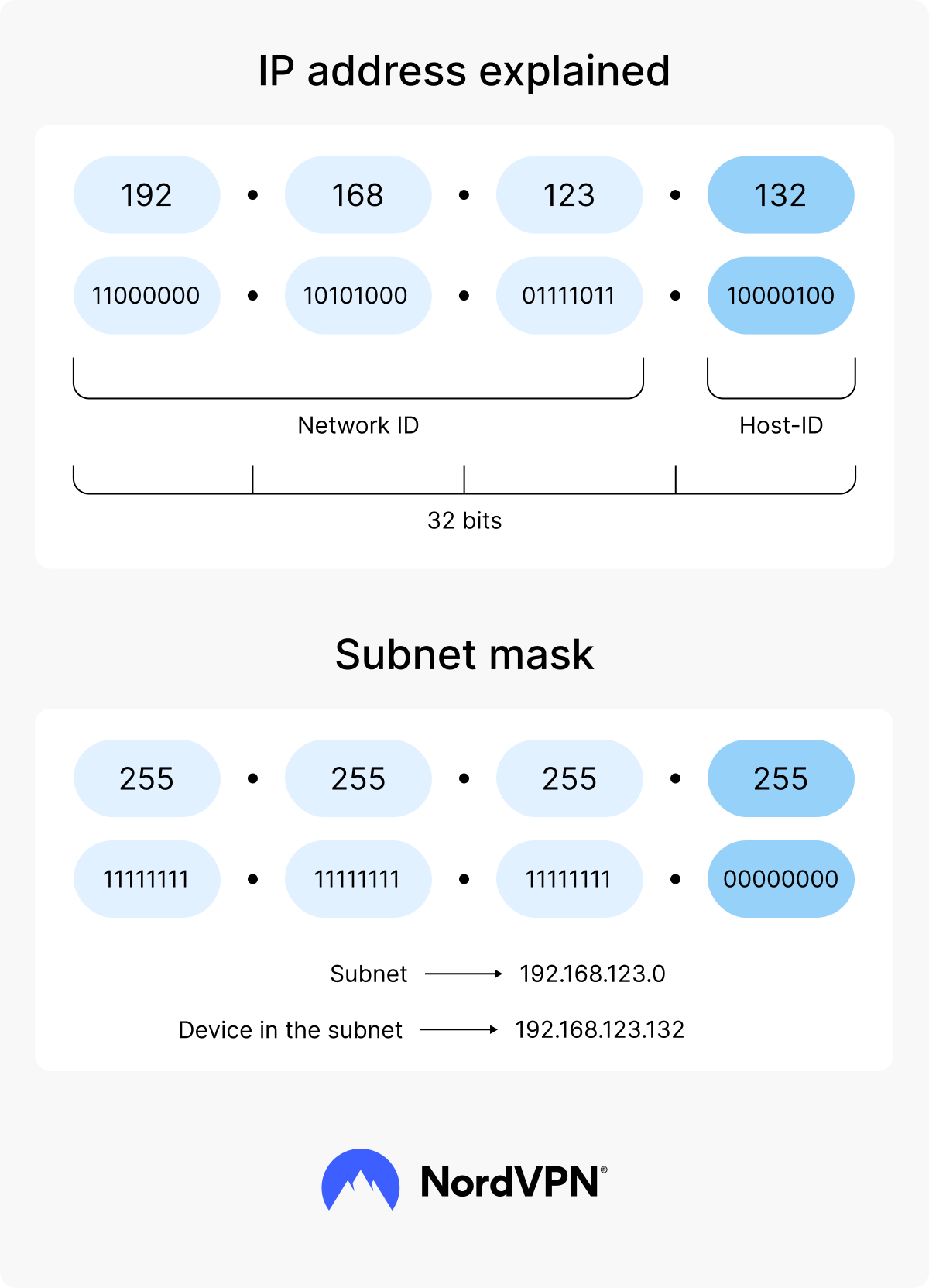
To grasp the purpose of a subnet mask, one must first understand the architecture of an IPv4 address. An IPv4 address consists of 32 bits, divided into four sections called octets. Each octet contains 8 bits, represented in decimal form (e.g., 192.168.1.1). However, computers do not read these numbers in decimal; they process them as binary strings of ones and zeros.
The Binary Relationship
A subnet mask is also a 32-bit number, usually written in the same dotted-decimal format as an IP address (e.g., 255.255.255.0). The mask works through a mathematical process known as a “bitwise AND operation.” In this process, the mask identifies which bits in the IP address are “masked” (fixed as part of the network identity) and which are “open” (available for individual devices, or hosts).
When a subnet mask contains a binary “1” in a specific position, it indicates that the corresponding bit in the IP address belongs to the network ID. When it contains a “0,” it indicates the bit belongs to the host ID. This binary logic is what allows hardware to instantaneously determine if a destination IP address is on the local network or if it needs to be sent to an external gateway or router.
Network ID vs. Host ID
Think of an IP address like a physical mailing address. The network ID is comparable to the street name, while the host ID is the specific house number. If you are sending a letter to someone on your own street, the postal service handles it differently than if you were sending it to a different city. The subnet mask is the mechanism that informs the system where the “street name” ends and the “house number” begins. By separating these two components, the subnet mask ensures that data isn’t broadcast to every device on the internet when it only needs to reach a computer in the next room.
Enhancing Performance and Security Through Segmentation
The primary practical purpose of a subnet mask is to enable “subnetting”—the practice of dividing a large network into smaller, more manageable sub-networks. This segmentation is not just an organizational preference; it is a technical necessity for modern enterprise and consumer environments.
Reducing Network Congestion
In a flat network where thousands of devices are connected without subnets, “broadcast traffic” becomes a significant problem. Many network protocols rely on broadcasting, where a device sends a packet to every other device on the network to find a resource (like a printer or a server). If the network is too large, these broadcasts can consume all available bandwidth, leading to a “broadcast storm” that can paralyze the system.
A subnet mask limits the scope of these broadcasts. By defining smaller subnets, the mask ensures that broadcast traffic remains trapped within its specific segment. This improves overall network performance, reduces latency, and ensures that bandwidth is preserved for actual data transmission rather than administrative overhead.
Layering Digital Security
From a security perspective, the subnet mask is a foundational tool for network isolation. In a corporate environment, it is rarely wise to have the guest Wi-Fi, the accounting servers, and the research and development workstations all on the same logical network.
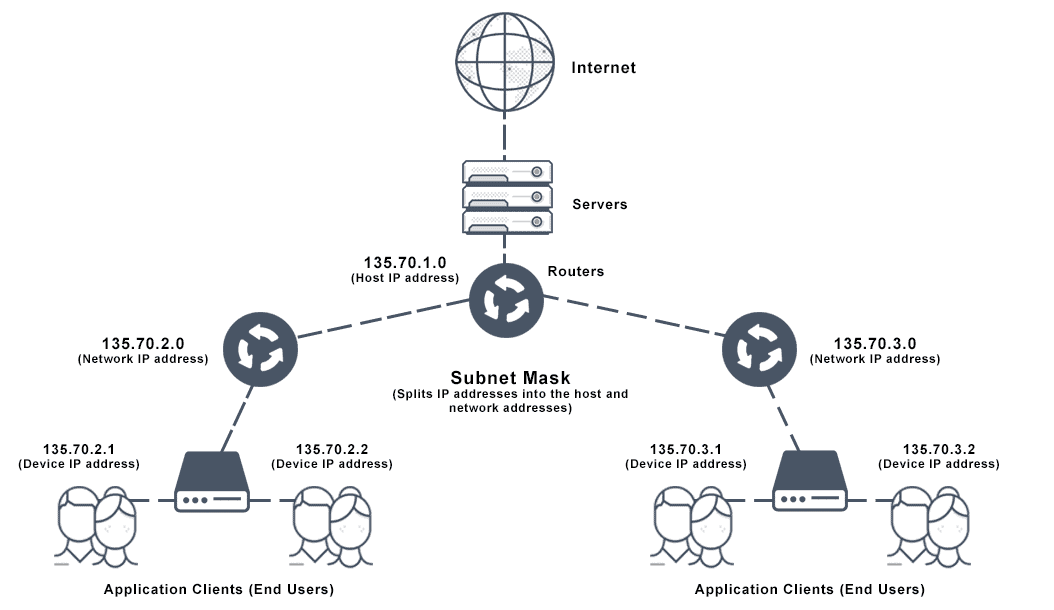
By using different subnet masks to create isolated segments, administrators can implement strict access control lists (ACLs) and firewall rules between subnets. If a device on the guest network is compromised by malware, the subnet boundary acts as a logical barrier, preventing the threat from easily traversing the network to reach sensitive data in other departments. The subnet mask provides the structural blueprint that security software uses to enforce these digital perimeters.
The Evolution of Scaling: From IP Classes to CIDR
In the early days of the internet, IP addresses were assigned using a rigid system known as “classful networking.” Under this system, there were three primary classes (A, B, and C), each with a fixed subnet mask. Class A networks used a mask of 255.0.0.0, allowing for millions of hosts; Class C used 255.255.255.0, allowing for only 254 hosts.
The Problem with Classful Networking
This system was incredibly wasteful. If a company needed 300 host addresses, they were too big for a Class C network but far too small for a Class B network (which allowed for 65,534 hosts). They would be forced to take a Class B block, wasting over 65,000 potential IP addresses that could not be used by anyone else. As the internet exploded in popularity, this inefficiency threatened to exhaust the supply of IPv4 addresses prematurely.
The Rise of CIDR (Classless Inter-Domain Routing)
To solve this, the industry moved to CIDR, which effectively decoupled the subnet mask from the IP address class. CIDR introduced “prefix notation,” where the subnet mask is represented by a forward slash followed by the number of masked bits (e.g., 192.168.1.0/24).
The purpose of the subnet mask in the CIDR era is to provide extreme flexibility. Administrators can now “subnet a subnet” (a process called Variable Length Subnet Masking, or VLSM). This allows for precisely sized networks that match the actual number of devices present, drastically reducing address waste and allowing the aging IPv4 protocol to continue functioning decades longer than originally anticipated.
Managing the Modern Ecosystem: Cloud and Virtualization
The role of the subnet mask has extended far beyond physical cables and hardware routers. In today’s tech landscape, it is a core component of cloud computing and virtualization.
Virtual Private Clouds (VPC)
When a developer sets up an environment in Amazon Web Services (AWS) or Microsoft Azure, they start by defining a Virtual Private Cloud (VPC). The first step in configuring this VPC is selecting an IP range and a subnet mask. In the cloud, the subnet mask determines how different tiers of an application are isolated.
For example, a developer might create a public-facing subnet for web servers and a private-facing subnet for databases. The subnet mask defines the reach of these environments. Even though these “servers” are just virtual instances running on a massive data center’s hardware, the subnet mask provides the logical separation required to keep the database hidden from the public internet while allowing the web server to communicate with it.
IPv6 and the Future of Masking
As the world transitions to IPv6, which uses a 128-bit address space, the concept of the subnet mask remains, though it is often referred to as a “prefix length.” Because IPv6 offers an astronomical number of addresses (340 undecillion), we no longer use masks to conserve addresses. Instead, the purpose shifts entirely toward organization and routing efficiency. In IPv6, the standard subnet size is a /64, which contains more addresses than the entire IPv4 internet combined. Here, the mask serves to simplify routing tables on a global scale, ensuring that the backbone of the internet can handle trillions of devices without slowing down.

Conclusion: The Invisible Traffic Controller
While the average user may never encounter a subnet mask, it remains one of the most critical components of modern information technology. It is the invisible hand that directs data, the wall that protects sensitive assets, and the logic that prevents the internet from collapsing under its own weight.
By efficiently separating the network from the host, the subnet mask allows for the hierarchical structure necessary for global communication. It transforms a chaotic sea of binary data into an organized, high-performance, and secure infrastructure. Whether it is a simple home router connecting a laptop to the web or a massive cloud array powering a global enterprise, the purpose of the subnet mask is clear: it provides the essential boundaries that make digital connectivity possible.
aViewFromTheCave is a participant in the Amazon Services LLC Associates Program, an affiliate advertising program designed to provide a means for sites to earn advertising fees by advertising and linking to Amazon.com. Amazon, the Amazon logo, AmazonSupply, and the AmazonSupply logo are trademarks of Amazon.com, Inc. or its affiliates. As an Amazon Associate we earn affiliate commissions from qualifying purchases.