
For international investors, business owners, and financial analysts, the term “province” is a familiar administrative designation used in countries like Canada, China, and South Africa. However, when pivoting to the United States market, the term vanishes, replaced by “States.” While the semantic difference might seem trivial, the financial implications are profound. In the United States, the equivalent of a province is a State, but from a “Money” perspective, these entities possess a level of fiscal autonomy and economic sovereignty that far exceeds the typical provincial model.

Understanding what the “province” equivalent is for the USA requires more than a vocabulary shift; it requires an analysis of fiscal federalism, localized taxation, and the massive sub-national GDPs that drive the American economy. This article explores the financial structure of US states, their roles as individual economic engines, and the complexities of navigating 50 distinct fiscal jurisdictions.
The Anatomy of Statehood: Why the USA Rejects “Provinces” for Fiscal Autonomy
In many nations, provinces act as administrative arms of the central government, often relying on the national treasury for the lion’s share of their funding. The United States operates on a principle of federalism that grants states significant independent power, particularly regarding finance and commerce. This distinction is the bedrock of the American economic landscape.
The Constitutional Framework of Economic Independence
The U.S. Constitution, specifically the Tenth Amendment, reserves all powers not delegated to the federal government to the states. In financial terms, this means states have the inherent right to manage their own budgets, issue their own debt (municipal bonds), and establish their own commercial codes. Unlike provinces in a unitary system, a US state does not “ask” the federal government for permission to set its minimum wage or corporate tax rate; it exercises that power as a sovereign financial entity.
States as Sovereign Financial Entities
When we look at the “province” equivalent in the USA, we are looking at entities that can go bankrupt (in the case of cities within states) or face credit rating downgrades independently of the federal government. For an investor, the creditworthiness of the state of Illinois is entirely separate from the creditworthiness of the state of Utah. This creates a diverse “internal market” where capital flows toward the states with the best fiscal management and the most attractive business climates.
Taxation and Revenue: How US “Provinces” Compete for Capital
One of the most striking features of the US state system is the intense competition for human and financial capital. Because states have the power to levy their own taxes, they essentially act as competing products in a marketplace. Investors and businesses must view each state as a separate financial environment.
The Income Tax Divide: High-Tax vs. No-Tax Jurisdictions
The US is divided into states that leverage high income taxes to fund robust social services (such as California or New York) and states that have zero personal income tax (such as Florida, Texas, and Nevada). This creates a unique economic migration pattern. In recent years, trillions of dollars in wealth have shifted from high-tax “provinces” to low-tax ones. For a financial planner or a remote worker, the choice of “province” in the USA can result in a 10% to 13% difference in net take-home pay before even considering federal obligations.
Corporate Tax Incentives and the “Delaware Effect”
Beyond personal income, states compete fiercely for corporate headquarters. Delaware, for instance, has carved out a niche as the “legal home” for the majority of Fortune 500 companies. This isn’t just about tax rates; it’s about the Court of Chancery, a specialized legal system for corporate disputes. Other states, like Georgia and Ohio, offer massive tax credits for film production or semiconductor manufacturing. Understanding the US “province” system means understanding that each state is a specialized fiscal ecosystem designed to attract specific industries.

Regional Economic Engines: Understanding US Sub-National GDP
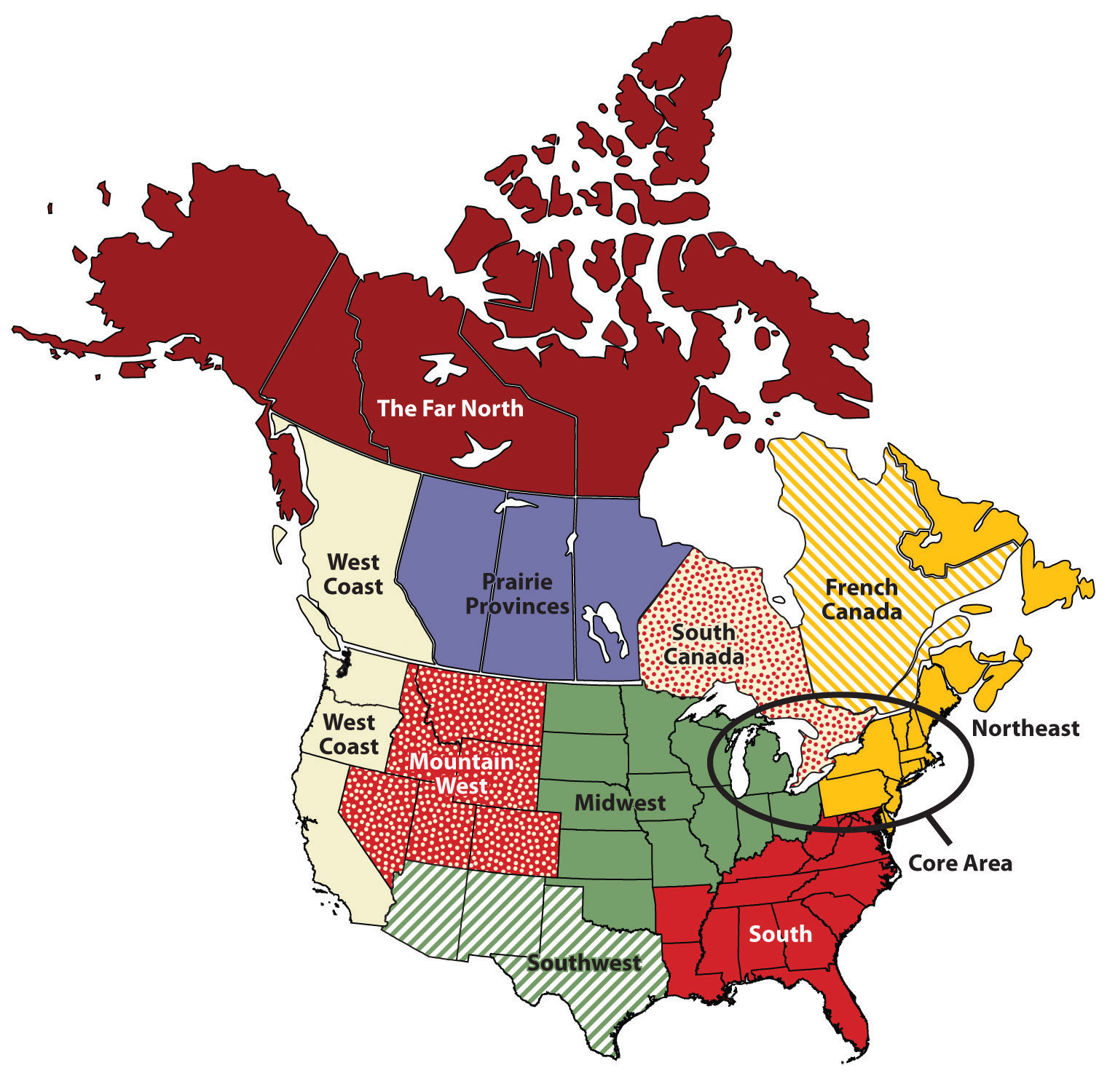
To grasp the scale of what a “province” represents in the USA, one must look at the Gross Domestic Product (GDP) figures. If US states were independent nations, many would rank among the largest economies in the world. This scale changes how businesses approach market entry and investment.
California and Texas: The Global Economic Titans
California’s economy is so vast that it would currently rank as the fifth-largest economy in the world, ahead of the United Kingdom and India. Its “provincial” power is concentrated in technology, entertainment, and agriculture. On the other hand, Texas, with a GDP exceeding $2 trillion, would rank as the eighth-largest economy, driven by energy, aerospace, and a rapidly expanding tech corridor. For an international business, “entering the USA” is often a misnomer; the reality is entering the California market or the Texas market, each of which requires a distinct financial strategy.
The Impact of Industry Clusters on Regional Prosperity
The US states function as specialized hubs. New York is the global epicenter for finance and insurance. Massachusetts is a powerhouse for biotechnology and higher education. Washington State dominates aerospace and e-commerce. This geographic specialization means that capital investment in the USA is rarely spread evenly. It is concentrated in these “super-provinces” that offer the best infrastructure and talent pools for specific sectors. For an investor, identifying the right “province” is synonymous with identifying the right industry cluster.
Navigating the Financial Complexity of Doing Business Across State Lines
While the autonomy of US states creates opportunities for tax optimization and localized growth, it also introduces significant complexity. For those used to the centralized regulations of a provincial system, the US model can be a logistical and financial hurdle.
Regulatory Fragmentation and Compliance Costs
Because each state has its own Department of Revenue and Secretary of State, a business operating across the “provinces” of the USA must deal with 50 different sets of rules. This includes “Nexus” laws, which determine when a business is liable for sales tax in a state, and varying labor laws that dictate overtime pay and benefits. The cost of compliance is a major line item in any US-based business budget. Financial software and specialized accounting are required to track these multi-jurisdictional obligations, highlighting the decentralized nature of the American economy.
State-Level Grant Programs and Small Business Support
Conversely, the decentralization provides a safety net of localized incentives. Many states offer their own versions of the Small Business Administration (SBA) loans, export assistance, and R&D grants. A startup that might not qualify for federal funding might find a receptive ear in a state-level economic development agency looking to boost its local tech sector. This granular level of financial support is a hallmark of the US state system, offering entrepreneurs multiple “bites at the apple” when seeking capital.
Conclusion: The Strategic Value of the US State System
In summary, when asking “what is a province for the USA,” the answer is the State—but with the caveat that these states are far more powerful than provinces in most other nations. From a money and finance perspective, US states are autonomous economic actors that set their own tax agendas, compete for global investment, and manage budgets that rival mid-sized nations.
For the savvy investor or business leader, the United States should not be viewed as a monolith. Instead, it should be seen as a collection of 50 distinct markets, each with its own risk profile, tax implications, and growth potential. Success in the American market depends on the ability to navigate this patchwork of fiscal jurisdictions, leveraging the strengths of each “province” to build a diversified and tax-efficient financial portfolio. Whether you are chasing the high-growth tech yields of the West Coast or the tax-shielded wealth preservation of the South, understanding the financial sovereignty of the US state is the key to unlocking the true economic potential of the American market.
aViewFromTheCave is a participant in the Amazon Services LLC Associates Program, an affiliate advertising program designed to provide a means for sites to earn advertising fees by advertising and linking to Amazon.com. Amazon, the Amazon logo, AmazonSupply, and the AmazonSupply logo are trademarks of Amazon.com, Inc. or its affiliates. As an Amazon Associate we earn affiliate commissions from qualifying purchases.