
In the realm of software development, communication between a human and a machine is governed by a strict set of rules known as syntax. Just as human languages rely on grammar, punctuation, and sentence structure to convey meaning, programming languages require a specific arrangement of symbols, keywords, and characters to function. Without syntax, a computer is unable to parse the instructions provided by a developer, resulting in the ubiquitous “syntax error” that halts execution.
At its core, programming language syntax is the set of rules that defines the combinations of symbols that are considered to be correctly structured programs in that language. It is the surface-level architecture of code. While the logic of a program—known as semantics—determines what the code actually does, the syntax determines how that logic is written. Understanding syntax is the foundational step for any technologist, as it represents the fundamental interface between human creativity and mechanical execution.

The Building Blocks of Syntax
To understand how syntax functions, one must look at the individual components that make up a line of code. Every programming language has a unique “vocabulary” and “alphabet,” but most share common structural elements that categorize their syntax.
Keywords and Reserved Words
Keywords are the most basic building blocks of any programming syntax. These are words that have a predefined meaning within the language and cannot be used for other purposes, such as naming variables. For instance, in Python, words like if, else, while, and def are reserved. The syntax rules dictate exactly where these words can appear. Placing a keyword in an unconventional spot—such as attempting to name a variable class—will violate the structural rules of the language and trigger a failure during the compilation or interpretation phase.
Identifiers and Variables
Identifiers are the names that developers assign to variables, functions, and classes. While keywords are fixed, identifiers offer flexibility, yet they are still bound by syntactic constraints. Most languages require that identifiers start with a letter or an underscore and forbid the use of special characters like “@” or “!”. Syntax also dictates naming conventions, such as the preference for camelCase in JavaScript or snake_case in Python. These rules ensure that the machine can distinguish between a command and a user-defined data label.
Operators and Delimiters
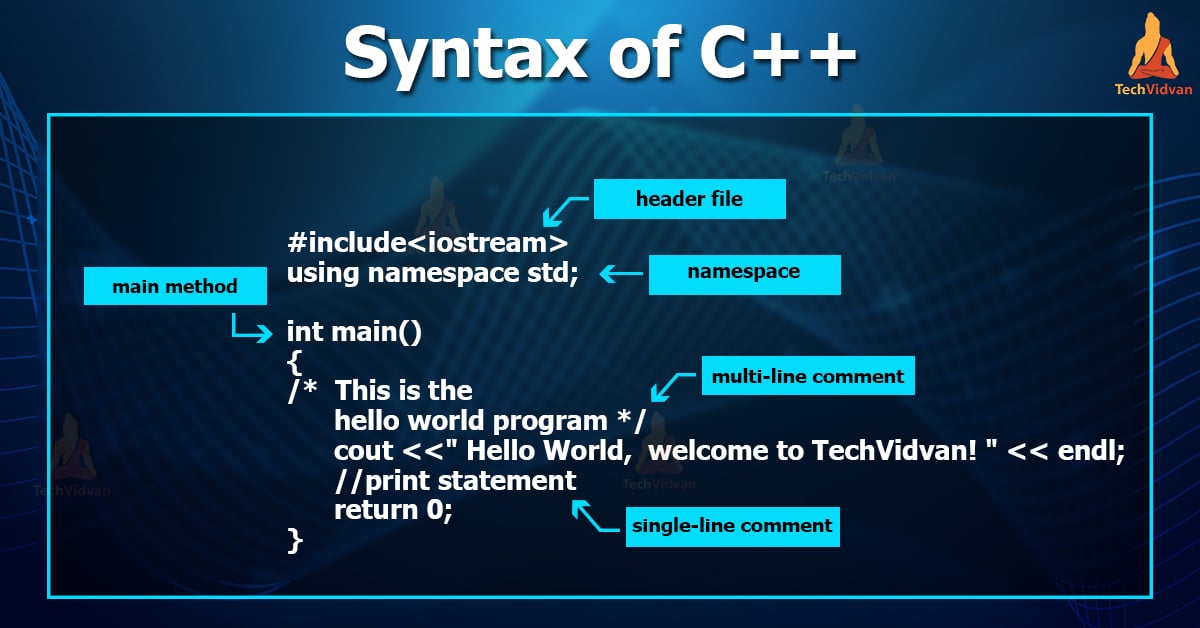
Operators are symbols that represent actions or computations, such as +, -, *, and /. Delimiters, on the other hand, are symbols that group or separate chunks of code. These include parentheses (), curly braces {}, square brackets [], commas, and semicolons. The placement of these symbols is arguably the most critical aspect of syntax. A missing semicolon in C++ or an unclosed bracket in Java can render thousands of lines of code unreadable to the compiler.
Literals and Comments
Literals are fixed values, such as the number 42 or the string "Hello World". Syntax defines how these values must be presented—for example, strings usually require quotation marks. Comments, while ignored by the computer, are also part of the syntax. Each language has a specific way to denote comments, such as // in C# or # in Ruby, allowing developers to leave notes within the code without breaking the structural integrity of the program.
Structural Paradigms and Stylistic Variations
While the basic components of syntax are universal, the way they are organized varies significantly between different programming languages. These variations define the “flavor” of a language and often influence a developer’s productivity and the code’s readability.
Curly Brace Languages vs. Indentation-Based Languages
One of the most significant divides in programming syntax is how code blocks are defined. Languages such as C, C++, Java, and JavaScript are known as “curly brace” languages. In these environments, blocks of code (like the body of a loop or a function) are wrapped in {}. This provides a very clear, explicit boundary for the machine, though it can lead to “bracket fatigue” for the developer.
In contrast, Python and Haskell use whitespace and indentation to define scope. In these languages, the syntax requires that a block of code be indented by a certain number of spaces. If the indentation is inconsistent, the code will fail. This syntactic choice forces developers to write clean, visually organized code, making it highly readable, though it can be unforgiving to those accustomed to more liberal spacing.
Verbositiy vs. Conciseness
Syntax also dictates how much code is required to perform a simple task. Java is often cited as a “verbose” language because its syntax requires explicit declarations of types and classes. To print a line of text, a developer might write System.out.println("Hello");. In a more “concise” language like Python, the syntax is stripped down to print("Hello").
The trade-off is often between clarity and speed. Verbose syntax can make the intent of the code clearer in massive enterprise systems, while concise syntax allows for rapid prototyping and faster development cycles.
Static vs. Dynamic Typing Syntax
The way a language handles data types is also a matter of syntax. In statically-typed languages like TypeScript or Swift, the syntax requires the developer to declare what kind of data a variable will hold (e.g., let age: Int = 25). In dynamically-typed languages like Ruby, the syntax is more relaxed, allowing the machine to infer the type during execution (age = 25). This syntactic distinction fundamentally changes how a developer approaches problem-solving and error management.
Syntax vs. Semantics: The Logic Divide
It is a common mistake among beginner programmers to confuse syntax with semantics. To write effective software, one must distinguish between the structure of the code and the meaning of the code.
The Grammatically Correct Nonsense
In linguistics, a sentence can be grammatically perfect but logically meaningless. A famous example is Noam Chomsky’s “Colorless green ideas sleep furiously.” This sentence follows all the rules of English syntax, yet it makes no sense.
The same occurs in programming. You can write a block of code that is syntactically perfect—every bracket is closed, every semicolon is in place, and every variable is declared correctly—but if the logic is flawed, the program will produce the wrong result or crash. For example, a “division by zero” error is a semantic error, not a syntactic one. The code is structured correctly, but the instruction is mathematically impossible.
The Parsing Process
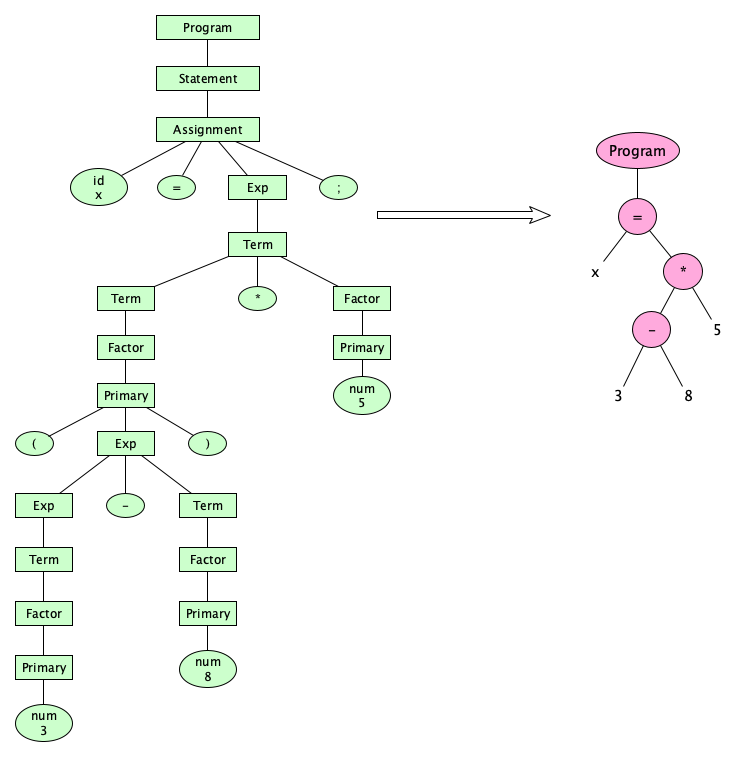
When you run a piece of code, the computer first performs a “syntax check” through a process called parsing. The compiler or interpreter breaks the code down into “tokens” and builds a tree structure known as an Abstract Syntax Tree (AST). If the code does not follow the syntax rules, the AST cannot be completed, and the process stops immediately. Only after the syntax is validated does the computer move on to evaluating the semantics and executing the logic. This is why syntax errors are caught early, while semantic errors (bugs) often remain hidden until the program is actually running.
The Evolution of Syntax in the Modern Tech Landscape
Syntax is not static; it evolves alongside the needs of the technology industry. As software becomes more complex, the goal of programming language design has shifted toward making syntax more “human-centric” rather than “machine-centric.”
The Rise of Declarative Syntax
Traditional “imperative” syntax tells the computer how to do something, step-by-step. However, the modern tech stack is increasingly moving toward “declarative” syntax, which tells the computer what the desired outcome is. SQL (Structured Query Language) is a prime example. Its syntax reads almost like English: SELECT name FROM users WHERE age > 21. Similarly, modern UI frameworks like React and SwiftUI use declarative syntax to describe what the user interface should look like, leaving the underlying engine to handle the complex state changes.
Syntax in the Age of AI and Low-Code
With the advent of AI-powered coding assistants like GitHub Copilot, the role of syntax is changing. These tools are trained on billions of lines of code, allowing them to predict and complete syntactic patterns. While this makes developers faster, it also requires a deeper understanding of syntax to debug the AI’s suggestions.
Furthermore, “low-code” and “no-code” platforms attempt to abstract syntax away entirely, using visual blocks or natural language to build applications. However, even these platforms have an underlying “visual syntax” that governs how components interact. As long as we are communicating with logical systems, syntax—in some form—will remain the essential medium of translation.
Conclusion
Programming language syntax is the unsung hero of the digital world. It is the rigid framework that allows human thought to be transformed into digital action. Whether it is the strict, bracket-heavy requirements of a legacy C++ system or the elegant, whitespace-driven simplicity of a modern Python script, syntax provides the clarity and structure necessary for technology to function. For the developer, mastering syntax is more than just memorizing rules; it is about learning to speak the language of the machine with precision, ensuring that every character serves a purpose in the grand architecture of software.
aViewFromTheCave is a participant in the Amazon Services LLC Associates Program, an affiliate advertising program designed to provide a means for sites to earn advertising fees by advertising and linking to Amazon.com. Amazon, the Amazon logo, AmazonSupply, and the AmazonSupply logo are trademarks of Amazon.com, Inc. or its affiliates. As an Amazon Associate we earn affiliate commissions from qualifying purchases.