
Retirement planning has evolved significantly over the past century, moving from a reliance on familial support and rudimentary public provisions to complex financial ecosystems designed to ensure financial security in later life. While public retirement schemes, such as social security or state pensions, form a foundational safety net in many countries, they are increasingly recognized as insufficient for maintaining a comfortable standard of living post-employment. This growing awareness underscores the critical importance of private retirement schemes, which serve as supplementary or primary vehicles for individuals to build substantial savings and investments specifically for their retirement years. Understanding what a private retirement scheme entails, how it functions, and its myriad benefits is paramount for anyone serious about securing their financial future.

Understanding the Landscape of Retirement Planning
The journey towards a financially secure retirement is a multi-faceted endeavor, often necessitating a blend of different savings and investment strategies. Before delving into the specifics of private schemes, it’s crucial to contextualize their role within the broader retirement planning landscape.
The Limitations of Public Schemes
Public retirement schemes, funded through taxes or mandatory contributions, are designed to provide a basic income floor for retirees. These schemes are typically universal or near-universal, aiming to prevent poverty among the elderly. However, their design often means benefits are modest, rarely enough to cover all living expenses, especially for those accustomed to a higher pre-retirement income. Factors such as demographic shifts (aging populations, lower birth rates), economic volatility, and political pressures constantly challenge the solvency and generosity of these systems. Relying solely on public provisions can therefore lead to a significant decline in one’s quality of life during retirement, necessitating a more proactive approach to personal financial planning.
The Imperative for Personal Savings
Given the inherent limitations of public schemes, the onus has increasingly fallen on individuals to take charge of their own retirement funding. Personal savings and investments become not just a desirable addition but an essential component of a robust retirement strategy. Private retirement schemes are specifically designed to facilitate this personal accumulation, offering structured ways to save, invest, and benefit from tax advantages that accelerate wealth growth for retirement. They empower individuals to define their own retirement lifestyle, rather than being constrained by the basic provisions of state-funded programs.
Delving into Private Retirement Schemes (PRS)
A private retirement scheme is, at its core, an investment vehicle or savings plan established by an individual or an employer to provide income during retirement, distinct from government-run public schemes. These schemes are characterized by their voluntary nature, investment flexibility, and often, significant tax incentives designed to encourage long-term savings.
Definition and Core Purpose
A Private Retirement Scheme (PRS) refers to a long-term savings and investment plan that allows individuals to accumulate funds over their working lives, which can then be drawn upon during their retirement years. Unlike public pension systems, which are typically managed by the government and provide fixed benefits based on contributions or years of service, PRS are privately managed, often by financial institutions, and the ultimate benefit received is largely dependent on the contributions made and the investment performance of those funds. Their primary purpose is to supplement or replace income from public pensions, ensuring a more comfortable and financially independent retirement.
Key Characteristics and Benefits
Private retirement schemes offer several distinct advantages that make them a cornerstone of effective retirement planning:
- Tax Advantages: A primary benefit of most PRS is the favorable tax treatment. This can include tax-deductible contributions, tax-deferred growth of investments (meaning taxes are paid only upon withdrawal in retirement), or even tax-free withdrawals in certain circumstances (e.g., Roth IRAs). These tax breaks significantly enhance the power of compounding.
- Flexibility and Control: Unlike many public schemes, PRS often provide a high degree of flexibility regarding contribution amounts, investment choices, and sometimes, withdrawal schedules. Individuals can often choose from a range of investment funds, tailoring their portfolio to their risk tolerance and financial goals.
- Supplementary Nature: PRS are designed to work in conjunction with public schemes, filling the gap between basic state provisions and an individual’s desired retirement income.
- Portability: Many private schemes, especially individual accounts, are portable, meaning they remain with the individual even if they change employers.
Common Types of Private Retirement Schemes
The landscape of PRS is diverse, with various structures tailored to different needs and regulatory environments.
Defined Contribution Plans
These are the most common type of private retirement scheme today. In a defined contribution plan, the employer, employee, or both contribute a specified amount regularly. The retirement benefit depends entirely on the total contributions made and the investment returns earned on those contributions. The investment risk is borne by the employee. Examples include:
- 401(k) (USA): Employer-sponsored plans allowing pre-tax contributions and tax-deferred growth. Many employers offer matching contributions.
- 403(b) (USA): Similar to 401(k)s but for employees of public schools and certain tax-exempt organizations.
- Individual Retirement Accounts (IRAs) (USA): Personal retirement savings plans that are not employer-sponsored, allowing individuals to contribute to a wide array of investments. Both Traditional (tax-deductible contributions, tax-deferred growth) and Roth (after-tax contributions, tax-free withdrawals in retirement) versions exist.
- Self-Invested Personal Pensions (SIPPs) (UK): A type of personal pension that gives individuals complete control over their investments.
- Superannuation (Australia): Mandatory employer contributions (often with voluntary employee contributions) to a fund for retirement.
Defined Benefit Plans
Once the standard for employer-sponsored pensions, defined benefit plans promise a specific payout at retirement, typically based on a formula involving an employee’s salary history and years of service. The employer bears the investment risk. While less common in the private sector today due to their high cost and complexity, some older plans still exist, and they remain prevalent in many public sector jobs. The employer is responsible for ensuring sufficient funds are available to pay the promised benefits.
How Private Retirement Schemes Operate
The mechanics of private retirement schemes involve contributions, investment management, and eventual withdrawals, all governed by specific rules and regulations.
Contribution Mechanisms
Contributions to PRS can come from several sources:
- Employee Contributions: Individuals can make regular or lump-sum contributions, often automatically deducted from their paychecks or made directly to the scheme administrator.
- Employer Contributions: Many employers offer to contribute to their employees’ PRS, often matching a percentage of the employee’s contribution. This “free money” is a powerful incentive to participate.
- Voluntary Additional Contributions: Beyond regular contributions, many schemes allow for additional voluntary contributions, enabling individuals to accelerate their savings.
Investment Management
A key aspect of PRS, particularly defined contribution plans, is the investment of accumulated funds.
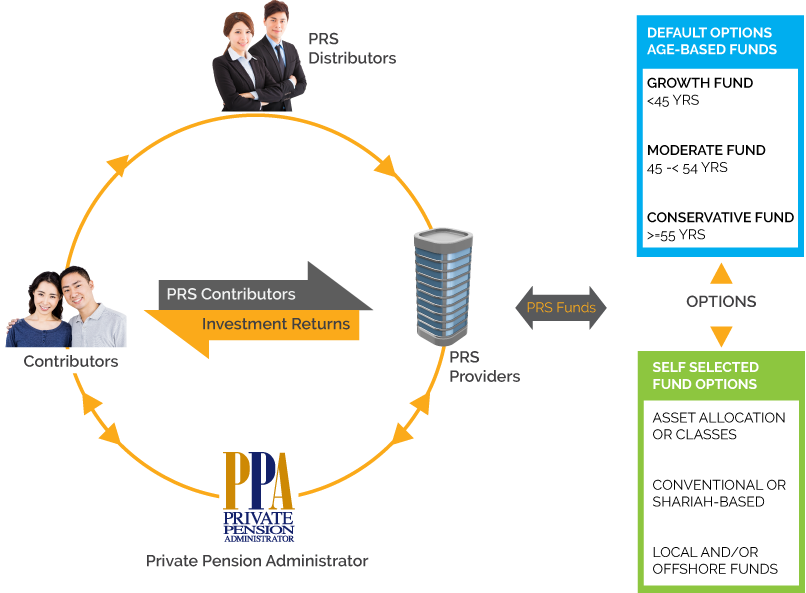
- Fund Choices: Scheme providers typically offer a menu of investment funds, ranging from conservative money market funds to aggressive equity funds, often including target-date funds that automatically adjust asset allocation as retirement approaches.
- Risk Profiles: Individuals select funds based on their personal risk tolerance, financial knowledge, and investment horizon.
- Role of Fund Managers: Professional fund managers manage the underlying investments within the chosen funds.
- Self-Directed Options: Some schemes, like SIPPs or certain IRAs, allow individuals to self-direct their investments, choosing individual stocks, bonds, and other assets.

Withdrawal Rules and Taxation
Rules regarding withdrawals are critical. Most PRS are designed for long-term savings, meaning withdrawals before a certain age (e.g., 59½ in the USA) may incur penalties and additional taxes, discouraging early access. Upon reaching retirement age, individuals can typically begin withdrawing funds, often subject to income tax (for tax-deferred accounts) but free from early withdrawal penalties. Options for withdrawal include lump sums, periodic payments, or annuities.
The Role of Financial Institutions
Private retirement schemes are administered by various financial institutions, including banks, mutual fund companies, insurance companies, and specialized retirement plan administrators. These entities are responsible for holding the assets, managing investments, processing contributions and withdrawals, and ensuring compliance with regulatory requirements.
Choosing the Right Private Retirement Scheme
Selecting the most suitable PRS requires careful consideration of personal circumstances, financial goals, and the specific features of available schemes.
Assessing Your Financial Goals and Risk Tolerance
Before choosing a scheme, articulate your retirement vision: When do you want to retire? What lifestyle do you envision? How much income will you need? Simultaneously, understand your risk tolerance – your comfort level with potential fluctuations in investment value. This will guide your investment choices within the scheme.
Understanding Fees and Charges
All private retirement schemes come with fees, which can significantly impact your long-term returns. These may include:
- Management Fees: Charged by fund managers for overseeing investments.
- Administrative Fees: For the general administration of the plan.
- Transaction Costs: For buying and selling investments within the fund.
- Advisor Fees: If you use a financial advisor.
Scrutinize these fees; even small percentages can erode substantial wealth over decades.
Evaluating Investment Options and Performance
Examine the range and quality of investment options available within a scheme. Look for diversification across asset classes, geographic regions, and investment styles. While past performance is not indicative of future results, consistent historical returns and a sound investment philosophy are positive indicators.
Considering Flexibility and Portability
Life circumstances change, so flexibility is valuable. Can you adjust contribution amounts easily? What happens if you change jobs – can you roll over your account to a new employer’s plan or an individual account without penalty? Portability ensures your retirement savings move with you, simplifying management.
Seeking Professional Financial Advice
Navigating the complexities of PRS and broader retirement planning can be daunting. A qualified financial advisor can provide personalized guidance, help assess your needs, recommend suitable schemes and investment strategies, and assist with tax optimization, ensuring your choices align with your long-term objectives.
Maximizing Your Private Retirement Scheme
Once you’ve chosen a private retirement scheme, strategic management is key to maximizing its potential and securing a robust financial future.
Start Early and Contribute Consistently
The most powerful advantage in retirement savings is time, thanks to the principle of compounding. Starting early, even with modest amounts, allows your investments to grow exponentially over decades. Consistent contributions, regardless of market conditions, build momentum and mitigate the impact of market volatility through dollar-cost averaging.
Maximize Employer Contributions/Matching
If your employer offers matching contributions to your retirement scheme, always contribute at least enough to receive the full match. This is essentially “free money” and represents an immediate, guaranteed return on your investment that is difficult to beat. Failing to take advantage of employer matching is a significant missed opportunity.
Diversify Your Investments
Diversification is crucial for managing risk. Spreading your investments across different asset classes (e.g., stocks, bonds, real estate), industries, and geographic regions helps buffer your portfolio against downturns in any single area. A well-diversified portfolio aims to achieve growth while mitigating significant losses.
Regularly Review and Adjust Your Strategy
Your financial situation, goals, and risk tolerance can change over time. Market conditions also evolve. It is essential to review your private retirement scheme periodically (e.g., annually) to ensure your investment strategy remains aligned with your objectives. This might involve rebalancing your portfolio, adjusting your asset allocation, or modifying your contribution amounts.
Understand Tax Implications
Optimize your tax strategy. Whether you choose pre-tax (tax-deferred) or after-tax (tax-free upon withdrawal) contribution vehicles, understanding the tax implications of your specific PRS can significantly impact your net retirement income. Consult with a financial advisor or tax professional to make informed decisions regarding contributions, withdrawals, and conversions to maximize tax efficiency throughout your saving and retirement phases.
aViewFromTheCave is a participant in the Amazon Services LLC Associates Program, an affiliate advertising program designed to provide a means for sites to earn advertising fees by advertising and linking to Amazon.com. Amazon, the Amazon logo, AmazonSupply, and the AmazonSupply logo are trademarks of Amazon.com, Inc. or its affiliates. As an Amazon Associate we earn affiliate commissions from qualifying purchases.