
The prime lending rate stands as a cornerstone of the financial system, a critical benchmark that influences borrowing costs across the economy. For individuals managing personal finances, for small businesses seeking growth capital, and for large corporations strategizing their investments, understanding the prime rate is not merely academic—it’s essential for sound financial decision-making. Today, the prime lending rate in the United States, as set by major commercial banks, is predominantly 8.50%. This rate reflects the current monetary policy stance of the Federal Reserve and has significant implications for a wide array of financial products.
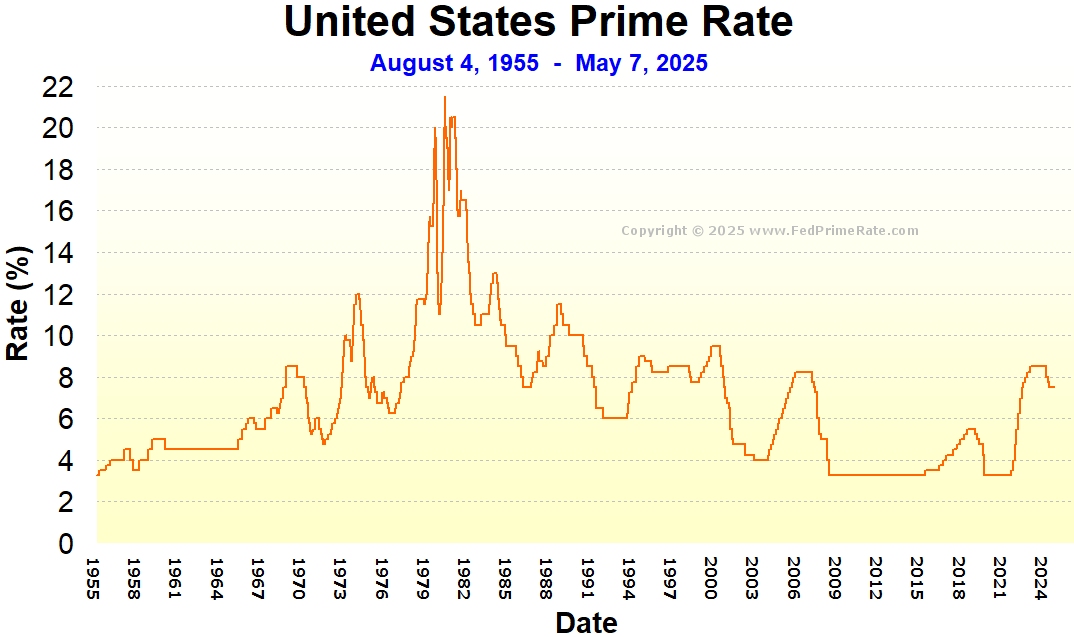
This article delves into the intricacies of the prime lending rate, exploring its definition, how it’s determined, its far-reaching impact on consumers and businesses, and strategies to navigate its fluctuations. By demystifying this crucial financial indicator, we aim to provide an insightful and engaging guide for anyone looking to better understand the economic landscape.
Understanding the Prime Lending Rate: Definition and Significance
At its core, the prime lending rate is the interest rate that commercial banks charge their most creditworthy corporate customers for short-term loans. While this might sound specific, its influence radiates far beyond this narrow definition, impacting millions of financial transactions daily.
What is the Prime Lending Rate?
The prime lending rate is, in essence, the “base” interest rate from which banks often calculate other variable interest rates. It represents the lowest available rate offered to the banks’ most reliable borrowers—those with impeccable credit histories and robust financial health. For other borrowers, the rate will typically be the prime rate plus a certain spread, determined by their creditworthiness and the specific loan product.
Unlike fixed rates, the prime rate is a variable rate. It does not remain static but adjusts in response to broader economic conditions and, most significantly, changes in monetary policy orchestrated by the nation’s central bank.
Why is it Called “Prime”?
The term “prime” historically refers to the best quality or most favorable conditions. In the context of lending, it signifies the preferred rate offered to top-tier clients who pose the lowest risk of default. While once a rate exclusively for large, highly stable corporations, its modern significance has broadened to serve as a universally recognized reference point for a vast range of lending products. This consistent benchmark allows for greater transparency and comparability across different financial institutions and loan offerings.
Its Role in the Financial System
The prime rate’s significance lies in its ripple effect. It acts as a foundational benchmark upon which countless other interest rates are built. When the prime rate shifts, so do the costs associated with a variety of consumer and business loans. It provides a common language for discussing interest rates and serves as a direct indicator of the prevailing cost of money in the economy. Financial advisors, investors, and economists closely monitor the prime rate as a bellwether for economic health and future financial trends.
How the Prime Rate is Determined: The Federal Reserve’s Influence
The prime lending rate is not set arbitrarily by individual banks. Instead, it is predominantly a reflection of the monetary policy decisions made by the Federal Reserve (or the central bank in other countries) and how commercial banks interpret and apply those decisions.
The Federal Funds Rate Connection
The most critical factor influencing the prime lending rate is the federal funds rate. This is the target interest rate set by the Federal Open Market Committee (FOMC) of the Federal Reserve. The federal funds rate is the rate at which commercial banks lend their excess reserves to other banks overnight. While banks don’t directly lend to consumers at this rate, it profoundly impacts their cost of funds.
Typically, the prime lending rate in the U.S. is calculated by adding a spread of approximately 3.00% to the upper bound of the federal funds target rate. So, if the federal funds target range is 5.25%-5.50%, the prime rate will be 5.50% + 3.00% = 8.50%. This relationship is a well-established convention, making the prime rate a direct consequence of the Fed’s monetary policy. When the Fed raises or lowers the federal funds rate, commercial banks are quick to adjust their prime rate in tandem.
The Role of Commercial Banks
While the Fed provides the anchor, commercial banks still play a role in setting their individual prime rates. However, due to the competitive nature of the banking industry and the need for consistency, most major U.S. banks converge on the same prime rate. Deviating significantly from the widely accepted prime rate could put a bank at a disadvantage, either by charging too much and losing customers or charging too little and sacrificing profitability. Therefore, while each bank technically sets its own prime rate, they generally follow a synchronized adjustment based on the Fed’s actions.
Factors Influencing the Fed’s Decisions
The Federal Reserve’s decisions regarding the federal funds rate are driven by its dual mandate: maximizing employment and maintaining stable prices (i.e., controlling inflation). When inflation is high, the Fed might raise rates to cool down the economy and reduce price pressures. Conversely, during periods of economic slowdown or recession, the Fed might lower rates to stimulate borrowing, spending, and investment. Other factors considered include GDP growth, consumer spending, global economic conditions, and geopolitical events. These complex considerations ultimately dictate the direction of the federal funds rate and, consequently, the prime lending rate.
Impact of the Prime Rate: For Consumers and Businesses
The prime lending rate is not an abstract economic indicator; its movements have tangible, real-world consequences for individuals and businesses alike. Understanding these impacts is crucial for navigating personal and business finance effectively.
Variable-Rate Loans
Perhaps the most direct impact of the prime rate is on variable-rate loans. Many popular financial products are tied directly to the prime rate, meaning their interest rates fluctuate as the prime rate changes.
- Credit Cards: A significant portion of credit card interest rates are expressed as “Prime + X%.” When the prime rate rises, the interest charged on outstanding credit card balances increases, making debt more expensive.
- Home Equity Lines of Credit (HELOCs): HELOCs are commonly tied to the prime rate. Borrowers with HELOCs will see their minimum monthly payments change when the prime rate moves, directly affecting their household budget.
- Adjustable-Rate Mortgages (ARMs): While many mortgages are fixed-rate, ARMs have interest rates that adjust periodically. Although often tied to other indices (like SOFR or a Treasury yield), an ARM’s margin and overall rate can still be indirectly influenced by the general interest rate environment reflected by the prime rate.
- Small Business Loans: Many lines of credit and short-term loans for small businesses are also linked to the prime rate, affecting their working capital costs and investment decisions.
Business Loans and Lines of Credit
For businesses, especially small to medium-sized enterprises (SMEs), the prime rate is a critical factor in their financial planning. A higher prime rate translates to higher borrowing costs for working capital, equipment purchases, and expansion projects. This can lead businesses to defer investments, slow hiring, or pass increased costs onto consumers through higher prices. Conversely, a lower prime rate can stimulate business growth by making capital more affordable, encouraging investment and expansion.

Savings and Investments
While the prime rate directly impacts borrowing, it also has indirect effects on savings and investments.
- Savings Accounts and CDs: While not directly tied, deposit rates often move in the same direction as the prime rate. When interest rates rise generally, banks are more likely to offer higher yields on savings accounts, money market accounts, and certificates of deposit (CDs) to attract deposits.
- Bond Market: Higher interest rates (including the prime rate) generally lead to lower bond prices for existing bonds, as newly issued bonds offer more attractive yields. This affects bond investors.
- Stock Market: The relationship between interest rates and the stock market is complex. Higher rates can increase borrowing costs for companies, potentially reducing their profitability, and can make bonds more attractive relative to stocks, leading some investors to shift their portfolios. However, rising rates often signal a strong economy, which can be positive for corporate earnings.
Tracking the Current Prime Lending Rate: Where to Find It and Why It Matters
Given its widespread influence, staying informed about the current prime lending rate is a prudent financial practice for individuals and businesses alike. Knowing where to find reliable information and how to interpret it empowers better decision-making.
Reliable Sources for Prime Rate Information
The prime lending rate is widely published and easily accessible.
- Financial News Outlets: Major financial news websites (e.g., The Wall Street Journal, Bloomberg, Reuters, CNBC) regularly report on the prime rate and any changes to it.
- Federal Reserve Website: While the Fed doesn’t directly set the prime rate, their website provides information on the federal funds target rate, which is the key determinant.
- Bank Websites: Most commercial banks will list their current prime rate on their websites, often in sections related to personal or business loans.
- Reputable Financial Data Providers: Services like Bankrate.com or other financial aggregators also provide up-to-date prime rate information.
When checking, ensure the source is current, as the rate can change immediately following a Federal Reserve FOMC meeting.
Interpreting Prime Rate Changes
Understanding what a change in the prime rate signifies is crucial:
- Rising Prime Rate: Indicates a tightening monetary policy by the Federal Reserve, usually in response to concerns about inflation or an overheated economy. Borrowing becomes more expensive, potentially slowing economic activity. For those with variable-rate debt, monthly payments will increase. For savers, deposit rates may rise.
- Falling Prime Rate: Indicates an easing monetary policy, often to stimulate a sluggish economy or combat deflationary pressures. Borrowing becomes cheaper, encouraging spending and investment. For variable-rate borrowers, payments will decrease. For savers, deposit rates may fall.
These changes have direct implications for budgeting, debt management, and investment strategies.
Historical Context and Future Outlook
Examining the prime rate’s historical trajectory provides valuable context. Over decades, the prime rate has seen significant swings, from double-digit highs in the late 1970s and early 1980s to historically low levels during the Great Recession and the COVID-19 pandemic. These movements reflect evolving economic conditions and the Fed’s responses.
Predicting the future of the prime rate involves anticipating the Federal Reserve’s actions, which in turn depend on economic data like inflation, employment figures, and GDP growth. While no one can perfectly forecast future rates, economic forecasts from reputable institutions and careful monitoring of Fed communications can offer insights into potential trends.
Navigating Prime Rate Fluctuations: Strategies for Borrowers and Investors
The variable nature of the prime lending rate means that borrowers and investors must be prepared to adapt. Proactive financial strategies can help mitigate risks and capitalize on opportunities presented by changing rate environments.
For Borrowers: Refinancing, Debt Consolidation, Fixed vs. Variable
For individuals and businesses with existing variable-rate debt, managing prime rate fluctuations is paramount.
- Consider Refinancing: If the prime rate has fallen significantly, borrowers with high-interest variable-rate loans might consider refinancing into a new loan with a lower interest rate, potentially even a fixed rate, to lock in savings.
- Debt Consolidation: For those with multiple high-interest credit cards or other variable-rate debts, consolidating these into a personal loan with a lower, fixed interest rate can provide stability and potentially reduce overall interest costs, especially if prime rates are expected to rise.
- Fixed vs. Variable-Rate Loans: When taking out new loans, carefully weigh the pros and cons of fixed versus variable rates. Fixed rates offer predictability and protection against rising rates, albeit often at a slightly higher initial cost. Variable rates can be cheaper initially but carry the risk of increased payments if rates go up. Your risk tolerance and rate outlook should guide this decision.
- Accelerate Payments: When prime rates are rising, consider making extra payments on variable-rate debt to reduce the principal faster and mitigate the impact of higher interest charges.
For Businesses: Cash Flow Management, Hedging Strategies
Businesses, particularly those with lines of credit tied to the prime rate, need robust strategies to manage interest rate risk.
- Cash Flow Management: Strong cash flow management is critical. Businesses with ample cash reserves are less reliant on borrowing and can better withstand periods of high interest rates.
- Interest Rate Swaps and Hedging: Larger businesses may employ sophisticated financial instruments like interest rate swaps to convert variable-rate debt into fixed-rate obligations, thereby hedging against future rate increases.
- Diversify Funding Sources: Relying on a single type of financing can be risky. Businesses might explore diversifying their funding, incorporating a mix of fixed-rate loans, equity financing, or even factoring receivables to reduce exposure to prime rate volatility.

For Investors: Sector Analysis, Bond Market Considerations
Investors also need to consider the prime rate’s implications for their portfolios.
- Sector Analysis: Certain sectors perform differently in varying interest rate environments. For instance, financial institutions often benefit from rising rates as their lending margins improve, while rate-sensitive sectors like real estate or utilities might face headwinds.
- Bond Market Strategy: In a rising rate environment, new bonds offer higher yields, while the value of existing bonds with lower yields tends to fall. Investors might consider shorter-duration bonds to reduce interest rate risk or explore bond funds that actively manage duration.
- Dividend Stocks: Companies with strong, reliable dividend payments can be attractive in a rising rate environment, offering income stability that might be lacking elsewhere.
- Inflation-Protected Securities: When rates rise due to inflation concerns, Treasury Inflation-Protected Securities (TIPS) can offer a hedge against the eroding purchasing power of money.
In conclusion, the prime lending rate is a dynamic and influential figure in the financial world. Today, at 8.50%, it reflects a period of tighter monetary policy aimed at curbing inflation. By understanding its mechanics, its impact, and developing adaptable financial strategies, both individuals and businesses can navigate the complexities of the current economic climate with greater confidence and foresight. Staying informed and proactive is key to optimizing financial outcomes in an environment shaped by this critical benchmark.
aViewFromTheCave is a participant in the Amazon Services LLC Associates Program, an affiliate advertising program designed to provide a means for sites to earn advertising fees by advertising and linking to Amazon.com. Amazon, the Amazon logo, AmazonSupply, and the AmazonSupply logo are trademarks of Amazon.com, Inc. or its affiliates. As an Amazon Associate we earn affiliate commissions from qualifying purchases.