
In the dynamic world of finance, few metrics hold as much sway over the average consumer and business alike as the prime interest rate. It’s a benchmark that ripples through the economy, influencing everything from the cost of a mortgage to the profitability of a small business loan. Understanding what the prime rate is, how it’s determined, and its current implications is not just an academic exercise; it’s a fundamental aspect of sound financial literacy and strategic economic planning. This article delves into the intricacies of the prime rate, its current standing, and what that means for your financial decisions.

Understanding the Prime Rate: The Foundation of Lending
At its core, the prime interest rate represents the interest rate that commercial banks charge their most creditworthy corporate customers. It’s a foundational rate, meaning many other variable interest rates for consumer and business loans are often pegged to it. When you hear about changes in the prime rate, it signals a shift in the broader lending landscape.
Definition and Basics: A Direct Link to the Federal Funds Rate
While set by individual banks, the prime rate is not arbitrary. It is almost universally derived from the federal funds rate, a target rate set by the U.S. Federal Reserve’s Federal Open Market Committee (FOMC). The federal funds rate is the rate at which commercial banks borrow and lend their excess reserves to each other overnight. Historically, the prime rate has consistently been about 3.00 percentage points higher than the upper bound of the federal funds rate target range. This spread accounts for the administrative costs of lending, the risk associated with even the most creditworthy borrowers, and the banks’ desired profit margin.
For example, if the Federal Reserve sets its federal funds rate target range between 5.00% and 5.25%, the prime rate would typically be 8.25% (5.25% + 3.00%). This consistency makes the prime rate highly predictable once the Fed’s actions are known, although individual banks can technically deviate, they rarely do due to competitive pressures and market expectations.
How Banks Use It: Pricing Loans for “Prime” Borrowers
Banks use the prime rate as a reference point for various types of loans, especially those with variable interest rates. These include:
- Credit Cards: Many credit card Annual Percentage Rates (APRs) are expressed as “Prime Rate + X%”, where X is a margin determined by the issuer and the cardholder’s creditworthiness.
- Home Equity Lines of Credit (HELOCs): HELOCs are almost exclusively variable-rate products tied directly to the prime rate.
- Certain Mortgages: Adjustable-Rate Mortgages (ARMs) can sometimes be tied to the prime rate, though more commonly they are linked to other indexes like the SOFR (Secured Overnight Financing Rate) or Treasury yields.
- Small Business Loans: Many revolving lines of credit and some term loans for businesses are priced off the prime rate, especially for well-established companies with strong financials.
- Personal Loans: While less common for prime rate linkage, some variable-rate personal loans may reference it.
The “prime” in prime rate signifies the best rate a bank typically offers, reserved for customers with impeccable credit histories and robust financial health. Other borrowers, deemed higher risk, will be charged the prime rate plus an additional margin (e.g., Prime Rate + 2%, Prime Rate + 5%).
The Federal Reserve’s Influence: The Puppet Master of Rates
The ultimate driver of the prime rate is the Federal Reserve’s monetary policy. The Fed uses its power to influence the cost of money in the economy to achieve its dual mandate: maximum employment and price stability (low and stable inflation).
The Federal Funds Rate Explained: A Key Policy Tool
The federal funds rate is not a rate that consumers or businesses directly pay or receive. Instead, it’s an interbank lending rate. By adjusting this target rate, the Fed makes it more or less expensive for banks to borrow from each other, which in turn affects their willingness and cost to lend to their customers. When the Fed raises the federal funds rate, it becomes more expensive for banks to operate, and they pass those increased costs on to borrowers in the form of higher interest rates, including the prime rate. Conversely, when the Fed lowers the federal funds rate, borrowing becomes cheaper for banks, and they tend to reduce their lending rates.
Transmission Mechanism: How Fed Actions Impact the Prime Rate
The transmission mechanism from the federal funds rate to the prime rate is direct and relatively immediate. When the FOMC announces a change to its target federal funds rate range, commercial banks typically adjust their prime rate within hours, if not minutes, of the announcement. This swift reaction is due to market efficiency and the competitive nature of the banking industry. No bank wants to be out of step with its peers, especially on such a foundational lending rate. This direct linkage makes the prime rate an excellent real-time indicator of the Fed’s stance on monetary policy.
Impact on Borrowing Costs: A Widespread Economic Ripple
Changes in the prime rate have profound implications across the financial landscape:
- Consumers: Higher prime rates mean higher costs for credit card debt, HELOCs, and variable-rate personal loans. This can increase monthly payments, reduce disposable income, and potentially slow consumer spending.
- Businesses: For businesses, especially those reliant on lines of credit for working capital, an increased prime rate means higher borrowing costs, which can eat into profit margins, deter investment, and potentially slow hiring. Conversely, a lower prime rate can stimulate business expansion and investment.
- Housing Market: While fixed-rate mortgages are typically tied to long-term bond yields (like the 10-year Treasury), variable-rate products like HELOCs and some ARMs are directly impacted. Rising prime rates can cool demand in the housing market by making these financing options more expensive.
Current Landscape and Economic Implications: What “Now” Means
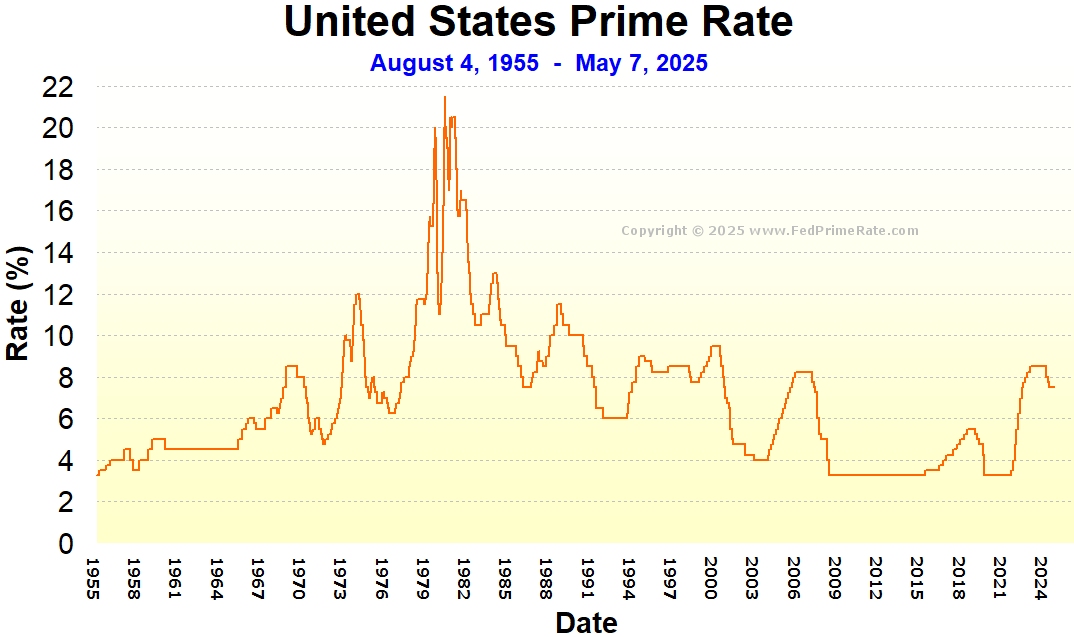
Defining “what is prime interest rate now” requires acknowledging that it fluctuates. As of my last update, the prime rate has been influenced by a period of significant monetary policy tightening by the Federal Reserve, aimed at combating persistent inflation.
What is the Current Prime Rate? (Interpreting the Economic Environment)
Since I cannot provide real-time data, understanding how to determine the current prime rate is crucial. You can typically find the most up-to-date prime rate by:
- Checking the Federal Reserve’s Website: Locate the current target range for the federal funds rate.
- Adding 3.00 Percentage Points: The prime rate will almost certainly be the upper bound of the federal funds rate target range plus 3.00%.
- Consulting Major Financial News Outlets: Reputable financial news sources (e.g., Wall Street Journal, Bloomberg, Reuters) frequently report on the prime rate, especially after a Fed meeting.
- Checking Your Bank’s Website: Most commercial banks prominently display their prime lending rate.
For example, if the federal funds rate target range is currently 5.25% – 5.50%, the prime rate would be 8.50%. This would represent a relatively high-interest rate environment compared to historical lows seen in the past decade.
Impact on Consumers: Managing Debt and Opportunities for Savings
In a period of elevated prime rates:
- Increased Debt Servicing Costs: Consumers with variable-rate debt, especially on credit cards and HELOCs, will see their monthly payments rise. This can strain household budgets and requires careful debt management. Prioritizing repayment of high-interest, variable-rate debt becomes paramount.
- Reduced Borrowing Power: The higher cost of borrowing may lead individuals to reconsider taking on new loans or reduce the amount they are willing to borrow for purchases like homes or cars (even if not directly tied to prime, the general rate environment impacts all credit products).
- Opportunities for Savers: Conversely, a higher prime rate environment often means higher interest rates on savings accounts, money market accounts, and Certificates of Deposit (CDs). This provides an opportunity for savers to earn more on their deposits, though often these rates still lag behind inflation.
Impact on Businesses: Investment Decisions and Operational Costs
Businesses face a different set of challenges and opportunities:
- Higher Cost of Capital: Companies relying on lines of credit for day-to-day operations or for financing expansion will incur higher interest expenses. This can compress profit margins and make new investment projects less attractive if the expected return doesn’t significantly exceed the increased cost of borrowing.
- Stricter Lending Standards: In a high-rate environment, banks may also become more cautious, potentially tightening their lending standards even for “prime” borrowers, requiring stronger collateral or higher credit scores.
- Strategic Planning: Businesses need to factor higher borrowing costs into their financial projections and strategic planning. This might involve delaying non-essential capital expenditures, optimizing inventory management to reduce reliance on short-term borrowing, or exploring alternative financing structures.
Broader Economic Effects: Navigating Inflation and Growth
The prime rate’s level is a critical indicator of the overall economic climate:
- Combating Inflation: When the prime rate is high, it typically signifies that the Federal Reserve is actively working to cool down an overheated economy and bring inflation under control. By making money more expensive, the Fed aims to reduce demand, which can help stabilize prices.
- Risk of Slowdown/Recession: While necessary for inflation control, a sustained period of high interest rates can slow economic growth, potentially leading to increased unemployment or even a recession. Policymakers walk a tightrope, trying to achieve a “soft landing” where inflation is tamed without severely damaging economic activity.
- Currency Strength: Higher interest rates can attract foreign investment, increasing demand for the domestic currency and potentially strengthening its value against other currencies.
Navigating a Changing Rate Environment: Strategies for Financial Resilience
Regardless of whether the prime rate is high or low, understanding its implications allows for proactive financial management. Adaptability is key in any rate environment.
For Borrowers: Optimizing Debt and Minimizing Costs
When the prime rate is high or rising:
- Prioritize Variable-Rate Debt Repayment: Focus on aggressively paying down credit card balances and HELOCs. Even small increases in the prime rate can significantly add to the cost of these debts over time.
- Consider Refinancing to Fixed Rates: If you have variable-rate debt (e.g., an ARM) and anticipate rates continuing to rise, exploring options to refinance into a fixed-rate product could lock in your payments and provide predictability.
- Consolidate High-Interest Debt: Explore options like personal loans (if at a lower fixed rate) or balance transfer credit cards (with introductory 0% APRs) to consolidate higher-interest variable debt.
- Evaluate Future Borrowing Needs: If you plan on taking out a significant loan in the near future, consider how current and projected rates might impact your affordability and timing.
For Savers and Investors: Maximizing Returns and Managing Risk
In a higher prime rate environment:
- Seek High-Yield Savings Accounts and CDs: Take advantage of increased returns on safe, liquid assets. Shop around for the best rates among online banks and credit unions.
- Re-evaluate Bond Portfolios: Rising rates can negatively impact the value of existing bonds, but new bonds issued will offer higher yields. Consider adjusting your bond allocations or focusing on shorter-duration bonds to mitigate interest rate risk.
- Review Investment Strategies: While the prime rate directly impacts short-term fixed income, it also influences equity markets. Higher rates can increase borrowing costs for companies, potentially impacting their earnings and stock valuations. Diversification and a long-term perspective remain crucial.
For Businesses: Prudent Financial Planning and Agility
Businesses need to be particularly agile:
- Cash Flow Management: Emphasize robust cash flow forecasting and management to reduce reliance on expensive short-term borrowing.
- Review Lending Agreements: Understand the terms of all variable-rate loans and lines of credit. Explore options to convert variable debt to fixed-rate debt if appropriate.
- Strategic Hedging: Larger businesses might explore interest rate hedging strategies to lock in borrowing costs or mitigate rate volatility.
- Cost Optimization: Focus on operational efficiencies to offset increased financing costs and maintain profitability.
- Re-evaluate Investment Horizons: Projects with longer payback periods might become less attractive in a higher interest rate environment, prompting a focus on quicker returns.

Conclusion: Staying Informed in a Dynamic Economic Climate
The prime interest rate is far more than just a number; it’s a barometer of economic health and a critical determinant of financial opportunity and challenge. Its direct linkage to the Federal Reserve’s policy decisions means that understanding the prime rate requires keeping a pulse on the broader economic narrative – inflation trends, employment figures, and the Fed’s commentary.
Whether you are a consumer managing household debt, an entrepreneur seeking growth capital, or an investor planning for the future, knowing “what is prime interest rate now” empowers you to make informed decisions. By staying aware of its current level and understanding its implications, you can adapt your financial strategies to navigate the economic currents, mitigate risks, and seize opportunities in an ever-evolving financial landscape. In finance, knowledge truly is power, and the prime rate is a potent reminder of that fundamental truth.
aViewFromTheCave is a participant in the Amazon Services LLC Associates Program, an affiliate advertising program designed to provide a means for sites to earn advertising fees by advertising and linking to Amazon.com. Amazon, the Amazon logo, AmazonSupply, and the AmazonSupply logo are trademarks of Amazon.com, Inc. or its affiliates. As an Amazon Associate we earn affiliate commissions from qualifying purchases.