
In the realm of pure mathematics, prime and composite numbers are often introduced as elementary concepts taught in primary education. However, in the context of modern technology, software engineering, and digital security, these numerical classifications represent the very bedrock of the global information economy. Every time a user logs into a secure banking portal, sends an encrypted message, or authorizes a blockchain transaction, they are relying on the unique properties of prime and composite numbers.
Understanding the distinction between these two types of integers is not merely an academic exercise; it is a prerequisite for understanding how data is protected in an increasingly interconnected world. While prime numbers serve as the “atoms” of the mathematical universe, composite numbers provide the complexity required to build sophisticated cryptographic structures.
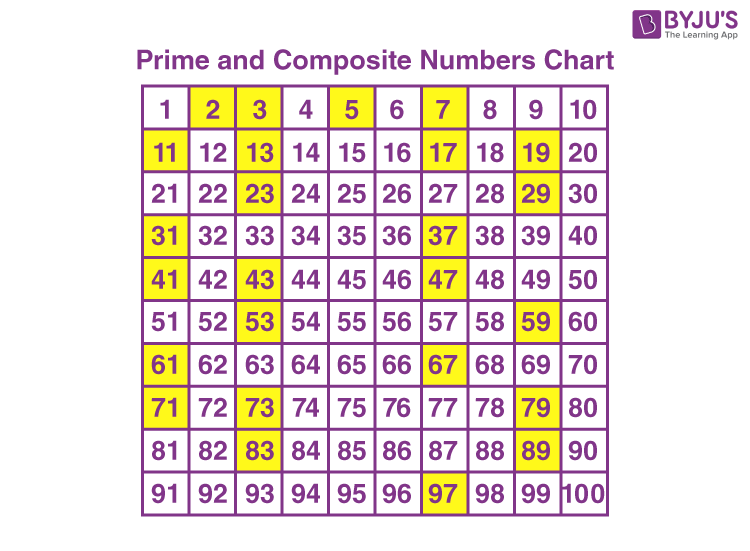
Understanding the Fundamentals: Prime vs. Composite Numbers in Computation
To grasp the technological implications of these numbers, one must first define them through the lens of computational logic. At its simplest, an integer greater than 1 is classified based on its divisibility.
Defining Primes and Their Unique Properties
A prime number is a natural number greater than 1 that has no positive divisors other than 1 and itself. In the world of algorithms, primes are irreducible. They cannot be broken down into smaller integer components through multiplication. Examples include 2, 3, 5, 7, 11, and 13.
From a technological standpoint, primes are invaluable because of their unpredictability. While there are infinite prime numbers—a fact proven since the time of Euclid—there is no simple, linear formula to predict where the next prime will appear in a sequence. This inherent “randomness” within a structured system is what makes them a vital tool for developers creating secure digital environments.
The Nature of Composite Numbers and Factorization
A composite number is a positive integer greater than 1 that has at least one divisor other than 1 and itself. Essentially, any number that is not prime (and is greater than 1) is composite. Examples include 4, 6, 8, 9, 10, and 12. Every composite number can be expressed as a unique product of prime numbers—a principle known as the Fundamental Theorem of Arithmetic.
In computer science, the process of breaking a composite number down into its constituent primes is known as prime factorization. While multiplying two large prime numbers together to get a composite number is computationally “cheap” (it happens almost instantaneously), reversing the process—finding the original primes from a massive composite number—is computationally “expensive.” This asymmetry is the core mechanism behind modern data encryption.
The Role of Primes in Modern Cryptography and Data Security
The most significant application of prime and composite numbers in technology is in the field of Public Key Cryptography (PKC). Without these mathematical constructs, the privacy of the internet would vanish, leaving sensitive data vulnerable to interceptive attacks.
RSA Encryption: The Power of Large Primes
The RSA (Rivest–Shamir–Adleman) algorithm is one of the oldest and most widely used systems for secure data transmission. It relies entirely on the relationship between primes and composites. In an RSA system, a user generates a public key and a private key. The public key is derived from a massive composite number, which is the product of two very large prime numbers.
When data is sent, it is encrypted using the public composite number. To decrypt the information, the receiver must know the two original prime factors. For a modern computer, multiplying two 1,024-bit prime numbers to create a 2,048-bit composite number takes milliseconds. However, attempting to factor that 2,048-bit composite number back into its original primes would take a standard supercomputer trillions of years using current algorithms.
Why Factoring Composites is a Computational Challenge
The difficulty of integer factorization is a “hard” problem in computational complexity theory. As the size of the prime numbers increases, the difficulty of factoring the resulting composite number grows exponentially, not linearly. This provides a “trapdoor function”—a mathematical process that is easy to perform in one direction but nearly impossible to reverse without specific “trapdoor” information (the private key).
Tech giants like Google, Amazon, and Microsoft rely on this mathematical wall to secure their cloud infrastructures. The security of the HTTPS protocol, which protects nearly all web traffic today, is fundamentally a shield built out of large prime numbers.
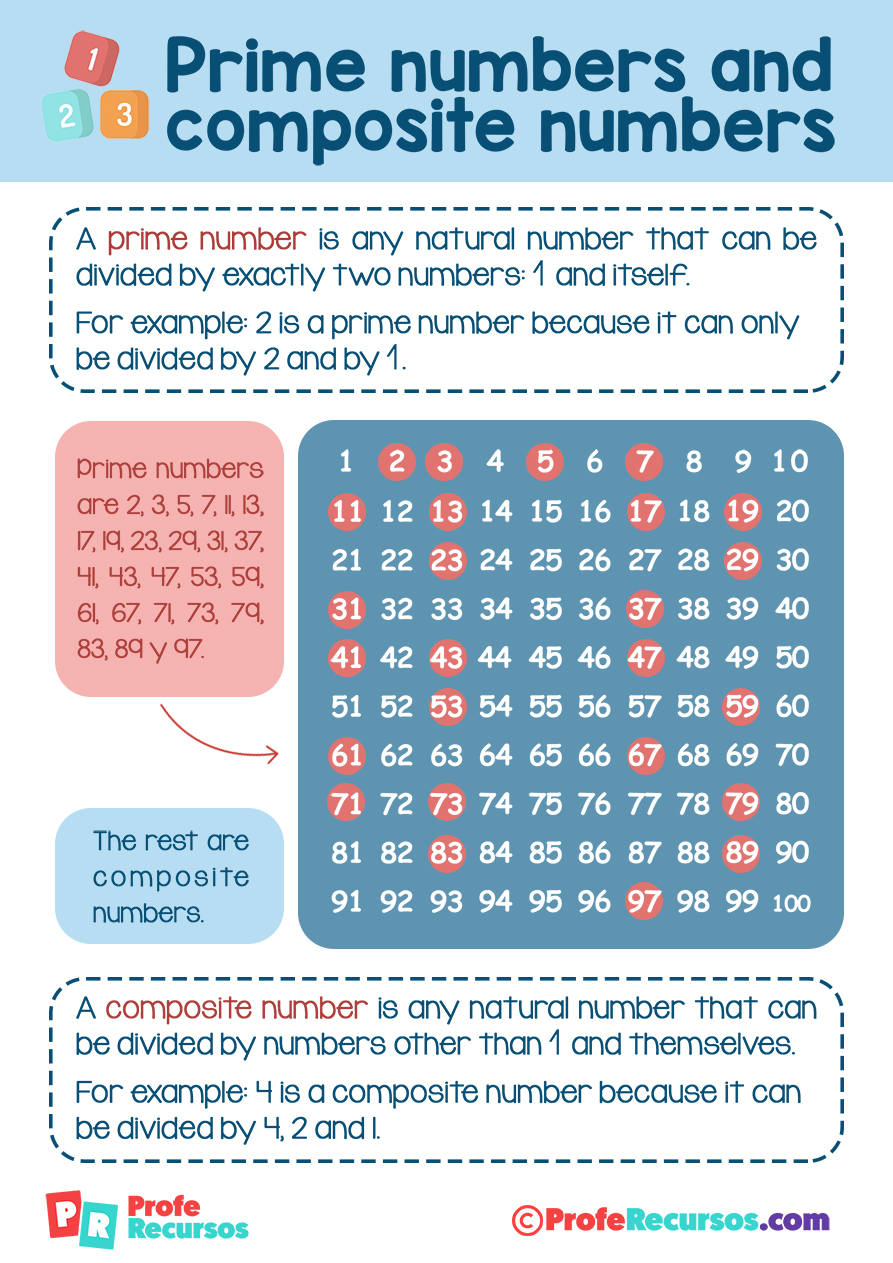
Algorithmic Efficiency: Sieve Methods and Primality Testing
In software development, particularly in fields involving high-level data processing or cybersecurity tools, identifying whether a number is prime or composite is a frequent requirement. Efficiently determining primality is essential for generating new encryption keys and maintaining system integrity.
The Sieve of Eratosthenes and Digital Optimization
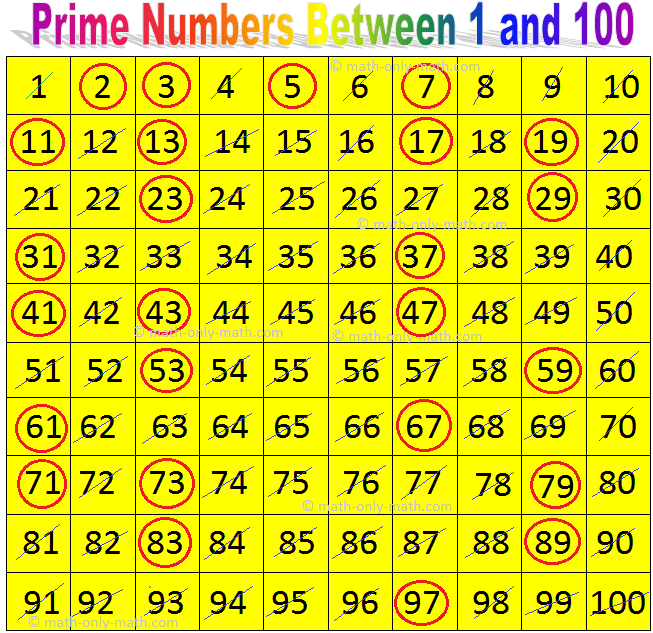
One of the oldest algorithms for finding primes is the Sieve of Eratosthenes. In a digital context, this algorithm is used to identify all prime numbers up to a specified integer. By iteratively marking the multiples of each prime starting from 2, the “sieve” filters out composite numbers, leaving only the primes.
While the basic sieve is highly efficient for small ranges, modern tech applications often require more sophisticated versions, such as the Sieve of Atkin. These algorithms are optimized for modern CPU architectures, utilizing bitwise operations and cache-friendly data structures to process millions of numbers per second. This is vital in fields like bioinformatics and large-scale data modeling where prime-based patterns often emerge.
Advanced Primality Testing in Software Development
For the astronomical numbers used in encryption (numbers with hundreds or thousands of digits), a simple sieve is insufficient. Instead, software engineers use probabilistic primality tests like the Miller-Rabin or Solovay-Strassen tests.
These algorithms don’t prove a number is prime with 100% certainty in a single pass; rather, they perform a series of tests that a composite number is extremely unlikely to pass. By running these tests multiple times, the probability of a “false positive” (calling a composite number a prime) becomes lower than the probability of a hardware glitch occurring in the CPU itself. This “good enough for practical security” approach is what allows modern apps to generate secure keys in real-time.
Beyond Security: Primes in Blockchain and Emerging Tech
While cryptography is the primary use case, prime and composite numbers are finding new roles in the evolution of decentralized technology and digital ledgers.
Zero-Knowledge Proofs and Mathematical Verifiability
A rising trend in digital privacy is the use of Zero-Knowledge Proofs (ZKPs), particularly in privacy-focused cryptocurrencies and secure identity verification tools. ZKPs allow one party to prove to another that they know a specific piece of information without actually revealing the information itself. Many ZKP constructions, such as those used in “zk-SNARKs,” rely on complex modular arithmetic involving large prime numbers to ensure that the proof cannot be forged.
Prime Numbers in Distributed Ledger Technology
Blockchain technology often utilizes Elliptic Curve Cryptography (ECC), which is a more efficient alternative to RSA. ECC relies on the algebraic structure of elliptic curves over finite fields. These fields are defined by—once again—prime numbers. The security of a Bitcoin or Ethereum wallet is derived from the difficulty of solving the “discrete logarithm problem,” a mathematical challenge rooted in the properties of prime-order groups.
By using primes, blockchain developers can ensure that transactions are immutable and that digital signatures are impossible to counterfeit, all while maintaining a much smaller computational footprint than traditional RSA-based systems.
The Future of Numbers: Quantum Computing and the Threat to Primes
The relationship between primes and composites is currently the gold standard for security, but the tech world is preparing for a seismic shift: the arrival of viable quantum computing.
Current encryption relies on the fact that classical computers are very bad at factoring large composite numbers. However, Shor’s Algorithm—a quantum algorithm developed in 1994—can theoretically factor large composite numbers in a fraction of the time it takes a classical computer. This means that if a powerful enough quantum computer is built, it could “un-multiply” the composite numbers used in RSA and ECC, effectively breaking the internet’s current security protocols.
In response, the tech industry is pivoting toward “Post-Quantum Cryptography” (PQC). Interestingly, some of these new methods still rely on different properties of prime numbers and lattice-based mathematics that are believed to be resistant to quantum attacks. The battle to secure our digital future remains a battle fought with the unique properties of prime and composite numbers.
In conclusion, the simple distinction between a prime and a composite number is the invisible force field around our digital lives. From the code that runs on your smartphone to the algorithms that secure global financial markets, these mathematical entities are more than just numbers—they are the fundamental building blocks of the digital age. As technology continues to evolve, our reliance on the unique, irreducible nature of the prime number and the complex, factorable nature of the composite number will only deepen.
aViewFromTheCave is a participant in the Amazon Services LLC Associates Program, an affiliate advertising program designed to provide a means for sites to earn advertising fees by advertising and linking to Amazon.com. Amazon, the Amazon logo, AmazonSupply, and the AmazonSupply logo are trademarks of Amazon.com, Inc. or its affiliates. As an Amazon Associate we earn affiliate commissions from qualifying purchases.