
Pretrial detention is often discussed within the framework of civil liberties and constitutional law. However, to truly understand its mechanics and its impact on modern society, one must analyze it as a significant economic phenomenon. At its core, pretrial detention—the practice of holding an individual in custody after they have been charged with a crime but before their trial has concluded—is a matter of risk management, capital allocation, and fiscal responsibility.
From the perspective of personal finance, business operations, and taxpayer-funded government budgets, pretrial detention represents a massive transfer of wealth and a significant disruption to economic productivity. This article explores the financial intricacies of pretrial detention, examining how it functions as a market, the devastating impact it has on individual net worth, and the broader macroeconomic consequences for the state.
The Financial Mechanics of Pretrial Detention and the Bail Industry
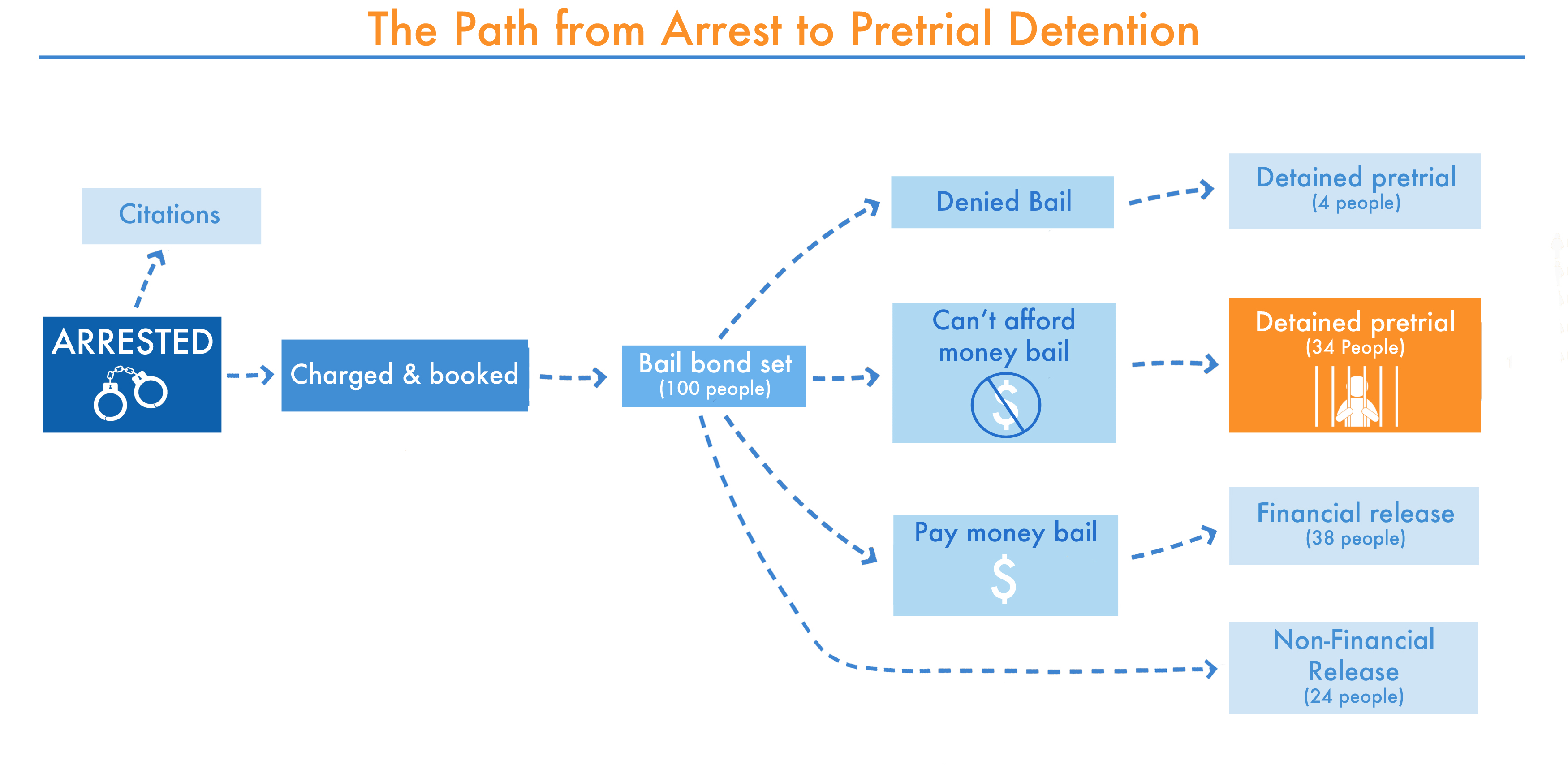
The most immediate financial component of pretrial detention is the bail system. In many jurisdictions, the decision of whether an individual remains in custody or is released depends almost entirely on their access to liquid capital. This creates a unique intersection between the legal system and the financial services sector.
Cash Bail: The Immediate Liquidity Crisis
When a court sets a cash bail, it is essentially requiring a security deposit to guarantee the defendant’s appearance at future proceedings. For many individuals, this represents an unforeseen liquidity crisis. Unlike a planned investment or a mortgage payment, bail is a sudden, high-stakes financial demand. When an individual cannot produce the full amount of cash required, their personal capital is effectively frozen, or they remain detained, which immediately halts their ability to earn further income. This “pay-to-play” model of liberty treats freedom as a high-cost asset, often priced far beyond the reach of the average consumer’s emergency fund.
The Commercial Bail Bond Business Model
Where individuals lack the liquidity to pay bail in full, the commercial bail bond industry steps in. This is a multi-billion dollar niche in the financial sector that operates on a fee-based model. Typically, a bail bondsman charges a non-refundable premium—usually 10% of the total bail amount. In exchange, the bondsman provides a surety bond to the court.
From a business finance perspective, this is a high-risk, high-reward industry. The 10% premium is the “cost of capital” for the defendant. Unlike a standard loan, this premium is never recovered, regardless of the trial’s outcome. For the bondsman, the profit margin depends on effective risk assessment—ensuring the defendant does not flee, which would result in the bondsman losing the full face value of the bond to the court.
The Individual Cost: Personal Finance and Career Disruption
The financial fallout of pretrial detention extends far beyond the initial cost of bail. For the individual detained, even a few days of incarceration can lead to a catastrophic collapse of their personal financial ecosystem.
Income Loss and Employment Stability
The most immediate impact of pretrial detention is the cessation of earned income. Most employment contracts include clauses regarding “no-call, no-show” absences. For an hourly worker or a member of the gig economy, a week in pretrial detention almost certainly results in the loss of their job.
This is not just a temporary pause in cash flow; it is a permanent hit to one’s career trajectory. Re-entering the labor market with a gap in employment and a pending legal issue significantly lowers a worker’s “market value,” often forcing them into lower-paying roles. The “opportunity cost” of pretrial detention includes not just the wages lost during the stay, but the lifetime earnings growth that is stunted by the loss of seniority and professional reputation.
Collateral Financial Damage: Housing and Credit
The ripples of detention quickly reach other areas of personal finance. Without income, an individual may miss rent or mortgage payments, leading to eviction or foreclosure. Financial obligations like car notes, insurance premiums, and utility bills continue to accrue.
Furthermore, the impact on credit scores is severe. Late payments triggered by detention can lower a credit score by hundreds of points, making future borrowing—whether for a home, a car, or a small business—prohibitively expensive. In this sense, pretrial detention creates a “debt spiral” that can take years, or even decades, to reverse.
The Macroeconomic Burden: Taxpayer Costs and Societal Fiscal Impact
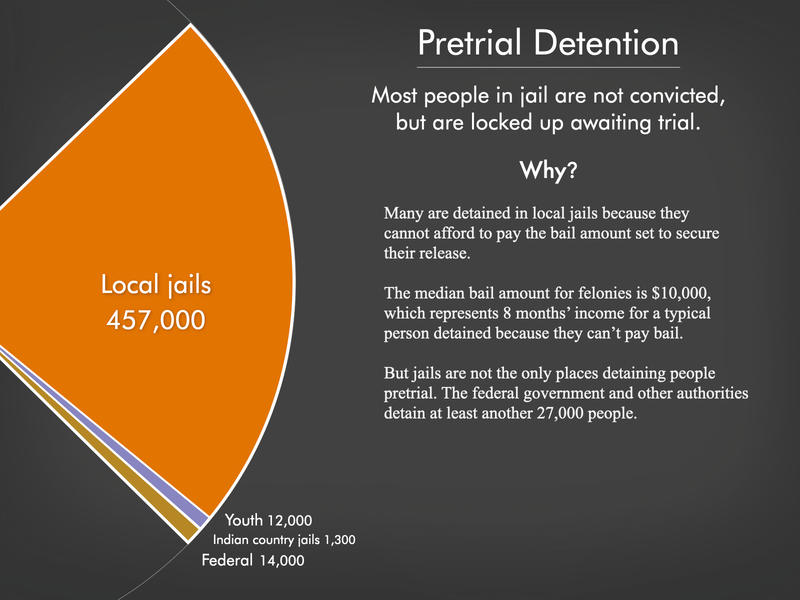
While the individual costs are significant, the macro-level financial burden of pretrial detention is a critical concern for government budgeting and fiscal policy. Maintaining a massive infrastructure for pretrial detention requires significant public investment with arguably low returns on capital.
The Daily Cost of Incarceration
Housing an individual in a local jail is an expensive endeavor. Taxpayers fund the facility’s operations, including staffing, security, food, medical care, and utilities. On average, the daily cost per inmate can range from $80 to over $200, depending on the jurisdiction.
When thousands of individuals are held pretrial, these daily costs aggregate into billions of dollars annually at the state and national levels. From a public finance perspective, this is an “operating expense” that yields no direct revenue. Many economists argue that these funds could be more efficiently allocated toward investments in infrastructure, education, or public health—sectors that provide a positive return on investment (ROI) for the community.
Long-term Economic Productivity Loss
The broader economy suffers when a significant portion of the workforce is sidelined by pretrial detention. When an individual is detained, they are not contributing to the Gross Domestic Product (GDP). They are not producing goods, providing services, or consuming at their normal rate.
Furthermore, the state often incurs secondary costs. If a primary breadwinner is detained, their family may require public assistance, such as food stamps or housing subsidies, to survive. This creates a “double-hit” to the public purse: the state pays for the detention of the individual while simultaneously increasing social welfare spending for their dependents.
Strategic Financial Reforms and the Future of the Justice Economy
In response to these fiscal pressures, many jurisdictions are looking toward financial reforms that prioritize economic efficiency and risk-based assessments over wealth-based detention.
The Shift Toward Risk-Based vs. Wealth-Based Systems
The traditional bail system is increasingly viewed as an inefficient market. It often detains low-risk individuals who lack capital while releasing high-risk individuals who happen to have financial resources. New models, such as those implemented in New Jersey or Illinois, focus on “risk-based” assessment tools.
From a management perspective, this is akin to using data analytics to predict default rates in banking. By releasing low-risk defendants on “own recognizance” or with electronic monitoring, the state significantly reduces its operating expenses without compromising public safety. This shift represents a move toward a more “lean” and fiscally responsible legal system.
The Role of Non-Profit Bail Funds in Market Correction
In recent years, the emergence of non-profit bail funds has introduced a new player into the justice economy. These organizations operate on a “revolving fund” model. They use donated capital to pay bails for individuals who cannot afford them. Once the case is closed, the bail money is returned to the fund to be used again.
This model is an interesting case study in social impact investing. By providing the liquidity that the market lacks, these funds mitigate the personal financial disasters associated with detention. They act as a market corrective, ensuring that the “asset” of freedom is not reserved solely for those with high net worth. As these funds scale, they challenge the traditional commercial bail industry, potentially leading to a total restructuring of how pretrial release is financed.

Conclusion
Pretrial detention is far more than a legal procedure; it is a complex financial event with profound implications for personal wealth and public fiscal health. For the individual, it is a high-cost disruption that can lead to job loss, debt, and long-term financial instability. For the state, it is a massive budgetary expenditure that often fails the test of economic efficiency.
As we move forward, the conversation around “what is pretrial detention” must continue to evolve into a discussion about “the cost of pretrial detention.” By applying the principles of finance and economics to the justice system, we can better understand the true price of our current policies and move toward a future that balances the need for security with the need for a productive, fiscally sound society. Understanding this niche is essential for anyone interested in the intersection of law, money, and the broader economy.
aViewFromTheCave is a participant in the Amazon Services LLC Associates Program, an affiliate advertising program designed to provide a means for sites to earn advertising fees by advertising and linking to Amazon.com. Amazon, the Amazon logo, AmazonSupply, and the AmazonSupply logo are trademarks of Amazon.com, Inc. or its affiliates. As an Amazon Associate we earn affiliate commissions from qualifying purchases.