
When navigating the intricate world of precision instrumentation, fluid dynamics, and industrial process control, the unit of measurement used to quantify force exerted over an area is critical. While the scientific community relies heavily on the Pascal (Pa) as the SI unit for pressure, engineers, manufacturers, and technicians across the globe frequently default to the “bar.” Understanding what pressure in bar represents is essential for anyone involved in high-stakes environments—from manufacturing facilities and HVAC installations to high-pressure hydraulics and automotive maintenance.
The Definition and Scientific Basis of the Bar
At its core, a bar is a metric unit of pressure, defined as exactly 100,000 Pascals (100 kPa). While it is not an SI unit, it is officially recognized by the International System of Units as a non-SI unit that is accepted for use. The term originates from the Greek word “baros,” meaning weight.
Why the Bar Replaced the Atmosphere
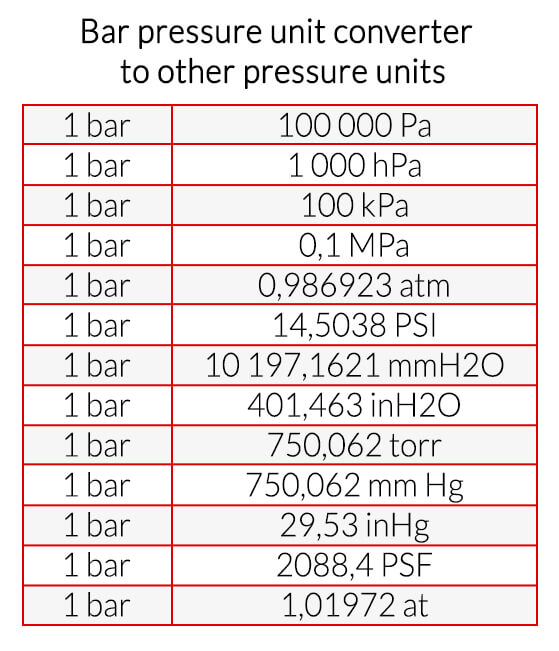
For decades, pressure was frequently measured in atmospheres (atm). An atmosphere is defined as 101,325 Pa—the average air pressure at sea level. However, using a unit based on variable atmospheric conditions proved cumbersome for standardized industrial calibration. By establishing the bar as exactly 100,000 Pa, engineers created a unit that is remarkably close to standard atmospheric pressure (1 bar is approximately 0.987 atm) while being much more mathematically convenient for calculations. This clean decimal relationship allows for rapid scaling and conversion, reducing the margin for human error in technical specifications.
The Relationship Between Bar and Other Units
In practical applications, professionals must often bridge the gap between different measurement systems. Because global standards vary, knowing the conversion factors is a prerequisite for safety and efficiency:
- 1 bar = 100,000 Pascals (Pa)
- 1 bar = 14.5038 PSI (pounds per square inch)
- 1 bar = 0.9869 atmospheres (atm)
- 1 bar = 750.06 mmHg (millimeters of mercury)
Understanding these relationships is vital, particularly when working with international machinery where a pressure gauge might be calibrated in PSI, but the operation manual requires bar. Misinterpreting these values can lead to equipment failure or safety breaches.
The Role of Bar in Industrial Applications
The bar has become the “lingua franca” of industrial pressure measurement. Whether you are dealing with pneumatic systems, hydraulic machinery, or gas compression, the bar is the standard language of the factory floor.
Pneumatics and Compressed Air
In compressed air systems, the bar is the primary metric for operational efficiency. Most industrial air compressors operate in the range of 6 to 10 bar. Monitoring pressure in this range is critical because air tools, assembly lines, and automated valves are calibrated to function within specific pressure windows. If the pressure drops below the required bar rating, production efficiency plummets; if it exceeds it, seals can blow, and equipment longevity is severely compromised.
Hydraulic Systems and Fluid Power
Hydraulics are the workhorses of heavy industry, capable of exerting massive force through incompressible liquids. In these systems, pressures are significantly higher than in pneumatic setups, often reaching several hundred bar. Excavators, injection molding machines, and aircraft landing gear rely on precise hydraulic bar readings to ensure the safe transfer of power. Here, the precision of the bar is paramount; even a minor deviation in pressure can result in the loss of control or structural failure of the hydraulic hoses, which operate under extreme stress.

HVAC and Thermal Dynamics
Within the realm of HVAC (Heating, Ventilation, and Air Conditioning), pressure in bar is the indicator of refrigerant health. Refrigeration cycles rely on the phase change of gases and liquids, which is directly dictated by pressure. Technicians use bar gauges to monitor both the high-side and low-side pressures of a system to diagnose leaks, compressor efficiency, and thermal exchange capabilities. Without an accurate bar reading, a technician cannot verify if a system is charged correctly or if the compressor is struggling under an excessive load.
Precision Instrumentation and Calibration
In technical and manufacturing environments, pressure measurement is only as good as the calibration of the instruments performing the task. Simply knowing the value in bar is insufficient; one must ensure that the sensor or gauge providing the reading is accurate and reliable.
The Evolution of Pressure Sensors
Historically, mechanical Bourdon gauges were the standard. These gauges use a coiled tube that uncoils as pressure increases, moving a needle across a calibrated dial. Today, these are increasingly being replaced or augmented by digital pressure transducers and transmitters. These electronic devices convert pressure into an electrical signal (such as 4–20 mA or 0–10 V), providing highly precise data that can be logged, analyzed by software, and used in automated control loops.
Calibration Standards and Traceability
In industries governed by strict regulations, such as pharmaceutical manufacturing or aerospace, pressure gauges must be calibrated against a master reference standard. This ensures that a reading of 5 bar on the factory floor is identical to 5 bar in the laboratory. Calibration certificates typically document the deviation of the gauge at various points, providing a “traceability chain” that proves the integrity of the measurements. Ignoring periodic calibration is a common pitfall that leads to “drift,” where the displayed bar value slowly diverges from the actual physical pressure, potentially creating dangerous operational conditions.
Safety Protocols and Pressure Management
Pressure is a form of stored energy. When contained, it is a tool; when mismanaged, it is a hazard. Understanding bar is not just about technical capability—it is a fundamental aspect of site safety.
Understanding Maximum Allowable Working Pressure (MAWP)
Every vessel, pipe, and valve is engineered with a specific “Maximum Allowable Working Pressure,” usually expressed in bar. This rating defines the highest pressure at which the equipment can be safely operated under normal conditions. It is imperative for operators to never exceed this value. In many industrial incidents, failures occur because the system pressure was allowed to exceed the bar rating of the weakest component in the loop, leading to catastrophic rupture.
Pressure Relief and Regulation
To manage pressure effectively, systems must include secondary safety measures. Pressure relief valves (PRVs) are mechanical devices designed to open automatically when the pressure in a system exceeds a pre-set limit, venting fluid or gas to prevent an over-pressure event. These valves are calibrated in bar to ensure they activate exactly when safety thresholds are breached. Furthermore, pressure regulators are used to step down high-pressure sources to a manageable bar output, ensuring that sensitive downstream equipment is not subjected to forces it cannot handle.
Human Error and Unit Confusion
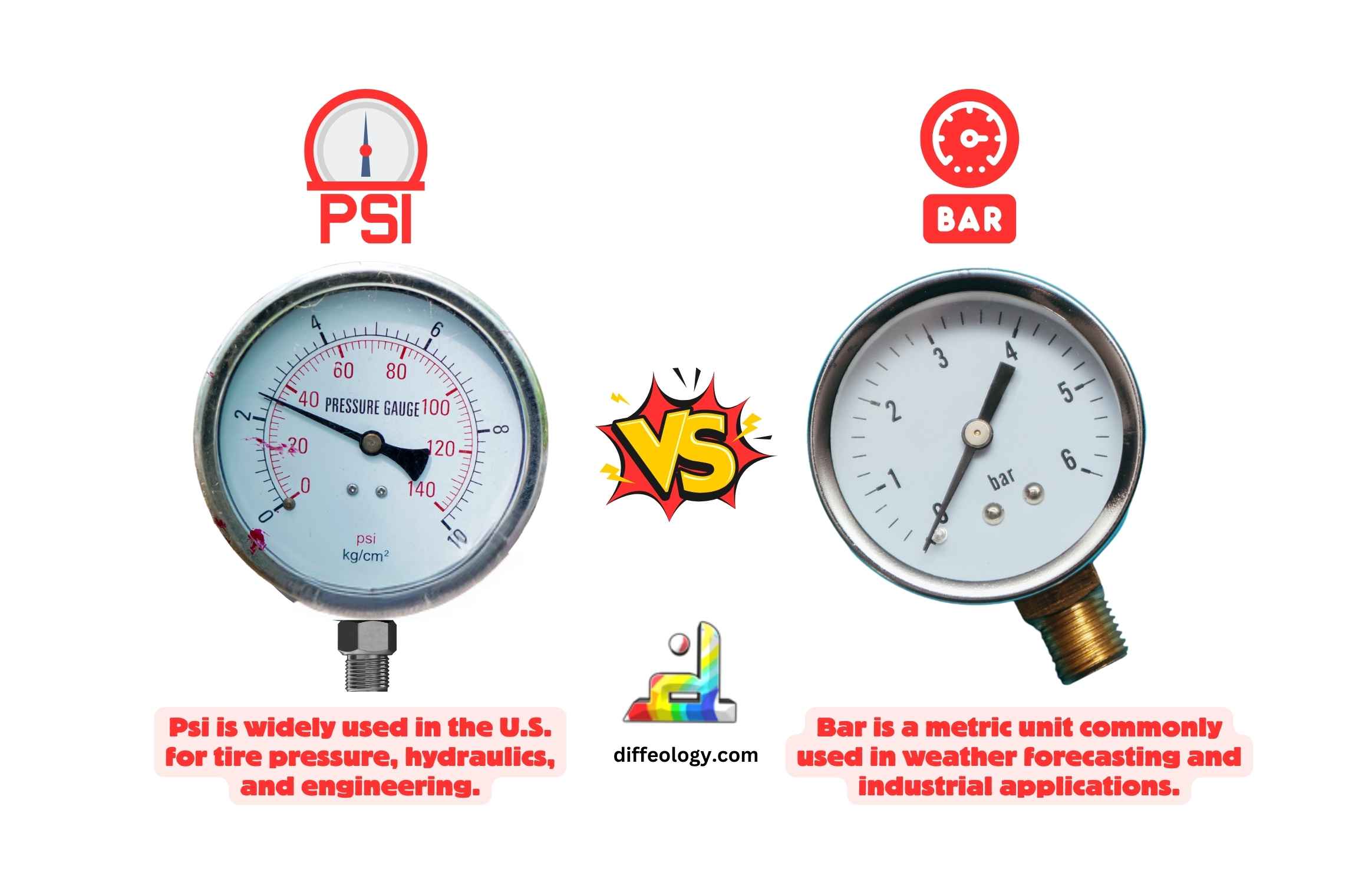
Perhaps the most common source of industrial accidents involving pressure is the miscommunication or misreading of units. In environments where both PSI and bar gauges are present, an operator might mistakenly treat a PSI value as a bar value—or vice versa. For example, 10 bar is 145 PSI. If a technician mistakenly attempts to pressure test a system to 145 bar instead of 145 PSI, they are applying ten times the intended force. This discrepancy highlights the necessity of standardized labeling and clear, unambiguous documentation in all technical environments.
Conclusion: The Ubiquitous Bar
The bar remains one of the most practical and widely adopted units of pressure in the modern world. Its mathematical simplicity, its alignment with metric standards, and its relevance across diverse fields—from heavy industrial hydraulics to precision HVAC maintenance—ensure that it will remain the benchmark for years to come. By mastering the concept of pressure in bar, professionals can ensure the efficiency of their equipment, the accuracy of their processes, and, most importantly, the safety of their work environments. Whether you are calibrating a digital transducer or simply monitoring the health of a pneumatic compressor, the bar provides the clarity required to manage the forces that drive our technological world.
aViewFromTheCave is a participant in the Amazon Services LLC Associates Program, an affiliate advertising program designed to provide a means for sites to earn advertising fees by advertising and linking to Amazon.com. Amazon, the Amazon logo, AmazonSupply, and the AmazonSupply logo are trademarks of Amazon.com, Inc. or its affiliates. As an Amazon Associate we earn affiliate commissions from qualifying purchases.