
In the traditional landscape of corporate accounting, expenses are usually categorized into clear, quantifiable line items: payroll, overhead, R&D, and marketing. However, there is a burgeoning “shadow” cost that rarely appears on a balance sheet but significantly erodes the profitability of modern enterprises. This phenomenon is known as presenteeism.
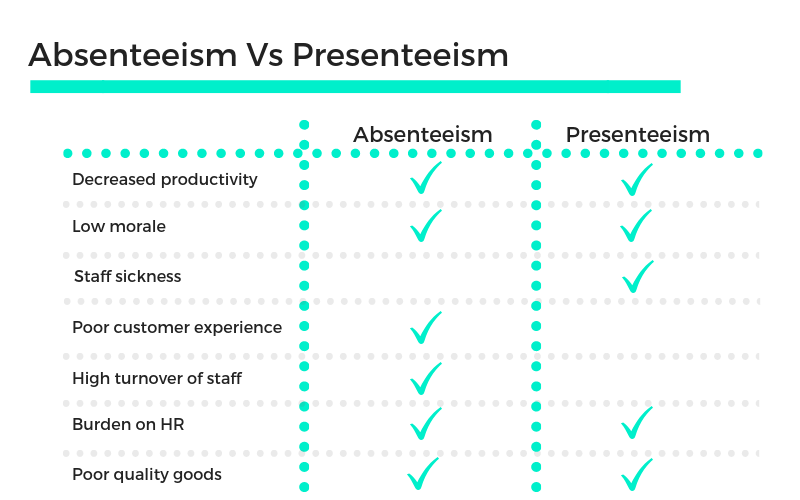
Presenteeism occurs when employees are physically present at their workstations—whether in a corporate office or a remote setup—but are not fully functioning due to illness, injury, or other mental and physical health constraints. While absenteeism (the act of staying home) is easy to track and budget for, presenteeism is a silent drain on business finance. It represents the gap between the salary paid for a full day’s work and the actual value produced by an employee who is operating at 50% or 60% capacity. To maintain a competitive edge and fiscal health, business leaders must shift their focus from mere “hours logged” to the actual ROI of human capital.

Quantifying the Ghost: The Economic Impact of Presenteeism
The financial implications of presenteeism are staggering, often dwarfing the costs associated with absenteeism and medical insurance premiums combined. For a Chief Financial Officer (CFO), understanding the scale of this issue is the first step toward reclaiming lost revenue.
Beyond Absenteeism: Why Presenteeism Costs More
For decades, businesses focused on absenteeism as the primary metric for health-related productivity loss. If an employee wasn’t at their desk, they weren’t working, and the cost was the lost labor for that day. However, research in the field of business finance suggests that presenteeism can be up to three times more expensive than absenteeism.
When an ill employee shows up to work, they don’t just produce less; they often produce “negative value.” In a financial or data-heavy environment, an unfocused employee is prone to making expensive errors—incorrectly entered data, missed contractual deadlines, or poor investment decisions—that require additional labor and capital to rectify. Furthermore, in physical or collaborative environments, a contagious employee can trigger a “domino effect,” lowering the productivity of the entire team and increasing the overall financial risk to the organization.
The Statistics of Lost Productivity
Global economic studies have attempted to put a dollar value on presenteeism. In the United States alone, some estimates suggest that presenteeism costs the economy upwards of $150 billion to $250 billion annually. From a microeconomic perspective, this translates to a significant percentage of a company’s total labor cost.
When analyzing the “Real Cost of Labor,” business owners must look beyond the gross salary. If a highly-compensated analyst is suffering from chronic migraines or severe burnout and is only 40% effective for two weeks out of the month, the company is essentially paying a premium for non-existent output. This “productivity leakage” directly reduces the net profit margin, making it a critical concern for financial auditing and performance management.
The Financial Mechanics of an “Always-On” Culture
The rise of presenteeism is often a byproduct of a “work martyr” culture, where staying late and never taking sick leave are seen as badges of honor. From a brand-agnostic, purely financial perspective, this culture creates a scenario of diminishing returns that can destabilize a company’s long-term financial projections.
Diminishing Returns and the Law of Labor Efficiency
In economics, the law of diminishing returns states that as more of a variable input (in this case, labor hours) is added to fixed inputs, the marginal increase in output will eventually decline. Presenteeism is the ultimate expression of this law.
When employees are pressured to work through illness or extreme stress, the “marginal product of labor” can actually become negative. For example, in software development or financial services, the cost of a “bug” or a “calculation error” caused by exhaustion can far outweigh the value of the extra hours the employee logged. By encouraging presenteeism, companies are essentially investing in low-quality labor hours that yield a poor—or even negative—return on investment (ROI).
Long-term Liability: Burnout and Healthcare Costs
From a risk management perspective, presenteeism is a leading indicator of future financial liability. Employees who consistently work while unwell are significantly more likely to experience total burnout or develop chronic conditions that eventually lead to long-term disability claims.
For companies that are self-insured or those that pay high experience-rated premiums, the financial fallout of presenteeism is delayed but inevitable. By not allowing for short-term recovery, the business is effectively “borrowing” productivity from the future at a very high interest rate. When the employee finally breaks down, the cost of replacement, recruitment, and increased insurance premiums creates a massive spike in expenses that can derail a quarterly budget.

Strategies for Financial Recovery: Investing in Human Capital
To mitigate the financial drain of presenteeism, businesses must treat employee health not as a “perk,” but as a strategic asset. Realigning corporate policy with financial reality requires a data-driven approach to wellness and productivity.
The ROI of Employee Wellness Programs
Investing in comprehensive wellness programs is often viewed as a discretionary expense. However, when viewed through the lens of business finance, these programs are a form of preventative maintenance for the company’s most expensive asset: its people.
A well-structured wellness program that encourages employees to take time off when sick or provides mental health support can yield a significant ROI. By reducing the incidence of presenteeism, companies see an uptick in “Effective Labor Hours.” Studies have shown that for every dollar invested in wellness, companies can see a return of $2 to $4 in reclaimed productivity. This makes health-centric policies one of the most effective ways to optimize the “Total Cost of Workforce” (TCOW).
Leveraging HR Analytics to Identify Financial Leakage
In the modern era, financial tools and HR software can be integrated to identify patterns of presenteeism. By analyzing data such as overtime hours versus output quality, or tracking the correlation between high-stress periods and a dip in KPIs, CFOs can begin to “map” the cost of presenteeism.
Financial modeling can help determine the “tipping point” where it becomes more profitable for an employee to stay home than to come in. By establishing clear metrics for what constitutes “productive output,” management can move away from time-based tracking and toward value-based tracking. This shifts the financial incentive from “being seen” to “being effective,” which is the cornerstone of a lean and profitable operation.
Presenteeism in the Gig Economy and Small Business Finance
While large corporations have the buffer of hundreds of employees, small businesses and independent contractors are particularly vulnerable to the financial shocks of presenteeism.
The Cost of Fragility in Lean Operations
In a small business or a startup, every single employee represents a significant percentage of the total operational capacity. If one out of five employees is practicing presenteeism, the business is operating at an 80% capacity ceiling while still incurring 100% of the overhead.
For the entrepreneur, the financial risk is even higher. Solopreneurs often feel they cannot afford to take a day off, leading to a cycle of low-quality work that can damage client relationships and lead to lost contracts. In this context, presenteeism isn’t just a cost; it’s a threat to business continuity. The financial “fragility” of a small firm means that a single period of prolonged presenteeism can be the difference between a profitable quarter and a net loss.
Financial Safeguards and Policy Restructuring
Small businesses can protect their finances by building “redundancy” into their financial planning. This includes setting aside a “health contingency fund” or utilizing business interruption insurance that covers more than just physical disasters.
Furthermore, restructuring compensation to focus on deliverables rather than hours logged can decouple the financial incentive from presenteeism. When an employee knows their pay is tied to the successful completion of a task rather than sitting in a chair for eight hours, they are more likely to manage their health proactively to ensure they can perform at peak levels. This alignment of incentives protects the business’s cash flow and ensures that payroll is always buying the highest possible quality of work.
Conclusion: The Path to Fiscal Vitality
Presenteeism is a complex issue that sits at the intersection of human psychology and business finance. For too long, it has been dismissed as an intangible HR concern, but the data is clear: presenteeism is a major source of financial waste.
By recognizing that “more hours” does not equate to “more value,” and by quantifying the cost of lost productivity, businesses can make more informed decisions about their labor investments. Whether it is through implementing robust wellness programs, utilizing data analytics to track efficiency, or restructuring corporate culture to prioritize output over attendance, addressing presenteeism is a vital step in optimizing a company’s bottom line. In the modern economy, the most profitable companies will not be those whose employees work the most hours, but those whose employees are most present and effective during the hours they work. Protecting the “human” in human capital is, ultimately, one of the smartest financial moves a business can make.
aViewFromTheCave is a participant in the Amazon Services LLC Associates Program, an affiliate advertising program designed to provide a means for sites to earn advertising fees by advertising and linking to Amazon.com. Amazon, the Amazon logo, AmazonSupply, and the AmazonSupply logo are trademarks of Amazon.com, Inc. or its affiliates. As an Amazon Associate we earn affiliate commissions from qualifying purchases.