
In the rapidly evolving landscape of Natural Language Processing (NLP) and Artificial Intelligence, the boundaries between linguistic theory and software engineering have blurred. To the average student, a “predicate nominative” is a term found in a dusty grammar textbook. However, to a data scientist or a developer working on Large Language Models (LLMs), understanding these structural components is essential for building systems that can accurately parse, interpret, and generate human-like text.
A predicate nominative is more than just a part of speech; it is a logical identity marker. In the world of technology, specifically within the realms of computational linguistics and semantic search, the predicate nominative serves as the foundation for how machines understand “identity” versus “action.”

Decoding the Syntax: The Technical Definition of a Predicate Nominative
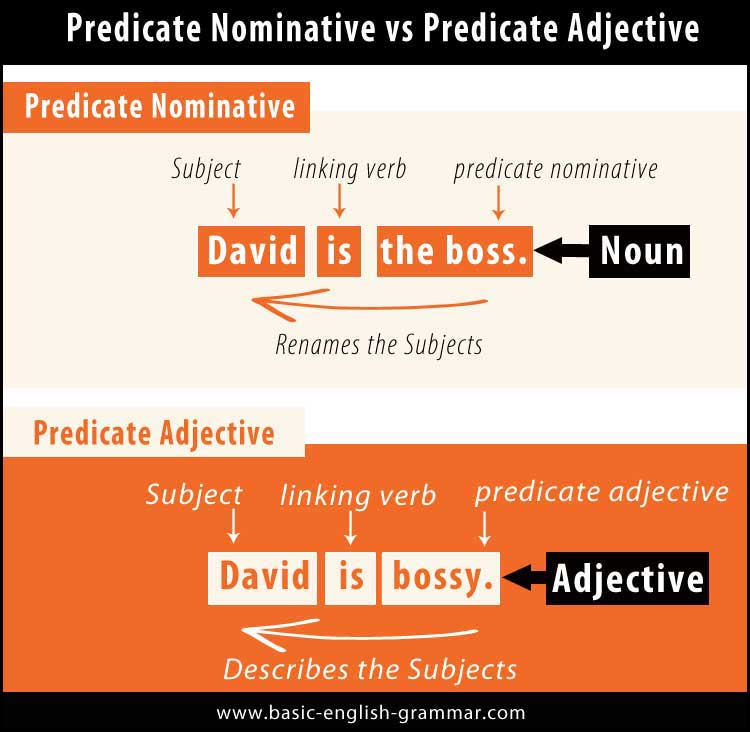
To understand how technology processes language, we must first define the predicate nominative through a structural lens. In traditional grammar, a predicate nominative is a noun or pronoun that follows a linking verb and renames or identifies the subject of the sentence.
Unlike a direct object, which receives the action of a transitive verb (e.g., “The developer wrote the code“), a predicate nominative completes a “linking” relationship where the subject and the complement are essentially the same entity (e.g., “The developer is an innovator“).
The Linking Verb Interface
In programming terms, a linking verb functions much like an assignment operator (=) or a comparison operator (==). When we say “Python is a language,” the verb “is” acts as the interface that connects the subject “Python” with its identity “language.” In the context of software development, identifying these “state-of-being” verbs is the first step in syntactic parsing. Common linking verbs include be, become, seem, appear, feel, sound, and grow. For an AI, recognizing these verbs is crucial because it signals that the word following the verb is not a new entity or an object of an action, but a definition of the subject itself.
Subject-Complement Equivalence in Data Parsing
From a data perspective, the predicate nominative establishes a relationship of equivalence. If $A$ is the subject and $B$ is the predicate nominative, then $A approx B$. This is a fundamental concept in data categorization and object-oriented programming. When a system parses the sentence “The primary cloud provider remains AWS,” it uses the predicate nominative (“AWS”) to assign a specific value to the variable “primary cloud provider.” Without a clear understanding of this grammatical structure, a machine might mistake “AWS” for a direct object, leading to errors in how the information is stored in a database or knowledge graph.
Predicate Nominatives in Natural Language Processing (NLP)
Modern AI tools, from chatbots like ChatGPT to sophisticated translation software, rely on a process called dependency parsing. This involves breaking down a sentence into its constituent parts to understand the relationships between words. The predicate nominative plays a starring role in this technical process.
Dependency Parsing and Syntactic Trees
When an NLP model receives a string of text, it creates a syntactic tree. This is a hierarchical map that shows how words relate to one another. In a sentence containing a predicate nominative, the tree must reflect that the noun in the predicate is modifying the subject, not the verb.
For instance, in the sentence “The new cybersecurity protocol became the industry standard,” the phrase “industry standard” is the predicate nominative. A high-performing NLP algorithm must identify that “standard” is a nominal subject complement. If the algorithm fails to distinguish this from a direct object, the semantic meaning of the sentence—the evolution of a state of being—is lost. This precision is what allows modern gadgets and smart assistants to answer complex “What is…” questions with high accuracy.
How Transformers Identify Identity Relationships
The “Transformer” architecture, which powers the current generation of AI, uses a mechanism called “attention.” This allows the model to weigh the importance of different words in a sentence. When a Transformer encounters a linking verb, its attention mechanism heavily weights the relationship between the subject and the predicate nominative.
By analyzing billions of parameters, the model learns that “Steve Jobs was a visionary” implies a permanent or historical state of identity. The predicate nominative “visionary” is mapped in a high-dimensional vector space close to “Steve Jobs.” This vector mapping is what enables AI to perform “sentiment analysis” and “entity recognition” at a level that rivals human intuition.
The Role of Predicate Nominatives in Knowledge Graph Construction
One of the most significant applications of this grammatical concept in the tech industry is the construction of Knowledge Graphs. Companies like Google, Meta, and Microsoft use knowledge graphs to power their search engines and recommendation algorithms.
Entity Linking and “Is-A” Relationships
Knowledge graphs are built on “triples”: Subject – Predicate – Object. However, when dealing with predicate nominatives, the “predicate” in the triple is often an “Is-A” relationship. For example:
- Subject: Ethereum
- Relationship: is a
- Predicate Nominative: Blockchain Platform
By extracting predicate nominatives from vast amounts of web data, tech companies can automatically build structured maps of human knowledge. When you search for “What is a predicate nominative?” on Google, the “Knowledge Panel” that appears on the right side of the screen is generated by identifying predicate nominatives in authoritative texts and linking them to the search query.
From Raw Text to Structured Databases
The transition from “unstructured data” (raw text) to “structured data” (databases) is a multi-billion dollar industry. Software tools that specialize in Information Extraction (IE) are programmed to look for the “Subject + Linking Verb + Predicate Nominative” pattern. This allows a business to scrape news articles and automatically update its database: “The company’s new CEO is [Name].” Here, the predicate nominative provides the essential data point that fills the “CEO” field in a corporate profile.
Improving AI Conversational Accuracy through Grammatical Precision
As we move toward a world of “Agentic AI”—where AI doesn’t just talk but performs tasks—the need for grammatical precision is greater than ever. Misidentifying a predicate nominative can lead to significant logic errors in automated workflows.
Reducing Hallucinations in LLMs
“Hallucination” refers to the phenomenon where an AI generates factually incorrect information. Often, these errors occur because the model fails to correctly associate a predicate nominative with its subject over a long passage of text. By fine-tuning models on syntactically diverse datasets, developers can ensure the AI maintains a “logical thread.” If the AI understands that “The vulnerability (S) is a buffer overflow (PN),” it is less likely to suggest a fix for a “SQL injection” later in the conversation. The predicate nominative serves as a semantic anchor, keeping the machine’s logic grounded in the established identity of the subject.
The Future of Context-Aware Software
The next frontier in digital security and personal computing is context-awareness. Imagine a digital assistant that understands your corporate hierarchy not because you programmed it, but because it read your emails. It identifies “John is my supervisor” and “The project lead is Sarah.” These predicate nominatives allow the software to build a mental model of your professional world.
Furthermore, in the realm of digital security, identifying the “state” of a system often involves parsing log files that use linking-verb logic. “The system status is critical.” In this technical context, “critical” acts as a predicate adjective (a close relative of the predicate nominative), but the structural requirement remains the same: the software must identify that the status is the condition, rather than the status performing an action.

Conclusion: Why Grammar Matters in a Digital World
While “predicate nominative” may sound like a relic of 19th-century education, it is a vital cog in the machine of 21st-century technology. From the way search engines categorize the world’s information to the way AI models learn to speak, the structural identity provided by the predicate nominative is indispensable.
As we continue to develop more sophisticated software and AI tools, the collaboration between linguists and technologists will only deepen. Understanding the “is-a” relationship is not just a matter of correct writing; it is a matter of building systems that can truly comprehend the nature of reality. Whether you are an AI researcher, a software developer, or a tech-savvy professional, recognizing the power of the predicate nominative allows you to see the underlying code of human communication—and how we are successfully teaching machines to read it.
aViewFromTheCave is a participant in the Amazon Services LLC Associates Program, an affiliate advertising program designed to provide a means for sites to earn advertising fees by advertising and linking to Amazon.com. Amazon, the Amazon logo, AmazonSupply, and the AmazonSupply logo are trademarks of Amazon.com, Inc. or its affiliates. As an Amazon Associate we earn affiliate commissions from qualifying purchases.