
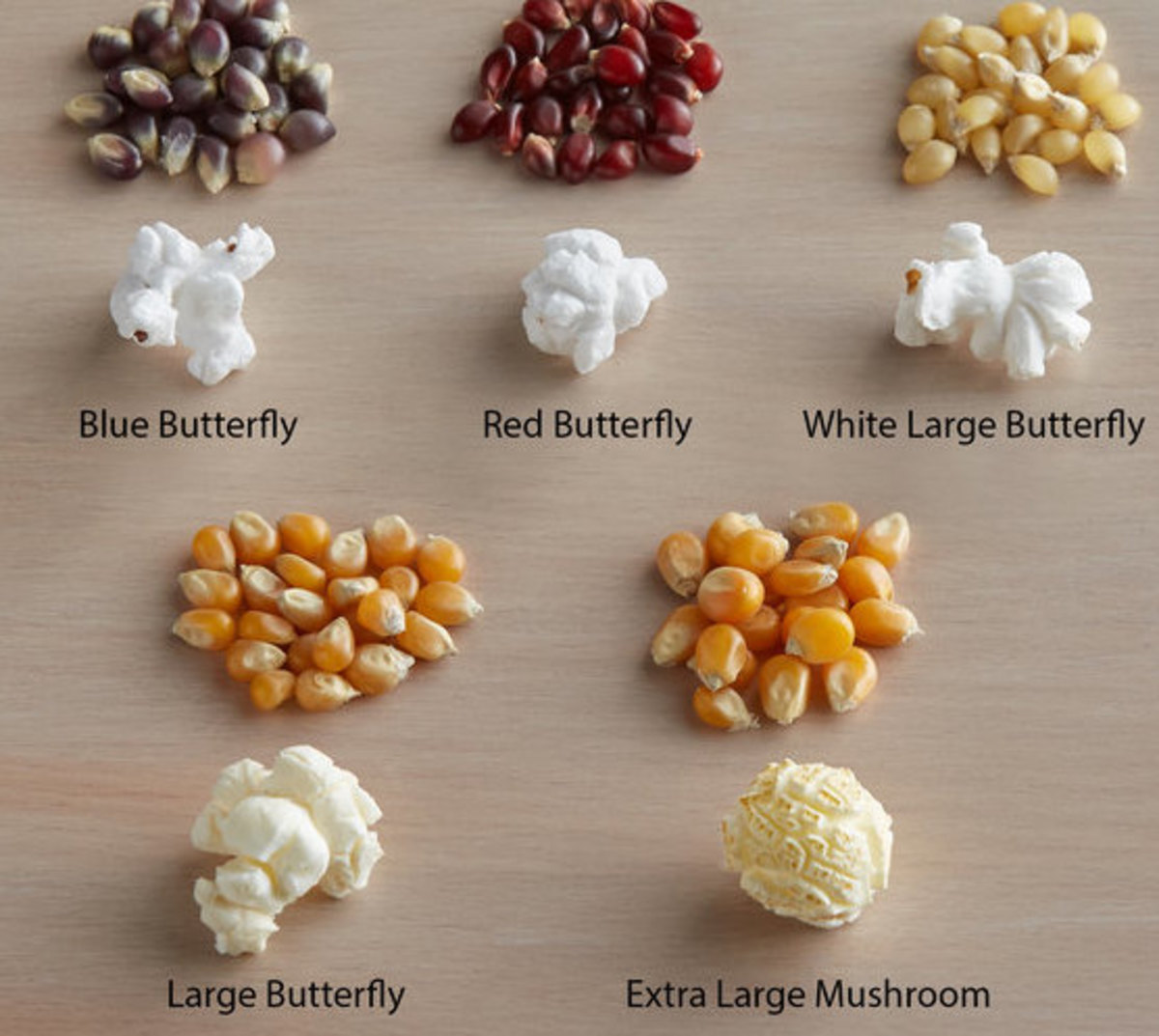
When we ask the question “what is popcorn made of,” the scientific answer is straightforward: it is a specific variety of flint corn known as Zea mays everta. However, from the perspective of a venture capitalist, a cinema owner, or a commodities trader, popcorn is made of something far more lucrative: high-margin potential, low-cost overhead, and a psychological pricing model that defies traditional market gravity.
In the world of finance and business, popcorn serves as the ultimate case study in unit economics. It is a product that undergoes a physical transformation—expanding up to 40 times its original size—mirroring the way it expands a business’s profit margins. This article explores the financial architecture of the popcorn industry, from the commodity markets of the Midwest to the high-stakes concession stands of global entertainment empires.

The High-Margin Miracle: Why Popcorn is a Cash Cow
To understand the financial allure of popcorn, one must look past the kernel and into the “Cost of Goods Sold” (COGS). Popcorn is widely cited as one of the highest-markup items in the retail world. For businesses that sell it, the transformation from a raw seed to a puffed snack is a literal “inflation” of value.
The Unit Economics of the Cinema Concession Stand
It is a common industry secret that movie theaters are not in the film business; they are in the popcorn business. While a theater must share a significant portion of ticket sales (often 50% to 70%) with film studios, they retain nearly 100% of the profit from concessions.
A standard bag of popcorn costs a theater approximately $0.10 to $0.20 in raw materials, including the kernel, the oil, and the salt. When sold for $8.00 or $10.00, the markup exceeds 1,000%. This high margin allows theaters to offset the expensive overhead of real estate, projection technology, and staffing. Without the specific economics of popcorn, the modern cinematic exhibition model would likely collapse.
Low Input Costs vs. High Perceived Value
The genius of popcorn lies in its perceived value. It is an experiential product. Because it is voluminous, a large bucket appears to be a “deal” to the consumer, even though the weight of the actual product is negligible. For a business, this means low shipping costs relative to volume (when shipped as kernels) and minimal storage requirements. The economic efficiency of “buying small and selling big” is rarely more evident than in the popcorn trade.
Commodity Markets and the Supply Chain of Corn
While the retail markup is impressive, the “Money” behind popcorn begins in the soil. Not all corn is created equal, and from an investment standpoint, the popcorn market is a specialized niche within the broader agricultural commodity sector.
Zea mays everta: Investing in the Specificity of the Seed
Popcorn is the only variety of corn that pops reliably. This specificity creates a protected market. Unlike field corn, which is used for ethanol and animal feed, popcorn is a specialty crop. For investors and large-scale agricultural firms, this means higher barriers to entry but more stable pricing.
The value of the crop is determined by its “expansion ratio.” A higher expansion ratio (the volume of popped corn produced from a specific weight of kernels) translates directly into higher profits for the end-user. Consequently, R&D in seed technology focuses on maximizing this ratio, making the intellectual property of the seeds themselves a valuable financial asset.
Global Export Trends and Market Volatility
The United States is the world’s largest producer of popcorn, with the “Popcorn Belt” spanning across Iowa, Illinois, Indiana, and Nebraska. For those looking at international trade, popcorn is a resilient export. As emerging markets develop a middle class with more disposable income for entertainment and snacking, the demand for high-quality American popcorn kernels has surged.
However, like any commodity, it is subject to the volatility of climate change and supply chain disruptions. Smart money in this sector often hedges against these risks through futures contracts, ensuring that the supply of “gold” (kernels) remains steady even when environmental factors threaten the harvest.

The CPG Pivot: How Brands Monetize “Healthy” Snacking
In the last decade, the business of popcorn has migrated from the movie theater to the grocery aisle. The Consumer Packaged Goods (CPG) industry has rebranded popcorn as a “better-for-you” (BFY) snack, unlocking a massive revenue stream in the process.
The Ready-to-Eat (RTE) Boom and Venture Capital Interest
Ten years ago, the popcorn aisle was dominated by microwaveable bags. Today, the “Ready-to-Eat” (RTE) segment is the fastest-growing category in the snack world. Brands like SkinnyPop and Angie’s BOOMCHICKAPOP have been the subjects of massive acquisitions. For example, Hershey acquired SkinnyPop’s parent company, Amplify Snack Brands, for approximately $1.6 billion in 2017.
Venture capitalists are drawn to this space because popcorn hits the “trifecta” of modern food trends: it is naturally non-GMO, gluten-free, and whole grain. By taking a cheap commodity and applying premium branding, these companies have achieved EBITDA margins that are the envy of the food and beverage industry.
Pricing Strategies: Premiumization of a Basic Staple
The financial success of bagged popcorn is a lesson in premiumization. By adding artisanal flavors—such as Himalayan pink salt, truffle oil, or vegan white cheddar—brands can charge $5.00 for a bag containing three ounces of corn. This shifts the consumer’s focus from “price per pound” to “lifestyle benefit.” This strategy has allowed popcorn to compete with potato chips, which have higher production costs and a more negative health perception.
Popcorn as a Business Model for Diversification
Beyond the large-scale corporate plays, popcorn offers a unique entry point for small-scale entrepreneurs and franchisees. Its low barrier to entry and high scalability make it an ideal “side hustle” that can evolve into a primary income stream.
Franchising and Small-Scale Entrepreneurship
Gourmet popcorn shops have become a staple in high-traffic shopping centers. These businesses operate on a “hub and spoke” model: a central kitchen produces the product at a low cost, which is then sold through various kiosks or online channels. Because the equipment needed to pop corn is relatively inexpensive compared to a full-service restaurant kitchen, the “Time to Break Even” (TBE) for a popcorn franchise is often much shorter than other food-based investments.
Intellectual Property and Branding in the Snack Space
In the “Money” niche, we often discuss the importance of an “Economic Moat”—a competitive advantage that protects a company’s profits. In the popcorn industry, that moat is built through branding. Since the product itself is a commodity, the value lies in the brand’s ability to command loyalty.
Whether it is a celebrity-backed brand or a local gourmet shop, the “secret sauce” is the marketing. This allows a business to diversify into corporate gifting, wedding favors, and subscription boxes—all of which carry even higher margins than traditional retail.
Conclusion: The Financial Density of a Light Snack
So, what is popcorn made of? Economically speaking, it is made of arbitrage. It is the art of taking a low-cost agricultural product and, through the application of heat and branding, turning it into a high-value consumer experience.
For the investor, popcorn represents a recession-resistant asset; people continue to seek small luxuries and entertainment even during economic downturns. For the entrepreneur, it offers a high-margin product with manageable overhead. And for the corporate giants, it is a vehicle for “healthy” rebranding and portfolio diversification.
In the final analysis, the popcorn industry proves that you don’t need a complex product to generate massive wealth. Sometimes, the best business opportunities are found in the simplest of places—just waiting for the right amount of pressure to pop into a windfall of profit. By understanding the underlying financial mechanics of this humble kernel, one can see why popcorn remains a cornerstone of the global snack economy, valued at billions of dollars and growing every year.
aViewFromTheCave is a participant in the Amazon Services LLC Associates Program, an affiliate advertising program designed to provide a means for sites to earn advertising fees by advertising and linking to Amazon.com. Amazon, the Amazon logo, AmazonSupply, and the AmazonSupply logo are trademarks of Amazon.com, Inc. or its affiliates. As an Amazon Associate we earn affiliate commissions from qualifying purchases.