
In the rapidly evolving landscape of health technology, the intersection of biochemical markers and digital diagnostics is creating a new paradigm for personalized care. One such marker, historically confined to the sterile environments of specialized nephrology labs, is Plasma Renin Activity (PRA). While it sounds like a purely biological metric, the measurement, interpretation, and application of PRA are currently undergoing a massive digital transformation.
As we move toward an era of “Quantified Self” and high-precision medicine, understanding the technology behind PRA—and how software and AI are decoding its complexities—is essential for anyone following the trajectory of MedTech.

The Digital Evolution of Plasma Renin Activity Analysis
Traditionally, measuring the activity of renin—an enzyme secreted by the kidneys that regulates blood pressure—was a slow, manual process prone to human error. However, the modern tech stack in clinical laboratories has revolutionized how we quantify this vital activity.
From Manual Assays to High-Throughput Automation
In the early days of clinical chemistry, PRA was measured using Radioimmunoassay (RIA). This process required radioactive isotopes and days of manual incubation. Today, the industry has shifted toward high-throughput automated platforms. These machines are marvels of robotics and fluidics, capable of processing hundreds of samples with minimal human intervention.
The software controlling these platforms uses sophisticated “middleware” to ensure that the chemical reactions are timed to the millisecond. By automating the “incubation” phase—where renin generates angiotensin I—the tech ensures a level of reproducibility that was previously impossible. This automation is the backbone of modern diagnostic scaling, allowing large-scale population health monitoring.
Liquid Chromatography-Tandem Mass Spectrometry (LC-MS/MS)
The current “gold standard” in the tech world for measuring PRA is LC-MS/MS. This is not just a chemical process; it is a complex data-processing feat. LC-MS/MS works by ionizing chemical species and sorting them based on their mass-to-charge ratio.
The software required to interpret the “peaks” in a mass chromatogram is highly specialized. Modern diagnostic software uses peak-integration algorithms to filter out background noise, ensuring that the measurement of Angiotensin I (the product of renin activity) is accurate down to the picogram. For tech enthusiasts, this represents the ultimate fusion of hardware precision and algorithmic filtering.
AI and Machine Learning: Interpreting Renin Data for Predictive Health
Raw data from a lab is useless without context. This is where Artificial Intelligence (AI) and Machine Learning (ML) are stepping in to redefine what we do with a Plasma Renin Activity score.
Algorithmic Diagnosis of Primary Aldosteronism
One of the primary uses of PRA is to screen for Primary Aldosteronism (PA), a leading cause of secondary hypertension. However, the diagnosis requires calculating the Aldosterone-to-Renin Ratio (ARR). Interpreting this ratio is notoriously difficult because it is influenced by medications, salt intake, and even the time of day.
New AI-driven diagnostic tools are being developed to synthesize these variables. By feeding large datasets into neural networks, researchers have created models that can predict the likelihood of a positive diagnosis with higher accuracy than a human clinician. These AI tools look at the PRA value in the context of the patient’s entire digital health record, identifying patterns that a standalone lab report would miss.
Predictive Analytics in Cardiovascular Risk Management
Beyond simple diagnosis, PRA is a critical data point for predictive analytics in cardiovascular health. Tech startups are now integrating PRA levels into “digital twin” models. These models use software to simulate a patient’s vascular system.
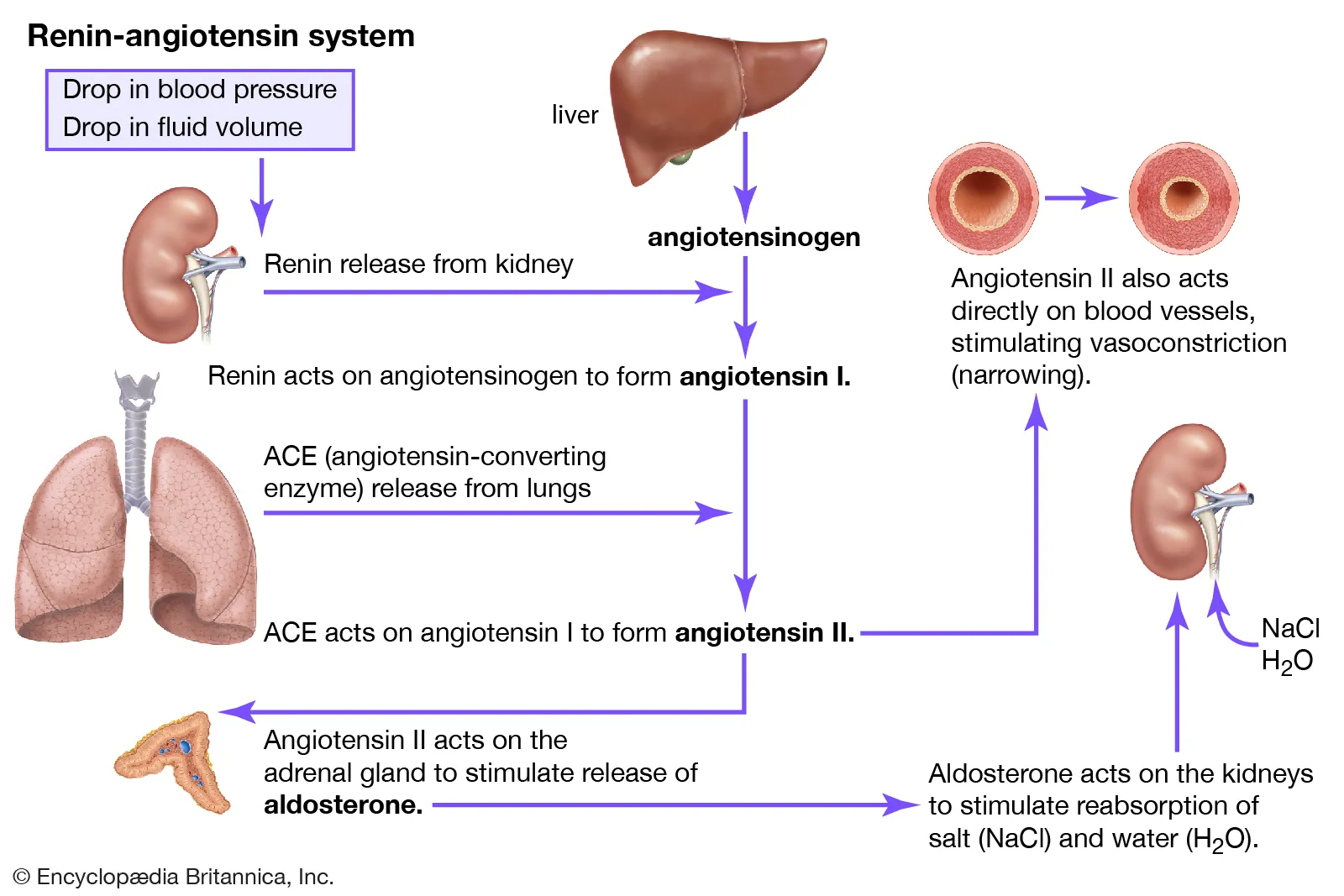
By inputting PRA data—which reflects the activity of the Renin-Angiotensin-Aldosterone System (RAAS)—the software can simulate how a patient might respond to specific antihypertensive drugs, such as ACE inhibitors or Beta-blockers. This “In Silico” testing allows doctors to use technology to find the most effective medication before the patient even takes the first pill, minimizing the “trial and error” phase of treatment.

The Rise of Bio-Wearables and Remote Renin Monitoring
The most exciting frontier in the tech niche regarding Plasma Renin Activity is the transition from the laboratory to the wrist. While we are not yet at a point where a smartwatch can measure enzymes in the blood, the roadmap is being drawn.
The Quest for Continuous Hormonal Tracking
Current wearable tech focuses on heart rate, SpO2, and sleep stages. However, the next generation of “Bio-Wearables” is targeting molecular markers. Companies are experimenting with microneedle patches and interstitial fluid sensors that can monitor hormonal fluctuations in real-time.
Measuring PRA via a wearable would be a “Holy Grail” for hypertension management. The tech challenge here is miniaturization. Sensors must be developed that can perform the enzymatic reaction of renin within a microscopic chamber on a patch, then transmit that data via Bluetooth to a smartphone app. This involves sophisticated MEMS (Micro-Electro-Mechanical Systems) technology, a major trend in current hardware engineering.
Integration with Electronic Health Records (EHR)
The data generated by these advanced diagnostic tools is increasingly being funneled into interoperable Electronic Health Record (EHR) systems. Using APIs (Application Programming Interfaces), lab results for PRA are now instantly accessible to a patient’s entire care team.
This digital connectivity ensures that a high PRA reading in a specialized clinic triggers an automated alert in the primary care physician’s dashboard. The “Tech” here isn’t just the measurement; it’s the cloud-based infrastructure that ensures data liquidity, allowing for a seamless flow of information between diagnostic hardware and clinical decision-making software.
Data Security and Ethical Considerations in Bio-Molecular Tech
As we digitize the measurement of markers like Plasma Renin Activity, we encounter a new set of challenges in digital security and data ethics. Biomolecular data is among the most sensitive information a person can possess.
Protecting Sensitive Proteomic Data
A Plasma Renin Activity level, when combined with other proteomic and genomic data, can provide a detailed roadmap of an individual’s future health risks. This makes it a high-value target for cyber-attacks.
The tech industry is responding by implementing end-to-end encryption for lab results and exploring the use of Blockchain for secure health data exchange. By decentralizing the storage of lab data, patients can grant “keys” to specific providers, ensuring that their PRA levels and other sensitive metrics aren’t sitting in a vulnerable, centralized database.
The Future of Decentralized Health Diagnostics
The ultimate goal of this technology is decentralization. We are seeing a trend toward “Lab-on-a-Chip” (LoC) devices that can be used in rural areas or even in the home. These devices use microfluidic technology to perform complex assays.
From a software perspective, these portable devices require robust edge computing capabilities. The device must process the biochemical signals locally before sending an encrypted summary to the cloud. This reduces the need for massive laboratory infrastructure and brings high-level diagnostic tech to a global audience.
Conclusion: The Silicon Heart of Biochemistry
The question “What is Plasma Renin Activity?” is no longer just a question for biologists. In the modern era, it is a question for data scientists, software engineers, and hardware developers. PRA has become a vital data point in the digital ecosystem of precision medicine.
As we continue to refine the AI models that interpret this enzyme’s activity and develop the hardware capable of measuring it more efficiently, we move closer to a world where “high blood pressure” is not a vague diagnosis, but a precisely managed digital condition. The fusion of biochemistry and technology is not just changing how we measure health—it is changing how we define it, one algorithmic calculation at a time.
aViewFromTheCave is a participant in the Amazon Services LLC Associates Program, an affiliate advertising program designed to provide a means for sites to earn advertising fees by advertising and linking to Amazon.com. Amazon, the Amazon logo, AmazonSupply, and the AmazonSupply logo are trademarks of Amazon.com, Inc. or its affiliates. As an Amazon Associate we earn affiliate commissions from qualifying purchases.