
In the rapidly evolving landscape of software as a service (SaaS), few tools have managed to balance technical sophistication with user-centric simplicity as effectively as Pipedrive. At its core, Pipedrive is a cloud-based Customer Relationship Management (CRM) solution designed specifically to help sales teams manage complex processes and close deals faster. However, defining it simply as a “database” does it a disservice. In the modern tech ecosystem, Pipedrive represents a shift toward activity-based selling, leveraging automation, artificial intelligence, and deep integrations to streamline the digital workspace.
Understanding the Architecture: The Activity-Based Philosophy
The technical foundation of Pipedrive is built upon a specific methodology known as activity-based selling. Unlike legacy CRM systems that often act as passive repositories for contact information, Pipedrive’s architecture is designed to be proactive. It operates on the principle that while you cannot control the final outcome of a deal, you can control the actions that lead to it.
The Pipeline Interface: Visualizing the Data Flow
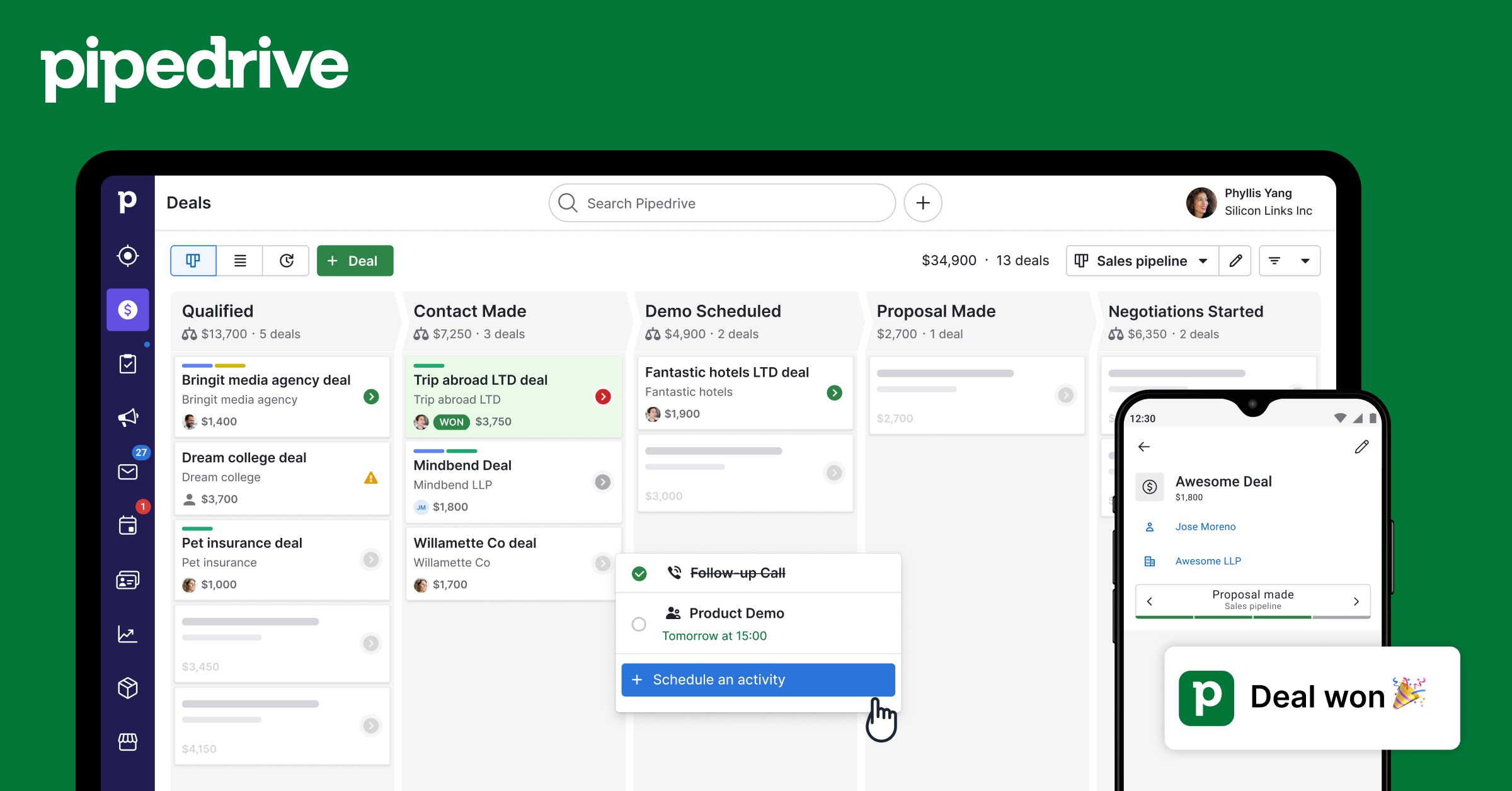
The most distinctive technical feature of Pipedrive is its visual sales pipeline. From a software design perspective, this is a Kanban-style board that represents the sales process as a series of linear stages. Each deal is represented as a “card” that contains metadata, including contact history, deal value, and expected closing dates.
This visualization is more than just a UI choice; it is a data-processing strategy. By allowing users to drag and drop deals through different stages, the software updates the underlying database in real-time, providing immediate feedback on sales velocity and bottleneck locations. For tech-savvy managers, this provides a clear view of the health of the sales funnel without needing to run complex manual queries.
Activity-Based Selling: Software as a Methodology
Pipedrive’s backend is engineered to prioritize “Activities”—calls, emails, meetings, and tasks—over “Deals.” The software uses a sophisticated notification engine to remind users of their next steps. If a deal has no scheduled activity, the system flags it. This ensures that the database remains “clean” and that no potential revenue is lost due to administrative oversight. This focus on scheduled events transforms the CRM from a static record-keeping tool into a dynamic workflow engine.
Core Features and Technical Capabilities
Beyond its visual interface, Pipedrive boasts a suite of high-tech tools designed to automate the repetitive aspects of sales. This allows human agents to focus on high-value interactions while the software handles the data entry and management.
Automation and Workflow Engines
One of the most powerful aspects of Pipedrive’s tech stack is its “Workflow Automation” tool. Using “if-this-then-that” logic, users can create complex automated sequences without writing a single line of code. For example, when a deal is moved to the “Contract Sent” stage, Pipedrive can automatically generate a Slack notification for the legal team, send a follow-up email to the client, and schedule a reminder for the salesperson three days later.
These automations reduce manual data entry by up to 30%, according to various performance benchmarks. By automating the “plumbing” of the sales process, the software ensures data integrity and consistency across the entire organization.
AI Sales Assistant: Integrating Intelligence into the Stack
In recent years, Pipedrive has integrated Artificial Intelligence to enhance its decision-support capabilities. The AI Sales Assistant is a sophisticated algorithm that analyzes historical performance data to provide actionable insights. It identifies patterns in winning deals and suggests the best time to contact a prospect or which deals are most likely to close.
This move toward AI-driven CRM represents a broader trend in technology where software doesn’t just store data but interprets it. The AI assistant also monitors user behavior to suggest relevant features or integrations that could improve the user’s specific workflow, creating a personalized software experience.
Data Security and Privacy Standards
For any cloud-based software, security is a paramount concern. Pipedrive employs enterprise-grade security protocols to protect sensitive client data. This includes SOC 2 and SOC 3 compliance, GDPR adherence, and data encryption both at rest and in transit (using AES-256 and TLS 1.2).
Technically, Pipedrive utilizes world-class hosting providers like AWS (Amazon Web Services) and Rackspace, ensuring 99.9% uptime. The software also includes granular visibility settings, allowing administrators to control exactly who can see or export specific data sets—a critical feature for maintaining digital security in a distributed work environment.

Integration and the Ecosystem: Building a Unified Tech Stack
No software exists in a vacuum. Pipedrive’s strength lies in its ability to act as the central “source of truth” within a much larger technical ecosystem. Through its robust API and expansive marketplace, it connects various disparate tools into a cohesive unit.
The App Marketplace: Extending Functionality
Pipedrive’s Marketplace features over 300 integrations with leading software tools. This includes marketing automation platforms like Mailchimp, communication tools like Zoom and Microsoft Teams, and lead generation tools like LeadBooster.
These integrations are not merely cosmetic; they involve deep data syncing. For instance, when a LeadBooster chatbot captures a visitor’s email on a website, the information is instantly parsed and injected into Pipedrive as a new “Lead,” complete with the chat transcript. This seamless data transfer eliminates the silos that often plague corporate technology stacks.
API and Webhooks: Customizing the Experience
For companies with unique technical requirements, Pipedrive offers a comprehensive RESTful API. This allows developers to build custom applications that interact directly with Pipedrive’s data. Whether it is a custom dashboard built in Power BI or a specialized internal tool, the API provides the flexibility needed for high-level customization.
Furthermore, Pipedrive supports Webhooks, which allow the system to send real-time data to other applications the moment an event occurs. This event-driven architecture is essential for modern tech stacks that require instant synchronization across multiple platforms.
Pipedrive in the Modern Tech Landscape
As businesses move away from bloated, “all-in-one” enterprise solutions, Pipedrive has emerged as a leader in the “best-of-breed” software movement. This philosophy suggests that companies should choose specialized tools that do one thing exceptionally well, rather than a single platform that does everything mediocrely.
SaaS Comparison: Why Simplicity Wins
When compared to enterprise giants like Salesforce, Pipedrive’s technical advantage is its lower barrier to entry and faster implementation time. While enterprise CRMs often require months of setup and dedicated consultants, Pipedrive is designed for “plug-and-play” functionality.
The software utilizes a clean, intuitive UI that minimizes “cognitive load”—the amount of mental effort required to use the system. In the tech world, a tool is only as good as its adoption rate; by making the software easy to use, Pipedrive ensures that sales teams actually input the data necessary for the organization to thrive.
Mobile Optimization and Cloud Access
In an era of remote and hybrid work, Pipedrive’s mobile application is a critical component of its technical offering. The app is not just a scaled-down version of the desktop site; it is a fully optimized tool that includes offline access, call tracking, and geolocation features.
The geolocation feature, for example, allows field sales representatives to see which clients or prospects are nearby using their phone’s GPS. This integration of hardware (mobile sensors) and software (CRM data) exemplifies the modern approach to mobile productivity.

The Future of Sales Tech with Pipedrive
As we look toward the future, Pipedrive continues to evolve alongside emerging technological trends. The focus is shifting toward “Revenue Intelligence”—using data science to predict future revenue streams with high accuracy.
The software is increasingly incorporating more “Smart Docs” and e-signature capabilities, moving toward a world where the CRM handles the entire lifecycle of a deal, from the first touchpoint to the final signed contract. By centralizing these functions, Pipedrive reduces the “toggle tax”—the time and productivity lost when switching between different software applications.
In conclusion, Pipedrive is much more than a digital Rolodex. It is a sophisticated, AI-enhanced, and highly integratable engine designed to power the modern sales organization. For any business looking to professionalize its sales process through technology, understanding “What is Pipedrive” is the first step toward building a more efficient, data-driven, and successful operation. Whether you are a small startup or a growing enterprise, the technical depth and user-friendly design of Pipedrive offer a compelling blueprint for how modern work should be done.
aViewFromTheCave is a participant in the Amazon Services LLC Associates Program, an affiliate advertising program designed to provide a means for sites to earn advertising fees by advertising and linking to Amazon.com. Amazon, the Amazon logo, AmazonSupply, and the AmazonSupply logo are trademarks of Amazon.com, Inc. or its affiliates. As an Amazon Associate we earn affiliate commissions from qualifying purchases.