
The term “pick order” is not a universally recognized or standardized term within the broad landscape of technology. However, when we consider the context of technology, particularly within the realms of logistics, supply chain management, and inventory systems, “pick order” most logically refers to the sequence or method by which items are selected for fulfillment. This directly impacts the efficiency, accuracy, and cost-effectiveness of warehouse operations. Therefore, within the Tech niche, this article will explore the concept of pick order as it pertains to technological applications in warehousing and fulfillment.
In essence, a pick order is a directive or instruction within a warehouse management system (WMS) that specifies which items need to be retrieved from inventory to fulfill a customer order or a manufacturing process. The “order” within “pick order” refers to the sequence in which these items are to be picked. This sequence is not arbitrary; it is meticulously planned and optimized through sophisticated algorithms and technologies to achieve specific operational goals. Understanding and optimizing pick order is a cornerstone of efficient warehouse technology.
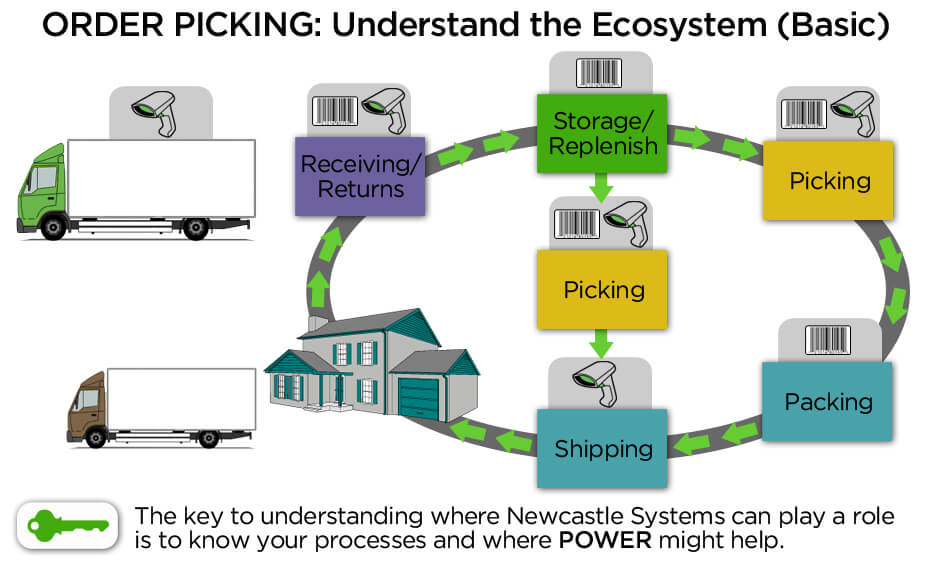
The Technological Foundation of Pick Order Optimization
The evolution of warehousing and fulfillment has been intrinsically linked to technological advancements. From manual lists to sophisticated WMS and robotic systems, technology dictates how pick orders are generated, processed, and executed. The core objective is to minimize the travel time and effort of the warehouse staff or automated systems involved in picking.
Warehouse Management Systems (WMS) and Data Integration
At the heart of modern pick order management lies the Warehouse Management System (WMS). A WMS is a software application designed to control and optimize day-to-day operations in a warehouse. It manages everything from receiving and putaway to inventory management, order fulfillment, and shipping.
Generating the Pick Order
The WMS receives customer orders from an enterprise resource planning (ERP) system or an e-commerce platform. It then processes these orders, breaking them down into individual items and quantities. This information is used to generate the initial pick list. However, a raw pick list is rarely the most efficient way to operate. The WMS, leveraging its extensive data on inventory locations, order priorities, and warehouse layout, transforms this raw list into an optimized pick order.
Inventory Location Data
Accurate and real-time inventory location data is paramount. The WMS maintains a digital map of the warehouse, knowing precisely where each SKU (Stock Keeping Unit) is stored. This data is typically collected and updated through technologies like barcode scanners, RFID (Radio-Frequency Identification) tags, and sensors. Without this granular data, generating an efficient pick order is impossible, as the system wouldn’t know where to direct the picker.
Order Aggregation and Batching
To further optimize pick orders, WMS often employs techniques like order aggregation and batching.
- Order Aggregation: This involves grouping multiple individual customer orders that share common items or are destined for similar geographical regions. By picking for a batch of orders simultaneously, pickers can collect all necessary items for those orders in a single pass.
- Batch Picking: This is a method where a picker is given a list of items for several orders and collects all items at once. The WMS then intelligently sorts these items for each individual order.
Advanced Algorithms for Pick Order Sequencing
The true “order” within a pick order is determined by sophisticated algorithms that aim to minimize travel distance and time. Different picking methodologies, supported by the WMS and its underlying algorithms, lead to distinct pick order strategies.
Zone Picking
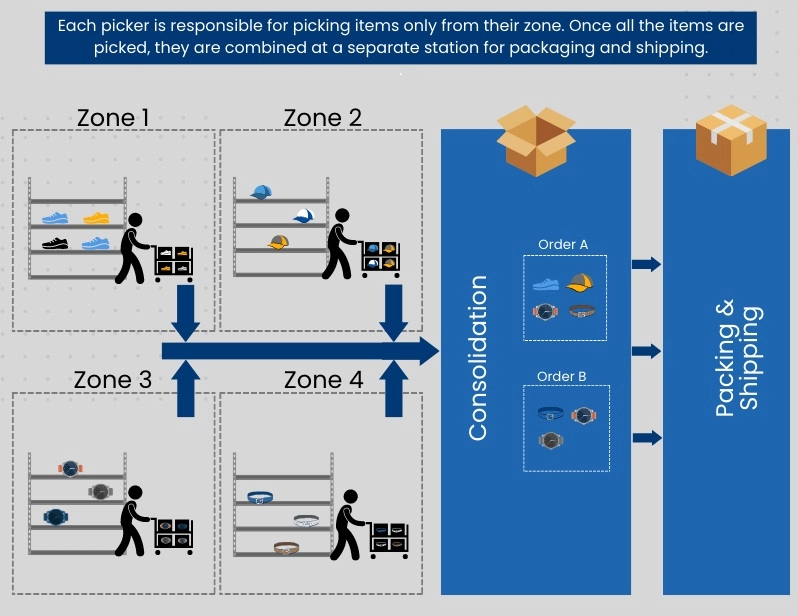
In a zone picking strategy, the warehouse is divided into different zones, and each picker is assigned to a specific zone. Pickers only pick items within their assigned zone. When an order requires items from multiple zones, it is passed sequentially from one zone to the next. The pick order for an individual picker within their zone is optimized based on the layout and item locations within that zone.
Benefits and Drawbacks of Zone Picking
Zone picking can be highly efficient when orders are distributed across many zones, as it reduces the need for pickers to travel long distances. It also allows for specialization, where pickers become highly familiar with their assigned zones. However, it can lead to bottlenecks if one zone is significantly busier than others, or if an order has many items in a single zone but only one in another, requiring excessive handoffs. The WMS helps manage these handoffs and can dynamically reassign pickers or adjust pick order priorities to mitigate these issues.
Wave Picking
Wave picking is a more complex method where orders are grouped into “waves” and released for picking at scheduled times. This allows for better synchronization of different warehouse activities, such as inbound receiving, putaway, and outbound shipping. The WMS determines the optimal composition of each wave and the pick order for the items within that wave, often considering factors like shipping deadlines, carrier pickups, and labor availability.
Optimizing Waves and Pick Sequences
The WMS analyzes incoming orders and strategically groups them into waves. The pick order within a wave is then optimized to minimize picker travel. This could involve sequencing picks based on proximity (e.g., picking items closest to each other first) or by destination (e.g., picking all items for a particular shipping lane together). This level of coordination requires robust technological infrastructure.
Cluster Picking
Cluster picking is a strategy where a picker is assigned multiple orders at once and travels through the warehouse to pick items for all of these orders simultaneously. The picker uses a cart or a vehicle equipped with multiple bins, with each bin designated for a specific order. The WMS determines the optimal route for the picker to travel through the warehouse, visiting locations for all assigned orders in an efficient sequence.
The Role of Technology in Cluster Picking
The success of cluster picking relies heavily on real-time data and intelligent routing. Handheld scanners or wearable devices guide the picker along the optimized route, confirming each item picked and placing it in the correct bin. The WMS continuously updates inventory and order status, ensuring the picker is always working with the most current information.
Technological Enablers for Efficient Pick Order Execution
Beyond the WMS, a suite of technologies actively contributes to the efficient generation and execution of pick orders. These technologies enhance speed, accuracy, and reduce human error.
Mobile Computing and Barcode Scanning
Handheld mobile computers and barcode scanners are ubiquitous in modern warehouses. They are essential for:
- Real-time Data Capture: When a picker scans an item’s barcode, the WMS immediately registers that the item has been picked for a specific order. This updates inventory levels in real-time, preventing overselling and ensuring accuracy.
- Navigation and Task Management: Mobile devices display the optimized pick order, guiding pickers to the exact location of each item. They often provide visual cues, such as aisle and bin numbers, and can display images of the product for verification.
- Error Reduction: By requiring barcode scans for verification, the system drastically reduces picking errors caused by misidentification of products or incorrect quantities.
RFID Technology: The Next Frontier
RFID technology offers an even more advanced approach to item tracking. Instead of requiring line-of-sight scanning like barcodes, RFID tags emit radio signals that can be read wirelessly and simultaneously from multiple items.

Advantages of RFID in Pick Order Fulfillment
- Speed: RFID readers can scan hundreds of items in seconds, significantly speeding up the picking process compared to individual barcode scanning.
- Accuracy: Eliminates the need for manual scanning, reducing human error and ensuring all items are accounted for.
- Visibility: Provides real-time visibility into inventory as items move through the warehouse.
While the initial investment in RFID can be higher, its potential to streamline pick order fulfillment and improve inventory accuracy makes it an increasingly attractive technology for large-scale operations.
Automation and Robotics
The integration of automation and robotics is revolutionizing pick order execution. These technologies aim to perform repetitive and physically demanding picking tasks with greater speed and precision.
Automated Guided Vehicles (AGVs) and Autonomous Mobile Robots (AMRs)
AGVs and AMRs are increasingly being deployed to transport goods within the warehouse. In the context of pick orders:
- AGVs: These robots follow predefined paths and can transport picked items from picking stations to packing areas, or even bring shelves of items to stationary pickers.
- AMRs: More sophisticated than AGVs, AMRs can navigate autonomously, dynamically rerouting around obstacles and adapting to changing warehouse layouts. They can be programmed to bring inventory to pickers, or to pick items themselves based on WMS instructions.
Robotic Picking Arms
Robotic arms, often equipped with advanced vision systems and specialized grippers, are capable of identifying and picking individual items from shelves. These are particularly useful for high-volume, repetitive picking tasks of standardized items. The WMS directs the robotic arm, providing the pick order information, and the robot executes the physical retrieval.
The Synergistic Relationship Between WMS and Robotics
The seamless integration of WMS with these automated systems is critical. The WMS acts as the central intelligence, generating and optimizing the pick order, and then communicating these instructions to the robots. The robots, in turn, provide real-time feedback to the WMS on task completion and any exceptions encountered. This symbiotic relationship is key to unlocking the full potential of automation in pick order fulfillment.
The Impact of Pick Order Technology on Business Operations
Optimizing pick order through technology is not merely an operational nicety; it has a profound and quantifiable impact on a business’s bottom line and customer satisfaction.
Enhancing Operational Efficiency and Throughput
The primary goal of pick order optimization is to increase the speed and volume of orders that can be processed within a given timeframe.
Reducing Picker Travel Time
By intelligently sequencing picks, warehouse technologies minimize the distance pickers need to travel. This directly translates to more picks per hour per picker, thereby increasing overall warehouse throughput without necessarily increasing labor costs.
Minimizing Idle Time
When pickers are efficiently guided through their tasks, idle time is significantly reduced. This ensures that labor is productively utilized, contributing to higher output and lower operational costs.
Improving Accuracy and Reducing Errors
Picking errors are a significant source of cost and customer dissatisfaction. Inaccurate picks lead to:
- Returns: Customers receive the wrong items, leading to costly return processes.
- Customer Dissatisfaction: Wrong items and delayed shipments damage customer loyalty.
- Inventory Discrepancies: Errors in picking can lead to inaccurate inventory records, further compounding operational issues.
Technological solutions like barcode scanning, RFID, and automated picking systems, driven by optimized pick orders, dramatically reduce the likelihood of these errors.
Real-time Data and Validation
The constant validation provided by technology—scanning items, confirming quantities, and verifying destinations—ensures that what is picked accurately matches what is ordered. This real-time feedback loop is critical for maintaining high levels of accuracy.
Cost Reduction and Profitability
Ultimately, the efficiencies gained through optimized pick order technology translate directly into cost savings and increased profitability.
Labor Cost Optimization
By increasing picker productivity, businesses can fulfill more orders with the same or even fewer staff. This is particularly impactful in industries with high labor costs.
Reduced Cost of Errors and Returns
The reduction in picking errors leads to fewer returns, lower processing costs for returns, and a decrease in the costs associated with rectifying order inaccuracies.
Inventory Management Benefits
Accurate picking contributes to more accurate inventory records. This reduces the need for costly cycle counts and physical inventories, and helps prevent stockouts or overstocking.
In conclusion, while the term “pick order” itself is simple, its underlying technological implementation is complex and sophisticated. It represents a critical intersection of software, hardware, and data science within the tech landscape, all focused on the fundamental goal of efficiently and accurately fulfilling customer demands from the warehouse. As technology continues to advance, the methods and effectiveness of pick order management will undoubtedly continue to evolve, further solidifying its importance in modern commerce.
aViewFromTheCave is a participant in the Amazon Services LLC Associates Program, an affiliate advertising program designed to provide a means for sites to earn advertising fees by advertising and linking to Amazon.com. Amazon, the Amazon logo, AmazonSupply, and the AmazonSupply logo are trademarks of Amazon.com, Inc. or its affiliates. As an Amazon Associate we earn affiliate commissions from qualifying purchases.