
In the rapidly evolving landscape of precision agriculture, the traditional methods of farming are being systematically replaced by data-driven ecosystems. At the heart of this transformation lies a fundamental chemical metric that has governed plant health for millennia: the pH level of the soil. However, in the modern tech context, soil pH is no longer just a number on a litmus strip; it is a critical data stream that feeds into complex Artificial Intelligence (AI) models and Internet of Things (IoT) frameworks to optimize global food production.

As we strive for higher yields and more sustainable resource management, understanding and managing soil pH through the lens of technology has become a cornerstone of the “AgTech” revolution. This article explores the technological architecture behind soil pH monitoring, the hardware driving these innovations, and how software integration is turning raw chemical data into actionable intelligence.
The Fundamentals of Soil pH in the Age of Precision Agriculture
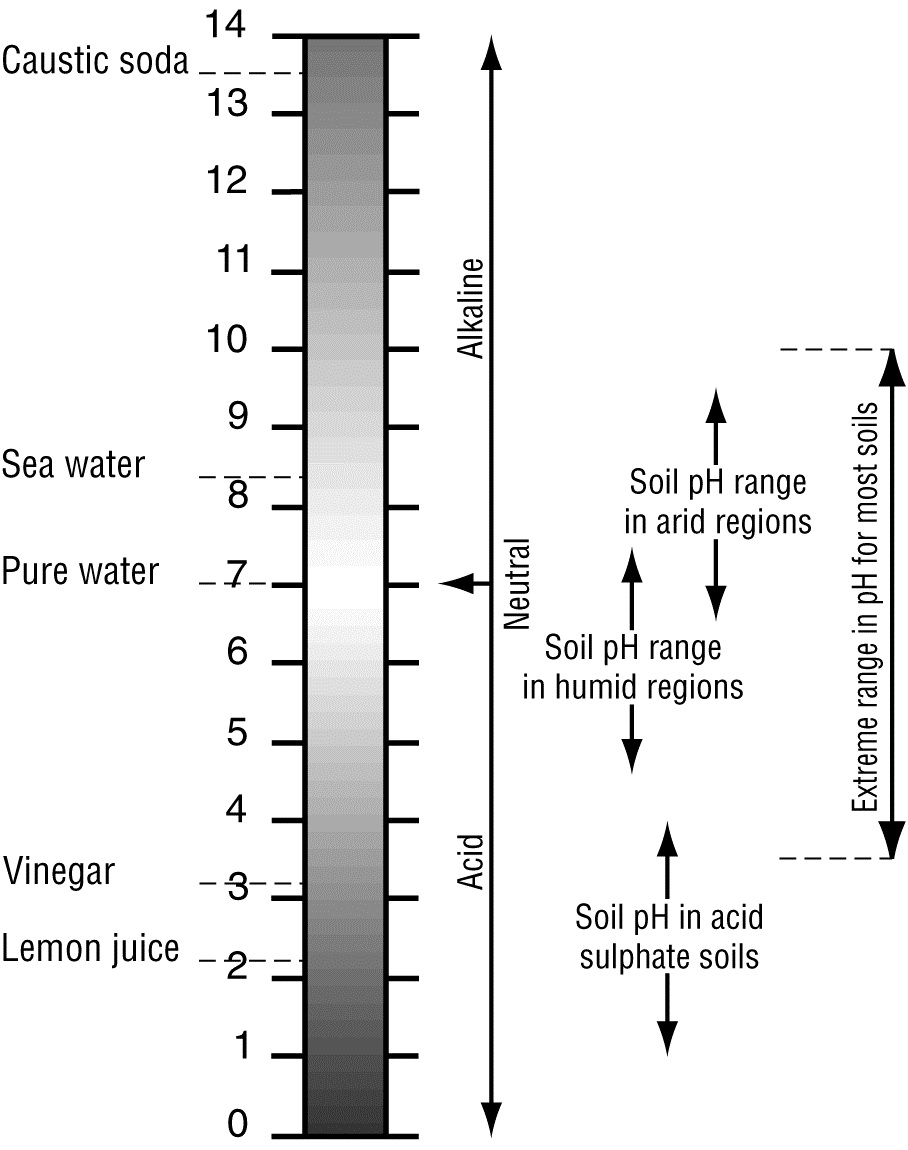
Soil pH is a measure of the acidity or alkalinity of the soil, traditionally measured on a scale from 0 to 14. For the modern technologist or digital agronomist, this metric represents the “operating system” environment of the root zone. If the pH is misaligned, the “applications”—in this case, nutrient uptake processes—fail to execute properly, regardless of how much fertilizer is applied.
Decoding the Chemistry through a Digital Lens
In technical terms, pH measures the activity of hydrogen ions ($H^+$) in the soil solution. From a technology perspective, this is a signal-to-noise challenge. Low pH (acidic) or high pH (alkaline) levels create “interference” by locking up essential minerals like phosphorus, potassium, and magnesium.
AgTech solutions now view these chemical interactions as variables in a predictive model. By digitizing the pH scale, developers can create algorithms that predict nutrient bioavailability with staggering accuracy. Instead of manual sampling every few years, digital systems treat soil pH as a dynamic variable that fluctuates based on moisture, temperature, and microbial activity—all of which are now tracked via high-resolution sensors.
Why Real-Time Data Surpasses Traditional Lab Testing
The legacy approach to soil pH involved collecting physical samples, mailing them to a laboratory, and waiting weeks for a PDF report. This “snapshot” method is inherently flawed in a high-tech farming environment because it lacks temporal and spatial resolution.
By the time the results arrive, the environmental conditions may have shifted. Tech-forward operations now utilize “Real-Time Kinematic” (RTK) positioning and on-the-go sensors that map pH variations across a field in meter-by-meter increments. This shift from static reports to live data streams allows for the creation of high-fidelity “soil maps” that serve as the foundation for autonomous machinery and precision application.
IoT and Sensor Technology: The Hardware Behind the Measurement
The bridge between the physical soil and the digital interface is the sensor. In recent years, there has been a massive influx of innovation in the hardware used to detect hydrogen ion activity. These aren’t just simple probes; they are sophisticated IoT devices capable of surviving harsh underground environments while transmitting data over long distances.
Deploying Wireless Soil Sensor Networks (WSN)
Modern smart farms utilize Wireless Soil Sensor Networks (WSN). These networks consist of multiple nodes buried at various depths to provide a 3D profile of the soil’s health. These devices often use LoRaWAN (Long Range Wide Area Network) or NB-IoT (Narrowband IoT) protocols to communicate. These technologies are chosen for their low power consumption and ability to penetrate through dense foliage and soil.
A typical high-end soil pH sensor utilizes an Ion-Selective Field Effect Transistor (ISFET). Unlike traditional glass-electrode probes which are fragile and prone to drift, ISFET technology is solid-state. This makes it more durable for long-term deployment and allows for integration into micro-electromechanical systems (MEMS). These sensors can provide continuous telemetry, alerting the farm manager via a smartphone app the moment the pH level crosses a predefined threshold.
Spectral Imaging and Remote Sensing vs. On-Site Probes
While underground sensors provide ground-truth data, the tech industry is also looking toward the sky. Hyperspectral imaging from satellites and drones is being used to infer soil pH levels across vast regions. By analyzing the light reflectance patterns of the soil and the vegetation growing upon it, machine learning models can estimate pH levels without a single physical probe touching the ground.

While remote sensing currently has lower precision than in-situ sensors, the synergy between the two is where the true power lies. Drones can identify “stress zones” via Normalized Difference Vegetation Index (NDVI) sensors, which then trigger automated ground-based robots to travel to those specific coordinates and conduct a high-precision chemical pH test.
Integrating Soil pH Data into AI-Driven Farm Management Systems (FMS)
Data is only as valuable as the insights derived from it. The modern AgTech stack includes sophisticated Farm Management Systems (FMS) that ingest pH data along with weather forecasts, moisture levels, and historical yield data.
Predictive Analytics for Optimal Nutrient Delivery
AI algorithms, specifically those using neural networks and random forest models, are now being trained on decades of soil data. When a real-time pH sensor reports a drop in alkalinity, the FMS doesn’t just show a red light; it calculates the exact amount of calcium carbonate (lime) needed to neutralize the area.
This is predictive maintenance for the Earth. By analyzing the “buffering capacity” of the soil—a metric that describes how resistant the soil is to pH change—AI can predict when a field will likely become too acidic months before it happens. This allows for proactive rather than reactive management, significantly reducing the “technological debt” of degraded soil.
Automation in Soil Amendment and Variable Rate Technology (VRT)
The ultimate execution of pH data happens through Variable Rate Technology (VRT). Modern tractors are essentially mobile data centers. When equipped with VRT, the tractor receives a “prescription map” generated by the FMS.
As the tractor moves across the field, the GPS coordinates are synced with the pH map. The onboard computer automatically adjusts the flow rate of soil amendments in real-time. In areas where the tech identifies optimal pH, the dispensers shut off. In areas with high acidity, the dosage increases. This level of robotic precision ensures that resources are used with maximum efficiency, minimizing environmental runoff and maximizing the ROI of every hardware deployment.
The Future of Soil Monitoring: Blockchain, Big Data, and Sustainability
As we look toward the next decade of AgTech, the management of soil pH will integrate with even more advanced digital architectures. The goal is a fully autonomous “closed-loop” system where the soil essentially manages itself through a network of sensors and actuators.
Traceability and Carbon Credits through Soil Tech
One of the most exciting trends in the tech space is the intersection of soil health and Blockchain technology. There is an increasing demand for “Regenerative Finance” (ReFi), where farmers are rewarded for sequestering carbon. Soil pH is a vital indicator of microbial health, which in turn dictates how much carbon the soil can hold.
By recording soil pH and health data on a decentralized ledger, farms can provide immutable proof of their environmental impact. This “Digital Twin” of the farm’s soil health allows for the transparent trading of carbon credits. Tech platforms are now being built to bridge the gap between the sensor in the mud and the carbon market in the cloud, with pH levels serving as a key metric for verification.
Scaling Solutions from High-Tech Ag-Corps to Small-Scale Digital Farmers
The final frontier of this technology is democratization. While large-scale corporate farms were the early adopters of pH-sensing robots and AI, the “consumerization” of AgTech is bringing these tools to smaller players. Plug-and-play sensor kits and open-source FMS platforms are lowering the barrier to entry.
We are seeing the rise of “API-first” agriculture, where different hardware manufacturers allow their sensors to talk to third-party apps. This interoperability is crucial. Whether it is a small-scale indoor vertical farm using hydroponic pH sensors or a 10,000-acre wheat farm using satellite telemetry, the underlying tech philosophy remains the same: treat the soil as a dynamic data set.
Conclusion
Understanding what pH level in soil means today requires a shift in perspective from traditional chemistry to modern information technology. It is a vital signal in the noise of environmental variables. Through the deployment of ISFET sensors, LoRaWAN networks, and AI-driven VRT, the agricultural sector is turning the age-old problem of soil acidity into a manageable, digital challenge.
As technology continues to advance, the integration of soil pH data into the broader digital ecosystem will play a decisive role in global food security and environmental sustainability. The dirt beneath our feet is being digitized, and in that data lies the future of how we feed the world.
aViewFromTheCave is a participant in the Amazon Services LLC Associates Program, an affiliate advertising program designed to provide a means for sites to earn advertising fees by advertising and linking to Amazon.com. Amazon, the Amazon logo, AmazonSupply, and the AmazonSupply logo are trademarks of Amazon.com, Inc. or its affiliates. As an Amazon Associate we earn affiliate commissions from qualifying purchases.