
In an increasingly competitive world, both individuals and organizations strive to differentiate themselves, forge meaningful connections, and establish lasting influence. While skills, products, and services are undeniably crucial, there’s a deeper, more fundamental element that underpins sustained success: personality. Often dismissed as a mere psychological concept, personality development is, in fact, the bedrock upon which truly powerful and authentic personal brands are built. It’s the intentional process of understanding, refining, and enhancing your unique set of traits, behaviors, and values to project an image that resonates and inspires trust.
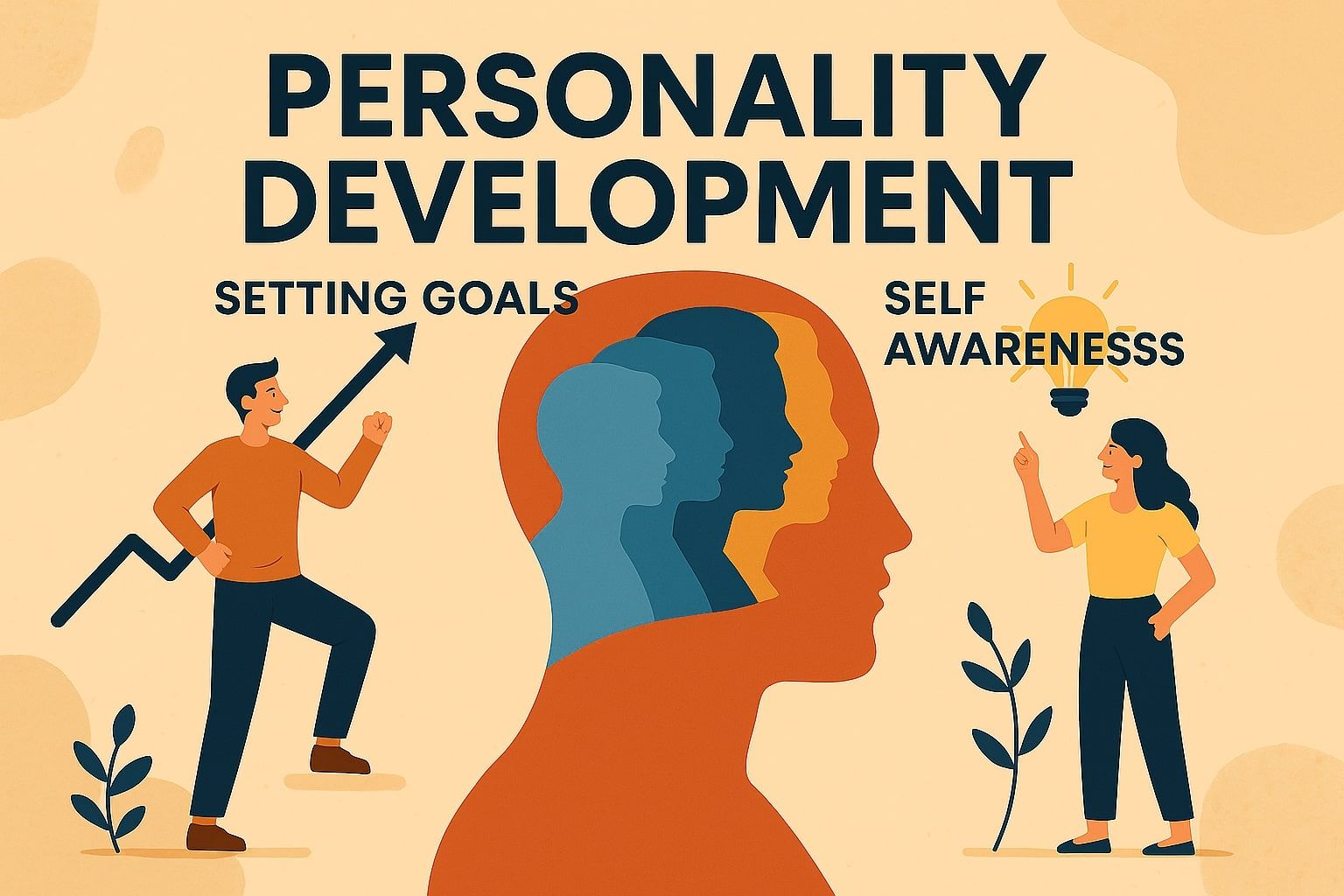
For anyone looking to carve out a distinct identity, whether as an entrepreneur, a thought leader, or a professional climbing the corporate ladder, recognizing the link between inner growth and outer perception is paramount. This article will delve into what personality development truly entails, exploring how its cultivation isn’t just about self-improvement, but a strategic imperative for crafting a compelling and memorable brand. By understanding and harnessing the power of your evolving self, you can build a brand that is not only visible but genuinely impactful and authentic.
Decoding Personality Development: More Than Just Self-Improvement
Personality development is far more nuanced than simply adopting a few positive habits or polishing your social graces. It’s a holistic and ongoing process of self-discovery, growth, and refinement that shapes how you interact with the world and, crucially, how the world perceives you. This perception, in turn, forms the very essence of your brand.
Defining the Core: Traits, Habits, and Beliefs
At its heart, personality is a complex tapestry woven from an individual’s unique blend of stable traits, habitual patterns of behavior, deeply held values, and core beliefs. Traits, such as introversion or extraversion, conscientiousness, openness to experience, agreeableness, and neuroticism (often referred to as the Big Five personality traits), provide a framework for understanding inherent tendencies. However, personality is not static; it’s a dynamic entity that evolves through experience, learning, and conscious effort.
Our habits—the routine actions we perform, from how we communicate to how we approach problem-solving—are outward manifestations of our personality. Similarly, our values and beliefs act as internal compasses, guiding our decisions and shaping our worldview. Developing your personality, therefore, involves not just acknowledging these components but actively working to align them with your aspirational self and, by extension, your desired brand identity. It’s about ensuring your internal compass points toward consistent, authentic brand messaging.
The Journey of Self-Discovery: Unearthing Your Authentic Brand
The initial step in effective personality development, and thus impactful brand building, is profound self-awareness. You cannot intentionally shape something you don’t fully understand. This journey involves introspection to identify your strengths, weaknesses, passions, and unique perspectives. What are your innate talents? What causes ignite your passion? What are the principles you live by, even when challenged?
From a branding perspective, this self-discovery translates directly into identifying your unique selling proposition (USP) and your authentic brand voice. Your personality’s nuances—your sense of humor, your empathy, your analytical prowess, your resilience—are not just personal attributes; they are distinct features that can differentiate your brand in a crowded market. Without this deep understanding, any attempt at branding will feel superficial, inauthentic, and ultimately, unsustainable.
Influence of Environment and Experience: Shaping Your Brand Narrative
Personality isn’t solely an internal construct; it’s continuously shaped by external forces. The environments we inhabit, the people we interact with, and the experiences we undergo all contribute to our personal evolution. A challenging project might foster resilience; a new cultural experience might broaden empathy; feedback from a mentor might refine communication skills.
For brand strategy, this means recognizing that your brand narrative is not fixed. It evolves with your experiences. By consciously seeking out growth-oriented environments, engaging with diverse perspectives, and reflecting on your experiences, you actively develop aspects of your personality that can enrich your brand story. This continuous adaptation demonstrates growth, relevance, and a capacity for learning—all highly valuable traits for any brand, personal or corporate.
Personality as Your Brand’s North Star
In the realm of branding, whether personal or corporate, authenticity is the gold standard. A brand built on a genuine personality radiates trust and attracts a loyal audience. Your personality acts as a guiding principle, ensuring that every facet of your brand identity, from your online presence to your in-person interactions, remains consistent and true to who you are.
Authenticity: The Bedrock of Trust
In an age saturated with marketing noise, consumers and professional contacts alike crave authenticity. People connect not just with what you do, but with who you are. A brand that feels authentic is one that aligns perfectly with the individual’s true personality. When you genuinely develop your personality—understanding your values, cultivating your strengths, and acknowledging your weaknesses—you eliminate the need to construct a façade.
This genuine self-presentation builds trust organically. Customers trust brands that are transparent and consistent, and the same applies to personal brands. Trying to project a persona that contradicts your true nature is exhausting and unsustainable, leading to inconsistencies that erode credibility. Your authentic personality, therefore, isn’t just a nice-to-have; it’s the foundational element for enduring brand loyalty and positive reputation.
Differentiation in a Crowded Market
In almost every industry, the market is saturated with talented individuals offering similar skills or products. How do you stand out? While technical expertise or product features are important, it’s often your unique personality that truly differentiates you. It’s the “how” and “why” behind what you do, infused with your personal touch, that becomes your brand’s unique signature.
Consider two professionals with identical resumes. The one with a compelling, well-developed personality—perhaps known for their infectious enthusiasm, their calm analytical approach, or their empathetic leadership style—will invariably be more memorable and desirable. This “personal touch” transforms a generic service or product offering into a unique brand experience, making you irreplaceable. Your personality isn’t just about being different; it’s about being uniquely you in a way that adds undeniable value.
Consistency Across All Touchpoints
A strong brand is a consistent brand. From your LinkedIn profile to your public speaking engagements, from your email communications to your social media posts, your brand message needs to be harmonious. This consistency is incredibly difficult to achieve if your brand is based on a fabricated image. However, when your brand is a natural extension of your developed personality, consistency flows effortlessly.
Your refined personality ensures that your core values, your communication style, and your professional ethos are evident in every interaction. This seamless coherence builds a robust and reliable brand image. It signals to your audience that they know what to expect from you, fostering a sense of predictability and reliability that is crucial for building a strong reputation and sustained brand equity.
Strategic Approaches to Personality-Driven Brand Development
Harnessing personality development for branding requires more than just passive self-reflection; it demands strategic application. By consciously integrating your personality into your brand strategy, you can create a narrative that is both compelling and authentically yours.
Identifying Your Brand Archetype (Personal Level)
Brand archetypes, originally popularized by Carl Jung, provide a powerful framework for understanding universal patterns of human motivation and personality. For personal branding, identifying with a particular archetype (e.g., The Sage, The Innovator, The Caregiver, The Hero, The Jester) can significantly clarify your brand voice, messaging, and visual identity.
For example, if your personality aligns with The Sage, your brand might emphasize wisdom, knowledge, and thoughtful analysis. If you embody The Rebel, your brand could challenge norms and advocate for change. This strategic alignment helps you develop a consistent brand narrative that resonates deeply with your target audience by tapping into universal human stories and aspirations, all while remaining true to your individual character.
Crafting Your Brand Story Through Personality
Every impactful brand has a compelling story. Your personality development journey provides the rich material for your unique brand narrative. Your personal experiences, the challenges you’ve overcome, your motivations, and the values that drive you are not just personal anecdotes; they are the chapters of your brand story.
By consciously weaving aspects of your personality into your narrative—whether it’s your relentless optimism, your meticulous attention to detail, or your compassionate leadership style—you create a relatable and inspiring account. Think of thought leaders like Simon Sinek, whose personality exudes curiosity and a passion for purpose, which is central to his brand message “Start With Why.” Your story, infused with your unique personality, isn’t just about what you’ve done; it’s about who you became along the way, and that’s what truly connects with your audience.
Communicating Your Unique Value Proposition (UVP)
While your Unique Value Proposition outlines what you offer, your personality dictates how you deliver it. It influences your communication style, your problem-solving approach, and the overall experience clients or colleagues have when interacting with you. A developed personality ensures that your UVP isn’t just a list of features or benefits, but a lived experience.
For instance, two consultants might offer “strategic business advice.” However, one might deliver it with a bold, challenging personality, pushing clients out of their comfort zones, while the other might offer it with a patient, empathetic personality, guiding clients through a collaborative process. Both are valuable, but their personalities shape the delivery and therefore the perceived value. Your personality effectively adds a qualitative layer to your UVP, making it distinct and memorable.
Cultivating Your Personality for Brand Growth
Personality development is not a destination but a continuous journey. For your brand to remain relevant, dynamic, and strong, you must commit to ongoing personal growth, seeing every new skill, insight, or challenge as an opportunity to refine your brand’s core.
Continuous Learning and Skill Acquisition
While often seen as distinct, learning new skills directly contributes to personality development and, by extension, brand strength. Acquiring technical skills enhances your competence, but developing soft skills like emotional intelligence, public speaking, negotiation, and critical thinking profoundly shapes your personality. These are the attributes that make you a more well-rounded, adaptable, and influential individual.
From a brand perspective, continuous learning signals growth, curiosity, and relevance. A brand that consistently evolves and adapts, showcasing new insights and capabilities, remains fresh and engaging. This commitment to self-improvement enriches your brand’s offerings and reinforces your image as a forward-thinking, valuable asset.
Seeking Feedback and Self-Reflection
To truly develop, you need an honest understanding of how you are perceived by others. Seeking constructive feedback from peers, mentors, or clients offers invaluable external perspectives that can highlight blind spots or confirm strengths. This feedback, combined with regular self-reflection (e.g., journaling, meditation), allows you to assess your behaviors, identify areas for improvement, and ensure alignment between your internal intentions and external impact.
For brand building, this iterative process is vital. It allows you to fine-tune your brand message and delivery, ensuring that your perceived brand aligns with your intended brand. It demonstrates humility and a commitment to excellence, which are powerful brand attributes in themselves.
Embracing Vulnerability and a Growth Mindset
True personality development, and consequently authentic branding, involves embracing vulnerability. It means acknowledging imperfections, learning from mistakes, and being open to change. A growth mindset—the belief that abilities and intelligence can be developed through dedication and hard work—is crucial for this. It fosters resilience, adaptability, and a willingness to step outside your comfort zone.
From a brand perspective, vulnerability, when shared thoughtfully, can build deeper connections. It shows humanity and relatability. A brand that is open about its journey, its challenges, and its continuous evolution is often more endearing and trustworthy than one that projects an image of flawless perfection. It makes your brand story more genuine and inspiring.
Networking with Purpose and Authenticity
Networking is a cornerstone of professional growth and brand visibility. However, when driven by a well-developed personality, networking transcends transactional exchanges and becomes an opportunity to build genuine relationships. Your refined communication skills, empathy, and ability to connect on a deeper level make interactions more meaningful and memorable.
Instead of merely collecting business cards, a personality-driven approach to networking focuses on offering value, sharing insights, and genuinely understanding others’ needs. This authentic engagement builds a strong professional network that not only supports your career but also amplifies your personal brand through positive word-of-mouth and meaningful collaborations.

Conclusion
Personality development is far more than a personal endeavor; it is an indispensable component of building a robust, authentic, and influential brand in today’s interconnected world. By intentionally understanding and cultivating your unique traits, habits, values, and beliefs, you lay the groundwork for a brand that is not only distinctive but deeply trustworthy and resonant.
Your personality acts as the North Star, guiding your brand’s authenticity, differentiating it from competitors, and ensuring consistency across every touchpoint. From identifying your brand archetype to crafting compelling stories and communicating your unique value proposition, every strategic branding decision is enriched and empowered by the foundation of your developed self.
Committing to continuous learning, seeking feedback, embracing vulnerability, and networking with purpose are not merely self-improvement tactics; they are essential investments in your brand’s long-term growth and success. Ultimately, personality development enables you to build a brand that is not just recognized, but genuinely respected, admired, and remembered for the unique human essence it embodies. Start viewing your personal growth as your most potent branding strategy, and watch your influence flourish.
aViewFromTheCave is a participant in the Amazon Services LLC Associates Program, an affiliate advertising program designed to provide a means for sites to earn advertising fees by advertising and linking to Amazon.com. Amazon, the Amazon logo, AmazonSupply, and the AmazonSupply logo are trademarks of Amazon.com, Inc. or its affiliates. As an Amazon Associate we earn affiliate commissions from qualifying purchases.