
In the dynamic world of finance, where numbers dictate decisions and trends shape fortunes, understanding how values change is paramount. One of the most fundamental yet powerful metrics for quantifying this change is the percentage increase. Far more than just a mathematical concept, percentage increase is a crucial lens through which individuals assess their personal financial growth, investors gauge portfolio performance, and businesses strategize for market dominance. It’s the language of growth, progress, and often, opportunity.
This article delves into the core of percentage increase, exploring its mechanics, its indispensable role across various facets of the money landscape, and the critical insights it provides for making informed financial choices. Whether you’re tracking your salary progression, evaluating investment returns, or analyzing business performance, mastering this concept is an essential tool in your financial arsenal.
The Fundamental Concept: Understanding Growth and Change
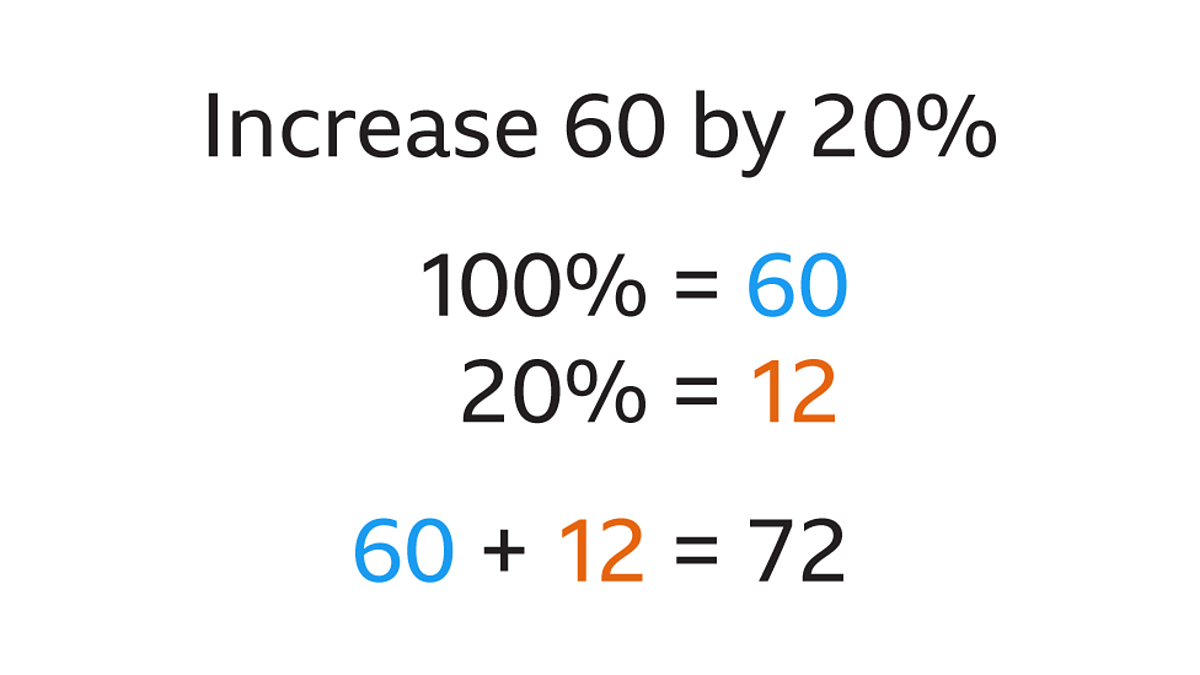
At its heart, a percentage increase measures the relative change between an initial value and a final value, expressed as a fraction of the initial value, multiplied by 100. It transforms raw numbers into a standardized, easily comparable metric that highlights the magnitude of growth or change in a way that absolute figures often cannot.
Defining Percentage Increase
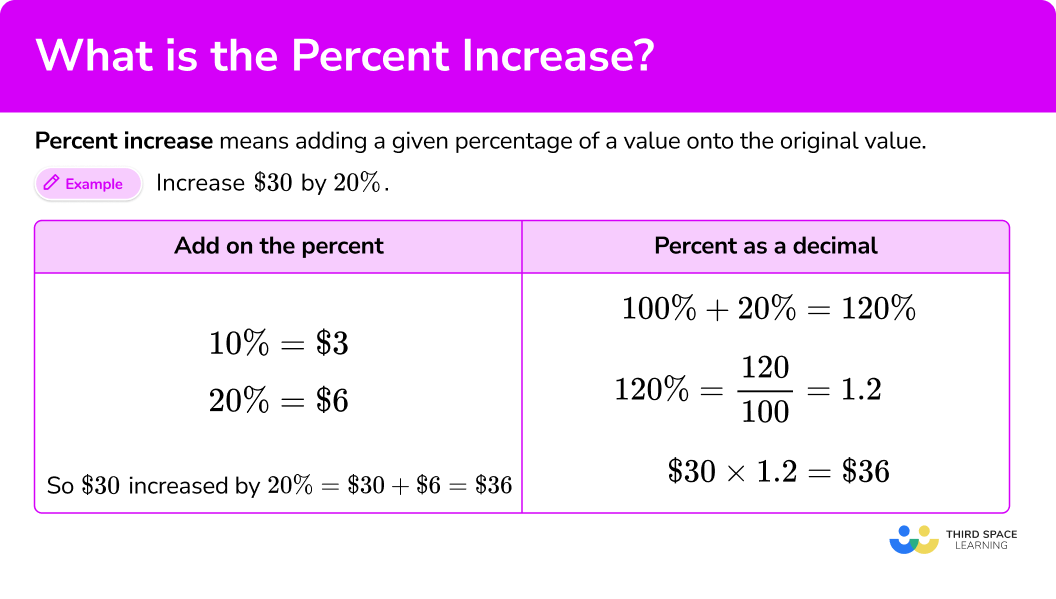
A percentage increase quantifies how much a value has grown in relation to its original size. For instance, if your investment grows from $100 to $120, the absolute increase is $20. However, the percentage increase tells you that your investment grew by 20%, offering a much clearer picture of its performance relative to its starting point. This relational aspect is critical because an absolute increase of $20 means very different things if the starting point was $100 versus $10,000.
The Core Formula: Calculation Demystified
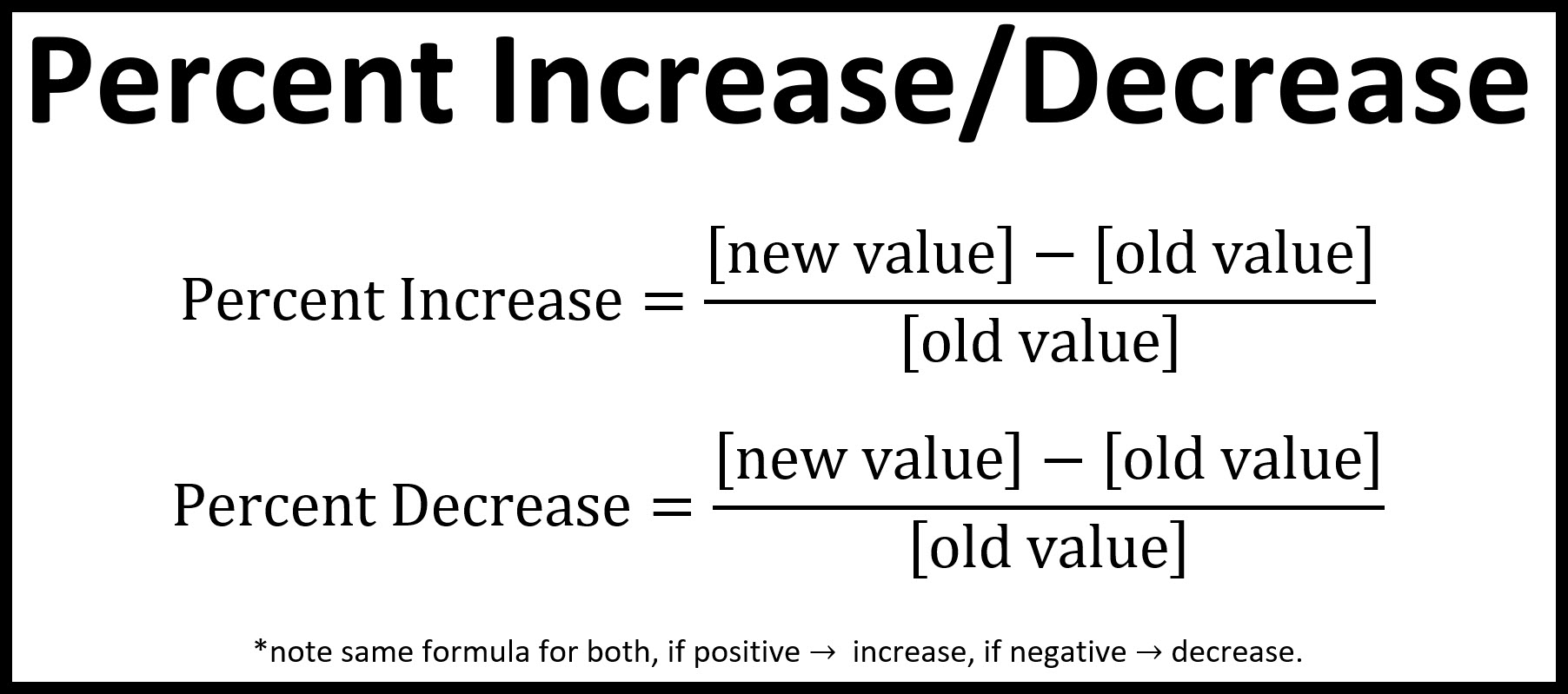
Calculating percentage increase involves a straightforward formula:
Percentage Increase = ((Final Value – Initial Value) / Initial Value) * 100
Let’s break this down with an example. If your monthly income increased from $4,000 to $4,500:
-
Find the absolute change: $4,500 – $4,000 = $500
-
Divide the change by the initial value: $500 / $4,000 = 0.125
-
Multiply by 100 to express as a percentage: 0.125 * 100 = 12.5%
So, your income saw a 12.5% increase. This simple calculation provides a powerful and universal metric for understanding growth.
Why Percentages Matter More Than Absolute Numbers in Finance
In financial analysis, relying solely on absolute numbers can be misleading. A $100 profit increase is commendable for a small startup making $500, representing a 20% growth. For a large corporation making $1 million, a $100 increase is negligible, a mere 0.01%. Percentage increases normalize these comparisons, allowing for apples-to-apples evaluation regardless of the scale of the underlying figures. They enable investors to compare the performance of different assets, help individuals understand the real impact of inflation on their purchasing power, and guide businesses in setting realistic growth targets against industry benchmarks.
Percentage Increase in Personal Finance: Tracking Your Financial Health
For individuals, percentage increase is an indispensable tool for monitoring and managing their personal financial journey. It provides clarity on how their wealth is accumulating, how their income is evolving, and how effectively they are combating financial challenges like inflation.
Salary and Income Growth: Measuring Your Earning Power
One of the most immediate applications of percentage increase in personal finance is evaluating salary hikes and income growth. When you receive a raise, knowing the percentage increase allows you to:
-
Benchmark your growth: Compare your raise to inflation rates, average industry increases, or your previous year’s increase. A 3% raise sounds good, but if inflation is 5%, your real purchasing power has actually decreased.
-
Negotiate effectively: Understanding your historical percentage increases can inform your negotiation strategy for future compensation discussions.
-
Plan your budget: A clear understanding of your income growth rate helps in forecasting future earnings and adjusting your spending and saving plans accordingly.
Investment Returns: The Engine of Wealth Accumulation
For investors, percentage increase is the primary metric for judging the performance of their investments. Whether it’s stocks, bonds, mutual funds, or real estate, returns are almost always quoted as a percentage.
-
Portfolio performance: Investors track the percentage increase of their entire portfolio over various periods (monthly, quarterly, annually) to assess its overall health.
-
Asset comparison: It enables a direct comparison between different investment vehicles. A stock might have gained $500, while a bond gained $100. If the stock started at $10,000 (5% gain) and the bond at $500 (20% gain), the percentage increase reveals the bond was the better performer in relative terms.
-
Compounding effect: Percentage increase is fundamental to understanding the power of compound interest, where earnings from initial investments are reinvested to generate even more earnings, leading to exponential growth over time.
Managing Expenses and Inflation: The Impact on Purchasing Power
While often associated with growth, percentage increase also helps individuals understand the erosive effects of rising costs.
-
Inflation: Governments and economists track inflation as a percentage increase in the general price level of goods and services. A 3% inflation rate means that, on average, what cost $100 last year now costs $103. This directly impacts the purchasing power of your money.
-
Cost of living: Understanding the percentage increase in rent, groceries, healthcare, and other essential expenses is crucial for budget planning and ensuring your income growth outpaces your expenditure growth.
-
Budget analysis: By tracking the percentage increase in specific spending categories, individuals can identify areas where costs are escalating rapidly and take corrective action.
Debt Management: The Flip Side of the Coin
While not strictly an “increase” in a positive sense for the individual, understanding percentage rates is vital for managing debt.
-
Interest rate increases: For variable-rate loans (like some mortgages or credit cards), an increase in the interest rate is a percentage increase that directly impacts your monthly payments and the total cost of borrowing.
-
Debt-to-income ratio: Lenders often assess your ability to take on more debt based on your debt-to-income ratio. An increase in your income (a positive percentage increase) can improve this ratio, potentially allowing for better borrowing terms.
Percentage Increase in Business Finance: Driving Strategic Decisions
For businesses, percentage increase is a cornerstone of financial reporting, strategic planning, and performance evaluation. It empowers leaders to understand their company’s trajectory, identify opportunities, and make data-driven decisions to foster sustainable growth.
Revenue and Profit Growth: Key Performance Indicators for Success
The most direct application of percentage increase in business finance is in tracking revenue and profit.
-
Revenue growth: Comparing current period revenue to previous periods (e.g., year-over-year, quarter-over-quarter) using percentage increase reveals the company’s sales momentum. High percentage revenue growth often signals a healthy, expanding business.
-
Profit margin improvement: Businesses analyze the percentage increase in gross profit, operating profit, and net profit. An increasing percentage in these metrics indicates improved efficiency, better cost management, or enhanced pricing power.
-
Investor confidence: Investors heavily scrutinize a company’s percentage revenue and profit growth rates as key indicators of its future potential and overall health.
Market Share Expansion: Gauging Competitive Advantage
Market share, the percentage of total sales in an industry generated by a particular company, is a critical measure of competitive standing.
-
Tracking market penetration: A percentage increase in market share signifies that a company is capturing a larger slice of the industry pie, often at the expense of competitors. This indicates strong product appeal, effective marketing, or superior operational strategies.
-
Strategic planning: Businesses set targets for percentage increase in market share as part of their growth strategy, aiming to solidify their position and achieve economies of scale.
Operational Efficiency Improvements: Reducing Costs, Boosting Margins
Percentage increase can also highlight improvements in operational efficiency, even when looking at cost reductions. For example, if the cost of producing a unit decreases from $10 to $8, that’s a 20% decrease in cost, which translates to an effective increase in efficiency and profit margins.
-
Cost reduction initiatives: Companies track the percentage reduction in various operational costs (e.g., manufacturing, logistics, administrative expenses) to measure the success of efficiency programs.
-
Productivity gains: A percentage increase in output per employee or per machine hour signifies enhanced productivity, which directly contributes to the bottom line.
Valuations and Acquisitions: Assessing Growth Potential
In the realm of mergers, acquisitions, and business valuations, percentage increase in key financial metrics is paramount.
-
Growth rates: Acquirers analyze the historical and projected percentage growth rates of target companies’ revenue, profits, and customer base to determine their intrinsic value and future potential.
-
Return on investment (ROI): Investors and acquirers calculate the expected percentage increase in their investment over time, which forms a critical basis for their investment decisions.
-
Synergy analysis: Expected percentage improvements in efficiency or market share post-acquisition are often factored into the valuation process.
Common Pitfalls and Advanced Considerations
While percentage increase is a powerful tool, its interpretation requires nuance and an awareness of potential misinterpretations.
The Base Effect: Why the Starting Point Matters
The “base effect” refers to how the initial value (the denominator in the formula) influences the magnitude of the percentage change. A small initial base can lead to a dramatically high percentage increase, even with a modest absolute change. For example, if a startup’s revenue grows from $1,000 to $5,000, that’s a 400% increase. While impressive, it’s easier to achieve a high percentage increase from a small base than for a multi-billion dollar company. Conversely, a large base makes it harder to achieve high percentage growth. Always consider the absolute numbers alongside the percentages.
Compounding vs. Simple Growth: Understanding Long-Term Impact
-
Simple growth: Measures the increase from the original value without considering interim earnings. If a stock gains 10% each year for three years, simple growth might suggest a 30% total increase.
-
Compounding growth: Assumes that earnings are reinvested. If you invest $100 and gain 10% ($10), in the next period you earn 10% on $110 ($11), and so on. This results in exponential growth. Financial returns, especially in investing, are typically compound growth, making percentage increase over multiple periods far more impactful than simple addition.
Annualized vs. Period-Specific Growth: Context is Key
-
Period-specific growth: A 5% increase over one month is a period-specific growth.
-
Annualized growth: To compare different periods consistently, growth rates are often annualized. A 5% monthly growth might translate to a much higher annualized rate (compounding 5% twelve times). Conversely, a 1% increase over 5 years (total) needs to be annualized to understand its average yearly performance. Always be clear about the period over which the percentage increase is being measured.
Interpreting Negative Percentage Change: Decreases and Losses
While the focus is on “increase,” the same formula is used to calculate percentage decrease. A negative result from the formula or a separately calculated percentage decrease (e.g., -10% or a 10% decrease) indicates a reduction in value. Understanding these decreases is just as crucial for identifying financial risks, losses, or declining performance in both personal and business finance.
Leveraging Percentage Increase for Financial Success
Mastering the concept and application of percentage increase is not just an academic exercise; it’s a practical skill that empowers individuals and businesses to navigate the financial landscape more effectively.
Goal Setting and Benchmarking
-
Personal goals: Set clear financial goals, such as increasing your net worth by 10% annually or boosting your savings rate by 2% of your income.
-
Business targets: Businesses establish percentage growth targets for revenue, profit, customer acquisition, and market share, using these benchmarks to measure success and drive strategy.
Identifying Trends and Opportunities
Regularly analyzing percentage increases (and decreases) in various financial metrics allows for the identification of emerging trends. An increasing percentage in a particular investment sector could signal a burgeoning opportunity, while a persistent high percentage increase in a specific expense category might necessitate budget reevaluation.
Risk Assessment and Mitigation
Understanding percentage changes helps in assessing financial risks. A high percentage increase in a company’s debt-to-equity ratio might signal increased financial leverage and risk. Similarly, a sustained high percentage increase in a particular cost factor could threaten a business’s profitability. Early identification allows for proactive mitigation strategies.
In conclusion, “what is percentage increase” is far from a simple arithmetic question; it’s an inquiry into the very fabric of financial evolution. By understanding its calculation, its pervasive applications across personal and business finance, and the nuances of its interpretation, individuals and organizations can unlock deeper insights, make more informed decisions, and ultimately, steer their financial journeys toward greater success. It is the metric that translates raw numbers into actionable intelligence, making it an indispensable tool for anyone operating in the world of money.
aViewFromTheCave is a participant in the Amazon Services LLC Associates Program, an affiliate advertising program designed to provide a means for sites to earn advertising fees by advertising and linking to Amazon.com. Amazon, the Amazon logo, AmazonSupply, and the AmazonSupply logo are trademarks of Amazon.com, Inc. or its affiliates. As an Amazon Associate we earn affiliate commissions from qualifying purchases.