
In the intricate world of finance, few concepts are as pervasive and critical as the humble percent. Far from being a mere mathematical curiosity, the percent serves as an indispensable tool for understanding, comparing, and making informed decisions across personal finance, investing, and business. From the interest rate on your savings account to the discount on a new purchase, from the profit margin of a corporation to the return on an investment portfolio, percentages are the universal language that translates raw numbers into relatable, actionable insights. To truly master one’s financial destiny, a deep comprehension of “what is percent” is not just beneficial, but absolutely essential.
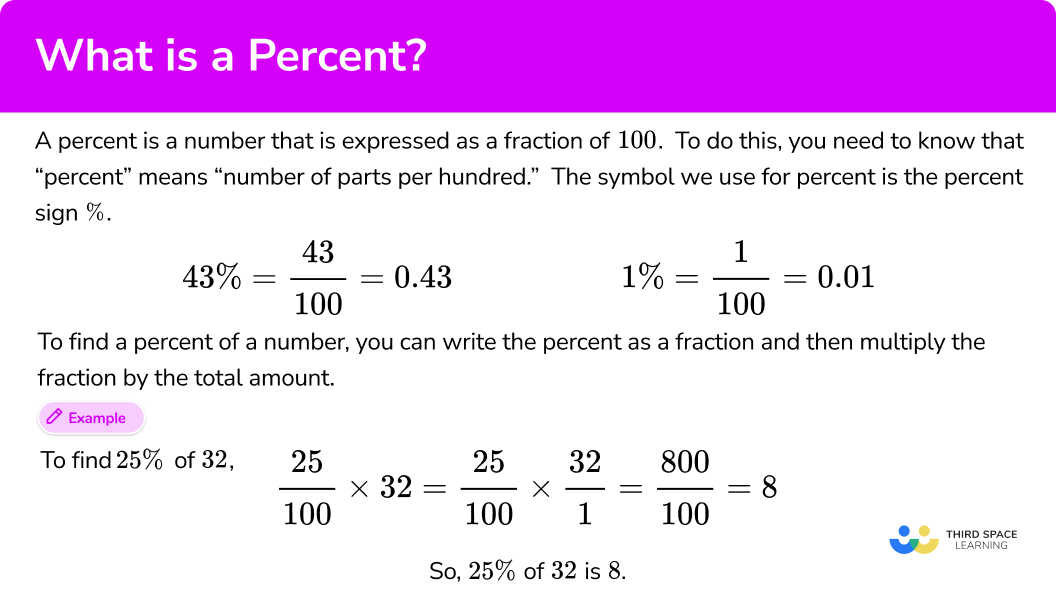
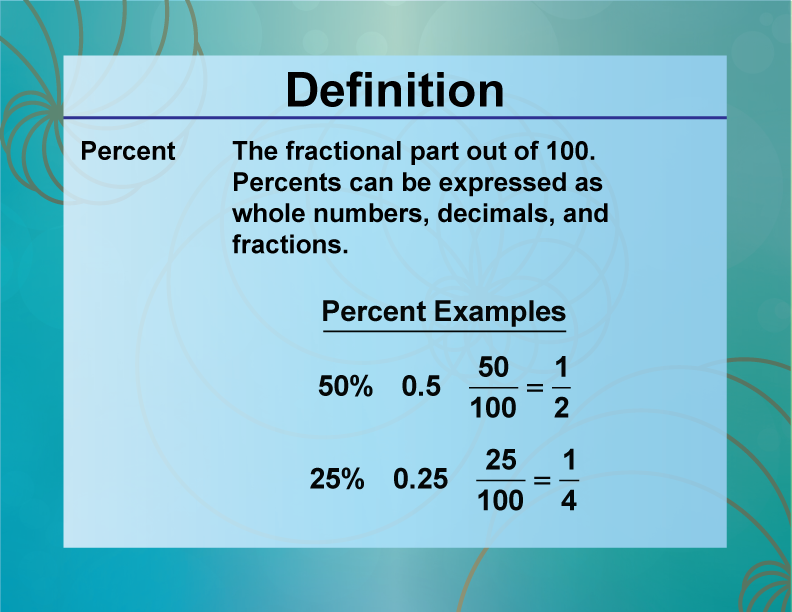
At its core, a percent simply means “per one hundred.” It’s a way of expressing a number as a fraction of 100, providing a standardized basis for comparison. For instance, 50% means 50 out of 100, or one-half. This seemingly simple definition unlocks a powerful analytical framework, allowing us to quantify proportions, track changes, and evaluate performance in a consistent manner. Without the ability to contextualize numbers through percentages, much of the financial landscape would remain a confusing jumble of figures, making sound judgment virtually impossible.
The Ubiquitous Role of Percentages in Personal Finance
For the individual navigating their financial life, percentages are omnipresent, influencing daily decisions and long-term planning alike. Understanding them is the first step towards achieving financial literacy and securing one’s economic future.
Budgeting and Expense Management
One of the most immediate applications of percentages in personal finance is in creating and adhering to a budget. Budgets are essentially allocation plans for your income, often expressed in percentages to simplify decision-making and ensure a balanced approach. For example, the popular 50/30/20 rule suggests allocating 50% of your income to needs, 30% to wants, and 20% to savings and debt repayment. This percentage-based framework offers flexibility and scalability, adapting to varying income levels while maintaining the underlying financial discipline.
Furthermore, tracking expenses often involves looking at what percentage of your income goes towards housing, transportation, food, or entertainment. If housing costs consume 40% of your take-home pay, you immediately understand the significant financial commitment compared to someone paying 20%, even if their absolute dollar amounts differ due to income disparities. Percentages provide a proportional reality check, highlighting areas where spending might be disproportionate and require adjustment to meet financial goals, such as increasing the percentage allocated to savings or investments.
Understanding Debt and Credit
Few areas of personal finance are as heavily reliant on percentages as debt and credit. Interest rates, the cost of borrowing money, are almost universally expressed as percentages. A credit card’s Annual Percentage Rate (APR) dictates how much extra you’ll pay on your outstanding balance over a year. A 20% APR means that for every $100 you owe, you’ll accumulate $20 in interest charges annually if you carry a balance. Understanding this percentage is crucial for comprehending the true cost of debt and motivating timely repayment.
Similarly, mortgages, personal loans, and auto loans all come with associated interest rates. A seemingly small difference, say between a 4% and 4.5% mortgage rate, can translate into thousands of dollars over the lifetime of a loan, underscoring the importance of comparing these percentages carefully. Beyond interest rates, late payment fees, balance transfer fees, and other charges are often expressed as a percentage of the transaction amount, making it vital to read the fine print and grasp the full financial implications.
Savings and Investments
On the flip side of debt, percentages play an equally critical role in savings and investments. The Annual Percentage Yield (APY) on a savings account or Certificate of Deposit (CD) tells you the effective annual rate of return, taking into account compounding interest. For investments, returns are almost exclusively discussed in percentage terms. A stock might have delivered a 15% return last year, or a mutual fund could boast an average annual return of 8% over the past decade.
These percentages allow investors to compare the performance of different assets, gauge the growth of their wealth, and set realistic expectations for future returns. Without them, comparing a $100 gain on a $1,000 investment to a $10,000 gain on a $100,000 investment would be cumbersome. Expressing both as a 10% return makes the comparison instant and meaningful. Furthermore, understanding the power of compounding, where your earnings also start earning, is fundamentally a percentage-driven concept, demonstrating how even modest percentage gains can lead to significant wealth accumulation over time.
Percentages in Business and Entrepreneurship
Beyond personal finance, percentages are the lifeblood of business operations, providing a standardized framework for analyzing performance, making strategic decisions, and communicating financial health to stakeholders.
Profitability Metrics
For businesses of all sizes, understanding profitability is paramount, and percentages are the primary tools for this analysis. Key metrics like Gross Profit Margin, Operating Profit Margin, and Net Profit Margin are all expressed as percentages. Gross Profit Margin, for example, tells you what percentage of revenue is left after deducting the cost of goods sold. A high percentage indicates efficient production and pricing, while a low one might signal issues with costs or pricing strategy.
These percentage-based metrics allow businesses to compare their performance against industry benchmarks, track progress over time, and identify areas for improvement. A startup might aim for a 30% net profit margin, knowing that achieving this target will ensure long-term viability. Investors frequently scrutinize these percentage margins to assess a company’s efficiency and potential for sustained success.
Pricing Strategies and Discounts
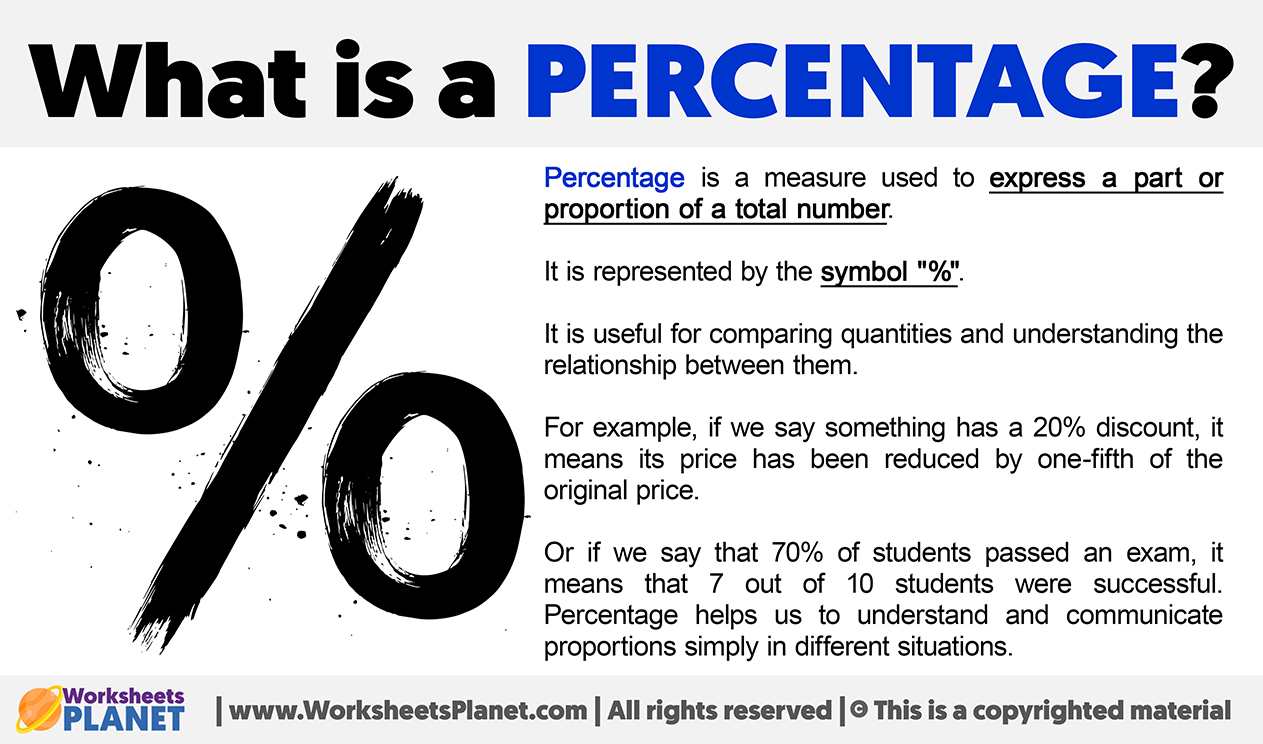
When it comes to pricing products and services, percentages are constantly at play. Markups, the amount added to the cost of a product to determine its selling price, are often calculated as a percentage. A retailer might apply a 50% markup to ensure sufficient revenue to cover overheads and generate profit. Conversely, discounts and promotional offers are almost always advertised as percentages off the original price (e.g., “20% off all items” or “save 15% on your next purchase”).
Understanding how these percentages translate into actual dollar amounts is crucial for both businesses setting prices and consumers making purchasing decisions. Businesses use percentages to calibrate sales targets, forecast revenue impacts of promotions, and manage inventory.
Analyzing Business Growth and Market Share
How fast is a company growing? What portion of the market does it control? These questions are typically answered using percentages. Year-over-year revenue growth, quarter-over-quarter customer acquisition, or average annual growth rates are all percentage-based indicators of a business’s expansion. A company reporting 25% annual revenue growth signifies robust performance, attracting investor interest.
Similarly, market share is expressed as the percentage of total sales or customers a company captures within its industry. A company with a 30% market share is a significant player, while one with 5% indicates a smaller, perhaps niche, presence. These percentages provide context and allow for strategic comparisons against competitors, informing decisions about expansion, product development, and competitive positioning.
Taxation and Deductions
The realm of taxation is another domain where percentages are fundamental. Income tax rates are structured in percentages, often progressive, meaning higher income brackets are taxed at higher percentage rates. Sales tax, property tax, and various other levies are also calculated as percentages of the transaction or asset value. Understanding these percentages is critical for individuals and businesses to accurately calculate their tax liabilities, take advantage of eligible deductions (which might reduce taxable income by a certain percentage), and comply with financial regulations. Tax planning frequently involves optimizing financial decisions to minimize the percentage of income or profit lost to taxes.
Navigating Investment Decisions with Percentages
For investors, percentages are the lingua franca of opportunity, risk, and performance measurement. They provide the quantitative basis for comparing diverse investment options and making strategic portfolio allocations.
Measuring Investment Performance
The performance of an investment—be it a stock, bond, mutual fund, or real estate—is almost universally measured and communicated through percentages. Capital gains or losses are often expressed as a percentage change from the original investment. Dividend yields are the percentage of a company’s share price paid out in dividends annually. Total return encompasses both capital appreciation and income, providing a comprehensive percentage figure for an investment’s performance over a given period.
These percentage metrics allow investors to gauge how well their assets are performing relative to their initial outlay, against benchmarks like market indices (e.g., S&P 500’s percentage gain), and in comparison to alternative investment opportunities. A 10% annual return on a stock is easily understood and comparable to a 3% yield on a bond, enabling direct decision-making.
Risk Assessment and Diversification
Percentages are also crucial in managing investment risk, particularly through diversification. Diversification involves spreading investments across different asset classes (stocks, bonds, real estate), industries, and geographies to mitigate risk. This allocation is almost always defined by percentages. An investor might decide on a 60% stocks, 40% bonds portfolio, adjusting these percentages based on their risk tolerance, age, and financial goals.
Understanding the percentage allocation allows investors to visualize their exposure to different market segments and rebalance their portfolios when asset values shift, maintaining their desired risk profile. If stocks surge, their percentage in the portfolio might increase beyond the target, prompting a sale of some stocks to restore the original percentage allocation.
Understanding Compounding and Time Value of Money
Perhaps one of the most powerful concepts in investing, compounding, is fundamentally about percentages. It’s the process where the returns on an investment are reinvested, leading to future returns being generated on both the initial principal and the accumulated interest. This “interest on interest” effect, driven by a consistent percentage rate of return, demonstrates the exponential growth potential of investments over time.
Even a modest annual return percentage, like 7% or 8%, can transform a small initial investment into a substantial sum over several decades. Understanding how this percentage grows over time highlights the importance of starting early and maintaining consistent contributions to fully harness the time value of money, where a dollar today is worth more than a dollar tomorrow due to its earning potential.
Practical Applications: Calculating and Interpreting Percentages
While the conceptual understanding of percentages is vital, the ability to calculate and interpret them accurately is equally important for navigating financial scenarios.
The Basic Formula: Part / Whole x 100
At its simplest, to calculate a percentage, you divide the “part” by the “whole” and then multiply by 100.
- Example: If you spent $300 on groceries from a $2,000 monthly income, the percentage spent on groceries is ($300 / $2,000) * 100 = 15%. This formula is universally applicable across all financial calculations.
Common Financial Calculations
- Calculating Interest: If you have a $1,000 loan with a 5% annual interest rate, the annual interest is $1,000 * 0.05 = $50.
- Calculating Discounts: A $100 item with a 20% discount saves you $100 * 0.20 = $20. The final price is $100 – $20 = $80.
- Calculating Increases/Decreases: If an investment grew from $5,000 to $5,500, the increase is $500. The percentage increase is ($500 / $5,000) * 100 = 10%.
Avoiding Common Misinterpretations
A common pitfall is confusing “percentage points” with “percentage change.” For instance, if an interest rate increases from 4% to 5%, that’s an increase of 1 percentage point. However, it’s a 25% percentage change (calculated as (5-4)/4 * 100). Misinterpreting this can lead to significant errors in financial analysis, especially when discussing market movements or interest rate adjustments. Always be clear about whether you are referring to an absolute difference in percentage points or a relative percentage change.
The Psychological Impact and Ethical Considerations of Percentages
Beyond their mathematical utility, percentages wield significant psychological influence and carry ethical implications in the financial world.
Framing Effects and Consumer Behavior
How percentages are presented can dramatically affect consumer perception and behavior. A “50% off” discount sounds more appealing than “save $20 on a $40 item,” even though the absolute saving is the same. Similarly, highlighting a low percentage interest rate might obscure high fees or other costs. Financial institutions often leverage these “framing effects” to influence decision-making, emphasizing attractive percentages while downplaying less favorable ones. Understanding this psychological aspect empowers individuals to look beyond the immediate appeal and analyze the full financial picture.
Transparency and Disclosure
Given their profound impact, the transparent and ethical disclosure of percentages is paramount in the financial industry. Regulations often mandate clear presentation of APRs, APYs, fees, and returns to ensure consumers and investors can make informed choices. Misleading or obscured percentage figures can lead to significant financial detriment, underscoring the importance of regulatory oversight and due diligence from individuals. Ethical financial practice demands that all relevant percentages are communicated clearly, completely, and without intent to deceive.
Conclusion
In sum, “what is percent?” is not merely a question about a mathematical notation; it is an inquiry into the foundational language of finance. From the smallest personal budget to the largest corporate investment, percentages provide the indispensable framework for quantification, comparison, and strategic decision-making. Mastering the concept of percent empowers individuals to take control of their personal finances, enables entrepreneurs to accurately gauge business health, and equips investors to navigate the complexities of the market with confidence. In a world increasingly driven by data, a solid grasp of percentages is not just a useful skill—it is a critical competency for financial literacy, security, and ultimate success.
aViewFromTheCave is a participant in the Amazon Services LLC Associates Program, an affiliate advertising program designed to provide a means for sites to earn advertising fees by advertising and linking to Amazon.com. Amazon, the Amazon logo, AmazonSupply, and the AmazonSupply logo are trademarks of Amazon.com, Inc. or its affiliates. As an Amazon Associate we earn affiliate commissions from qualifying purchases.