
In the landscape of modern music production and digital learning, the pentatonic scale remains the most critical architectural framework for guitarists. Whether you are a bedroom producer using a Digital Audio Workstation (DAW) or a live performer leveraging modeling processors, understanding the pentatonic scale is akin to understanding the source code of a software program. It is a five-note system that strips away the complexities of traditional heptatonic scales to provide a versatile, “fail-proof” map of the fretboard. In the digital age, mastering this scale is no longer just about finger memory; it is about integrating music theory with the powerful technological tools available to the modern musician.

The Digital Geometry of the Pentatonic Scale
The word “pentatonic” is derived from the Greek word pente, meaning five. Unlike the standard major or minor scales that consist of seven notes, the pentatonic scale removes the “avoid notes”—the intervals that often create harsh dissonance. From a technical perspective, this makes the pentatonic scale an ideal candidate for algorithmic music generation and digital quantization.
The Binary Logic of Major and Minor Pentatonics
In the digital realm, we often view musical choices through a binary lens: tension and resolution. The pentatonic scale facilitates this by offering two primary “modes”:
- The Minor Pentatonic: This is the “industry standard” for rock, blues, and electronic fusion. It consists of the Root, Flat 3rd, 4th, 5th, and Flat 7th. In software terms, this is your default setting for soloing over minor progressions.
- The Major Pentatonic: Consisting of the Root, 2nd, 3rd, 5th, and 6th, this scale offers a brighter, more melodic profile. It is frequently used in country, pop, and upbeat indie tracks.
Frequency Mapping and MIDI Integration
When you input guitar lines into a DAW like Ableton Live or Logic Pro, the pentatonic scale simplifies the MIDI grid. Because the scale lacks the half-step intervals (minor seconds) found in diatonic scales, the “collision” of frequencies is minimized. This makes it easier for pitch-correction software and MIDI-to-Audio converters to accurately track your playing. For tech-focused guitarists, the pentatonic scale represents the most efficient data set for creating catchy, resonant melodies that translate well across digital speakers.
Leveraging AI and Software for Pattern Recognition
The traditional method of learning scales involved hours of rote memorization. Today, the integration of Artificial Intelligence (AI) and specialized software has transformed how guitarists internalize the five positions of the pentatonic scale.
The Five Positions as Data Modules
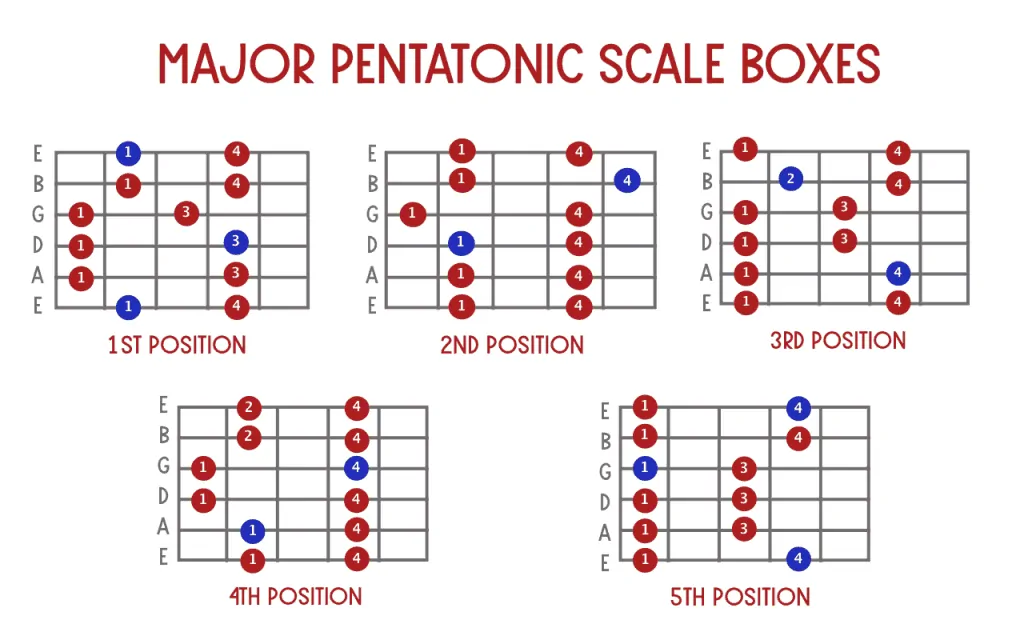
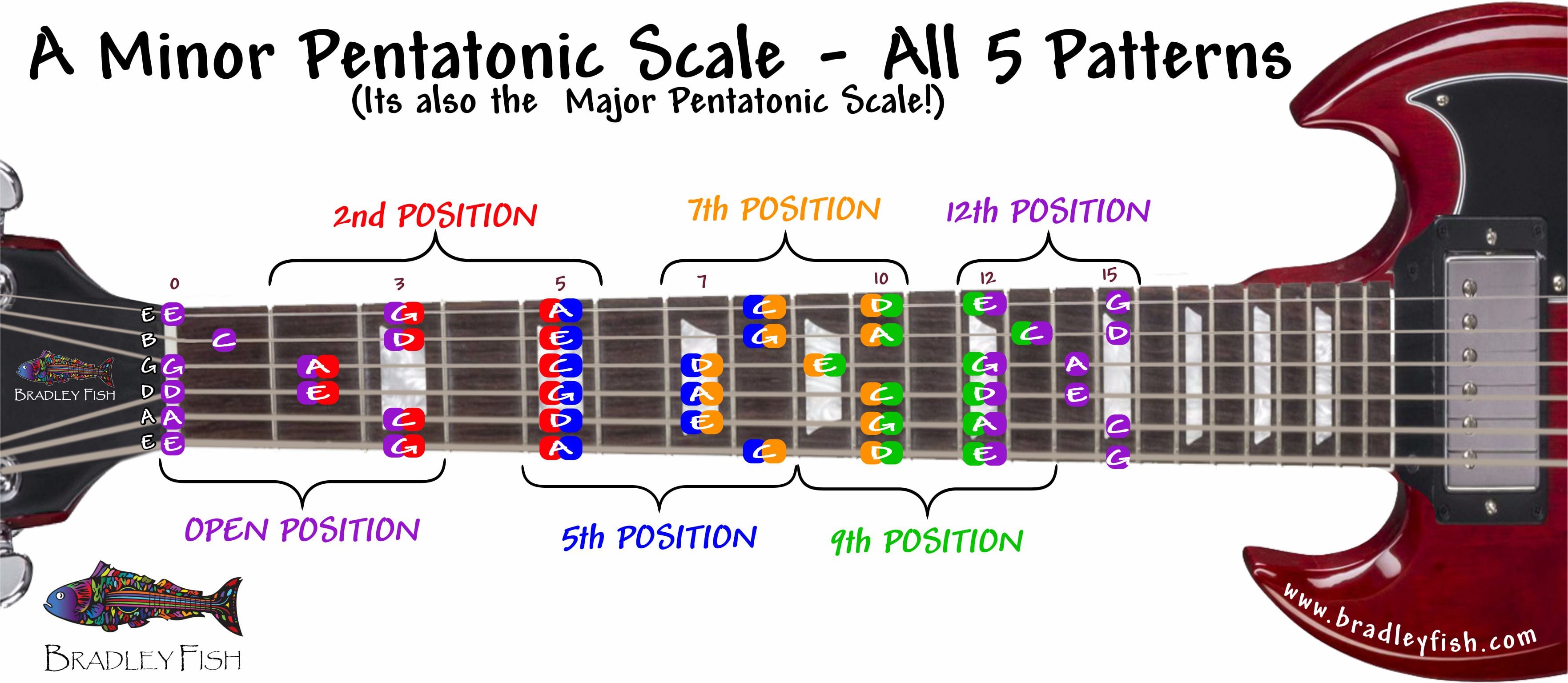
To cover the entire neck, the pentatonic scale is broken down into five distinct “shapes” or positions. In modern pedagogical apps, these are treated as modular blocks.
- Position 1 (The E-Shape): The most recognizable box pattern, starting on the root note of the low E string.
- Position 2 (The D-Shape): A more melodic, higher-register extension.
- Position 3 (The C-Shape): Connecting the middle of the fretboard.
- Position 4 (The A-Shape): Often used for sliding licks and fluid transitions.
- Position 5 (The G-Shape): The final bridge back to the octave of Position 1.
AI-Powered Feedback Tools
Platforms like Yousician or Fender Play utilize audio recognition algorithms to provide real-time feedback. When you practice a pentatonic run, the software “listens” to the frequency of your notes and compares them against a digital template. This instantaneous data feedback loop allows for faster neural mapping. Furthermore, AI tools like ChatGPT or specialized music LLMs can now generate custom practice routines, suggesting specific pentatonic sequences based on your previous performance data, effectively acting as a digital metronome and coach.
Visualizing the Fretboard with Digital Overlays
For the modern learner, hardware like the Fretlight guitar or LED-equipped fretboards utilizes software to light up pentatonic shapes directly on the neck. This eliminates the “translation lag” between looking at a screen and looking at your fingers. By syncing these LEDs with a DAW, a guitarist can see exactly which pentatonic notes are “safe” within a specific key change in real-time.
The Pentatonic Scale in the Modern Production Workflow
The application of the pentatonic scale extends far beyond the physical instrument. In the world of digital music production, these five notes are the foundation of many iconic synth leads and sampled hooks.
Using Plugins to Enhance Pentatonic Phrasing
Modern plugins such as Scaler 2 or Captain Chords allow producers to lock their MIDI input to a specific pentatonic scale. This is a game-changer for guitarists who use MIDI pickups or MPE (MIDI Polyphonic Expression) controllers. By constraining the input to the pentatonic scale, you ensure that every note triggered—whether it’s a Moog synth lead or a cinematic string patch—remains harmonically consistent with the guitar’s output.
Digital Signal Processing (DSP) and Tone Shaping
When playing pentatonic licks through digital modelers like the Neural DSP Quad Cortex or Kemper Profiler, the simplicity of the scale allows the “tone” to breathe. Pentatonic playing often involves heavy use of string bends, vibrato, and slides. Digital processors are designed to capture the nuances of these articulations. Because the pentatonic scale provides a clear harmonic roadmap, it allows the DSP to prioritize the “feel” and “dynamics” of the note over complex harmonic resolution, resulting in a punchier, more professional mix.
Quantization and Rhythmic Precision
One of the challenges of recording guitar is timing. In a DAW, pentatonic riffs are exceptionally easy to quantize because they often follow a rhythmic “pocket” common in 4/4 time. Software like Melodyne or Flex Time can align pentatonic notes to the grid with minimal artifacts, precisely because the scale’s intervals are wide and distinct. This makes the pentatonic scale the most “edit-friendly” scale for modern digital production.
Future Tech: AR, VR, and Gamified Mastery
As we look toward the future of music technology, the way we interact with the pentatonic scale is moving into immersive environments. The transition from 2D screens to 3D interfaces is redefining “muscle memory.”
Augmented Reality (AR) Instruction
Imagine wearing a pair of AR glasses—such as the Apple Vision Pro or Meta Quest—while holding your guitar. Through AR, the pentatonic scale can be projected as a three-dimensional overlay floating above the fretboard. Instead of reading a static PDF, you are following a “ghost” of a professional guitarist’s fingers, or chasing digital “notes” that fall toward your strings in a gamified interface. This tech reduces the cognitive load required to memorize the five positions, allowing the brain to focus on creative expression rather than rote memorization.
Virtual Reality (VR) Jam Sessions
VR platforms are now enabling musicians from across the globe to jam in virtual studios with near-zero latency. In these environments, the pentatonic scale serves as the “universal language.” Since it is virtually impossible to play a “wrong” note within the pentatonic framework over a standard blues or rock progression, it becomes the default setting for collaborative improvisation in virtual spaces.
The Gamification of Music Theory
The “Guitar Hero” generation has matured, and the technology that powered those games is now being applied to real instruments. Gamified software turns pentatonic drills into high-score challenges. By tracking speed, accuracy, and note duration, these apps turn the “grind” of scale practice into a dopamine-driven tech experience. For the tech-savvy guitarist, this data-driven approach to mastery is far more efficient than traditional methods.
Conclusion: The Synergy of Tradition and Technology
The pentatonic scale is not a relic of the past; it is a vital component of the modern digital music ecosystem. Its simplicity makes it the perfect candidate for software integration, AI analysis, and digital production. By viewing the pentatonic scale through the lens of technology—as a data set, a MIDI constraint, or an AR overlay—guitarists can bridge the gap between traditional musicianship and the cutting edge of digital innovation.
Whether you are automating a solo in a DAW, using an app to sharpen your fretboard visualization, or experimenting with AI-generated riffs, the pentatonic scale remains your most powerful tool. In an era where technology can do almost anything, the five notes of the pentatonic scale provide the essential structure needed to turn digital noise into meaningful, resonant music. Mastering this scale is the first step in becoming not just a guitar player, but a high-tech musical architect.
aViewFromTheCave is a participant in the Amazon Services LLC Associates Program, an affiliate advertising program designed to provide a means for sites to earn advertising fees by advertising and linking to Amazon.com. Amazon, the Amazon logo, AmazonSupply, and the AmazonSupply logo are trademarks of Amazon.com, Inc. or its affiliates. As an Amazon Associate we earn affiliate commissions from qualifying purchases.