
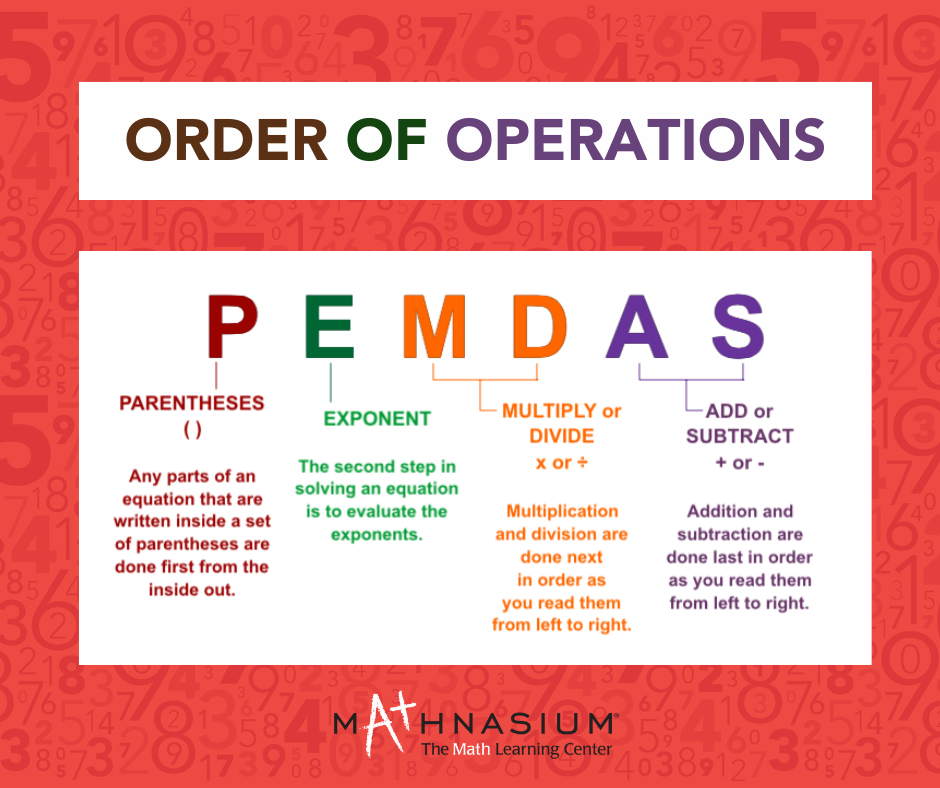
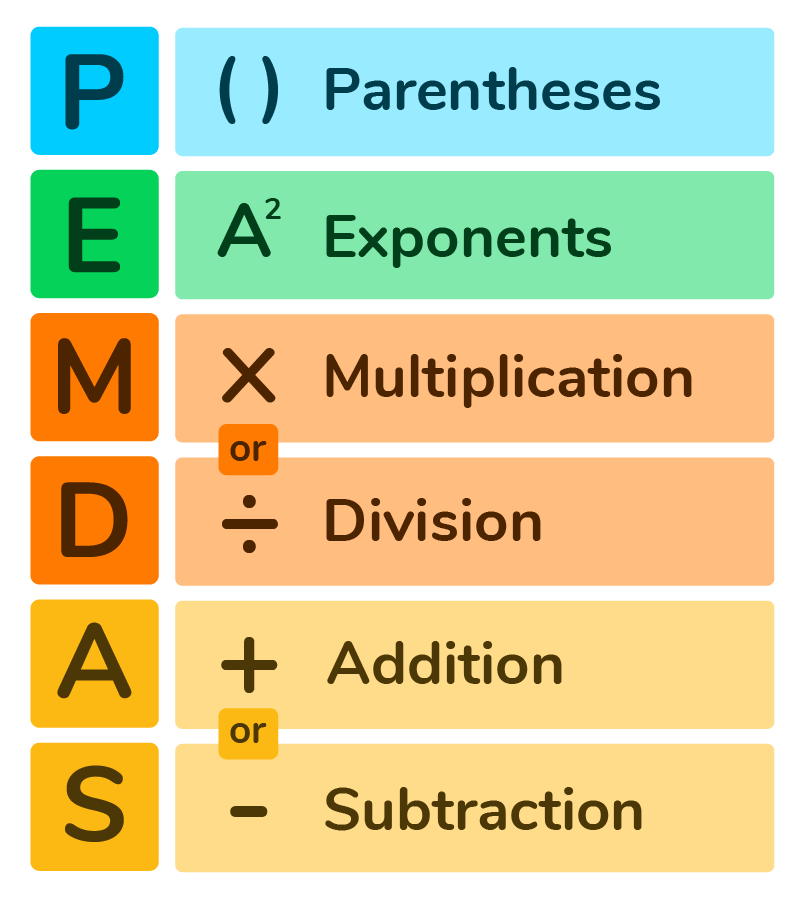
In the world of computer science and software engineering, the phrase “order of operations” is more than a middle-school memory; it is the fundamental syntax upon which entire digital architectures are built. PEMDAS—an acronym for Parentheses, Exponents, Multiplication and Division (left to right), and Addition and Subtraction (left to right)—serves as the logical blueprint for how machines interpret human intent. While a student uses PEMDAS to solve a classroom equation, a software developer relies on it to ensure that a financial algorithm, a physics engine, or a machine learning model yields predictable, accurate results.
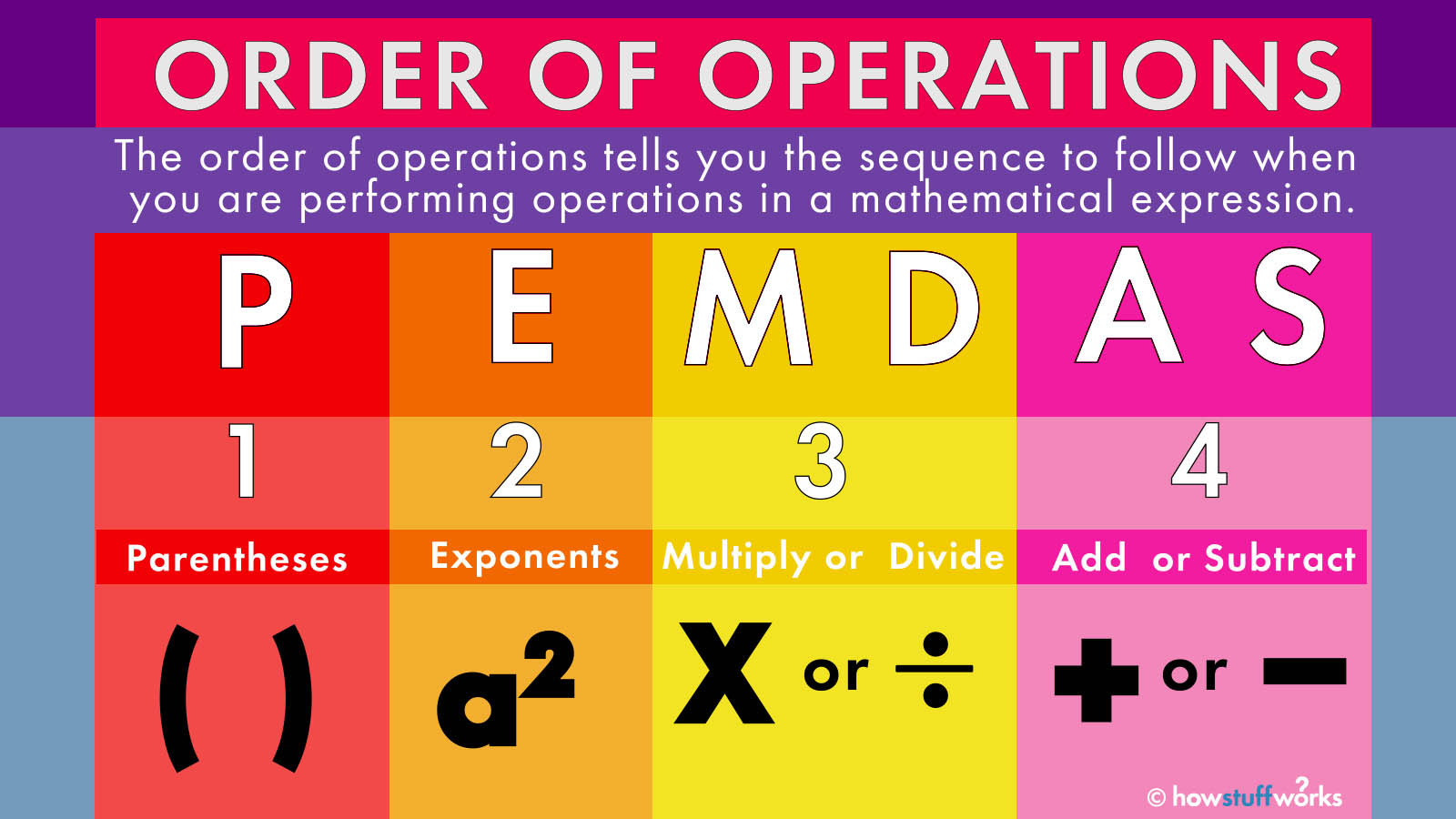
As we delve deeper into the intersection of mathematics and technology, understanding PEMDAS is essential for grasping how compilers parse code and how complex algorithms maintain integrity. This article explores the technical nuances of PEMDAS, its implementation in programming languages, and its critical role in the evolution of artificial intelligence.
The Shunting-Yard Algorithm: How Compilers Interpret PEMDAS
At the heart of every high-level programming language—be it Python, C++, or Java—lies a compiler or an interpreter that must translate human-readable mathematical expressions into machine code. The machine doesn’t inherently “know” to perform multiplication before addition; it must be programmed to follow the hierarchy of PEMDAS.
Understanding Operator Precedence and Associativity
In tech, PEMDAS is formally referred to as “operator precedence.” However, precedence alone isn’t enough for a machine. Compilers also require “associativity” rules to handle operators of the same rank, such as multiplication and division. While PEMDAS tells us these are equal, the software must decide whether to process them from left-to-right or right-to-left.
Most modern languages utilize a left-associative approach for these operations. Without this standardized logic, two different computers might interpret the same line of code and produce different outputs, leading to catastrophic software failures in critical systems like banking or aerospace.
The Role of Abstract Syntax Trees (ASTs)
When a developer writes a complex equation in a script, the software generates an Abstract Syntax Tree (AST). This is a tree-like representation of the abstract syntactic structure of source code. In an AST, PEMDAS is represented through the depth of the branches. Operations with higher precedence (like Parentheses and Exponents) are placed deeper in the tree, ensuring they are evaluated first as the machine “climbs” back up. This structural implementation of PEMDAS allows software to handle nested calculations with billions of variables in real-time.
Dijkstra’s Shunting-Yard Algorithm
One of the most significant technological applications of PEMDAS is the Shunting-Yard algorithm, developed by Edsger Dijkstra. This algorithm is used specifically to parse mathematical expressions specified in “infix” notation (how humans write) into “Reverse Polish Notation” (RPN) or an AST. By using a stack-based approach, the Shunting-Yard algorithm ensures that the computer strictly adheres to PEMDAS, effectively acting as the digital gatekeeper for mathematical logic in software.
Precision in Programming: Why PEMDAS Nuances Matter for Developers
While the core tenets of PEMDAS are universal, the way different technology stacks handle these operations can vary. For developers, a deep understanding of these nuances is the difference between a functional application and one riddled with logical bugs.
Floating-Point Arithmetic and Calculation Errors
In software development, mathematical precision is often limited by the way hardware stores numbers. This is known as floating-point arithmetic. When PEMDAS is applied to extremely large or infinitesimally small numbers—common in data science and 3D rendering—the order in which operations are performed can actually change the result due to rounding errors.
If a developer adds a series of small numbers before a large one (violating a strict left-to-right PEMDAS approach for the sake of optimization), the machine might “drop” the smaller values. Technical mastery involves knowing when to override standard PEMDAS logic with specific libraries (like Python’s Decimal or NumPy) to maintain financial or scientific accuracy.
Language-Specific Operator Precedence Tables
Every major programming language has an “Operator Precedence Table.” While these tables are heavily based on PEMDAS, they often include additional layers relevant to tech, such as bitwise operators, logical AND/OR gates, and assignment operators.
For instance, in JavaScript, the exponentiation operator (**) has right-associativity, which is a departure from the standard left-to-right rule taught in basic mathematics. A developer who relies solely on 5th-grade math without consulting the tech-specific documentation for their language risks creating significant logical errors in their code.
The Impact of Parentheses on Code Readability
In professional software engineering, the “P” in PEMDAS (Parentheses) is often used even when not mathematically necessary. This is known as “defensive programming.” By explicitly wrapping operations in parentheses, developers ensure that the code is readable for other humans and that no compiler quirks can misinterpret the intent. In the tech industry, “clear is better than clever,” and the strategic use of parentheses is a hallmark of high-quality, maintainable code.
Data Science and the Architecture of Artificial Intelligence
The explosion of AI and machine learning has brought the importance of PEMDAS into a new light. Neural networks, the engines behind tools like ChatGPT and Midjourney, are essentially massive, multi-layered mathematical functions.
PEMDAS in Neural Network Forward Propagation
During the “forward propagation” phase of a neural network, data passes through layers of “neurons.” Each neuron performs a calculation: $(Weight times Input) + Bias$. This is a direct application of the “M” and “A” in PEMDAS. When you scale this across billions of parameters, the order of operations becomes the backbone of the entire model. If the underlying framework (such as TensorFlow or PyTorch) did not strictly adhere to these mathematical hierarchies, the model would fail to learn or produce coherent patterns.
Vectorization and Matrix Operations
In data science, we rarely perform calculations on single numbers. Instead, we use vectors and matrices. This introduces a concept called “Vectorized PEMDAS.” Tech tools like NumPy allow developers to apply the order of operations across entire datasets simultaneously. This parallel processing is what allows AI to analyze massive amounts of data in seconds. However, the logic remains the same: the software must determine which matrix transformation (Exponents vs. Multiplication) happens first to ensure the spatial integrity of the data.
Prompt Engineering and Logical Sequencing
Interestingly, the logic of PEMDAS has even migrated into the way we interact with AI through “Prompt Engineering.” When giving complex instructions to an LLM (Large Language Model), users often use a pseudo-PEMDAS structure—grouping instructions in brackets or defining sequences—to ensure the AI processes the most important context first. The “order of operations” in a prompt determines whether the output is a hallucination or a highly accurate response.
Debugging the Logical Flow: Avoiding Common Calculation Errors in App Development
In the lifecycle of software development, debugging mathematical logic is one of the most time-consuming tasks. Logical errors involving PEMDAS are particularly insidious because the code will often “run” without crashing, but it will produce the wrong data.
The Danger of Implicit Conversion
Many modern gadgets and apps rely on user input that must be converted from text to numbers. If an app takes two inputs, “5” and “10,” and the developer attempts to perform a PEMDAS-governed calculation without properly casting these strings to integers, the “Addition” operation might accidentally become “String Concatenation,” resulting in “510” instead of “15.” This highlights that in tech, PEMDAS can only function correctly if the data types are as precise as the logic.
Unit Testing for Mathematical Integrity
To combat PEMDAS-related errors, tech companies employ “Unit Testing.” This involves writing small scripts that test specific mathematical functions within an app to ensure they return the expected result. For example, a fintech app will have hundreds of tests specifically designed to ensure that interest rate calculations strictly follow the order of operations across different currencies and time zones.
Optimization vs. Accuracy
Sometimes, in pursuit of software speed (latency optimization), developers might be tempted to simplify equations. However, reordering an equation to make it run faster can inadvertently violate the PEMDAS structure required for that specific business logic. Modern compilers are now smart enough to perform “constant folding”—where they pre-calculate the PEMDAS-compliant parts of an equation before the code even runs—to provide both speed and accuracy.
The Future of Computational Logic
As we move toward the era of quantum computing, the way we perceive PEMDAS may evolve, but the core necessity of a logical hierarchy remains. Quantum bits (qubits) operate on principles of superposition and entanglement, yet the algorithms that control them still require a sequential logic to be useful to human observers.
PEMDAS is not just a rule for classrooms; it is the “grammar” of the technological world. From the simplest mobile app to the most complex AI research, the order of operations ensures that our digital world remains consistent, predictable, and functional. For anyone working in the tech niche, mastering this fundamental logic is not just a mathematical requirement—it is a prerequisite for building the future.
aViewFromTheCave is a participant in the Amazon Services LLC Associates Program, an affiliate advertising program designed to provide a means for sites to earn advertising fees by advertising and linking to Amazon.com. Amazon, the Amazon logo, AmazonSupply, and the AmazonSupply logo are trademarks of Amazon.com, Inc. or its affiliates. As an Amazon Associate we earn affiliate commissions from qualifying purchases.