
Partial knee replacement (PKR), also known as unicompartmental knee arthroplasty, represents a sophisticated convergence of surgical precision and advanced materials science, offering a less invasive alternative to total knee replacement for specific patient profiles. While fundamentally a medical procedure, its efficacy, increasing prevalence, and continuous refinement are inextricably linked to cutting-edge technological advancements in biomaterials, imaging, surgical robotics, and digital planning tools. Understanding PKR from a technological perspective reveals a fascinating narrative of innovation aimed at restoring function with unparalleled accuracy and minimizing patient impact.
The Technological Core: Implant Design and Biomaterials
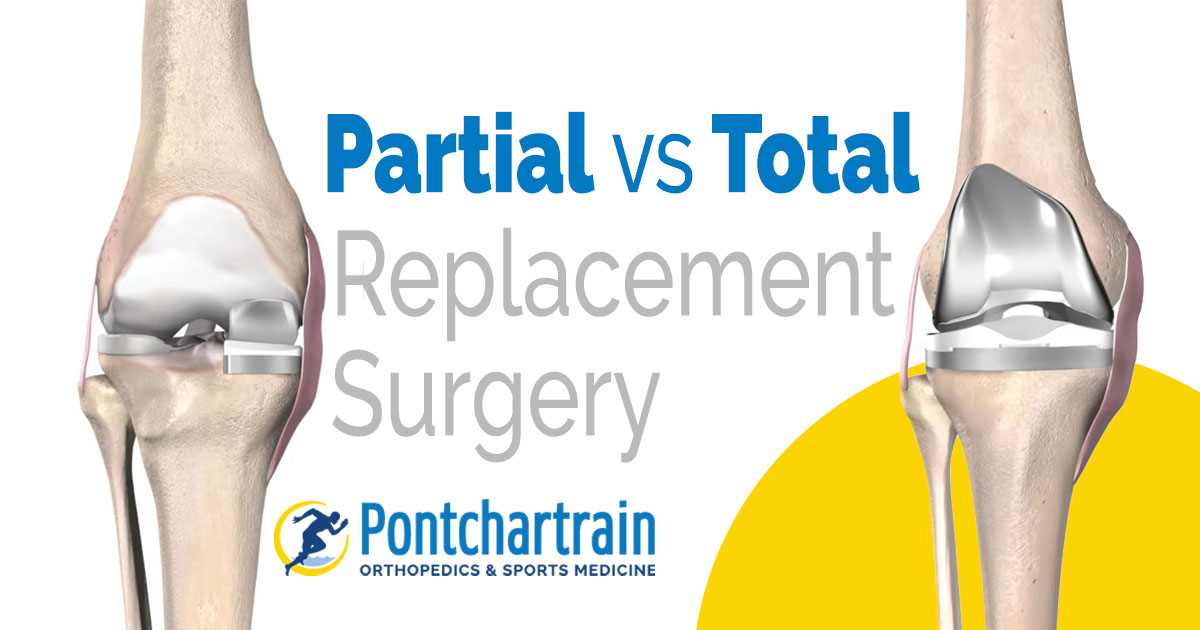
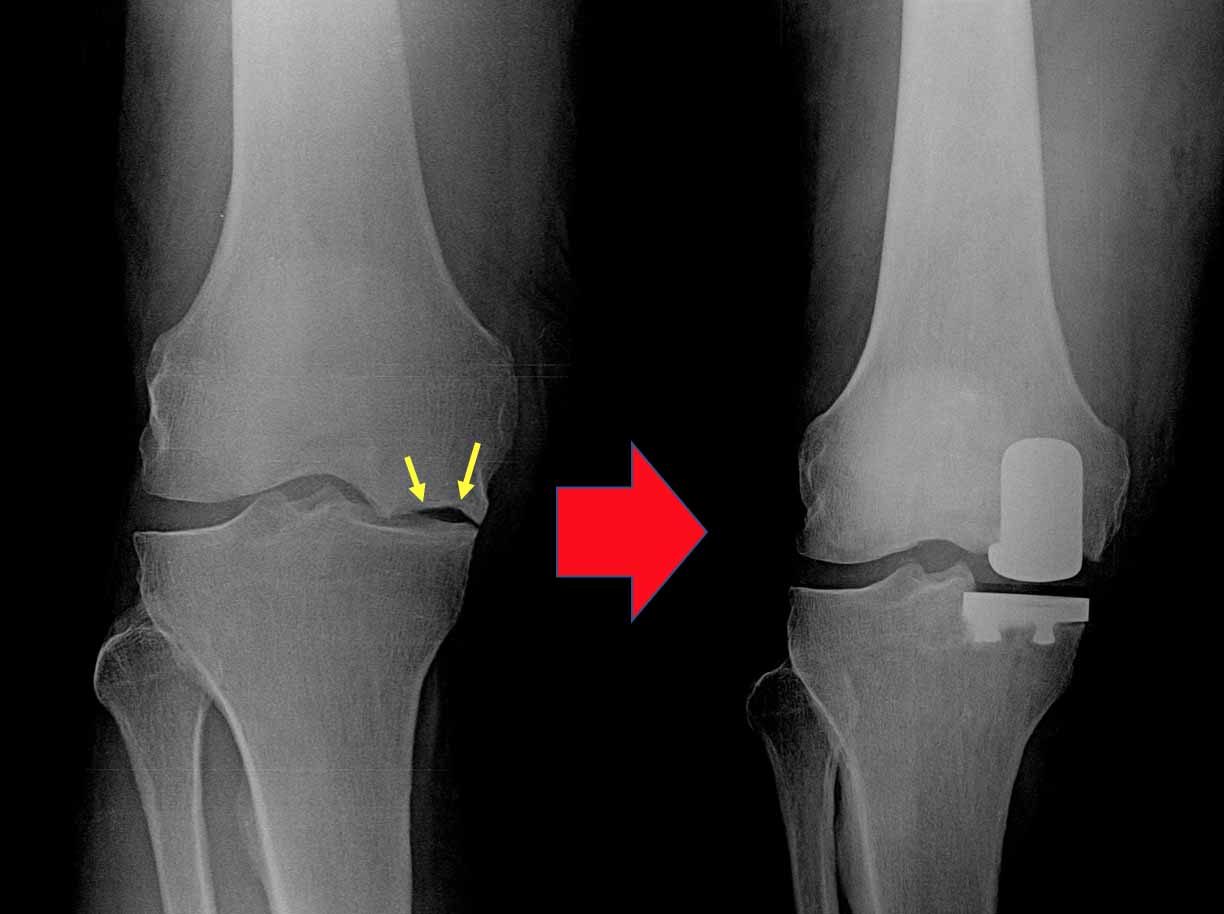
The very possibility of partial knee replacement hinges on the evolution of highly specialized implants, engineered to mimic the natural mechanics of the knee joint. Unlike total knee replacement which resurfaces all three compartments of the knee (medial, lateral, and patellofemoral), PKR focuses only on the damaged compartment, typically the medial side, preserving healthy cartilage, bone, and ligaments in the other areas. This targeted approach demands implants of exceptional design and material integrity.

Evolution of Implant Materials
Early joint replacement implants faced challenges with wear, corrosion, and biocompatibility. However, decades of research and development in materials science have led to robust, long-lasting solutions. The primary materials utilized in PKR implants include:
- Cobalt-Chromium Alloys: These metals are renowned for their high strength, wear resistance, and corrosion resistance. They form the femoral and tibial components, providing a smooth articulation surface.
- Titanium Alloys: Offering excellent biocompatibility and a favorable strength-to-weight ratio, titanium is often used for the backing of tibial components, sometimes porous-coated to encourage bone ingrowth for secure fixation.
- Ultra-High Molecular Weight Polyethylene (UHMWPE): This advanced polymer serves as the bearing surface between the metal components. Modern UHMWPE formulations, often cross-linked, exhibit significantly enhanced wear resistance compared to earlier versions, extending implant longevity. The processing of UHMWPE to optimize its molecular structure and crystalline regions is a testament to polymer engineering, reducing particle generation which can lead to osteolysis (bone loss around the implant).
- Ceramics: While less common in PKR than in other joint replacements, ceramic components, or ceramicized surfaces on metal, are explored for their extreme hardness and low friction, further enhancing wear characteristics.
The design of these implants is a marvel of biomechanical engineering. Components are meticulously shaped through advanced manufacturing processes, often involving precision machining and casting, to articulate smoothly, replicate natural knee kinematics, and distribute forces optimally across the joint. Modularity in design allows surgeons to select appropriately sized components for individual patient anatomy, ensuring a precise fit. Surface treatments, such as hydroxyapatite coatings, are sometimes applied to promote osteointegration, where bone grows directly onto the implant surface, providing durable biological fixation.
Advancements in Biomechanics and Customization
Contemporary implant designs are not merely about replacing damaged tissue; they are about restoring natural motion. Engineers utilize sophisticated finite element analysis (FEA) and computational fluid dynamics (CFD) to model stress distribution, wear patterns, and fluid dynamics within the joint. This data informs designs that minimize impingement, optimize range of motion, and enhance component longevity.
Furthermore, the concept of patient-specific instrumentation (PSI) represents a significant technological leap. Derived from pre-operative CT or MRI scans, custom surgical guides are 3D-printed. These guides fit precisely onto the patient’s bone, indicating the exact cuts required for implant placement. While not the implant itself, PSI is a critical technological adjunct that enables greater precision in standard implant placement, pushing the boundaries towards personalized medicine in orthopedics.
Precision Engineering: Robotic-Assisted and Computer-Navigated Surgery
The success of a partial knee replacement is heavily dependent on the accurate alignment and balanced tension of the implants. Even the most advanced implants will fail prematurely if not positioned correctly. This is where surgical technology, specifically robotic-assisted systems and computer navigation, plays a transformative role.
Robotic-Assisted Surgery (RAS)
Robotic platforms, such as MAKOplasty and ROSA Knee, have revolutionized orthopedic surgery by bringing unparalleled precision to the operating room. These systems integrate advanced imaging, sophisticated software, and robotic manipulators to guide the surgeon.
- Pre-operative Planning: Before surgery, a 3D model of the patient’s knee is created from a CT scan. The surgeon uses this model to digitally plan the optimal size, position, and alignment of the implant, virtually performing the surgery. This allows for detailed planning of bone resections and ligament balancing.
- Intra-operative Guidance: During surgery, optical trackers are attached to the patient’s femur and tibia, providing the robotic system with real-time feedback on the knee’s position and movement. The surgeon’s pre-operative plan is translated into a dynamic, interactive guide.
- Haptic Feedback and Controlled Resection: The robotic arm, either actively cutting or providing haptic (tactile) guidance to the surgeon’s hand, ensures bone resections are performed exactly according to the plan. The system creates a virtual “boundary” which the surgeon cannot cross, protecting healthy tissue and preventing over-resection. This level of control significantly enhances the accuracy of implant placement, crucial for restoring natural knee kinematics and extending implant lifespan.
The advantages of RAS in PKR include improved implant positioning accuracy, more precise soft tissue balancing, and potentially smaller incisions due to the streamlined nature of robotic guidance, leading to reduced post-operative pain and faster recovery for some patients.
Computer Navigation Systems
While distinct from full robotic systems, computer navigation systems also employ digital technology to enhance surgical accuracy. These systems use infrared cameras to track the position of instruments and the patient’s anatomy in real-time, displaying this information on a monitor in the operating room.
- Real-time Feedback: Surgeons receive live visual feedback on bone cuts, alignment, and soft tissue tension, allowing for immediate adjustments.
- Avoiding Radiation: Unlike robotic systems that often require a pre-operative CT scan, some navigation systems can use intra-operative registration points, potentially reducing patient exposure to radiation.
- Enhanced Precision: Although not providing the direct haptic guidance of a robotic arm, computer navigation significantly improves upon traditional manual alignment techniques, offering a higher degree of precision in implant placement.
Both robotic-assisted and computer-navigated surgery underscore a fundamental shift in orthopedic practice, moving from purely manual techniques to digitally augmented procedures where precision is paramount.
Digital Innovations for Pre-operative Planning and Post-operative Monitoring
Beyond the operating room, digital technologies are playing an increasingly critical role in the entire patient journey for PKR, from diagnosis and planning to rehabilitation.
Advanced Imaging and 3D Planning Software
High-resolution MRI and CT scans are foundational for PKR. These imaging modalities provide detailed anatomical information that allows surgeons to accurately assess the extent of cartilage damage, bone loss, and overall knee alignment. Specialized 3D planning software integrates these images to create virtual models of the patient’s knee. Surgeons can rotate these models, analyze various angles, and simulate different implant sizes and positions before ever making an incision. This meticulous digital planning minimizes surprises during surgery and optimizes outcomes.
Furthermore, software developments in biomechanical analysis can predict the impact of various surgical plans on the patient’s gait and long-term joint health, offering an unprecedented level of predictive capability.
Wearable Technology and Remote Monitoring
The recovery phase of PKR is equally important, and technology is increasingly extending its reach into post-operative care. Wearable sensors and smart devices are emerging tools for remote patient monitoring. These devices can track metrics such as:
- Range of Motion: Sensors embedded in knee braces or worn directly on the limb can provide real-time data on the degree of knee flexion and extension.
- Activity Levels: Accelerometers and gyroscopes can quantify patient activity, steps taken, and compliance with weight-bearing instructions.
- Gait Analysis: Advanced sensors can analyze subtle changes in gait patterns, helping physical therapists identify issues and tailor rehabilitation programs.
This data, transmitted to healthcare providers, allows for continuous monitoring of patient progress, early identification of potential complications, and timely intervention without requiring frequent in-person clinic visits. It empowers patients by giving them objective feedback on their recovery, fostering adherence to rehabilitation protocols.
The Technological Advantage: Patient Outcomes and Future Frontiers
The integration of advanced biomaterials, robotic surgery, computer navigation, and digital planning tools has profoundly elevated the standard of care for partial knee replacement. The technological advantage translates directly into tangible benefits for patients:
- Enhanced Precision and Alignment: Leading to better biomechanical function, reduced pain, and potentially longer implant survival.
- Minimally Invasive Approaches: Often allowing for smaller incisions, less soft tissue disruption, reduced blood loss, and faster initial recovery times.
- Preservation of Native Tissue: By precisely targeting only the diseased compartment, PKR preserves healthy bone, cartilage, and ligaments, which can contribute to a more natural-feeling knee post-surgery compared to total knee replacement for suitable candidates.
- Personalized Treatment: The ability to plan and execute surgery with patient-specific data moves orthopedics closer to a truly personalized medicine approach.
Looking ahead, the technological landscape of PKR is ripe for further innovation. Artificial intelligence (AI) and machine learning are poised to analyze vast datasets of patient outcomes, identifying optimal treatment pathways and predicting individual patient responses. Advanced manufacturing techniques, such as 3D printing, could enable the creation of truly custom implants tailored to the unique anatomy and biomechanics of each patient. Further integration with virtual reality (VR) and augmented reality (AR) in surgical planning and execution could provide surgeons with even more immersive and precise guidance. The future of partial knee replacement is undoubtedly a future driven by an accelerating pace of technological advancement.
aViewFromTheCave is a participant in the Amazon Services LLC Associates Program, an affiliate advertising program designed to provide a means for sites to earn advertising fees by advertising and linking to Amazon.com. Amazon, the Amazon logo, AmazonSupply, and the AmazonSupply logo are trademarks of Amazon.com, Inc. or its affiliates. As an Amazon Associate we earn affiliate commissions from qualifying purchases.