
In the vast and intricate world of audio engineering, precise control over sound frequencies is paramount. From refining a podcast’s vocal clarity to perfecting a symphonic orchestra’s sonic balance, equalization (EQ) is an indispensable tool. Among the various forms of EQ, the parametric equalizer stands out as a titan of precision, offering unparalleled control over the tonal characteristics of any audio signal. It represents a significant leap in sound sculpting technology, moving beyond simpler adjustments to offer surgical accuracy that has become a cornerstone of modern sound production.
The Foundation of Audio Sculpting: Understanding Equalization
At its core, equalization is the process of adjusting the balance between different frequency components within an audio signal. Imagine sound as a spectrum of frequencies, ranging from the rumble of a bass guitar at the low end to the shimmer of cymbals at the high end. An EQ allows engineers and producers to either boost (increase) or cut (decrease) specific bands of these frequencies, thereby altering the timbre or “color” of the sound. This seemingly simple concept is fundamental to making instruments sit well in a mix, removing unwanted noises, or enhancing the aesthetic quality of a recording.
Beyond Graphic EQs
Before delving into the specifics of parametric EQs, it’s helpful to understand what it isn’t. Simpler forms of equalization, such as graphic EQs, provide a fixed number of frequency bands, each with a corresponding slider to adjust its gain. While effective for broad tonal adjustments, graphic EQs lack the granular control often required in professional audio. They offer a “snapshot” view and adjustment of the frequency spectrum, but without the ability to fine-tune the center frequency or the width of the affected band. This limitation highlights the need for a more sophisticated tool, which the parametric EQ meticulously addresses, embodying a higher level of technological sophistication in audio processing.
Deconstructing the Parametric EQ: Precision Controls
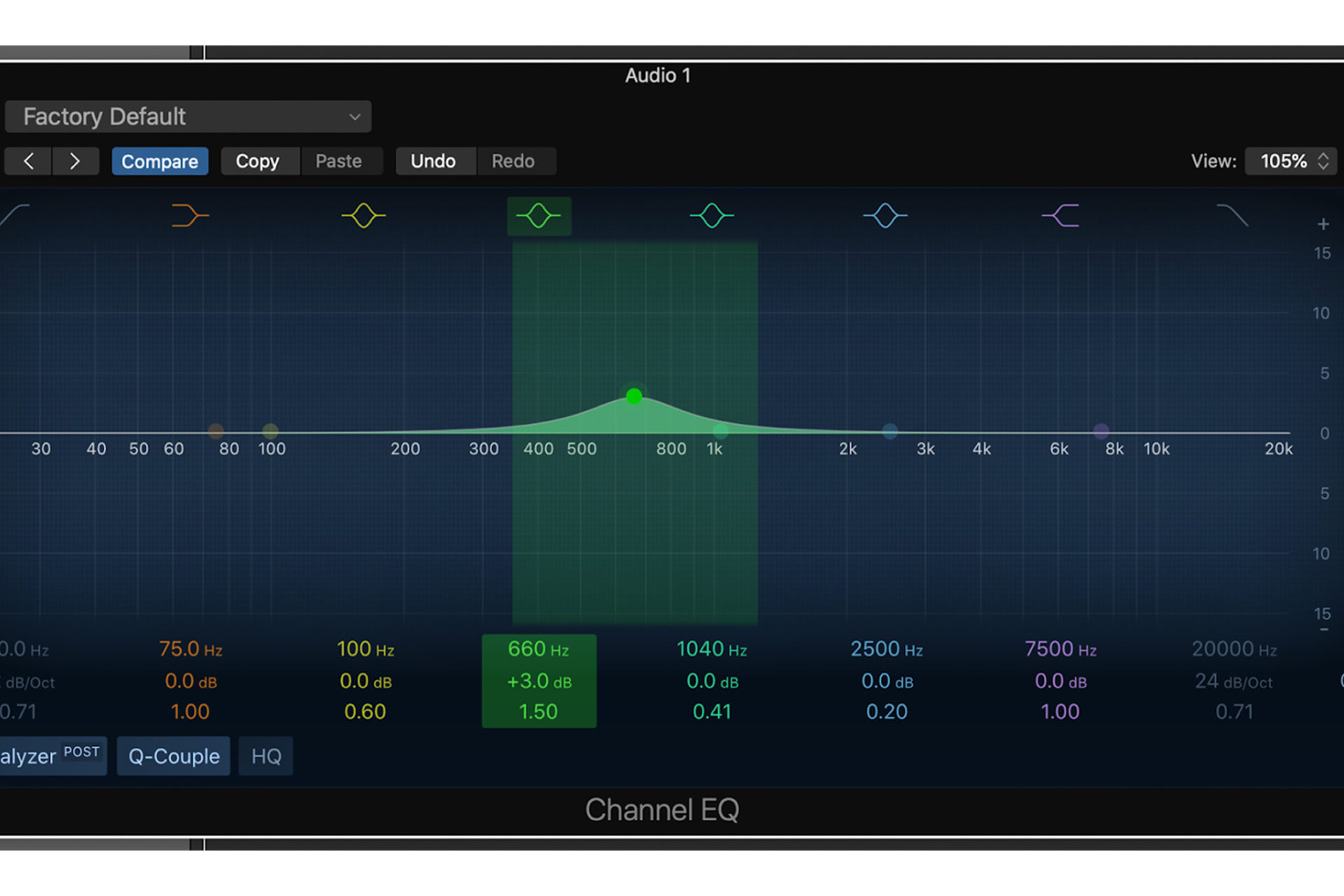
What sets a parametric EQ apart is its ability to precisely control three crucial parameters for each frequency band: frequency, gain, and Q factor (or bandwidth). This triad of controls empowers users to isolate and manipulate specific sonic elements with surgical accuracy, making it an invaluable asset in both corrective and creative audio tasks.
Frequency
The “frequency” parameter dictates the central point on the frequency spectrum where the EQ adjustment will be applied. Measured in Hertz (Hz) or kilohertz (kHz), this control allows you to pinpoint the exact frequency you wish to boost or cut. For instance, if a vocal track sounds “muddy,” a sound engineer might identify that the problematic frequencies lie around 200-300 Hz. By setting the frequency parameter to, say, 250 Hz, they can then focus their adjustments precisely on that area, leaving other frequencies untouched. This surgical targeting is a hallmark of parametric EQ’s technological advantage over its simpler counterparts.
Gain/Amplitude
The “gain” or “amplitude” parameter determines how much a selected frequency band will be boosted or cut. Measured in decibels (dB), a positive dB value increases the loudness of the selected frequency range, while a negative dB value decreases it. This allows for both enhancement (e.g., boosting 10 kHz to add “air” to a vocal) and attenuation (e.g., cutting 60 Hz to reduce “rumble” in a bass track). The range of gain adjustment typically varies significantly across different parametric EQ plugins and hardware units, offering a wide dynamic for shaping sound.
Q Factor/Bandwidth
The “Q factor” (Quality Factor) or “bandwidth” is arguably the most powerful and distinctive feature of a parametric EQ. It defines the width of the frequency band that will be affected around the center frequency.
- High Q values result in a narrow, precise band, allowing for very specific, surgical adjustments. This is ideal for targeting and removing very narrow, troublesome resonances without affecting surrounding frequencies.
- Low Q values create a wide, broad band, leading to more general tonal shaping. This is useful for making subtle, musical adjustments that affect a larger portion of the frequency spectrum, such as warming up a guitar or adding presence to a drum kit.
The ability to adjust the Q factor gives the user unprecedented control over how broad or narrow their equalization curve will be, making it an indispensable tool for detailed sonic manipulation. This flexibility is a core reason why parametric EQs are standard in sophisticated audio software and hardware.
Filter Types
Beyond the core parameters, parametric EQs also offer various filter types, each designed for specific purposes:
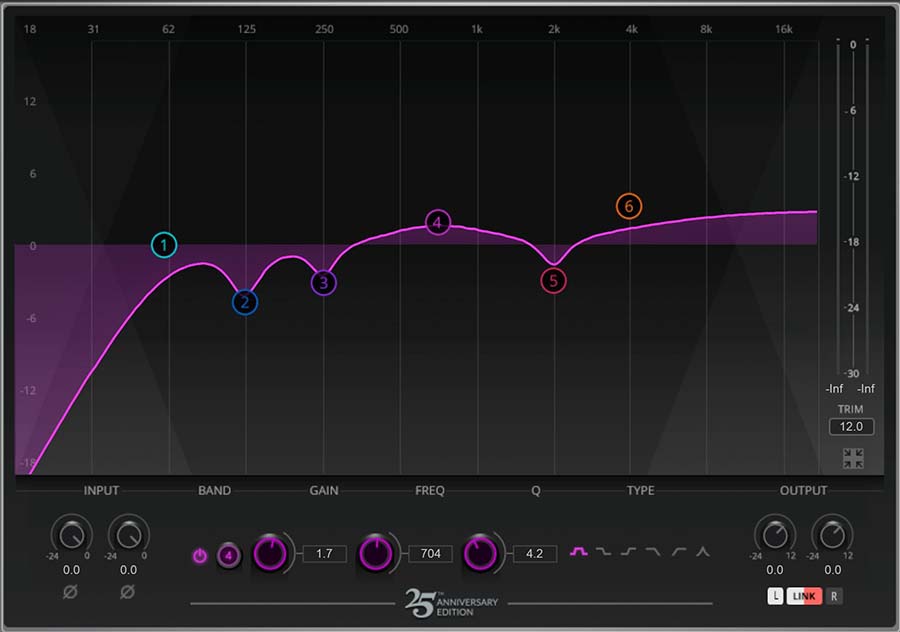
- Bell Filter (Peak/Dip Filter): This is the most common filter type, creating a bell-shaped curve that either boosts or cuts a specific frequency range. The Q factor applies directly to the width of this bell.
- Shelf Filters (High-Shelf / Low-Shelf):
- High-Shelf Filter: Affects all frequencies above a certain point, either boosting or cutting them collectively. Useful for adding “brilliance” to the high end or reducing harshness.
- Low-Shelf Filter: Affects all frequencies below a certain point, either boosting or cutting them. Useful for adding “weight” to the low end or cleaning up muddiness.
- High-Pass Filter (Low-Cut Filter): Allows high frequencies to pass through while attenuating or cutting low frequencies below a specified cutoff point. Essential for removing unwanted rumble, stage noise, or cleaning up the low end of individual tracks.
- Low-Pass Filter (High-Cut Filter): Allows low frequencies to pass through while attenuating or cutting high frequencies above a specified cutoff point. Useful for softening harsh high frequencies, creating special effects, or focusing the sound.
These diverse filter types, combined with the three core parameters, provide an incredibly versatile toolkit for any audio professional, emphasizing the technological depth of parametric equalization.
Why Parametric EQ is Indispensable in Tech
The precision and flexibility offered by parametric EQs have cemented their status as a cornerstone technology in all facets of audio production and sound design. From the most basic home studio setup to state-of-the-art professional mastering suites, these tools are ubiquitous, largely thanks to their seamless integration into software ecosystems and specialized hardware.
Precision in Mixing and Mastering
In the context of music production, mixing involves blending multiple individual tracks (vocals, drums, guitars, etc.) into a cohesive stereo soundfield. Parametric EQs are crucial here for:
- Carving out space: Ensuring each instrument has its own frequency range, preventing sonic clashes and muddy mixes. For example, cutting specific low-mid frequencies in a guitar to make room for the bass guitar.
- Correcting imbalances: Addressing recording imperfections, such as an instrument sounding too boomy or too thin.
- Enhancing clarity: Bringing out the details in a vocal or instrument by subtly boosting its characteristic frequencies.
Mastering, the final stage of audio production, involves polishing a mixed track to achieve optimal loudness, clarity, and stereo imaging for distribution. Here, parametric EQs are employed with even greater subtlety and precision. A mastering engineer might use a parametric EQ to:
- Apply gentle, broad-stroke tonal enhancements across the entire mix.
- Address any lingering frequency imbalances that escaped the mixing stage.
- Ensure the track translates well across various playback systems.
The surgical accuracy of parametric EQs allows for these critical, often imperceptible, adjustments that can elevate a good mix to a great master.
Corrective vs. Creative Applications
The utility of parametric EQs spans both corrective and creative domains.
- Corrective Applications: This involves using EQ to fix problems. Examples include:
- Removing unpleasant resonances from an instrument recording.
- Eliminating hum or hiss from a signal.
- Reducing feedback in live sound environments.
- Taming harsh sibilance (sharp “s” sounds) in vocals.
These applications often involve narrow Q cuts to surgically remove offending frequencies without impacting the overall sound quality.
- Creative Applications: Here, EQ is used to shape sound aesthetically or to achieve specific artistic intentions. Examples include:
- Emphasizing the “thump” of a kick drum by boosting its low end.
- Adding “sparkle” or “air” to cymbals or vocals by boosting high frequencies.
- Creating a “telephone effect” by applying aggressive high-pass and low-pass filters.
- Shaping the tone of synthesizers or sound effects for unique textures.
These applications might involve broader Q boosts or cuts, or a combination of various filter types to sculpt a desired sonic characteristic.
Software and Hardware Implementations
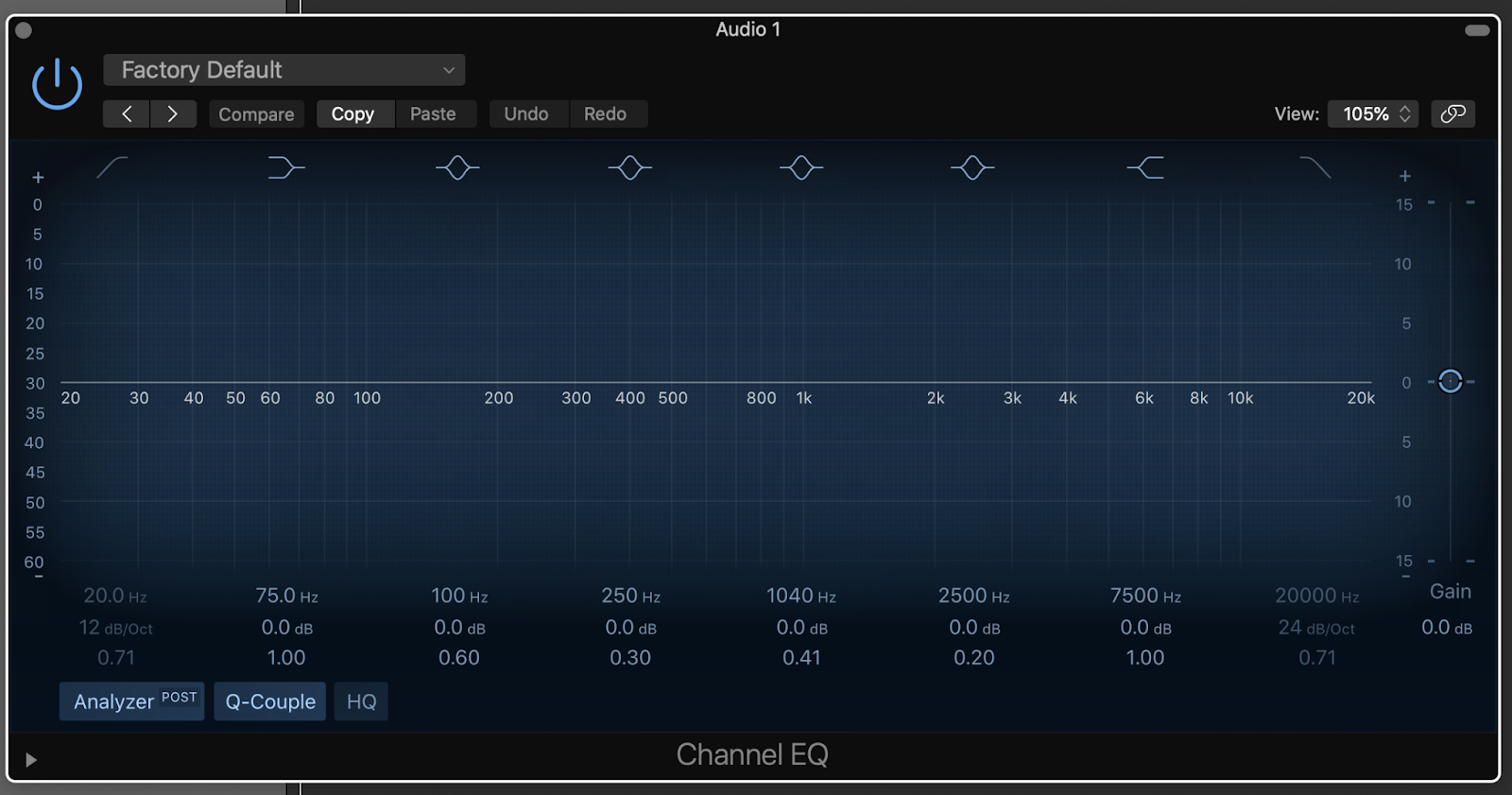
The digital revolution has brought parametric EQs into virtually every Digital Audio Workstation (DAW) as standard plugins. Software parametric EQs offer visual feedback, often displaying the frequency spectrum and the EQ curve graphically, which significantly aids in understanding and applying adjustments. Notable software examples include those built into Pro Tools, Logic Pro, Ableton Live, FL Studio, and a myriad of third-party plugins from developers like FabFilter, Waves, and Universal Audio, many of which leverage advanced digital signal processing (DSP) algorithms.
Beyond software, high-quality hardware parametric EQs are still prized in professional studios for their sonic characteristics, often imparting a unique analog warmth or transparency. These units are typically found in mixing consoles, outboard racks, and specialized mastering equipment, representing the pinnacle of analog audio technology married with precise digital-style control. The interplay between these digital and analog implementations highlights the robust nature of parametric EQ technology.
Mastering Parametric EQ for Superior Sound
Effective use of parametric EQ requires not just technical understanding but also a developed ear and a clear sonic vision. It’s a skill honed over time, demanding an iterative process of listening, adjusting, and re-listening.
Taming Resonances and Mud
One of the most common and effective uses of parametric EQ is to identify and attenuate resonant frequencies or muddy build-ups. Resonances are specific frequencies that stand out unpleasantly, often due to acoustic characteristics of a room or an instrument’s physical properties. Muddy frequencies, typically in the low-mid range (200-500 Hz), can make a mix sound unclear and congested. By using a narrow Q boost to “sweep” across the frequency spectrum, an engineer can pinpoint these problem areas by ear and then apply a precise, narrow cut to eliminate them. This technique is often referred to as “subtracting to make space” and is a critical skill in achieving clean, professional mixes.
Enhancing Clarity and Punch
Conversely, parametric EQs are also used to enhance desirable characteristics. A carefully applied broad Q boost in the upper midrange (2-5 kHz) can add clarity and presence to vocals or lead instruments, helping them cut through a dense mix. Boosting specific low frequencies (e.g., 60-100 Hz for a kick drum or bass) can add punch and weight, giving the rhythm section more impact. These creative applications require a discerning ear to ensure that boosts do not introduce harshness or overwhelm other elements in the mix.
Dynamic EQ and Other Evolutions
The core principles of parametric EQ continue to evolve. Dynamic EQs, for example, combine the precision of parametric EQ with the responsiveness of a compressor. This means an EQ band only activates and adjusts gain when the signal in that specific frequency range exceeds a set threshold. This allows for even more nuanced control, such as automatically taming sibilance in a vocal only when it becomes too prominent, or subtly boosting a bass guitar’s low end only when it lacks sufficient power. This integration of dynamics into frequency control represents a sophisticated evolution of parametric EQ technology, offering automated, context-aware sound shaping. Further advancements include multi-band compression, linear phase EQs for mastering, and EQs integrated with artificial intelligence for intelligent spectral balancing, all building upon the fundamental parametric model.
In conclusion, the parametric EQ is far more than just a tool for boosting or cutting frequencies; it is a sophisticated instrument of sonic artistry and technical correction. Its precise controls over frequency, gain, and bandwidth provide audio professionals with the power to meticulously sculpt sound, ensuring clarity, balance, and impact across all forms of audio media. As technology advances, the underlying principles of parametric EQ remain fundamental, forming the bedrock upon which new and more intelligent audio processing tools are built.
aViewFromTheCave is a participant in the Amazon Services LLC Associates Program, an affiliate advertising program designed to provide a means for sites to earn advertising fees by advertising and linking to Amazon.com. Amazon, the Amazon logo, AmazonSupply, and the AmazonSupply logo are trademarks of Amazon.com, Inc. or its affiliates. As an Amazon Associate we earn affiliate commissions from qualifying purchases.