
In the landscape of modern enterprise software, few names evoke as much intrigue and debate as Palantir Technologies. Founded in 2003 by a group of innovators including Peter Thiel, Alex Karp, and Stephen Cohen, Palantir emerged from the realization that the technologies used to detect credit card fraud at PayPal could be repurposed to solve some of the world’s most complex data challenges. Today, Palantir is not merely a data analytics company; it is a foundational layer of the global digital infrastructure, providing the software engines that power everything from counter-terrorism operations to global supply chain optimization.
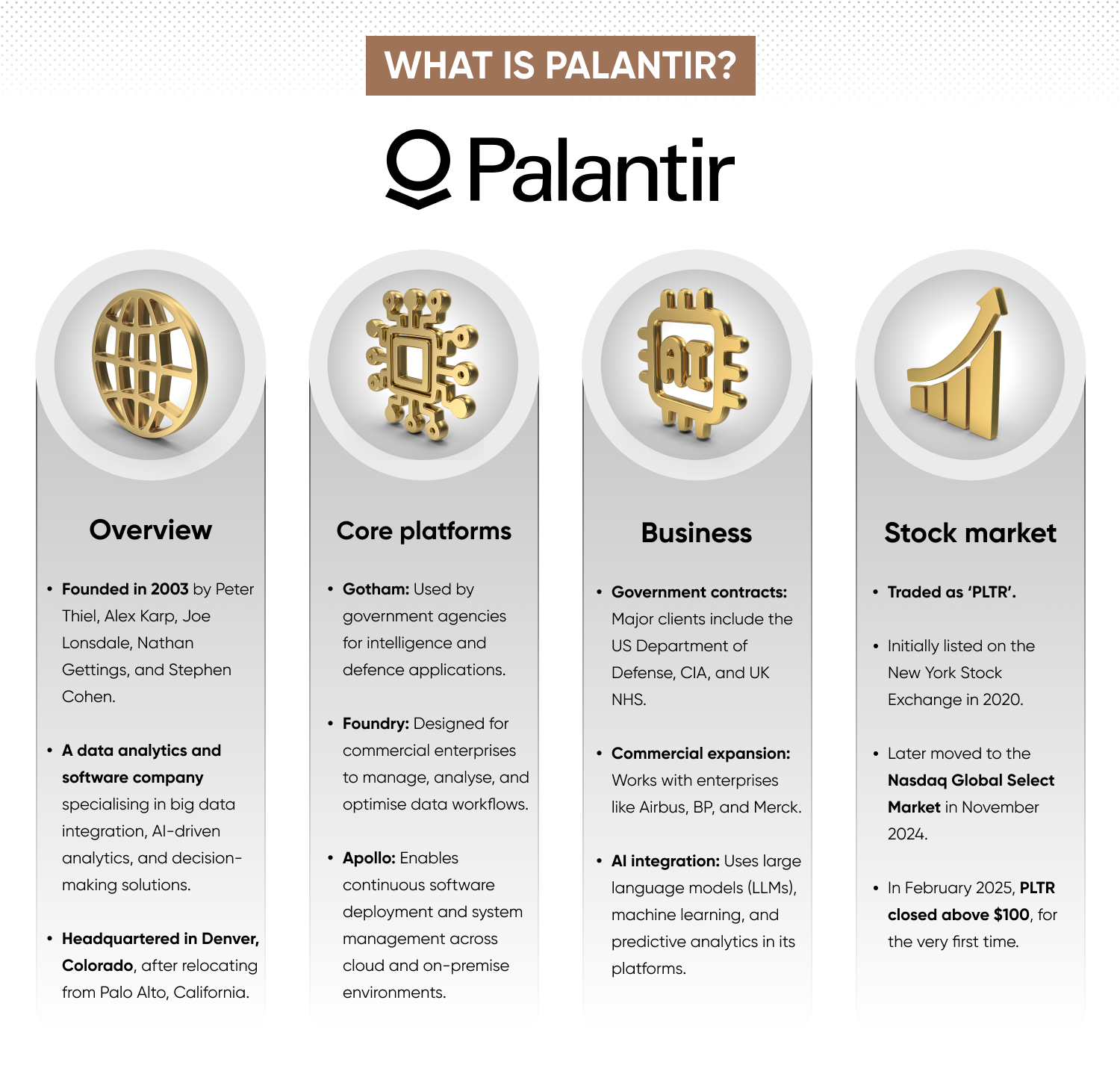
At its core, Palantir creates platforms that allow organizations to integrate, manage, and secure vast amounts of disparate data. While many technology companies focus on consumer-facing applications or simple business intelligence tools, Palantir operates in the “deep tech” space, building the plumbing and the intelligence layers that enable human decision-makers to make sense of chaos.
The Architecture of Intelligence: Gotham, Foundry, and Apollo
To understand what Palantir is, one must understand its three primary software platforms. Each is designed for a specific environment, but they all share a common goal: turning massive datasets into actionable intelligence.
Palantir Gotham: The Decision Suite for Defense
Palantir Gotham was the company’s first major product, designed primarily for the intelligence community and defense departments. Gotham is built to find “needles in haystacks.” It integrates structured data (like spreadsheets and databases) and unstructured data (like emails, videos, and sensor feeds) into a single, cohesive environment.
Within Gotham, data is transformed into “objects”—people, places, things, and events—and the relationships between them. For a military commander or a lead investigator, this means being able to visualize a network of actors, map out historical events, and identify patterns that would be invisible in a traditional database. The platform’s strength lies in its ability to facilitate human-driven analysis, where the software does the heavy lifting of data correlation, allowing the human to focus on the “why” and the “what next.”
Palantir Foundry: Operationalizing Data for the Enterprise
While Gotham was built for the world of secrets, Palantir Foundry was built for the world of business. Foundry is a comprehensive data integration and operations platform used by some of the world’s largest corporations, including Airbus, BP, and Merck.
Foundry solves the “data silo” problem. In most large organizations, data is trapped in disconnected systems—ERP software, CRM tools, IoT sensors, and legacy spreadsheets. Foundry acts as a central operating system, ingesting this data and creating a “Digital Twin” of the organization. This allows executives and frontline workers alike to see the entire business in real-time. Whether it is optimizing the manufacturing process of an aircraft or managing the logistics of a global retail chain, Foundry provides the analytical backbone necessary for operational efficiency.
Palantir Apollo: Continuous Delivery and Deployment
Palantir Apollo is perhaps the least understood but most technically significant part of the ecosystem. It is the continuous delivery software that powers Gotham and Foundry. In the world of enterprise tech, deploying software across diverse environments—from public clouds like AWS and Azure to classified government servers and even disconnected hardware on the “edge”—is incredibly difficult.
Apollo automates this process. It ensures that Palantir’s software is always up to date, secure, and functioning, regardless of where it is hosted. It allows Palantir to function as a SaaS (Software as a Service) provider even in environments that are traditionally hostile to cloud-native updates. This capability is a critical competitive advantage, as it allows for rapid innovation cycles in highly regulated and secure industries.
The Evolution into AI: The Artificial Intelligence Platform (AIP)
As the tech industry shifted toward Large Language Models (LLMs) and generative AI, Palantir introduced its Artificial Intelligence Platform (AIP). AIP is designed to bring the power of AI into the high-stakes environments where Palantir already operates, addressing the primary concerns that prevent enterprises from adopting AI: security, accuracy, and ethics.
Integrating Large Language Models (LLMs)
AIP allows organizations to deploy LLMs—such as those developed by OpenAI, Google, or Meta—directly onto their private networks. The key differentiator for Palantir is the “Logic Layer.” Instead of letting an AI scan a company’s raw, messy data, AIP connects the AI to the “Ontology” created in Foundry or Gotham.
The Ontology is a semantic map of the organization’s data. When a user asks an AI in AIP a question, such as “How can I reroute my shipping containers to avoid the storm in the Atlantic?”, the AI doesn’t just guess based on training data. It uses the Ontology to understand exactly what a “shipping container” is, where they are currently located, and what the financial implications of a reroute would be. This creates a version of AI that is grounded in reality, significantly reducing the risk of “hallucinations.”

Ethical AI and Governance Frameworks
One of the most significant hurdles in tech today is the ethical use of AI. Palantir has built AIP with a focus on “Human-in-the-loop” (HITL) systems. The software is designed so that every action taken or suggested by an AI is auditable and reversible.
AIP includes robust guardrails that dictate what the AI can and cannot do. For example, in a military context, the AI might suggest a target, but the software ensures that a human operator must make the final decision, with a full digital trail of how the AI arrived at its conclusion. This focus on “digital sovereignty” and governance is what separates Palantir’s tech stack from more experimental or consumer-focused AI tools.
Bridging the Gap: Data Integration and Digital Security
In the realm of digital security and software architecture, Palantir is often described as a “data integration” company rather than a “data storage” company. It does not aim to replace existing data lakes like Snowflake or Databricks; rather, it sits on top of them to make the data usable.
Breaking Down Data Silos
The primary technical challenge for modern institutions is not a lack of data, but the inability to connect it. A hospital might have patient records in one system and pharmaceutical inventory in another. Palantir’s software uses a sophisticated “ingestion engine” that can take data in any format and map it to a common language. This process, known as data orchestration, allows for a level of cross-functional visibility that was previously impossible without manual, error-prone data entry.
Privacy-Preserving Analytics and Access Controls
Palantir’s reputation in the tech world is defined by its rigorous approach to digital security. Because the software handles some of the most sensitive data on the planet, it was built with “zero trust” principles from the beginning.
The platforms utilize granular access controls. This means that two people looking at the same dashboard may see different levels of detail based on their security clearances or job functions. Palantir also employs advanced “Purpose-Based Access Control” (PBAC), which ensures that data can only be accessed if the user has a legitimate, documented reason to do so. These features are critical for maintaining privacy and compliance in industries like healthcare and finance, where data leaks can have catastrophic consequences.
Real-World Applications: From Counter-Terrorism to Supply Chain Optimization
The impact of Palantir’s technology is best understood through its real-world applications. The software is not a theoretical tool; it is an operational one.
National Security and Law Enforcement
Gotham is famously used by intelligence agencies to track and disrupt illicit networks. By connecting disparate data points—cell phone records, border crossings, financial transactions, and satellite imagery—the software helps analysts identify patterns indicative of terrorist activity, human trafficking, or cyberattacks. The ability to visualize these links in real-time allows for faster response times and more accurate intelligence-led policing.
Global Logistics and Manufacturing
In the commercial sector, Foundry has become a staple for complex manufacturing. Airbus, for example, uses a version of Foundry called “Skywise” to manage the production and maintenance of its global fleet. By integrating data from the factory floor with sensor data from aircraft in flight, Airbus can predict when a part is likely to fail before it actually does, drastically reducing downtime and improving safety.
During the COVID-19 pandemic, Palantir’s software was used by the NHS in the UK and the Department of Health and Human Services in the US to manage vaccine distribution. The software allowed officials to track inventory in real-time, identify underserved populations, and adjust logistics dynamically as the situation changed.

The Future of Palantir in the Global Tech Ecosystem
As we move deeper into the age of AI and big data, Palantir’s role is likely to expand. The company has positioned itself at the intersection of high-end software engineering and geopolitical strategy. While many tech firms shy away from government contracts or controversial sectors, Palantir leans into them, arguing that the defense of Western liberal democracy requires the world’s best software.
The technical shift we are seeing today is a move away from “data for the sake of data” toward “data for the sake of action.” Palantir’s platforms are built for this transition. By providing a bridge between the digital world of bits and the physical world of atoms, Palantir has created a unique niche in the tech industry. It is not just an app or a tool; it is a foundational architecture for the modern age, designed to ensure that in an increasingly complex world, humans still have the upper hand in making critical decisions.
aViewFromTheCave is a participant in the Amazon Services LLC Associates Program, an affiliate advertising program designed to provide a means for sites to earn advertising fees by advertising and linking to Amazon.com. Amazon, the Amazon logo, AmazonSupply, and the AmazonSupply logo are trademarks of Amazon.com, Inc. or its affiliates. As an Amazon Associate we earn affiliate commissions from qualifying purchases.