
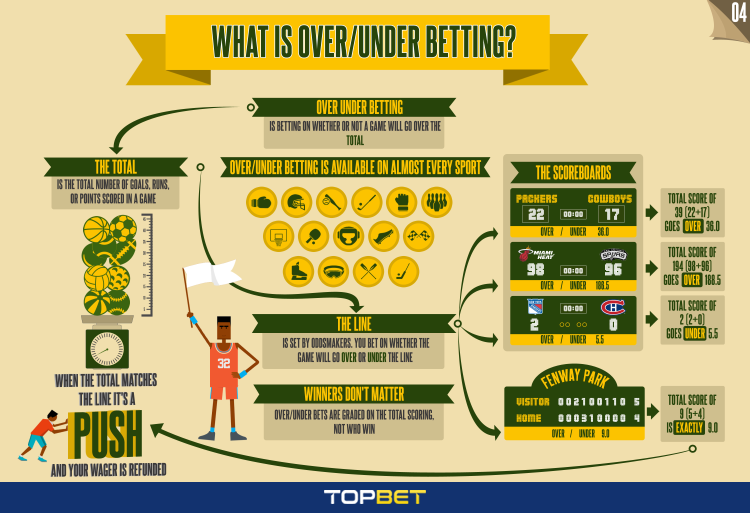
In the realms of finance, investing, and speculative markets, the concept of “Over/Under” serves as a fundamental framework for assessing value and predicting outcomes. At its core, an over/under—often referred to as a “total”—is a figure set by analysts, market makers, or bookmakers that represents a predicted cumulative statistic for a given event. Participants then decide whether the actual outcome will fall above or below that designated threshold. While the term is most frequently associated with sports betting, its underlying logic is deeply embedded in stock market valuations, corporate budgeting, and personal financial planning. Understanding the mechanics of the over/under is essential for anyone looking to navigate the complexities of risk management and capital allocation.
Understanding the Fundamentals of Over/Under Valuations
In broader financial terms, the over/under represents the “line” between expectation and reality. When an investor looks at a company’s price-to-earnings (P/E) ratio, they are essentially making an over/under bet on the company’s future growth. If the market prices a stock based on an expected growth rate of 15%, an investor buying that stock is betting “over”—believing the company will exceed those expectations.
The Concept of Intrinsic Value vs. Market Price
The most critical distinction in financial over/under logic is the difference between intrinsic value and market price. Intrinsic value is the perceived or calculated true value of an asset based on fundamental analysis, including cash flows, assets, and liabilities. The market price, however, is the consensus “line” currently set by the collective actions of buyers and sellers.
Professional investors use Discounted Cash Flow (DCF) models to set their own over/under benchmarks. If a DCF analysis suggests a stock is worth $120, but it is currently trading at $100, the investor identifies an “under” scenario where the market has undervalued the asset. Successfully identifying these discrepancies is the primary driver of alpha, or market-beating returns.
Identifying Overvalued and Undervalued Assets
Determining whether an asset is “over” or “under” its fair value requires a rigorous examination of market sentiment and historical data. An asset is considered “overvalued” when its price exceeds its intrinsic worth, often driven by irrational exuberance, speculative bubbles, or temporary supply shortages. Conversely, an “undervalued” asset trades below its true worth, often due to market overreactions to negative news or general economic downturns.
In the context of the “Money” niche, mastering the over/under means developing the discipline to ignore the noise of the “line” set by the public and focusing on the raw data. This is as true for a value investor like Warren Buffett as it is for a quantitative trader using algorithms to find micro-inefficiencies in currency pairs.
The Mechanics of Over/Under in Speculative Markets
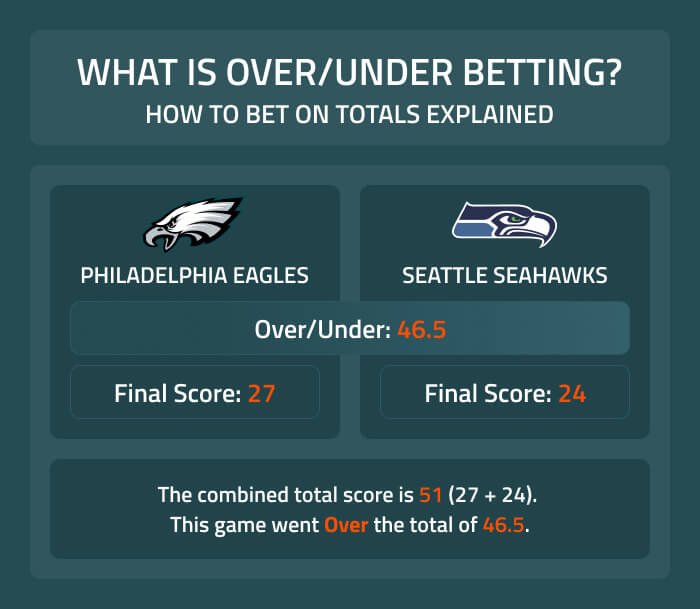
When we transition into the world of speculative markets and sports investing, “Over/Under” becomes a specific type of wager on the total number of points, goals, or runs scored in a game. However, for the serious financial strategist, this is not a game of luck; it is a game of probability, statistics, and liquidity management.
Total Lines and Market Sentiment
In speculative betting, the “total” is the combined score of both teams. The market maker sets this number based on a variety of factors: offensive and defensive efficiencies, pace of play, weather conditions, and historical matchups. Once the line is set, the “market” (the bettors) moves the price.
If a significant amount of capital is placed on the “Over,” the line will move higher to balance the risk for the house. This movement is identical to how a stock price rises when there is high demand. For a disciplined earner, the goal is to find “closing line value.” If you bet the “Over” at 45 points and the line closes at 48 points before the event begins, you have effectively gained a 3-point advantage over the market, much like buying a stock before a positive earnings report.
How Vigorish and Odds Impact the Bottom Line
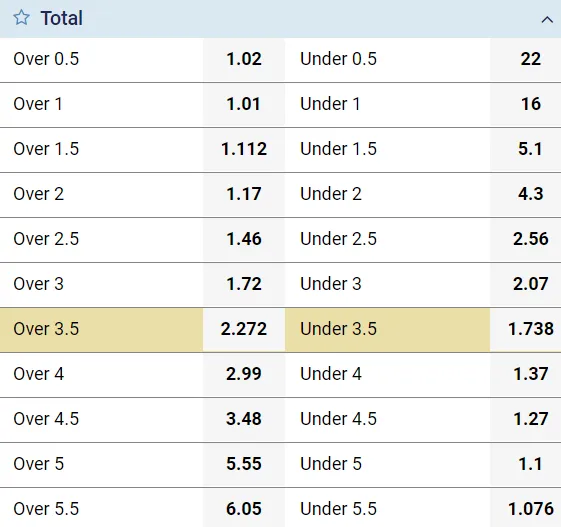
In any over/under market, there is a cost of doing business known as the “vigorish” or “vig.” This is the commission charged by the facilitator of the trade. In financial markets, this might be the bid-ask spread or brokerage fees. In betting markets, it is typically expressed in the odds (e.g., -110).
To be profitable in over/under markets, one must overcome this “vig.” If you are betting at -110 odds, you must win 52.38% of your trades just to break even. This highlights the importance of the “under” in financial discipline: often, the most profitable move is the one with the lowest cost of entry and the highest probability of a “reversion to the mean.”
Risk Management Strategies for Over/Under Trading
Whether you are managing a portfolio of equities or engaging in high-frequency speculative trades, risk management is the barrier between a professional and an amateur. The over/under mindset requires a strict adherence to mathematical models rather than emotional impulses.
Bankroll Management and Unit Sizing
The most common reason for failure in financial markets is improper capitalization. Professional traders use “unit sizing” to ensure that no single over/under decision can bankrupt their entire operation. A common rule is the Kelly Criterion, a formula used to determine the optimal size of a series of bets to maximize the logarithm of wealth.
By treating every investment as a “unit” of a larger whole, you mitigate the impact of variance. In an over/under scenario, variance is the “noise” that causes an outcome to differ from the statistical expectation. Even if you have a 60% edge, you can still lose five times in a row. Proper unit sizing ensures you stay in the game long enough for your edge to manifest.
The Role of Data Analytics in Predicting Outcomes
Modern over/under strategies rely heavily on “big data.” Analysts use regression models to identify which variables have the highest correlation with the final total. In personal finance, this might involve tracking spending habits over five years to predict “over/under” variances in a monthly budget. In institutional investing, it involves using machine learning to parse thousands of data points—from satellite imagery of retail parking lots to shipping container manifests—to predict whether a company will go “over” or “under” its quarterly revenue guidance.
The “Money” aspect of this is clear: information is the most valuable commodity. Those who can process information faster and more accurately than the market can set their own over/under lines and profit from the delta between their line and the public line.
Applying Over/Under Logic to Business and Personal Finance
Beyond the trading floor and the sportsbook, the over/under concept is a powerful tool for corporate strategy and personal wealth building. It is essentially a framework for “Expectation Management.”
Forecasting Revenue and Expense Variances
Every corporate budget is an over/under proposition. A CFO sets a revenue target (the line). If the company goes “over,” there is often a surplus that can be reinvested or paid out as dividends. If the company goes “under,” it may lead to layoffs or restructuring.
The key to successful business finance is “Conservative Forecasting.” By setting the internal over/under line for expenses slightly higher than expected and the line for revenue slightly lower, a business creates a “margin of safety.” This margin of safety is what allows companies to survive black swan events or economic downturns that would otherwise liquidate their competitors.
The Psychological Trap of Over-Optimism
One of the greatest hurdles in financial mastery is “Optimism Bias.” Human beings are naturally inclined to bet the “Over”—we want to see more growth, more points, and more success. However, in many financial markets, the “Under” is often the more profitable position because the public’s bias inflates the “Over” price.
In personal finance, this manifests as “lifestyle creep.” People often project that their future income will be significantly higher (betting the “Over” on their career) and increase their debt accordingly. A more robust financial strategy involves betting the “Under” on your future expenses—assuming costs will be higher and returns will be lower than the historical average. This defensive posture ensures that even if the “market” of your life underperforms, your financial foundation remains secure.
Conclusion: The Strategic Value of the Threshold
In conclusion, “What is Over/Under?” is a question with a multi-layered answer. It is a betting line, a valuation tool, and a risk management philosophy. To master the “Money” niche, one must look past the surface-level simplicity of the term and recognize it as a sophisticated way to quantify uncertainty.
By identifying the “total” in any financial situation—whether it is the valuation of a tech startup, the projected points in a game, or the annual ceiling of a household budget—and then applying rigorous data analysis to determine the probability of the outcome, an individual can move from a position of speculation to one of calculated investment. The goal is not to win every “bet,” but to consistently find “value” where the market’s over/under is misaligned with reality. Success in finance is ultimately about the cumulative effect of these small edges over time.
aViewFromTheCave is a participant in the Amazon Services LLC Associates Program, an affiliate advertising program designed to provide a means for sites to earn advertising fees by advertising and linking to Amazon.com. Amazon, the Amazon logo, AmazonSupply, and the AmazonSupply logo are trademarks of Amazon.com, Inc. or its affiliates. As an Amazon Associate we earn affiliate commissions from qualifying purchases.