
In the world of marketing and corporate identity, few case studies are as compelling as the rise of “Outlaw Country.” While musicologists view it as a subgenre defined by grit and stripped-down production, brand strategists recognize it as one of the most successful market disruptions in entertainment history. Outlaw Country was not just a sonic shift; it was a radical rebranding of the country music industry that challenged the monopolistic “Nashville Sound” of the 1960s and 70s.
To understand what Outlaw Country is, one must look past the acoustic guitars and leather vests and examine the mechanics of brand positioning, creative autonomy, and the power of the “anti-hero” archetype. It is a story of how a group of “brand rebels” reclaimed their intellectual property and redefined an entire industry’s value proposition.
The Core Identity: Defining the Outlaw Brand
Every successful brand begins with a problem that needs solving. In the early 1970s, the country music “brand” was controlled by a small group of producers in Nashville, Tennessee. This era, known for the “Nashville Sound,” utilized lush string arrangements and polished background vocals to make country music more palatable to pop audiences. While commercially successful, the brand had become diluted, losing its connection to its core demographic: the working class.
The Rebellion Against the “Nashville Sound”
The Outlaw Country movement was a direct response to brand stagnation. Artists like Willie Nelson and Waylon Jennings felt that the “Nashville Sound” was a form of corporate over-processing. In marketing terms, the product had become too homogenized. The “Outlaw” brand was built on the principle of differentiation through subtraction. By removing the orchestras and returning to a raw, honky-tonk sound, these artists created a “Blue Ocean” strategy—finding an untapped market space where they didn’t have to compete with the pop-country giants on their terms.
Authenticity as a Value Proposition
In modern branding, “authenticity” is often a buzzword, but for Outlaw Country, it was the primary product. The Outlaw brand identity was rooted in the idea that the artist, not the label, owned the creative vision. This shift moved the brand’s value from “commercial perfection” to “unfiltered truth.” Consumers weren’t just buying music; they were buying into a lifestyle of independence and integrity. This remains one of the most powerful branding lessons: when a market feels over-polished and artificial, raw authenticity becomes the most valuable commodity.
Building the Outlaw Persona: Strategic Differentiation
A brand is more than a logo or a sound; it is the sum of all perceptions held by the consumer. The Outlaw Country movement meticulously (even if subconsciously) constructed a visual and narrative identity that stood in stark contrast to the clean-cut image of the Grand Ole Opry stars.
Visual Identity: From Sequins to Denim
In the 1960s, country stars were known for “Nudie Suits”—elaborate, sequined outfits that screamed “show business.” The Outlaw brand performed a complete visual pivot. Waylon Jennings and Willie Nelson adopted long hair, beards, faded denim, and leather. This wasn’t just a fashion choice; it was a visual signal of brand alignment with the counterculture.
From a brand strategy perspective, this was a brilliant move to capture a dual audience. By looking like bikers or hippies but playing country music, they appealed to the traditional country fan who felt disenfranchised, as well as the younger, rock-and-roll-oriented demographic. This “cross-segment appeal” is a cornerstone of brand expansion.
Narrative Storytelling: The “Anti-Hero” Archetype
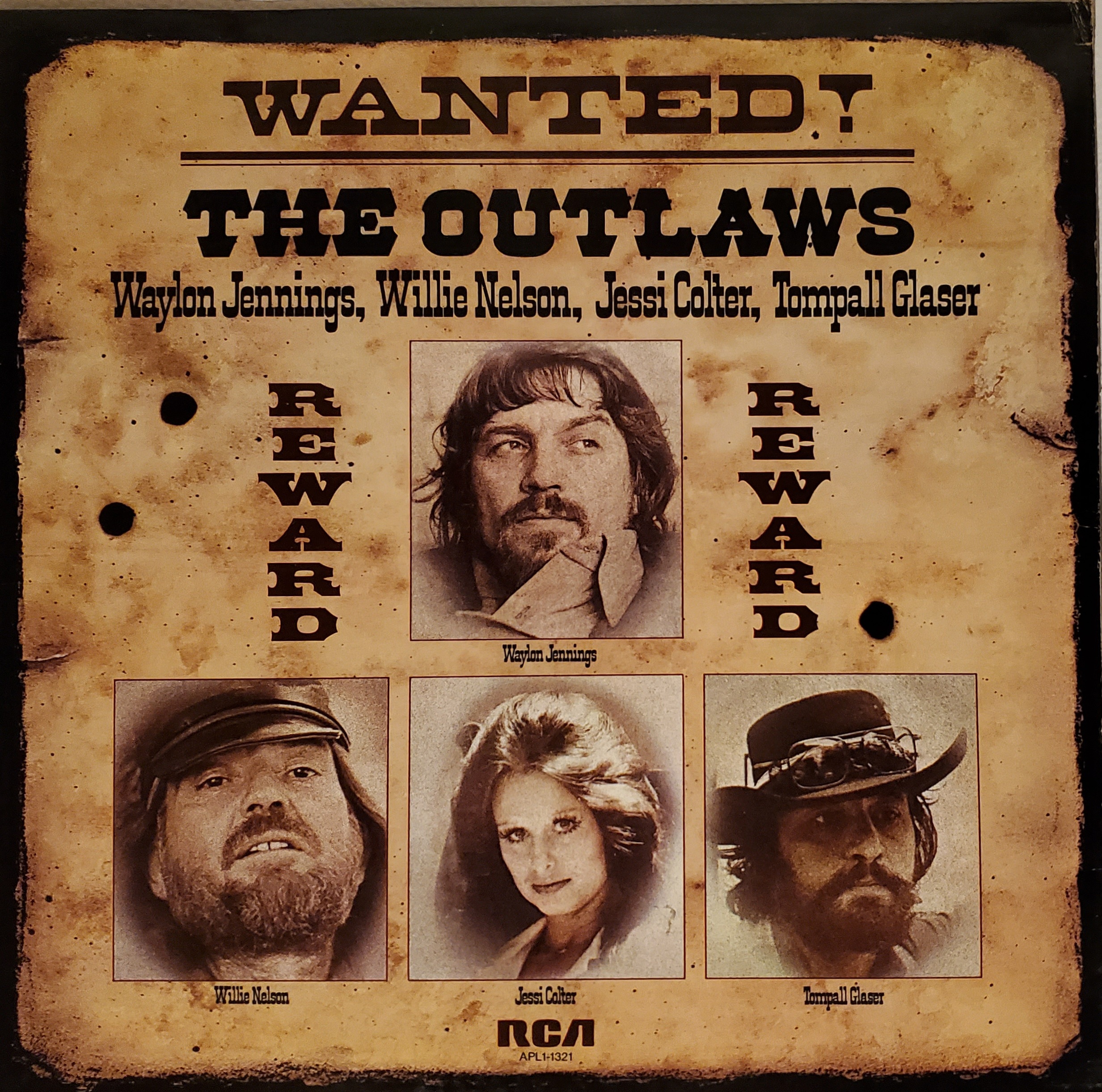
The “Outlaw” name itself was a stroke of branding genius. It didn’t come from a music critic; it was solidified by the 1976 album Wanted! The Outlaws. The album cover featured a “Wanted” poster, positioning the artists as rebels against the establishment.
This leveraged the “Anti-Hero” archetype—a powerful narrative tool in brand building. By positioning themselves as “outsiders,” the artists created an “Us vs. Them” mentality. This fostered intense brand loyalty among fans, who saw supporting Outlaw Country as an act of rebellion against the corporate music machine. In branding, nothing builds a community faster than a common adversary.

Distribution and Market Positioning: Reclaiming the Narrative
A major component of any corporate identity is the control of one’s output. Before the Outlaw movement, the “Nashville Sound” was a factory system. Labels chose the songs, the session musicians, and the production style. The Outlaws realized that to protect their brand, they needed to own the means of production.
Bypassing the Gatekeepers
Waylon Jennings famously negotiated a contract with RCA that gave him total artistic control—a rarity at the time. This was a monumental shift in “brand ownership.” By choosing their own studios and musicians, Outlaw artists ensured that the final product was consistent with their brand promise.
In business, this is equivalent to a company moving from an OEM (Original Equipment Manufacturer) model to a direct-to-consumer or vertically integrated model. By cutting out the middle-management producers who acted as gatekeepers, the artists could deliver a product that was “on-brand” every single time, without corporate dilution.
Cultivating a Niche Community
While the Nashville establishment focused on mass-market appeal, the Outlaws focused on a specific niche. They played at venues like the Armadillo World Headquarters in Austin, Texas, which served as a “brand hub” for this new movement.
By focusing on a geographic and cultural niche—Austin’s progressive country scene—they built a concentrated base of “super-fans.” This strategy mirrors how modern tech brands often launch in specific cities or sectors before scaling globally. The Austin scene provided the social proof the Outlaw brand needed to eventually take over the national charts.
The Longevity of the Outlaw Brand Legacy
The Outlaw Country movement reached its commercial peak in the late 1970s, but its impact on brand strategy in the music industry—and beyond—is permanent. The “Outlaw” identity has become a legacy brand that continues to influence how new products are brought to market.
Modern Iterations and Brand Licensing
Today, the “Outlaw” brand has been institutionalized. There are Outlaw Country channels on satellite radio, Outlaw-themed cruises, and a constant stream of “New Outlaw” artists like Sturgill Simpson or Chris Stapleton.
From a corporate identity standpoint, this represents the “Institutionalization Phase” of a brand. The radical rebellion of the 70s has become a recognized category. However, the core brand promise remains the same: a commitment to artistic independence. Modern artists use the “Outlaw” label as a shorthand to tell consumers, “I am not part of the pop-country machine.” This shows the enduring power of a well-defined brand identity; even decades later, the label carries a specific set of expectations and values.
Lessons for Corporate and Personal Branding
The story of Outlaw Country offers three vital lessons for any brand strategist:
- Identify the Market Gap: The Outlaws succeeded because they saw a “fatigue” in the market. When every competitor is zigging (going polished and pop), there is a massive opportunity to zag (go raw and authentic).
- Own the Creative Process: Quality control is brand control. If you outsource your core identity to third parties, you risk diluting the product.
- Lean into Your Flaws: The Outlaws didn’t try to hide their rough edges; they made them their Unique Selling Proposition (USP). In a world of filtered and curated corporate images, vulnerability and “the grit” can be a powerful competitive advantage.
Ultimately, “What is Outlaw Country Music?” is a question with two answers. To the ear, it is a blend of honky-tonk, rock, and folk. But to the mind of a brand strategist, it is a masterclass in market disruption—a reminder that the most successful brands are those that have the courage to stand against the status quo, reclaim their narrative, and stay true to their core identity, no matter the cost.
aViewFromTheCave is a participant in the Amazon Services LLC Associates Program, an affiliate advertising program designed to provide a means for sites to earn advertising fees by advertising and linking to Amazon.com. Amazon, the Amazon logo, AmazonSupply, and the AmazonSupply logo are trademarks of Amazon.com, Inc. or its affiliates. As an Amazon Associate we earn affiliate commissions from qualifying purchases.