
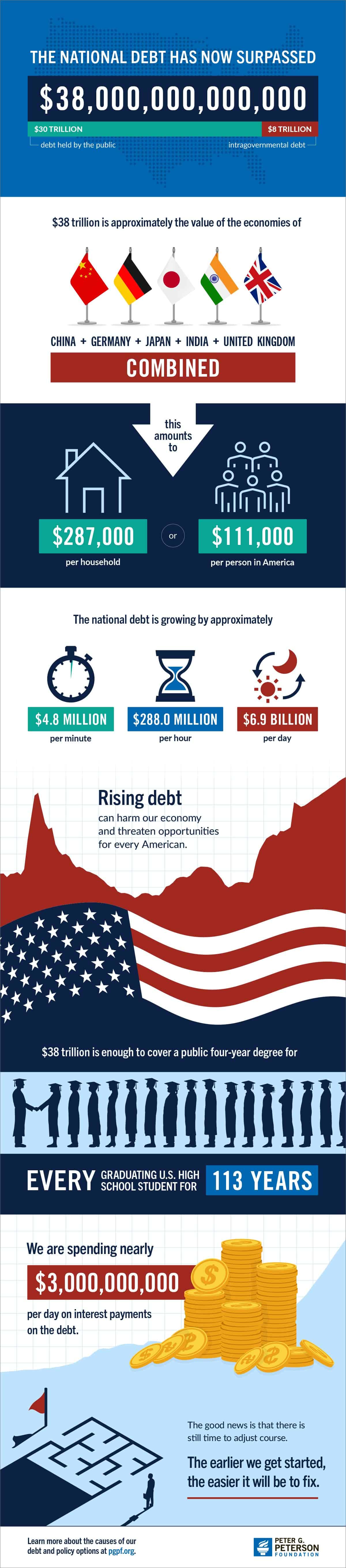
The United States national debt is a figure so astronomical that it often transcends the realm of relatable personal finance and enters the territory of abstract mathematics. As of the mid-point of 2024, the gross federal debt has surpassed $34.9 trillion. To the average investor or homeowner, this number can feel like a distant legislative problem, yet its implications ripple through every corner of the financial world—from the interest rates on a 30-year mortgage to the long-term viability of the Social Security system.
Understanding the national debt requires moving past the political headlines and into the mechanics of business finance and macroeconomics. It is not merely a “credit card bill” for the country; it is a complex instrument of global liquidity, a reflection of decades of fiscal policy, and a significant factor in the future of the American economy.

Decoding the Trillions: What Makes Up the National Debt?
When we talk about the national debt, we are referring to the total amount of outstanding transitionary and long-term borrowing by the U.S. Federal Government. However, this debt is not a monolithic block of money. It is categorized into two distinct types that represent different financial relationships.
Debt Held by the Public
The largest portion of the national debt—roughly $27 trillion—is held by the public. This includes individuals, corporations, the Federal Reserve, and foreign governments. When you buy a U.S. Savings Bond or a Treasury bill, you are effectively a creditor to the United States government.
Foreign ownership of U.S. debt is often a point of public concern, yet it serves as a testament to the global reliance on the U.S. Dollar. Countries like Japan and China hold significant portions of Treasury securities because they are considered the safest “risk-free” assets in the world. This demand helps keep the U.S. economy liquid and provides a stable place for global capital to reside.
Intragovernmental Holdings
The remaining portion of the debt, approximately $7 trillion, consists of intragovernmental holdings. This is money that the government owes to itself. Specifically, various government agencies and trust funds, such as the Social Security Trust Fund and the Medicare Trust Fund, are required by law to invest their surpluses into special-issue Treasury securities.
While this may seem like “funny money,” it represents a serious future obligation. When these trust funds need to pay out benefits, the government must find the cash to redeem those securities, which usually involves either raising taxes, cutting spending, or issuing more debt to the public.
The Mechanics of Growth: Deficits vs. Debt
To understand why the national debt is at its current level, one must distinguish between the annual budget deficit and the cumulative national debt.
The Annual Shortfall
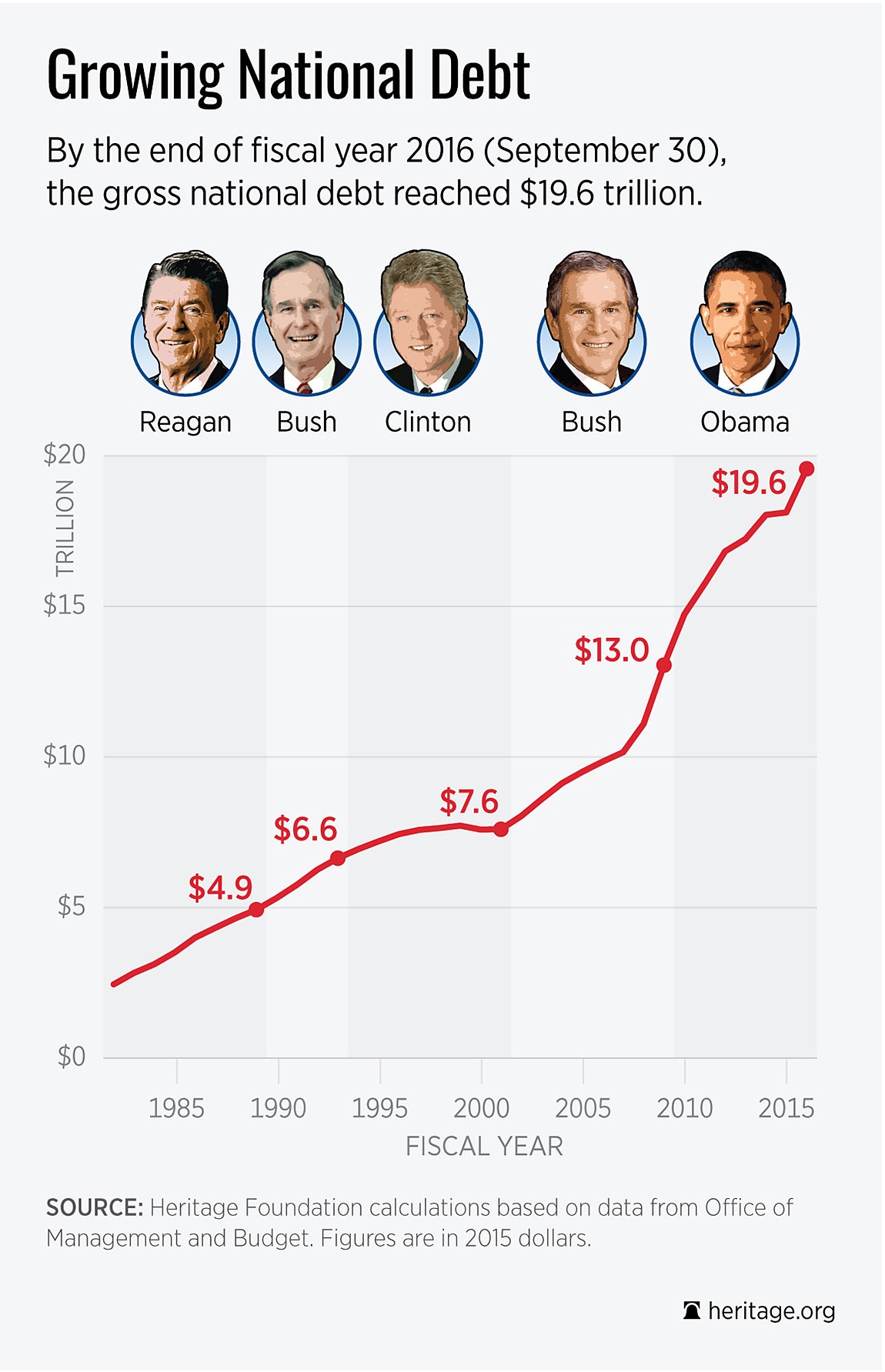
A deficit occurs when the government’s spending in a single fiscal year exceeds its revenue (primarily from taxes). Since 2001, the U.S. has consistently run a deficit. Major events, such as the 2008 financial crisis and the COVID-19 pandemic, necessitated massive infusions of capital into the economy, leading to trillion-dollar annual deficits.
The national debt is essentially the sum of all past annual deficits, plus the interest accrued on those borrowings. Because the U.S. has not run a surplus in over two decades, the total debt continues to climb at an accelerating rate.
The Rising Cost of Interest
Perhaps the most concerning aspect of the debt right now is the “interest expense.” For years, historically low interest rates allowed the government to borrow cheaply. However, as the Federal Reserve raised interest rates to combat inflation in 2022 and 2023, the cost of servicing the existing debt skyrocketed.
Interest payments on the national debt are now one of the fastest-growing items in the federal budget. In fact, the U.S. is currently spending more on interest payments than it does on the entire Department of Defense budget. This “interest trap” creates a cycle where the government must borrow more money just to pay the interest on the money it already borrowed.
Why the Debt Level Matters for Your Finances
The national debt is not just a concern for economists in Washington; it has tangible effects on the financial health of every American. From the cost of borrowing to the purchasing power of your savings, the debt’s influence is pervasive.
Interest Rates and the Consumer
There is a strong correlation between government borrowing and the interest rates offered to consumers. To attract buyers for its massive amount of debt, the Treasury must offer competitive yields. These Treasury yields serve as the “benchmark” for almost all other interest rates in the economy.
When the government issues a high volume of debt, it can lead to higher yields, which in turn leads to higher interest rates for mortgages, auto loans, and business credit lines. For the individual, a high national debt can translate directly into a higher monthly payment on a new home or a more expensive loan for a small business expansion.
The Inflation Connection
While the relationship between debt and inflation is complex, the underlying principle is simple: if the government prints money or expands the money supply to facilitate its debt obligations, the value of each individual dollar may decrease.
Long-term, high debt levels can lead to “debt monetization,” where the central bank buys up government bonds to keep interest rates low. This increase in the money supply can dilute the purchasing power of your savings. For those planning for retirement, this means your “nest egg” might not go as far in twenty years as it would in a more fiscally stable environment.
The “Crowding-Out” Effect
In the world of business finance, the “crowding-out” effect occurs when heavy government borrowing uses up the available capital that would otherwise be invested in the private sector. When investors flood their capital into “safe” Treasuries to fund the government, there is less capital available for venture capital, corporate bonds, and innovation-driven startups. This can lead to slower economic growth over the long term, as the engine of the private sector is deprived of the fuel it needs to innovate.
Is the Current Debt Level Sustainable?
The most frequent question asked by financial analysts is not “how big is the debt?” but “is it sustainable?” To answer this, economists look at the Debt-to-GDP ratio.
The Debt-to-GDP Metric
Comparing the national debt to the Gross Domestic Product (GDP) provides context for the country’s ability to pay back what it owes. Currently, the U.S. Debt-to-GDP ratio is hovering around 120%. For comparison, at the end of World War II, the ratio was roughly 106%.
While 120% is high, it is not unprecedented on a global scale (Japan, for instance, maintains a ratio well over 200%). However, the trajectory is what concerns fiscal hawks. Unlike the post-WWII era, where the U.S. entered a period of massive demographic and industrial growth, the current era is defined by an aging population and slowing productivity growth.
The Role of the Reserve Currency
The U.S. has a unique advantage known as the “exorbitant privilege.” Because the U.S. Dollar is the world’s primary reserve currency, there is an almost insatiable global demand for Dollars. This allows the U.S. to carry a higher debt load than other nations might be able to sustain. As long as the world views the U.S. as the safest place to store wealth, the government can continue to find buyers for its debt. However, if that trust ever wavers—due to political instability or prolonged fiscal mismanagement—the consequences for the global financial system would be catastrophic.
Strategic Pathways Toward Fiscal Responsibility
Correcting the course of a $34 trillion debt requires a multi-faceted approach. There is no “silver bullet” solution; rather, it involves a combination of policy adjustments and economic shifts.
Entitlement and Spending Reform
A significant portion of federal spending is “mandatory,” consisting of Social Security, Medicare, and Medicaid. As the “Baby Boomer” generation retires, the strain on these systems increases. Reforming these programs—perhaps by adjusting retirement ages or means-testing benefits—is often discussed but remains politically difficult. On the discretionary side, cuts to defense or non-defense spending are frequently debated but rarely implemented on a scale large enough to move the needle on the total debt.
Revenue Generation and Tax Policy
The other side of the ledger is revenue. Increasing tax receipts through higher corporate taxes, closing loopholes, or adjusting individual tax brackets can help reduce the annual deficit. However, the challenge for policymakers is to raise revenue without stifling the very economic growth that provides the tax base.
Growth: The Ultimate Solution
Historically, the most effective way to “lower” debt is to grow the economy faster than the debt increases. If the GDP grows at 3% or 4% while the debt grows at 2%, the Debt-to-GDP ratio improves. This requires investments in technology, infrastructure, and education to boost productivity. In the digital age, advancements in AI and automation could potentially provide the productivity “leap” needed to expand the economy and make the current debt load more manageable.
Ultimately, the national debt is a reflection of a nation’s priorities and its confidence in the future. For the individual investor, it serves as a reminder of the importance of diversification and the need to stay informed on the macroeconomic forces that shape the value of money. While the figure of $34.9 trillion is daunting, the resilience of the American economy has historically managed to navigate periods of high leverage, provided that growth and fiscal discipline remain part of the long-term strategy.
aViewFromTheCave is a participant in the Amazon Services LLC Associates Program, an affiliate advertising program designed to provide a means for sites to earn advertising fees by advertising and linking to Amazon.com. Amazon, the Amazon logo, AmazonSupply, and the AmazonSupply logo are trademarks of Amazon.com, Inc. or its affiliates. As an Amazon Associate we earn affiliate commissions from qualifying purchases.