
In the rapidly evolving landscape of electronics and digital systems, the need to protect sensitive components from high-voltage spikes and electrical noise has never been more critical. Whether it is a sophisticated industrial robot, a medical imaging device, or a simple microcontroller connected to a high-power motor, the integrity of the signal and the safety of the hardware depend on a concept known as opto-isolation.
At its core, opto-isolation (also known as optical isolation) is a method of transferring electrical signals between two isolated circuits by using light. By converting an electrical signal into light and then back into an electrical signal, designers can ensure that there is no direct electrical path—no physical wire—connecting the input to the output. This “galvanic isolation” is the ultimate safeguard in modern tech design, preventing catastrophic failures and ensuring that high-voltage environments do not compromise low-voltage processing units.
The Fundamentals of Optical Isolation
To understand opto-isolation, one must first understand the problem it solves: electrical interference and voltage surges. In any complex system, different modules operate at different voltage levels. A microprocessor might operate at a delicate 3.3V, while the motor it controls might require 480V. If a fault occurs in the high-voltage motor circuit, a surge could travel backward through the control lines and instantly incinerate the microprocessor.
The Core Mechanism
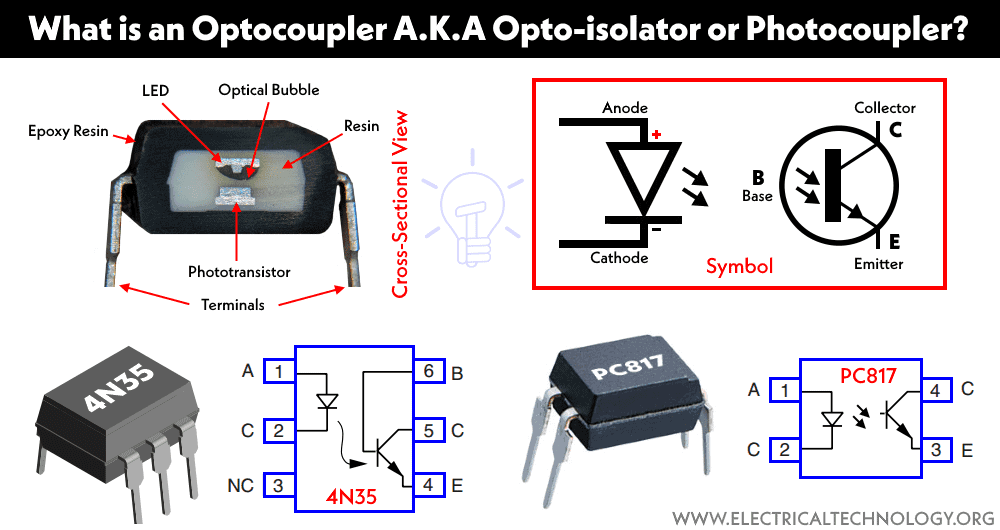
The primary device used to achieve this is the optoisolator, or optocoupler. This small integrated circuit (IC) contains two main components housed within a light-tight package: a light source (usually a Gallium Arsenide infrared LED) and a photosensitive receiver (typically a phototransistor or a photodiode).
When a current is applied to the input side, the LED illuminates. This light travels across an internal dielectric gap—an insulating barrier—and strikes the photosensitive receiver on the other side. The receiver then generates a proportional current or switches a state, effectively replicating the input signal on the output side. Because the medium of transfer is light rather than electrons, the two circuits remain electrically independent.
Bridging the Gap Without a Connection
This lack of physical connection is referred to as galvanic isolation. It is the gold standard for circuit protection because it offers a near-infinite resistance between the input and output. The dielectric barrier within an optoisolator is designed to withstand thousands of volts (often rated between 2,500V to 7,500V RMS). This ensures that even if a massive transient voltage occurs on the “hot” side of the system, the “cold” side remains perfectly shielded.
Anatomy of an Optocoupler
While the basic principle of an optoisolator is straightforward, the internal engineering is a marvel of materials science and photonics. Each component of the device must be precisely calibrated to ensure speed, efficiency, and long-term reliability.
The Input Stage: The LED
The input of an optoisolator is almost always a Light Emitting Diode (LED). However, this is not the visible light LED found on a dashboard. It is typically an infrared LED designed for high efficiency and fast switching speeds. The “Current Transfer Ratio” (CTR) is a critical metric here; it defines the ratio of the output current to the input current. High-quality LEDs are essential for maintaining a consistent CTR over the lifespan of the device, as LEDs can dim slightly as they age, potentially affecting signal accuracy.
The Isolation Barrier
The space between the LED and the detector is filled with a transparent insulating material, such as silicone or a specialized polymer. This material must be clear enough to allow photons to pass through with minimal loss, yet structurally robust enough to act as a dielectric insulator. The physical distance of this gap, combined with the properties of the insulating material, determines the “Isolation Voltage” rating of the component. In high-safety environments, this barrier must be manufactured to withstand not just steady-state high voltages, but also rapid “Common-Mode Transients”—sudden spikes in voltage that can happen in milliseconds.
The Output Stage: The Photodetector
The output stage is where the magic happens. Depending on the application, several types of detectors can be used:
- Phototransistor: The most common type, used for general-purpose switching and signal isolation. It is reliable but has limitations in terms of speed.
- Photodarlington: Uses two transistors in a configuration that provides much higher current gain, useful when the input signal is very weak.
- Phototriac: Specifically designed for controlling Alternating Current (AC) loads. These are widely used in home automation and industrial motor starters.
- High-Speed Logic Gates: For digital communication (like Ethernet or USB isolation), specialized high-speed photodetectors are used that can handle megabits of data per second without distorting the square waves of the digital signal.
Why Engineers Prioritize Opto-Isolation

The integration of opto-isolation into a tech stack is rarely an afterthought; it is a fundamental architectural choice. There are three primary reasons why engineers rely on this technology: safety, signal integrity, and the elimination of ground loops.
Protection Against High-Voltage Transients
In industrial environments, heavy machinery creates a “noisy” electrical atmosphere. When a large motor starts or stops, it can create back-electromotive force (back-EMF) or inductive spikes that reach thousands of volts. Without opto-isolation, these spikes would travel through the control wires and destroy the sensitive Logic Gates of the Programmable Logic Controller (PLC). Opto-isolation acts as a one-way street: signal goes through, but the destructive energy is blocked by the dielectric wall.
Eliminating Ground Loops
One of the most frustrating challenges in electrical engineering is the “ground loop.” This occurs when two connected pieces of equipment are grounded at different physical locations, creating a slight potential difference between their “ground” points. This difference causes a parasitic current to flow through the signal cables, introducing hum in audio equipment, flickering in video, or data errors in digital systems. Because opto-isolation breaks the physical ground connection between the two circuits, it effectively “opens” the loop, eliminating the interference entirely.
Signal Integrity in Noisy Environments
Electromagnetic Interference (EMI) is everywhere—generated by Wi-Fi signals, power lines, and even fluorescent lights. When data travels over long copper wires, it acts like an antenna, picking up this noise. By using opto-isolation at the entry point of a digital system, engineers can ensure that the “clean” internal logic of the machine is not corrupted by the “dirty” external environment. This is especially vital in aerospace and automotive tech, where sensor accuracy is a matter of safety.
Real-World Applications in Modern Tech
Opto-isolation is the silent hero in many of the devices we use every day. While invisible to the end-user, its presence is mandatory for the reliability of modern infrastructure.
Industrial Automation and PLCs
In the world of Industry 4.0, factories are filled with sensors and actuators. Every time a robotic arm moves or a conveyor belt speeds up, optoisolators are working in the background. They allow the high-speed processors that run AI-driven logistics to communicate safely with high-power hydraulic pumps and pneumatic valves.
Telecommunications and Data Centers
Modern data centers handle massive amounts of electricity to power thousands of servers. Opto-isolation is used in the power distribution units (PDUs) and the communication interfaces between different server racks. It ensures that a power surge in one section of the facility doesn’t cascade through the networking cables and take down the entire network. Furthermore, MIDI (Musical Instrument Digital Interface), the standard that has powered electronic music for decades, mandates opto-isolation in its hardware spec to prevent audio hum and protect expensive synthesizers.
Medical Electronics and Patient Safety
In medical technology, opto-isolation is not just about protecting the machine; it is about protecting the patient. Devices like ECG monitors or MRI machines are connected directly to the human body. These devices must also be connected to wall power. Opto-isolation ensures that there is a massive electrical barrier between the power grid and the patient, making it physically impossible for a hardware fault to deliver a lethal shock through the sensor leads.
Selecting the Right Isolation Strategy
As technology moves toward higher speeds and smaller form factors, the traditional optoisolator faces new challenges. Engineers must balance several factors when choosing an isolation strategy for a modern project.
Speed vs. Isolation Voltage
Traditional phototransistor-based optoisolators are relatively slow. They have “rise and fall times” that make them unsuitable for high-speed data protocols like USB 3.0 or HDMI. For these applications, engineers use specialized high-speed digital isolators. While some of these still use light (Silicon Photonics), others use micro-transformers (magnetic isolation) or capacitors (capacitive isolation). However, the “opto” method remains the most popular for DC and low-frequency applications due to its unparalleled immunity to magnetic interference.

The Shift Toward Digital Isolators
In the realm of high-end tech reviews and hardware development, there is an ongoing discussion about the transition from traditional optocouplers to modern digital isolators. Digital isolators offer lower power consumption and higher integration, allowing multiple channels of isolation in a single tiny chip. However, for many engineers, the simplicity and “proven” nature of the optoisolator make it the preferred choice for safety-critical systems. The physical air gap or dielectric thickness in an optocoupler is a visible, measurable security feature that provides peace of mind in high-stakes environments.
As we continue to push the boundaries of AI, IoT, and high-performance computing, the “bridge of light” provided by opto-isolation will remain a cornerstone of hardware design. By separating the fragile world of bits and logic from the high-energy world of power and motion, opto-isolation enables the complex, interconnected technology that defines our modern era.
aViewFromTheCave is a participant in the Amazon Services LLC Associates Program, an affiliate advertising program designed to provide a means for sites to earn advertising fees by advertising and linking to Amazon.com. Amazon, the Amazon logo, AmazonSupply, and the AmazonSupply logo are trademarks of Amazon.com, Inc. or its affiliates. As an Amazon Associate we earn affiliate commissions from qualifying purchases.