
In the rapidly evolving landscape of personal finance, the transition from paper-based transactions to digital ecosystems has redefined how consumers interact with their money. Online bill pay, once a novel convenience offered by high-end financial institutions, has become a foundational tool for modern budgeting, debt management, and financial security. At its core, online bill pay is a service offered by banks, credit unions, and third-party providers that allows users to send money to creditors, service providers, and individuals electronically.
While the definition seems straightforward, the strategic implications of using these tools effectively go far beyond simple convenience. Utilizing online bill pay is a matter of optimizing cash flow, protecting one’s credit score, and leveraging technology to ensure financial discipline. This guide explores the mechanics, benefits, and best practices of online bill pay within the broader context of personal finance management.

Understanding the Mechanics of Digital Payments
To master your finances, it is essential to understand how money moves through the digital ether. Online bill pay typically operates through two primary channels: bank-centric systems and biller-direct systems. Understanding the distinction between these two is vital for managing liquidity and ensuring timely payments.
Bank-Based Online Bill Pay
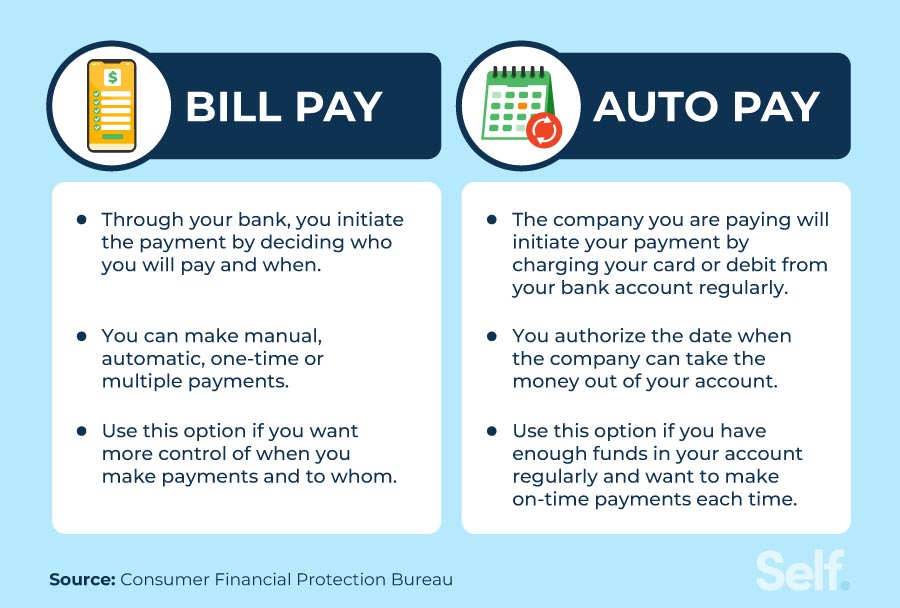
Most checking account providers offer a dedicated “Bill Pay” portal within their online banking suite. In this model, the bank acts as the central hub for all outbound payments. The user inputs the information for various payees—such as utility companies, landlords, or credit card issuers—and instructs the bank to send a specific amount on a specific date.
The bank then attempts to send the funds electronically via the Automated Clearing House (ACH) network. If the payee is a small business or an individual not set up for electronic transfers, the bank will often print and mail a physical check on the user’s behalf. This centralized approach allows a consumer to see their entire financial “outflow” in one dashboard, making it easier to monitor total monthly expenses without logging into multiple merchant websites.
Biller-Direct Payments
The alternative is the biller-direct model, where the consumer logs into the service provider’s website (e.g., an electric company or a wireless carrier) and provides their bank account or credit card information. In this scenario, the merchant “pulls” the money from the consumer’s account. While this is technically a form of online bill pay, it decentralizes financial data. While convenient for setting up “autopay” for a single service, it requires the consumer to visit multiple platforms to get a holistic view of their financial obligations.
The Role of ACH and Processing Times
Regardless of the method, most online bill payments rely on the ACH network. This is a batch-processing system that clears transactions in cycles. For a consumer, this means that “paying a bill” does not always result in an instantaneous transfer of funds. Financial literacy requires an understanding of “float time”—the period between when a payment is authorized and when the funds actually leave the account. Efficiently managing this window is key to avoiding overdraft fees and ensuring that “available balance” reflects actual financial reality.
The Strategic Benefits of Automating Your Finances
The adoption of online bill pay is not merely about saving the cost of a postage stamp; it is a strategic move to strengthen one’s overall financial profile. When used correctly, these tools serve as a hedge against human error and a catalyst for wealth building.
Protecting and Boosting Your Credit Score
In the world of personal finance, your credit score is your most valuable asset. Payment history accounts for approximately 35% of a FICO score, making it the single most influential factor in determining creditworthiness. A single late payment—even if forgotten by a day—can result in a significant drop in points that may take months or years to recover.
Online bill pay allows for the automation of minimum payments. By scheduling recurring transfers, a consumer ensures that they never miss a deadline. This consistent “on-time” behavior builds a robust credit history, which eventually leads to lower interest rates on mortgages, auto loans, and insurance premiums, potentially saving the individual tens of thousands of dollars over a lifetime.
Cash Flow Management and Budgetary Discipline
One of the greatest challenges in personal finance is the “mental load” of tracking various due dates. Online bill pay mitigates this by allowing users to align their payment dates with their income cycles. For example, a worker who is paid bi-weekly can schedule their largest bills—such as rent or mortgage—to be paid immediately following their largest paycheck of the month.
This level of precision in cash flow management prevents the “feast or famine” cycle that many households experience. By automating the fixed costs of living, the user is left with a clear picture of their discretionary income, making it much easier to stick to a budget and allocate funds toward savings or investments.
Enhanced Security and Fraud Prevention
Contrary to early skepticism regarding digital banking, online bill pay is significantly more secure than traditional paper checks. Paper checks contain a wealth of sensitive information, including the account holder’s name, address, bank routing number, and account number. These can be easily intercepted in the mail or “washed” by fraudsters.
Digital payments use high-level encryption and tokenization to protect data. Furthermore, most modern banking platforms offer multi-factor authentication (MFA), adding a layer of security that a physical envelope simply cannot provide. By keeping financial transactions within a secure digital environment, consumers drastically reduce their exposure to identity theft.
Setting Up and Optimizing Your Online Bill Pay System
Transitioning to a fully digital payment system requires an initial investment of time to ensure the architecture is sound. A haphazardly organized bill pay system can lead to confusion or missed payments.
Gathering and Organizing Payee Information
The first step is to compile a master list of all recurring obligations. This includes fixed expenses (mortgage, car insurance) and variable expenses (utilities, credit card balances). For each payee, you will need:
-
The official billing name.
-
The account number associated with the service.
-
The “remit to” address (if using bank-based bill pay).
-
The typical due date.
Establishing the “Safety Net” Recurring Payment
For variable bills like credit cards, many financial experts recommend setting up an automated “minimum payment” via the bank’s bill pay system. This acts as a safety net. If you forget to log in and pay the full balance manually, the automated system ensures you aren’t marked late. You can then make a secondary manual payment to clear the remaining balance and avoid interest charges.
Monitoring and Reconciliation
Automation does not mean abdication. Even with a robust online bill pay system, a successful financial manager must perform a monthly reconciliation. This involves reviewing the “scheduled payments” list against the actual bank statements to ensure that every transaction was executed correctly and that no unauthorized charges have appeared.
Common Pitfalls and How to Avoid Them
While online bill pay is a powerful tool, it is not without its risks. Awareness of these pitfalls is essential for maintaining financial stability.
The Risk of Overdrafts
The most common issue with automated bill pay is the “set it and forget it” mentality. If a series of automated payments hits an account when the balance is low, it can trigger a cascade of overdraft fees. To prevent this, many financial planners suggest maintaining a “buffer” in the checking account—typically equal to one month’s worth of expenses—to ensure that automated withdrawals never result in a negative balance.
Technical Glitches and “Failed” Transfers
No system is perfect. Occasionally, an electronic transfer may fail due to a technical error at the bank or the receiving institution. It is the consumer’s legal responsibility to ensure the bill is paid, regardless of whether the automation worked. Setting up email or SMS alerts for “payment sent” and “payment delivered” provides a paperless trail that allows you to intervene quickly if a payment stalls.
Expiring Payment Methods
If you use the biller-direct method (paying via a merchant’s site using a debit or credit card), you must keep track of expiration dates. When a card is replaced, any automated payments linked to that card will fail. Transitioning as many payments as possible to direct ACH (using routing and account numbers) is often a more stable long-term strategy, as bank account numbers change much less frequently than card numbers.
The Future of Online Payments in Personal Finance
As we move toward an era of “Real-Time Payments” (RTP) and increased integration between fintech apps and traditional banks, online bill pay will continue to evolve. We are already seeing the rise of AI-driven tools that analyze a user’s spending patterns and suggest the optimal day to pay a bill to maximize interest earned in a savings account.
However, the core principle remains the same: online bill pay is a tool for empowerment. It shifts the power dynamic from the creditor to the consumer by providing the consumer with the tools to organize, schedule, and verify every cent that leaves their account. By mastering this digital utility, individuals can move away from the stress of manual money management and toward a future of automated financial health.
In conclusion, online bill pay is far more than a digital version of a checkbook. It is a sophisticated financial tool that, when integrated into a broader strategy of budgeting and credit management, provides a level of control and security that was once impossible. For those looking to optimize their personal finances, the question is no longer “what is online bill pay,” but rather, “how can I best leverage it to reach my financial goals?”
aViewFromTheCave is a participant in the Amazon Services LLC Associates Program, an affiliate advertising program designed to provide a means for sites to earn advertising fees by advertising and linking to Amazon.com. Amazon, the Amazon logo, AmazonSupply, and the AmazonSupply logo are trademarks of Amazon.com, Inc. or its affiliates. As an Amazon Associate we earn affiliate commissions from qualifying purchases.