
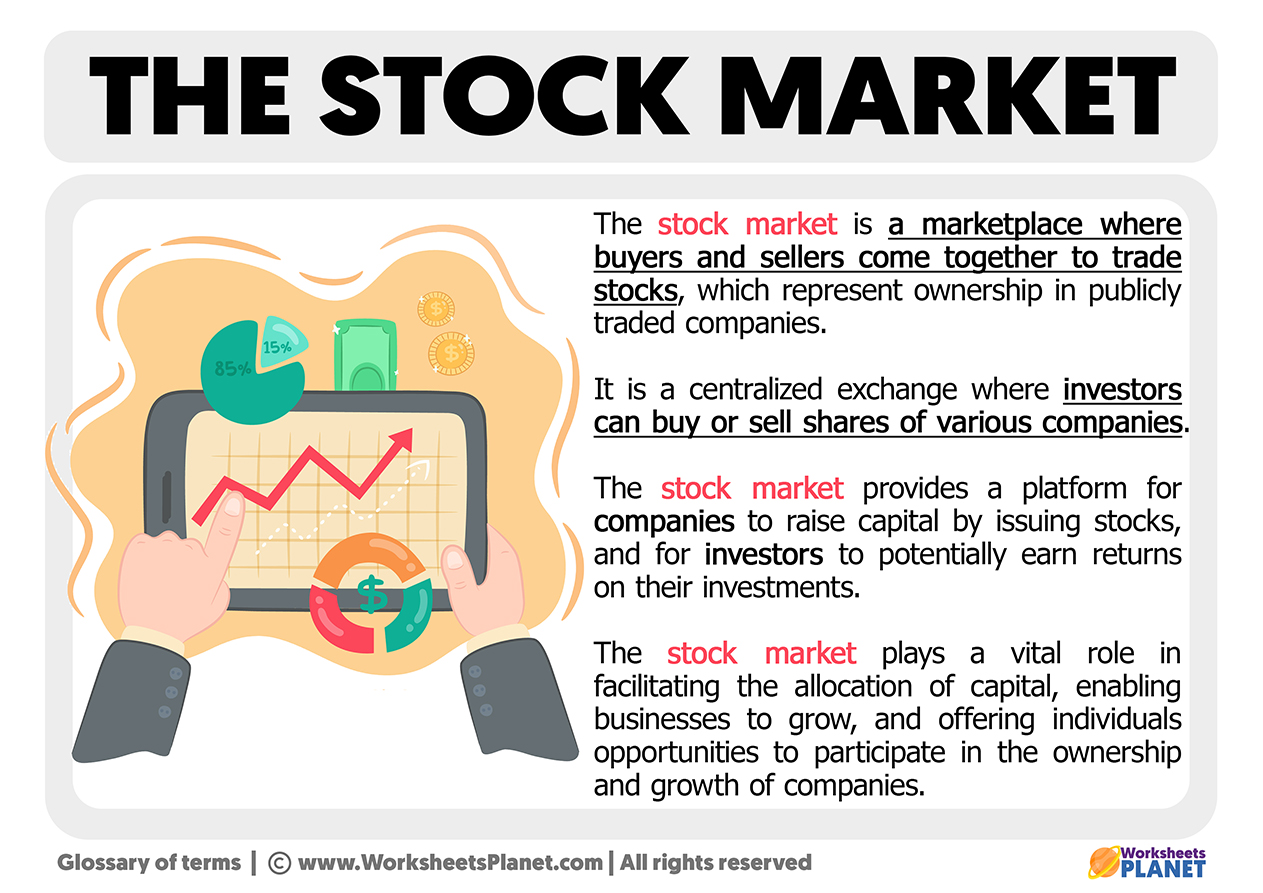
To the uninitiated, the stock market often appears as a chaotic flurry of flashing numbers, complex ticker symbols, and shouting traders. However, at its core, the stock market is the most significant engine of wealth creation in the modern world. When someone asks, “What is on the stock market?” they are often looking for more than a list of company names. They are seeking to understand the diverse array of financial instruments, asset classes, and equity structures that dictate the flow of global capital.
Navigating the stock market requires a fundamental understanding of what is being traded and how these assets are categorized. It is not merely a digital bazaar for corporate shares; it is a sophisticated ecosystem comprising various vehicles designed to suit different risk appetites, time horizons, and financial goals.
The Primary Building Blocks: Stocks and Equities
The most fundamental answer to what is on the stock market is “equities.” Equities, commonly referred to as stocks, represent fractional ownership in a corporation. When you purchase a stock, you are buying a small piece of that company’s earnings and assets. However, not all stocks are created equal, and the market differentiates them based on the rights they afford the owner and their underlying financial characteristics.
Common Stock vs. Preferred Stock
The majority of investors trade in common stock. This asset class represents the standard form of ownership. Common stockholders typically have voting rights at shareholder meetings and may receive dividends if the company’s board of directors chooses to issue them. In the event of a corporate liquidation, common stockholders are last in line behind creditors and preferred shareholders.
Preferred stock, on the other hand, functions more like a hybrid between a stock and a bond. Preferred shareholders usually do not have voting rights, but they have a higher claim on assets and earnings. They receive a fixed dividend, which must be paid out before any dividends are paid to common stockholders. For many income-focused investors, preferred stocks are a staple of their portfolios.
Growth Stocks vs. Value Stocks
Beyond the legal structure, the market categorizes stocks by their “personality” or investment style. Growth stocks are companies expected to grow at a rate significantly above the average for the market. These companies—often in the technology or biotech sectors—usually reinvest their earnings into research and development rather than paying dividends.
Value stocks are companies that appear to be trading at a lower price relative to their fundamentals, such as dividends, earnings, or sales. These are often established companies with steady, predictable revenue streams. The tension between growth and value is a primary driver of market cycles and investor sentiment.
Dividends and Shareholder Rights
One of the most attractive things “on” the stock market is the promise of passive income through dividends. Dividends are a portion of a company’s profit distributed to shareholders. High-quality, long-standing companies often pride themselves on being “Dividend Aristocrats”—companies that have increased their dividend payouts for at least 25 consecutive years. For the long-term investor, these distributions provide a way to build wealth through the power of compounding.
Diversified Vehicles: ETFs and Mutual Funds
While individual stocks are the individual ingredients, many investors prefer to buy the “pre-made meal.” The stock market offers a wide variety of pooled investment vehicles that allow for instant diversification. This is crucial for risk management, as it prevents an investor from being overly exposed to the failure of a single company.
Exchange-Traded Funds (ETFs)
In the last two decades, ETFs have become perhaps the most popular instrument on the stock market. An ETF is a basket of securities that trades on an exchange just like an individual stock. An ETF might track a specific index, a sector, or even a commodity. Because they are traded throughout the day, they offer high liquidity and transparency. Whether you want to invest in the entire S&P 500, a collection of clean energy companies, or a basket of cybersecurity firms, there is likely an ETF that covers it.
Mutual Funds and Active Management
Mutual funds are similar to ETFs in that they pool money from many investors to buy a diversified portfolio of stocks or bonds. However, they are typically priced only once at the end of the trading day. Many mutual funds are “actively managed,” meaning a professional fund manager makes specific decisions about which assets to buy and sell in an attempt to outperform the market. While they often come with higher fees than passive ETFs, they remain a cornerstone of retirement accounts like 401(k)s.
Index Funds: Tracking the Market
Index funds can exist as either mutual funds or ETFs. Their sole purpose is to mirror the performance of a specific market benchmark, such as the Russell 2000 or the Nasdaq-100. Because they do not require a team of analysts to pick winners—they simply buy everything in the index—the fees (expense ratios) are incredibly low. For the average investor, index funds are often cited by experts like Warren Buffett as the most effective way to participate in the stock market’s long-term growth.

The Benchmarks: Indices and Sectors
To understand what is happening on the stock market at any given time, investors look at indices. An index is essentially a statistical measure of a section of the stock market. It provides a snapshot of how a specific group of stocks is performing, which helps investors gauge the health of the overall economy.
The S&P 500 and the Dow Jones
The most frequently cited index is the S&P 500, which tracks the performance of 500 of the largest publicly traded companies in the United States. It is widely considered the best single gauge of large-cap U.S. equities. The Dow Jones Industrial Average (DJIA), while older and more famous, is a price-weighted index of only 30 “blue-chip” companies. While the Dow is a household name, professional investors generally look to the S&P 500 for a more comprehensive view of market movement.
Understanding Market Sectors
The stock market is divided into 11 primary sectors according to the Global Industry Classification Standard (GICS). These include Information Technology, Health Care, Financials, Consumer Discretionary, Communication Services, Industrials, Consumer Staples, Energy, Utilities, Real Estate, and Materials. Different sectors respond differently to economic cycles. For instance, Utilities and Consumer Staples (like food and household goods) tend to be “defensive,” performing better during recessions, while Tech and Discretionary spending thrive during economic expansions.
Market Capitalization Categories
Assets on the stock market are also categorized by their size, known as market capitalization (the total dollar value of a company’s outstanding shares).
- Mega-Cap: Companies with a market cap of $200 billion or more (e.g., Apple, Microsoft).
- Large-Cap: $10 billion to $200 billion.
- Mid-Cap: $2 billion to $10 billion.
- Small-Cap: $300 million to $2 billion.
Small-cap stocks often offer higher growth potential but come with significantly higher volatility and risk compared to their large-cap counterparts.
Beyond Ordinary Shares: REITs and Alternative Instruments
The stock market also hosts specialized assets that allow investors to gain exposure to industries that were previously difficult to access. These instruments provide variety and help in building a sophisticated, multi-asset portfolio.
Real Estate Investment Trusts (REITs)
A REIT is a company that owns, operates, or finances income-producing real estate. By trading on the stock market, REITs allow individual investors to earn a share of the income produced through commercial real estate ownership—without actually having to go out and buy a building. By law, REITs must distribute at least 90% of their taxable income to shareholders as dividends, making them a favorite for those seeking high-yield investments.
Options and Derivatives
For more advanced participants, the stock market includes derivatives like options. An option is a contract that gives the buyer the right (but not the obligation) to buy or sell a stock at a specific price within a specific timeframe. While highly speculative and risky for beginners, options are used by professionals to hedge against losses or to generate additional income through strategies like covered calls.
Commodities and Bond Proxies
While traditional commodities like gold, oil, and wheat are traded on futures exchanges, many investors access them through the stock market via commodity-linked ETFs. Similarly, while bonds are a separate asset class, “bond ETFs” allow investors to trade government and corporate debt as if they were stocks. This convergence makes the stock market a “one-stop shop” for almost every type of financial exposure.
Navigating the Market Infrastructure
Finally, understanding “what” is on the market requires understanding the “where” and the “how.” The infrastructure of the stock market ensures that these assets can be traded efficiently and safely.
Exchanges: NYSE vs. NASDAQ
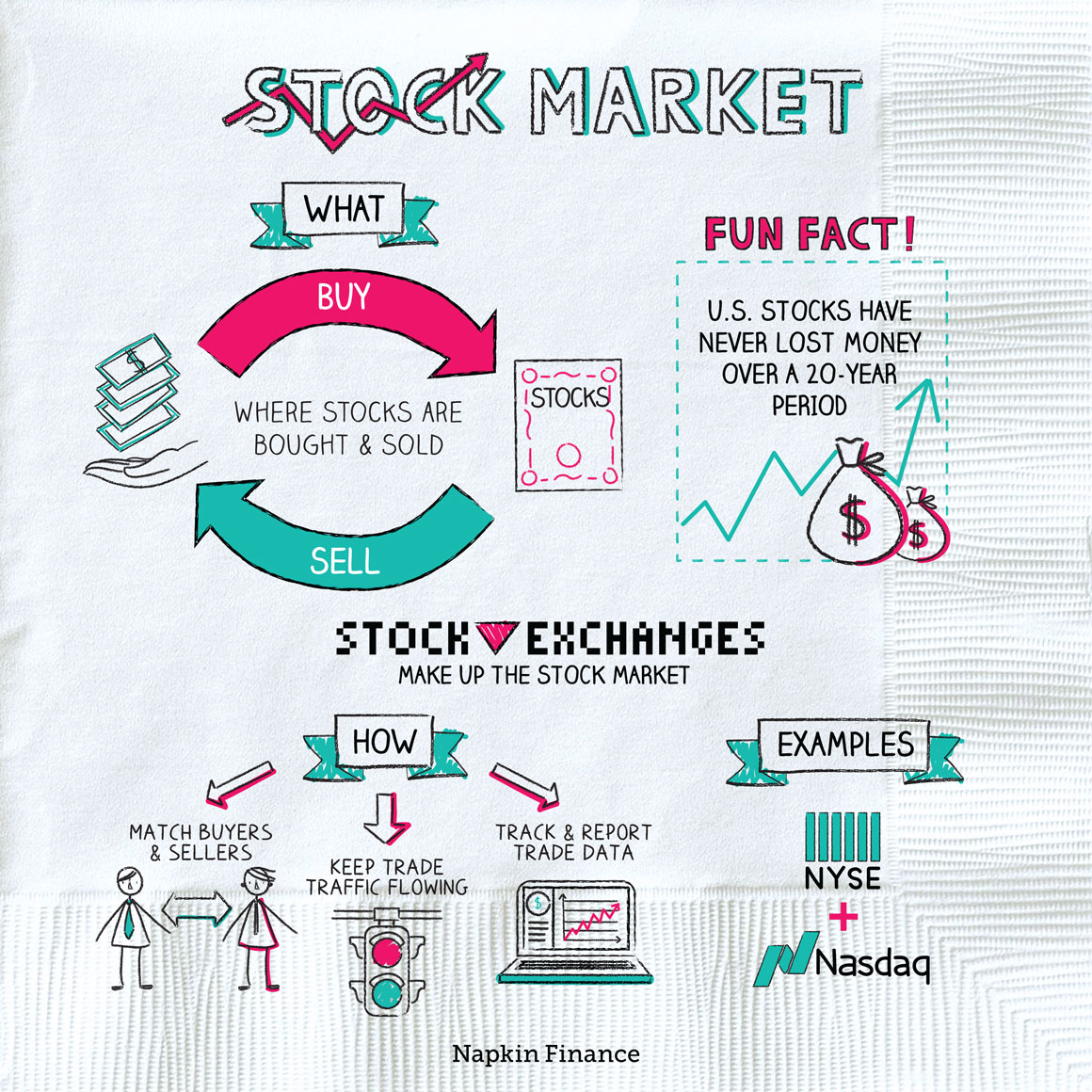
The two primary venues in the United States are the New York Stock Exchange (NYSE) and the NASDAQ. The NYSE is the world’s largest stock exchange and is known for its physical trading floor in Wall Street, though it is now mostly electronic. The NASDAQ is an entirely electronic marketplace and is the traditional home of the world’s biggest technology giants. While they function differently behind the scenes, for the average investor, the experience of buying a stock on either exchange is virtually identical.
The Role of Brokerages and Digital Platforms
In the modern era, the gateway to the stock market is the brokerage. Digital platforms have democratized access, allowing anyone with a smartphone to buy fractional shares of the world’s most expensive companies. These platforms provide the tools for execution, research, and portfolio tracking, serving as the bridge between the individual and the vast global market.
Market Sentiment and Volatility
What is also “on” the stock market—though invisible—is human emotion. Market sentiment, often measured by the Volatility Index (VIX), reflects the collective fear or confidence of investors. Prices are not just a reflection of mathematical value; they are a reflection of what people believe that value will be in the future. Understanding this psychological layer is just as important as understanding the financial instruments themselves.
The stock market is a profound reflection of human ambition and economic progress. By understanding the various stocks, funds, indices, and specialized vehicles that inhabit this space, an investor can move from being a spectator to an active participant in the global economy. Whether you are seeking long-term growth, steady income, or a way to hedge against inflation, the diverse offerings “on” the stock market provide the tools necessary to build a secure financial future.
aViewFromTheCave is a participant in the Amazon Services LLC Associates Program, an affiliate advertising program designed to provide a means for sites to earn advertising fees by advertising and linking to Amazon.com. Amazon, the Amazon logo, AmazonSupply, and the AmazonSupply logo are trademarks of Amazon.com, Inc. or its affiliates. As an Amazon Associate we earn affiliate commissions from qualifying purchases.