
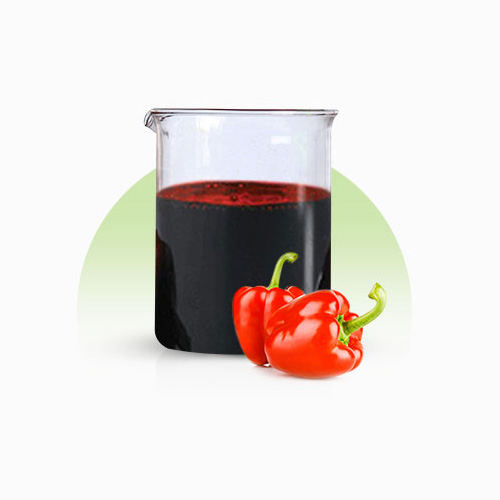
Oleoresin Capsicum (OC) is a potent, oil-soluble extract derived from the fruits of Capsicum plants, most commonly from chili peppers. While its primary association for many might be with self-defense sprays and culinary heat, its underlying biochemical properties and extraction processes place it squarely within the realm of advanced Tech. This article will explore the technological facets of OC, focusing on its sophisticated extraction methodologies, analytical techniques for quality control, and its innovative applications across various high-tech industries. We will delve into the science that makes OC a valuable commodity and the technological advancements that ensure its purity, efficacy, and diverse utility.

The Science and Technology of Extraction
The journey from a humble chili pepper to a refined oleoresin extract is a testament to chemical engineering and sophisticated processing. The goal is to isolate and concentrate the capsaicinoids, the compounds responsible for OC’s characteristic pungency and physiological effects. This process involves intricate steps that leverage principles of mass transfer, solvent extraction, and purification.
Solvent Extraction: The Core Process
The most prevalent method for extracting OC is solvent extraction. This technique relies on the principle that OC is soluble in certain organic solvents, while many other plant components are not.
Choosing the Right Solvent
The selection of the solvent is critical for both efficiency and safety. Commonly used solvents include hexane, acetone, ethanol, and supercritical carbon dioxide (scCO2). Each solvent has its advantages and disadvantages:
- Hexane: Offers good solubility for capsaicinoids and is relatively inexpensive. However, concerns about its flammability and potential health impacts necessitate stringent safety protocols and efficient removal from the final product.
- Acetone: Also demonstrates good solubility and is volatile, allowing for easier removal. However, it can also extract undesirable compounds, requiring further purification steps.
- Ethanol: A more environmentally friendly and safer option, ethanol is also effective. However, it may require higher temperatures or longer extraction times compared to other solvents.
- Supercritical Carbon Dioxide (scCO2): This advanced method is gaining traction due to its “green” credentials. Supercritical fluids, like scCO2, possess properties of both liquids and gases, allowing for excellent penetration into the plant matrix and efficient extraction. The process operates at moderate temperatures, preserving sensitive compounds and avoiding solvent residues. Post-extraction, the scCO2 can be easily depressurized and recycled, leaving behind a pure OC extract. The technological sophistication here lies in precise control of pressure, temperature, and flow rates to optimize extraction efficiency and selectivity.
The Extraction Mechanism
The solvent is introduced to finely ground chili pepper material. The capsaicinoids, being lipophilic (fat-soluble), readily dissolve into the solvent. This creates a saturated solution. The process can be carried out in batch or continuous extraction systems, with the latter offering higher throughput for industrial-scale production. Parameters like temperature, pressure, solvent-to-solid ratio, and extraction time are meticulously controlled to maximize yield and minimize the extraction of unwanted compounds like pigments and waxes, which can affect the final product’s quality and color.
Modern Refinement and Purification Techniques
Once the initial extraction is complete, the crude OC extract often contains impurities. Advanced purification techniques are employed to achieve the desired purity and concentration of capsaicinoids.
Filtration and Centrifugation
Initial steps often involve filtration or centrifugation to remove solid plant debris from the liquid extract. This is a fundamental separation technology, but precision filtration systems, utilizing membrane technologies, can achieve finer separation of suspended particles.
Evaporation and Concentration
The solvent is then evaporated under reduced pressure (vacuum distillation) to recover the solvent and concentrate the OC. Technologies like rotary evaporators and wiped-film evaporators are employed to achieve efficient solvent removal at lower temperatures, preventing thermal degradation of the capsaicinoids.
Chromatographic Separation
For higher purity applications, chromatographic techniques are indispensable. High-Performance Liquid Chromatography (HPLC) is a powerful analytical and preparative tool used to separate individual capsaicinoids or to remove specific impurities. Preparative chromatography allows for the isolation of specific capsaicinoid fractions for research or specialized industrial uses, showcasing a high level of chemical separation technology.
Molecular Distillation
This technique is used for further purification and refinement, especially when dealing with heat-sensitive compounds. It utilizes very low pressures to achieve distillation at lower temperatures, minimizing degradation and effectively separating compounds with similar boiling points.
Analytical Technologies for Quality Assurance
Ensuring the consistency, potency, and safety of OC is paramount, especially for its use in demanding technological applications. A suite of analytical technologies is employed throughout the production process and for final product verification. These tools provide quantitative data on capsaicinoid content, identify potential contaminants, and confirm the absence of residual solvents.
Spectroscopic Analysis
Spectroscopic methods are widely used for the identification and quantification of OC components.
UV-Vis Spectroscopy
Ultraviolet-Visible (UV-Vis) spectroscopy is a relatively simple yet effective technique to estimate the total capsaicinoid content. Capsaicinoids have characteristic absorption peaks in the UV region of the spectrum. By comparing the absorbance of a sample to that of a known standard, the concentration can be determined. This is often used as a rapid screening tool.
Infrared (IR) Spectroscopy
Fourier-Transform Transform Infrared (FTIR) spectroscopy provides a molecular fingerprint of the sample. The vibrations of specific chemical bonds within the capsaicinoid molecules absorb IR radiation at distinct frequencies, generating a unique spectrum. FTIR can be used for both qualitative identification and to detect the presence of certain functional groups indicative of impurities.
Mass Spectrometry (MS)

Mass spectrometry is a highly sensitive technique that measures the mass-to-charge ratio of ions. Coupled with chromatographic separation techniques like Gas Chromatography (GC-MS) or Liquid Chromatography (LC-MS), it offers unparalleled ability to identify and quantify individual capsaicinoids with great specificity. This allows for detailed analysis of the capsaicinoid profile and the detection of trace impurities, including residual solvents or degradation products, at parts-per-million (ppm) or even parts-per-billion (ppb) levels.
Chromatographic Techniques in Detail
As mentioned in the extraction section, chromatography plays a dual role: in purification and in precise analysis.
High-Performance Liquid Chromatography (HPLC)
HPLC is the gold standard for quantifying individual capsaicinoids, such as capsaicin and dihydrocapsaicin, which are the primary active components. By using specific stationary phases and mobile phases, HPLC can separate these closely related compounds. Detectors, often UV-Vis or Diode Array Detectors (DAD), are then used to quantify the separated peaks. This technology is crucial for establishing the “heat unit” of OC, typically measured in Scoville Heat Units (SHU), providing a standardized measure of pungency.
Gas Chromatography (GC)
While HPLC is more commonly used for the non-volatile capsaicinoids, GC can be employed for the analysis of more volatile components or degradation products. When coupled with MS (GC-MS), it provides comprehensive identification and quantification capabilities.
Other Essential Analytical Tools
- Refractometry: Measures the refractive index of the oleoresin, which can be correlated with its concentration and purity.
- Viscometry: Assesses the viscosity of the OC, an important physical property that influences its handling and application.
- Colorimetry: Quantifies the color of the OC, which can be an indicator of its processing and the presence of certain pigments.
These analytical tools, powered by sophisticated instrumentation and data processing capabilities, form the backbone of quality assurance for OC, ensuring it meets stringent specifications for diverse technological applications.
Innovative Technological Applications of Oleoresin Capsicum
Beyond its well-known use in self-defense sprays and the food industry, the unique properties of OC are being harnessed in a growing array of technologically advanced applications. These applications leverage OC’s irritant properties, its biochemical interactions, and its extractability as a model for other natural product processing.
Advanced Materials and Coatings
The pungent nature of OC, specifically its interaction with sensory receptors, is inspiring innovations in material science.
Smart Coatings and Anti-Fouling Technologies
Researchers are exploring the incorporation of OC into advanced coatings. For instance, the irritant properties could deter marine organisms from attaching to ship hulls, reducing drag and fuel consumption. This is a form of bio-inspired anti-fouling technology, moving away from environmentally harmful biocides. The challenge lies in controlling the release of OC and ensuring its longevity in harsh marine environments. This involves sophisticated microencapsulation technologies, where OC is enclosed within protective polymer shells that gradually degrade or respond to specific environmental triggers.
Fire Retardant and Insect Repellent Materials
The inherent chemical structure of capsaicinoids, particularly their ability to interact with biological systems, is being investigated for fire retardant properties. While not a primary flame retardant, it might act synergistically with other compounds. Furthermore, its insect repellent qualities are being integrated into durable, long-lasting materials for agricultural or outdoor equipment.
Biomedical and Pharmaceutical Research
The biological activity of capsaicinoids extends beyond simple irritation, opening doors for technological applications in the biomedical field.
Drug Delivery Systems
Capsaicin has been explored for its analgesic properties and its potential to enhance the transdermal delivery of other drugs. OC, as a concentrated source, can be formulated into specialized patches or gels. The technology here involves creating sophisticated delivery vehicles that can control the rate and depth of penetration of capsaicinoids into the skin, targeting specific therapeutic outcomes while minimizing undesirable side effects like intense burning sensations. Micro-needle arrays and liposomal encapsulation are examples of advanced drug delivery technologies being considered.
Neuroscience and Sensory Research Tools
In neuroscience, OC and its purified components are used as research tools to study pain pathways, sensory receptors (like TRPV1), and neuroinflammation. Highly purified capsaicinoids, obtained through advanced chromatographic techniques, are essential for these precise experimental designs. The ability to synthesize or isolate specific capsaicinoids allows neuroscientists to probe specific biological mechanisms with remarkable accuracy.
Industrial Safety and Process Monitoring
OC’s distinct characteristics can be utilized in industrial settings for safety and monitoring purposes.
Leak Detection and Warning Systems
The intense pungency and visibility of OC (when aerosolized) can be harnessed for leak detection in industrial pipelines or hazardous gas containment systems. A small amount of OC could be introduced into a system, and if a leak occurs, the characteristic odor and irritation would provide an immediate warning. This requires robust aerosolization technology and sensitive detection mechanisms for the OC signature.
Tracer Technology
In environmental studies or industrial process tracing, OC can serve as a biodegradable tracer. Its unique chemical signature makes it detectable even at low concentrations, and its natural origin makes it less environmentally disruptive than some synthetic tracers. Advanced analytical techniques are crucial for tracking these tracers over time and distance.
The exploration of OC’s technological applications is a dynamic field, constantly pushing the boundaries of material science, biomedical engineering, and industrial process optimization. As extraction and analysis technologies continue to advance, we can anticipate even more ingenious uses for this potent natural extract.
aViewFromTheCave is a participant in the Amazon Services LLC Associates Program, an affiliate advertising program designed to provide a means for sites to earn advertising fees by advertising and linking to Amazon.com. Amazon, the Amazon logo, AmazonSupply, and the AmazonSupply logo are trademarks of Amazon.com, Inc. or its affiliates. As an Amazon Associate we earn affiliate commissions from qualifying purchases.